Gamja Jeon Recipe
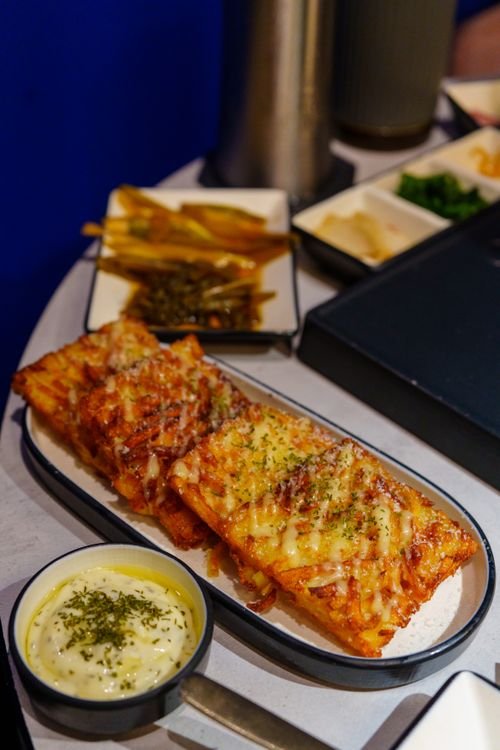
Gamja jeon is a Korean potato pancake, crisp and golden at the edges with a soft, chewy middle. Grated potato and onion bind together with just a little starch, then fry in a hot pan until the outside turns crunchy. There is no flour-heavy batter and no fuss, only potato, salt and heat. Dip it in soy sauce with vinegar and eat it straight from the pan.
The story behind Gamja Jeon
Gamja jeon is one of Korea's oldest and simplest pancakes. Potatoes arrived in Korea in the nineteenth century, carried along trade routes from China, and farmers in the cold mountain province of Gangwon-do took to them quickly. The potato grew well in thin, rocky soil where rice struggled, and it became a staple food for families who needed something filling and cheap. Grating the potato, squeezing out the water and frying it in oil turned a humble root into a crisp, golden pancake that needed nothing else.
The dish belongs to the wider family of Korean jeon, the savoury pancakes that appear at markets, in home kitchens and on festive tables. Jeon of all kinds, from kimchi pancakes to seafood pancakes, are cooked on the same principle: a simple batter, a hot oiled pan, and a quick fry. Gamja jeon is the plainest of them, and that is its charm. There is no filling to prepare and no batter to rest. It is the pancake you make when you have potatoes, an onion and twenty minutes, and you want something hot and satisfying.
What makes gamja jeon special is the texture. The outside fries to a crisp, lacy edge, while the middle stays soft and slightly chewy, almost like a dumpling. That contrast comes from the potato starch itself, which binds the shreds together without any flour. The onion melts into the mixture and adds a quiet sweetness, and the salt sharpens the potato flavour. Eaten hot with a sharp soy and vinegar dipping sauce, it is the kind of food that disappears from the plate before you have finished cooking the next batch.
Cook gamja jeon as a snack, a side dish, or a light lunch with a bowl of soup. It is a natural partner for rainy days, when Koreans traditionally reach for pancakes and a warm drink. It also works as a starter for a Korean meal, cut into wedges and shared from a plate in the middle of the table. Children love it because it is mild and crunchy, and adults love it because it tastes like the simplest possible version of a good idea.
- Prep time
- 20 mins
- Cook time
- 20 mins
- Total time
- 40 mins
- Servings
- 4 servings
- Calories
- 280
Ingredients
- 500 g potatoes, peeled
- 1/2 onion, finely grated
- 1 teaspoon salt
- 1/2 teaspoon black pepper
- 2 spring onions, finely chopped
- 2 tablespoons potato starch or cornflour
- 3 tablespoons vegetable oil, for frying
- 2 tablespoons soy sauce, for dipping
- 1 tablespoon rice vinegar
- 1 teaspoon sesame seeds
Instructions
- Grate the potatoes on the fine side of a box grater, working over a large bowl. The shreds should be fine and damp, almost like wet snow. Grate the onion the same way and add it to the bowl. Work quickly, because grated potato darkens as it sits in the air, and a splash of lemon juice or vinegar will slow that down if you need a moment.
- Let the grated potato rest for ten minutes, then squeeze out the excess water. Take handfuls and press them firmly over the bowl, letting the liquid run out between your fingers. You do not need to wring it bone dry, but a soggy mixture will steam instead of frying. Pour the squeezed liquid into a jug and leave it to sit for five minutes, so the white starch settles at the bottom.
- Add the starch back in and season the mixture. Pour off the water from the jug carefully, keeping the thick white starch at the bottom, and scrape it into the potato. Add the salt, black pepper, chopped spring onions and potato starch, then mix everything with your hands until it holds together in a soft, sticky mass. It should clump when you press it and fall apart only when you pull it.
- Heat the pan and oil until they are properly hot. Put a wide frying pan over medium-high heat, add the oil and swirl it to coat the base. Wait until the oil shimmers and a tiny drop of batter sizzles hard when it touches the pan. If the oil is not hot enough, the pancake will soak it up and turn greasy instead of crisp.
- Shape the first pancake and slide it into the pan. Scoop up about a third of the mixture, press it into a flat round about 15 centimetres across and half a centimetre thick, and lay it gently into the oil. Press it down lightly with a spatula so the surface meets the pan. You should hear a strong, steady sizzle. If the pan is crowded, cook one pancake at a time.
- Fry the first side for three to four minutes without moving it. Resist the urge to poke or lift the edge, because the crust needs time to form. You will see the edges turn golden brown and the top begin to look dry. When the edge lifts easily with a spatula and the underside is deep gold, it is ready to turn.
- Flip the pancake with confidence and fry the second side. Slide a wide spatula underneath, lift in one smooth motion and turn it over in a single movement. Add a drizzle more oil around the edge if the pan looks dry. Cook for another three to four minutes, until the second side is just as golden and crisp and the centre feels set when you press it gently.
- Drain the pancake and serve it straight away. Lift it onto a plate lined with kitchen paper for a minute so the extra oil drains off, then cut it into wedges while it is still hot. Repeat with the remaining mixture, adding a little oil between pancakes. Serve with the soy sauce, rice vinegar and sesame seeds mixed together as a dipping sauce, and eat it while the edges are still crunchy.
Pro tips
- Use starchy potatoes such as Maris Piper or Russet for the best result. Waxy potatoes hold their shape but release less starch, so the pancake is more likely to fall apart in the pan.
- Grate the potato on the fine side of the grater. Coarse shreds leave gaps in the pancake and cook unevenly, while fine shreds knit together into a smooth, even pancake with crisp edges.
- Do not skip the resting step. Ten minutes of rest lets the starch settle out of the liquid, and that starch is what binds the pancake. Pour the water away carefully and keep every bit of the white paste.
- Fry one pancake at a time in a wide pan. Crowding the pan drops the temperature of the oil and the pancakes steam instead of crisping, so patience gives you a much better result.
- Serve gamja jeon the moment it leaves the pan. The crisp edges soften within minutes, so cut it into wedges, set out the dipping sauce and eat it while it is still hot and crackling.
Variations & serving ideas
Add a little something extra to the batter when you want a change. A handful of chopped kimchi gives the pancake a sour, spicy kick and turns it a pale pink. A spoonful of grated cheese melts into the middle and adds a rich, savoury pull. Chopped chives, perilla leaves or a little grated carrot all work well, and a few prawns or a spoonful of minced pork turns the pancake into a fuller meal. Keep the additions small, so the potato stays the star.
Swap the dipping sauce to change the mood of the dish. The classic is soy sauce with rice vinegar and sesame seeds, but a spoonful of gochujang stirred into soy sauce adds heat and sweetness. A yoghurt dip with garlic and lemon works well in summer, and a simple sprinkle of flaky salt with a squeeze of lemon lets the potato flavour speak for itself. If you are serving children, leave out the vinegar and offer plain soy sauce with a little sugar.
Serve gamja jeon as part of a bigger Korean spread. It sits happily next to kimchi, pickled radish and a bowl of rice, or alongside a hot soup such as doenjang jjigae. For a light lunch, pair it with a fresh cucumber salad and a fried egg. For a party, make small pancakes, about eight centimetres across, and serve them as finger food with toothpicks and a bowl of dipping sauce in the middle.
If you cannot find potato starch, cornflour works in the same quantity, and rice flour gives a slightly lighter crust. Sweet potato makes a lovely variation, though it is softer and sweeter, so squeeze it well and add an extra spoonful of starch. For a gluten-free version, check that your soy sauce is tamari, since the pancake itself contains no wheat at all. The recipe is naturally vegetarian, and a splash of soy sauce is the only seasoning it really needs.
Getting it right
The key technique is getting the moisture right. Grated potato holds a surprising amount of water, and if you leave it in, the pancake steams in the pan instead of frying. Squeeze the shreds firmly, a handful at a time, until they feel damp but not dripping. Then rescue the starch: let the squeezed liquid sit for five minutes, pour off the water, and stir the white paste left at the bottom back into the potato. That starch is the glue that holds the pancake together.
Heat control is the second skill. The pan must be hot before the batter goes in, and the oil should shimmer and sizzle the moment the potato touches it. Too cool, and the pancake drinks oil and turns pale and greasy. Too hot, and the outside burns before the centre cooks through. Medium-high heat, with a steady sizzle you can hear across the kitchen, is the sweet spot. Once the pancake is in, leave it alone. Moving it breaks the crust before it has set.
The common mistake is making the pancake too thick. A pancake thicker than half a centimetre stays raw and stodgy in the middle while the outside darkens. Spread the mixture thin and even, pressing it down with a spatula so the whole surface touches the pan. If a pancake falls apart when you flip it, the mixture was too wet or the first side was not cooked long enough. Add a spoonful of starch next time and give the first side a full four minutes.
Storing & reheating
Gamja jeon is at its best straight from the pan, but leftovers keep well in the fridge for two days. Stack them with a sheet of baking paper between each pancake so they do not stick together, and keep them in a sealed container. The edges will soften in the fridge, so do not expect the same crunch until you reheat them.
Reheat them in a hot pan with a little oil, or in an oven at 200 C for five to eight minutes, until the edges crisp up again. An air fryer at 190 C for six to eight minutes works just as well. Avoid the microwave, which makes them soft and limp. The raw grated potato mixture does not keep, so fry it all on the day you grate it.
Frequently asked questions
What does gamja jeon taste like?
Gamja jeon is made from grated potato, so it tastes like potato in its purest form. The edges turn crisp and golden while the centre stays soft and slightly chewy. Onion adds sweetness, and the soy dipping sauce brings salt and tang.
Can I add potato starch to help it hold together?
Yes, and this is the easiest way to fix a loose batter. If the grated potato releases a lot of liquid, squeeze it out and add one or two tablespoons of potato starch or cornflour. The mixture should hold together when you press it, not run.
Do I need flour to make gamja jeon?
No, the potato starch that settles out of the grated potato is the real binder. Let the grated potato sit for ten minutes, pour off the water, and stir the white starch left at the bottom back into the mixture. That is the traditional method and it works beautifully.
How do I reheat leftover gamja jeon?
Fry them on a baking tray in a hot oven at 200 C for five to eight minutes, or in an air fryer at 190 C for six to eight minutes. Brush them lightly with oil first so the edges crisp up again instead of drying out.
What dipping sauce goes with gamja jeon?
A soy and vinegar dipping sauce is the classic partner. Mix soy sauce with rice vinegar, a little sugar and sesame seeds, and add chopped spring onion. Some people add a spoonful of gochujang for heat, but the plain version is best for tasting the potato.
Can I make gamja jeon without a non-stick pan?
Yes, if your pan is well seasoned and you use enough oil. A cast iron or non-stick pan works best, and the pan must be properly hot before the batter goes in. If the pancake sticks, wait another minute, since it releases itself once the crust forms.