Gamja Jorim Recipe
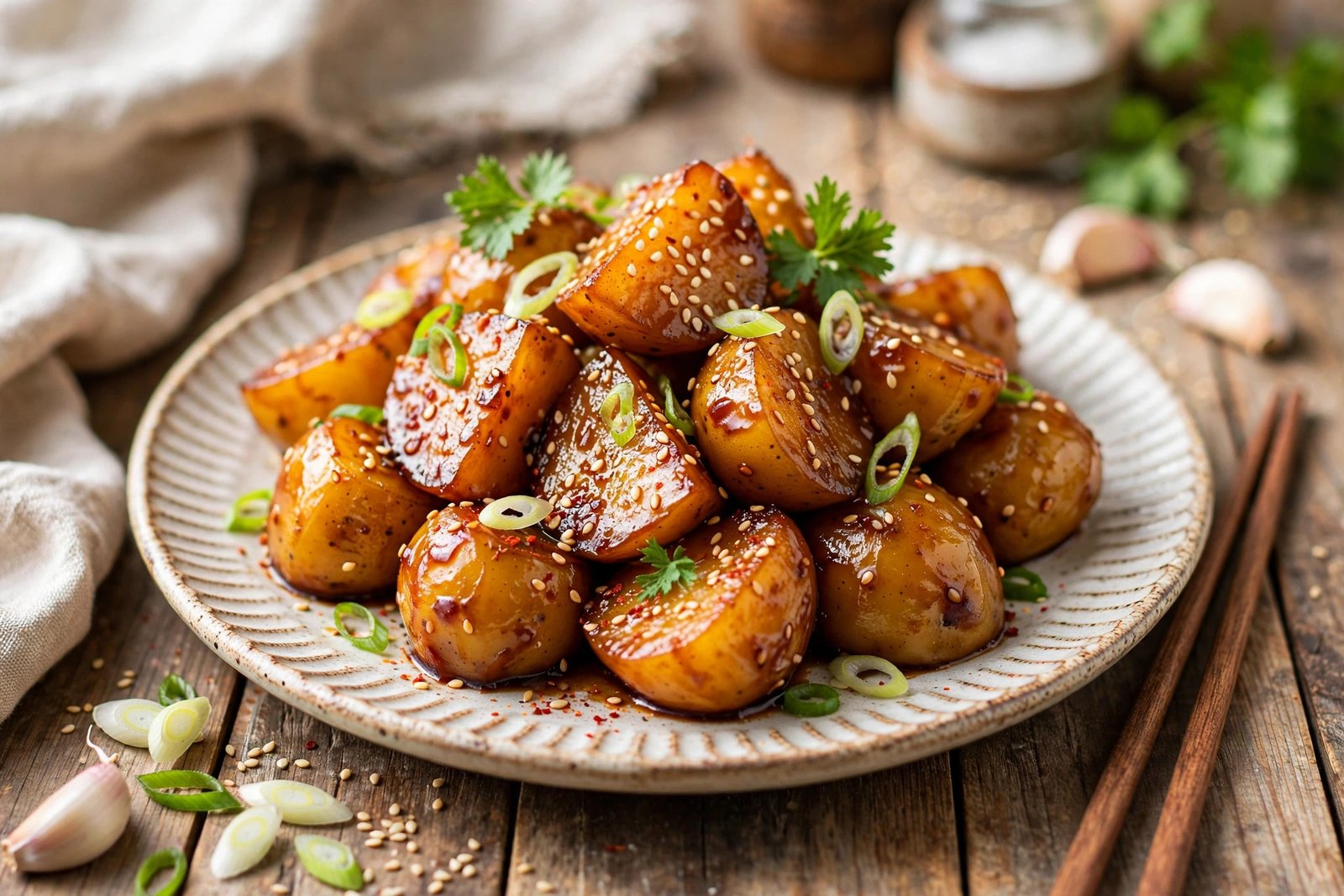
Gamja Jorim is a beloved Korean banchan of small potatoes slow-braised until glossy and tender in a sweet soy sauce. Each bite is soft inside with a sticky, savoury-sweet coating. It is simple, comforting, and pairs beautifully with rice and grilled meats.
The story behind Gamja Jorim
Jorim means braising in soy sauce, and it is one of the foundations of Korean home cooking — a technique used for everything from fish to tofu to eggs. Gamja jorim, made with potatoes, is among the most loved of the banchan, the small side dishes that fill a Korean table around a bowl of rice. Potatoes braise beautifully: they drink up the soy, honey and garlic as they simmer, and the sauce reduces to the glossy glaze that defines the dish. Because it keeps well for days and tastes good cold, gamja jorim is a classic lunchbox dish too, packed into dosirak alongside rice and kimchi. It is the kind of food Korean cooks make without a recipe, adjusting the sweetness by feel.
- Prep time
- 15 mins
- Cook time
- 30 mins
- Total time
- 45 mins
- Servings
- 4 servings
- Calories
- 280
Ingredients
- 700 g baby potatoes, peeled and halved
- 3 tablespoons soy sauce
- 2 tablespoons honey
- 1 tablespoon rice syrup or maple syrup
- 3 cloves garlic, minced
- 1 tablespoon sesame oil
- 1 teaspoon sesame seeds
- 2 spring onions, finely sliced
- 1/2 teaspoon black pepper
- 1 tablespoon vegetable oil
- 240 ml water
- 1 small dried red chilli (optional)
Instructions
- Wash the peeled potatoes and pat them dry. Cut any large ones in half so all pieces are roughly the same size for even cooking.
- Heat the vegetable oil in a wide pan over medium heat. Add the potatoes and fry for 5 minutes, turning occasionally, until lightly golden at the edges.
- Add the soy sauce, honey, rice syrup, garlic, black pepper and water. Stir gently to coat the potatoes and bring to a gentle boil.
- Reduce the heat to low, cover the pan, and simmer for 20 minutes until the potatoes are tender when pierced with a fork.
- Remove the lid and raise the heat to medium. Cook for a further 5 minutes, shaking the pan often, until the sauce thickens into a glossy glaze that clings to the potatoes.
- Drizzle over the sesame oil and toss gently so every potato shines.
- Transfer to a serving dish and sprinkle with sesame seeds and spring onions. Serve warm or at room temperature as a banchan.
Pro tips
- Choose small, waxy potatoes so they hold their shape while braising.
- Do not stir too vigorously once the potatoes soften, or they will break apart.
- If the sauce dries out before the potatoes are tender, add a splash of hot water.
- Leftovers keep well in the fridge for up to 4 days and taste even better the next day.
Variations & serving ideas
The braising sauce here is a template you can play with. Drop in a handful of peeled quail eggs for the last ten minutes of simmering and they will soak up the soy glaze alongside the potatoes — a favourite addition in Korean home kitchens. Carrot chunks braise just as well, and a few dried anchovies added with the water give the sauce a deeper savoury backbone. For a spicy version, stir a spoonful of gochujang into the sauce and lean on the dried chilli; for a milder one, leave the chilli out entirely. The finished potatoes are also good piled over a bowl of steamed rice with a fried egg on top, turning a side dish into a quick lunch. Any leftovers can be lightly crushed and folded into an omelette.
Frequently asked questions
What is Gamja Jorim?
Gamja Jorim is a Korean braised potato dish. Small potatoes are simmered in a sweet soy sauce until tender and glossy, then served as a banchan, a small side dish eaten with rice.
Can I make Gamja Jorim less sweet?
Yes. Reduce the honey to 1 tablespoon and the rice syrup to half a tablespoon, then taste the sauce before serving and adjust with a little more soy sauce.
How long does Gamja Jorim keep?
It keeps for up to 4 days in an airtight container in the fridge. Reheat gently in a pan with a splash of water, or enjoy it cold.
What do you serve with Gamja Jorim?
It goes perfectly with steamed rice, kimchi, and grilled meats such as bulgogi or galbi, or as part of a spread of banchan.