Gimbap Recipe
Advertisement
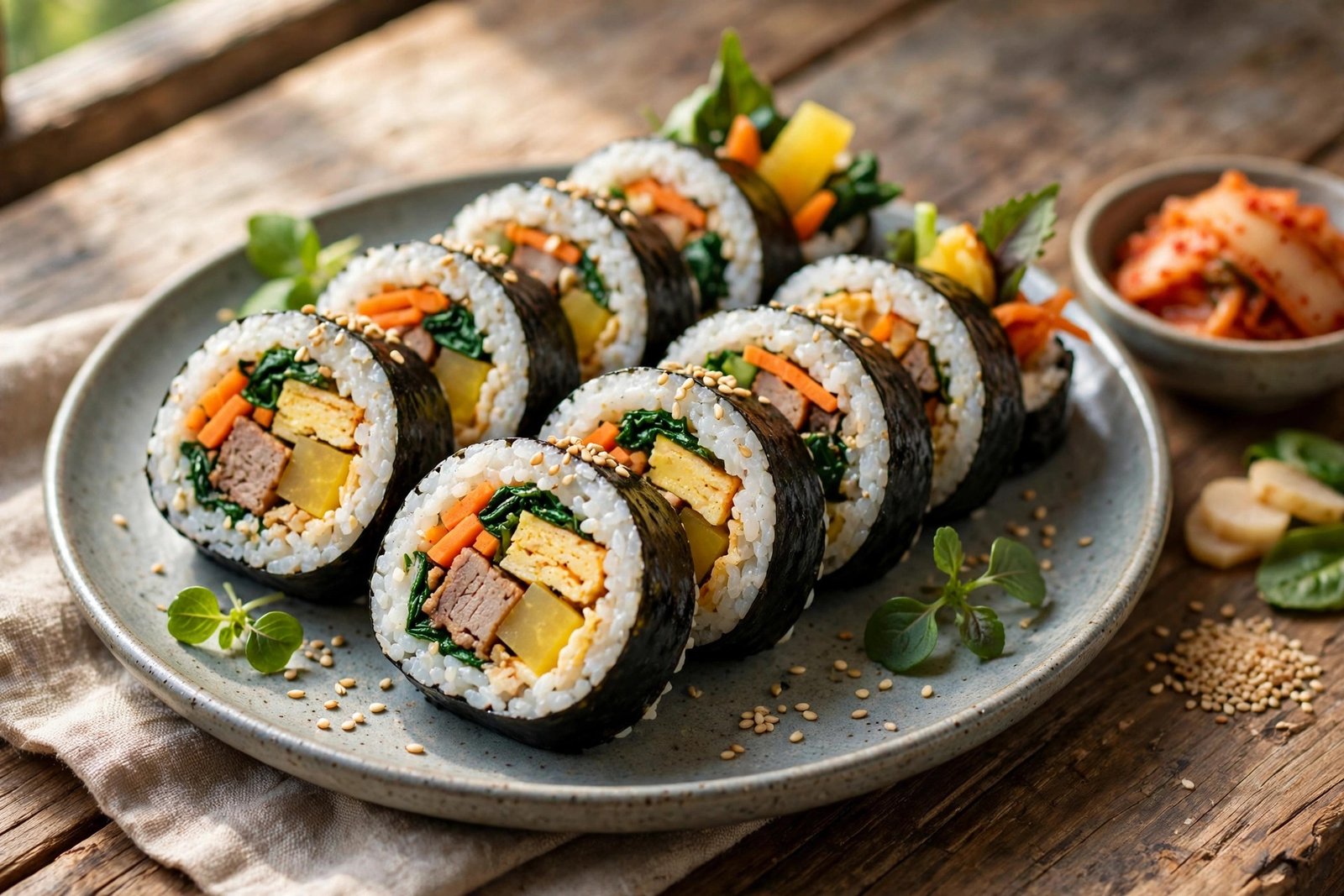
Sesame-scented rice rolled in seaweed with colourful vegetables, egg and beef, Gimbap is Korea's favourite picnic food. Slice it up and watch it disappear.
Advertisement
Advertisement
- Prep time
- 30 mins
- Cook time
- 20 mins
- Total time
- 50 mins
- Servings
- 4 servings
- Calories
- 480
Ingredients
- 3 cups cooked short-grain rice
- 5 sheets gim (roasted seaweed)
- 200 g beef bulgogi, thinly sliced
- 2 eggs, beaten
- 1 carrot, julienned
- 1 cucumber, julienned
- 5 strips pickled radish (danmuji)
- 4 leaves spinach, blanched
- 2 tbsp sesame oil
- 1 tbsp sesame seeds
- 1 tbsp soy sauce
- 1 tsp sugar
- 1/2 tsp salt
Instructions
- Season the warm rice with sesame oil, sesame seeds and salt, then let it cool slightly.
- Fry the beef with soy sauce and sugar until cooked, then set aside.
- Cook the beaten eggs into a thin omelette, cool and slice into strips.
- Saute the carrot briefly until just tender, and season the spinach with a little sesame oil.
- Place a seaweed sheet shiny side down on a bamboo mat and spread a thin layer of rice, leaving a strip bare at the top.
- Lay the fillings in a line across the middle, then roll firmly away from you, sealing the bare edge with a dab of water.
- Brush the roll with sesame oil, rest for 2 minutes, then slice into even pieces with a sharp knife.
Advertisement
Pro tips
- Spread the rice thinly; too much rice makes the roll burst and hard to slice.
- Keep the fillings in a neat line in the centre so every slice looks the same.
- Wipe the knife with a damp cloth between cuts for clean slices.
- Roll firmly but gently, squeezing evenly along the mat as you go.
Frequently asked questions
What is the difference between gimbap and sushi?
Gimbap uses sesame oil seasoned rice and cooked fillings, while sushi uses vinegar rice and often raw fish. Gimbap is also usually served without wasabi.
Can I make gimbap vegetarian?
Absolutely. Use extra vegetables, tofu strips and pickled radish, and skip the beef and egg or keep the egg.
How do I stop gimbap unravelling?
Leave a bare strip of seaweed at the top edge and seal it with water. Rolling firmly on a bamboo mat helps too.
How long does gimbap keep?
It is best eaten the same day. Refrigerate leftovers and bring to room temperature before eating, as cold rice turns hard.