Dongchimi Recipe
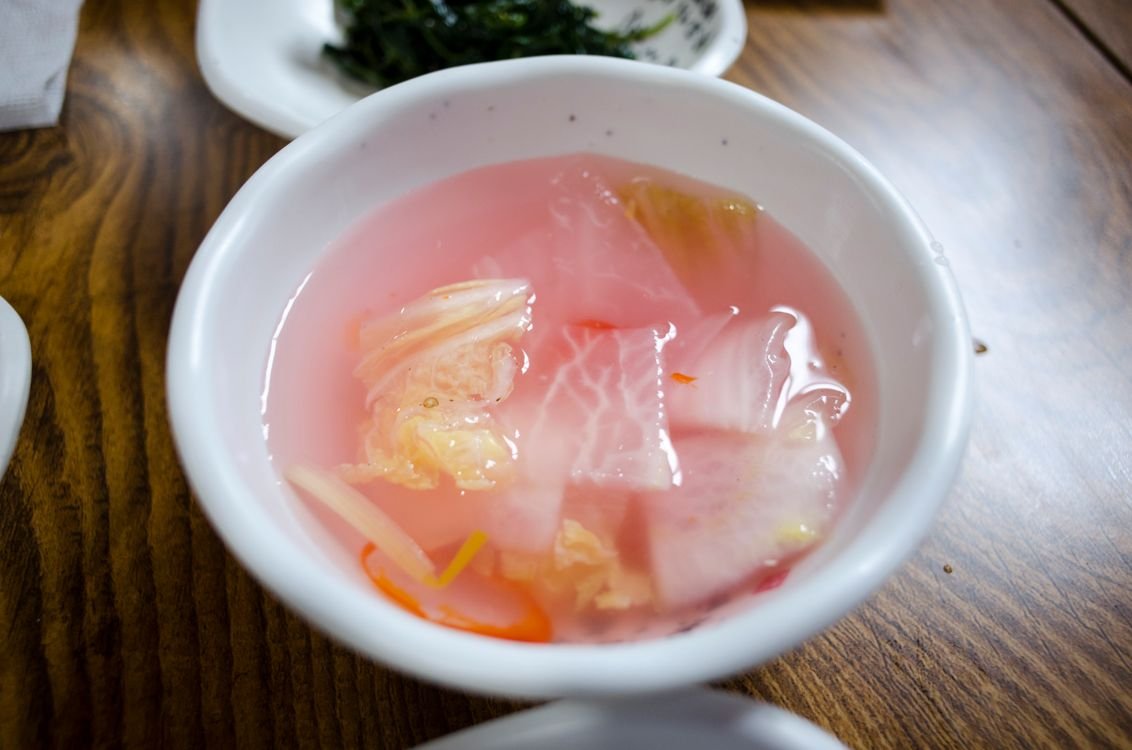
Dongchimi is Korea's cold radish water kimchi, a clear, gently sour brine poured over crisp white radish and Asian pear. It ferments for a day or two until the liquid turns tangy and refreshing, with a soft fizz on the tongue. There is no chilli heat here, only cool, clean flavour. Serve it ice cold in a small bowl, and drink the brine like a light soup.
The story behind Dongchimi
Dongchimi is one of the oldest forms of kimchi in Korea, older than the red, chilli-coated kimchi most people know today. Chillies only arrived in Korea in the sixteenth century, carried along trade routes from the Americas, so the kimchi of earlier times was white. Dongchimi, a water kimchi made with radish in a clear brine, is a survivor of that older tradition. It was made in the cold months, when radishes were at their sweetest and the brine could ferment slowly in the cool air.
In Korean homes, dongchimi is the kimchi of winter and of the royal table. The brine, called dongchimi-guksu when served with noodles, was prized by the Joseon court for its clean, refreshing flavour. Families made large jars of it in late autumn and kept them in earthenware pots buried in the ground, where the cold earth kept the ferment slow and steady. It was eaten through the winter, when fresh vegetables were scarce, and it was served with rich foods such as grilled meat and oily fish, because its cool sourness cut through the fat.
What makes dongchimi special is the brine. It is clear, lightly fizzy and gently sour, with a flavour that is hard to describe until you taste it: cool, clean, a little sweet from the pear, with a warm whisper of ginger. The radish stays crisp for weeks, and the pear softens into something almost floral. There is no heat, no fish sauce and no strong smell, so it suits people who find ordinary kimchi too fiery. It is the quiet member of the kimchi family, and often the most loved.
Cook dongchimi when the weather turns cold and radishes are in season, or whenever you want a refreshing side dish for a rich meal. It needs two days of fermenting at room temperature, then it lives happily in the fridge for weeks. It is one of those recipes that asks for almost nothing and gives back a great deal.
- Prep time
- 40 mins
- Cook time
- 0 mins
- Total time
- 40 mins
- Servings
- 4 servings
- Calories
- 60
Ingredients
- 1 kg Korean radish (mu), peeled
- 1 Asian pear, peeled and sliced
- 1 tablespoon coarse sea salt
- 1.5 litres water
- 3 tablespoons rice flour
- 1/2 onion, sliced
- 4 garlic cloves, sliced
- 1 thumb ginger, sliced
- 2 spring onions, cut into 5 cm pieces
- 1 teaspoon sugar
Instructions
- Prepare the radish first, since it is the heart of the dish. Peel the radish and cut it into thick batons, about five centimetres long and two centimetres wide, or into rounds about one centimetre thick. The pieces should be chunky, because thin slices turn soft too quickly in the brine. Put them in a large bowl and set them aside while you make the brine.
- Salt the radish and leave it to draw out water. Sprinkle the coarse sea salt over the radish pieces and toss them gently with your hands so every piece is coated. Leave the bowl for 30 minutes, turning the pieces once halfway through. You will see liquid pooling at the bottom of the bowl and the radish will bend slightly when you press it. This salting step keeps the radish crisp through the ferment.
- Make the rice flour porridge that feeds the ferment. Put the rice flour and 250 millilitres of the water in a small saucepan and whisk them together until smooth. Heat over medium heat, stirring all the time, until the mixture thickens into a thin, milky paste, about three minutes. Take it off the heat and leave it to cool completely. The porridge gives the good bacteria something to eat and helps the brine turn pleasantly sour.
- Build the brine in a large jug or bowl. Stir the remaining water, the cooled rice flour porridge, the sugar, the sliced onion, garlic and ginger together. The liquid should look milky and smell faintly of ginger and garlic. Taste it: it should be salty, like seawater, with a gentle sweetness underneath. Add a pinch more salt if it tastes flat, since the radish will soften the seasoning as it ferments.
- Pack the radish and pear into a clean glass jar. Drain the salted radish and layer it into the jar with the sliced pear and the spring onion pieces. Do not pack it too tightly, because the brine needs room to move around the pieces. Leave at least three centimetres of space at the top of the jar, since the liquid will rise and bubble as the ferment gets going.
- Pour the brine over the vegetables and weigh them down. Ladle the brine into the jar until it covers the radish by at least two centimetres. Push the pieces down with a clean spoon so none of them poke above the surface, and lay a small plate or a zip-lock bag filled with brine on top to hold everything down.
- Ferment the jar at room temperature for one to two days. Put the lid on loosely, not tight, so the gas from the ferment can escape, and set the jar on a plate to catch any drips. After a day, taste the brine: it should be starting to turn tangy, with tiny bubbles rising to the surface. When it tastes pleasantly sour, with a light fizz on the tongue, it is ready. Move the jar to the fridge to slow the ferment down.
- Serve dongchimi ice cold, in small bowls, with some of the brine ladled over the radish. The radish should be crisp and cool, the pear soft and sweet, and the brine clear and refreshing.
Pro tips
- Use Korean radish, called mu, if you can find it. It is sweeter and juicier than the small red radishes sold in supermarkets, and it stays crisp for weeks in the brine. Daikon is the closest substitute and works well.
- Cut the radish into chunky pieces, at least two centimetres wide. Thin slices turn soft within days, while thick batons stay crisp and crunchy for the full two to three weeks the jar lasts.
- Let the rice flour porridge cool completely before you mix it into the brine. Hot porridge will soften the radish and can kill the friendly bacteria that drive the ferment, so be patient and wait until it is cold.
- Keep everything under the brine. A small plate or a zip-lock bag filled with brine makes a perfect weight, and it stops the radish from drying out or growing mould on the surface.
- Taste the brine every day while it ferments. Your tongue is the best guide: when it turns pleasantly sour with a light fizz, move the jar to the fridge. A day too long at room temperature makes it sharp, while a day too short leaves it flat.
Variations & serving ideas
Change the fruit to suit the season. Asian pear is traditional, but a firm apple, a slice of quince, or a few pieces of jujube all add their own sweetness to the brine. In winter, some cooks add a small piece of chestnut for a nutty note. Keep the fruit firm and slice it thinly, so it softens gently in the brine without turning to mush. A little extra sugar, about a teaspoon, can balance a less sweet fruit.
Swap the vegetables for a different water kimchi. Cucumber makes a quick, fresh version that is ready in a day, though it softens faster than radish. Young white turnip works well, and a few leaves of napa cabbage add colour and a softer texture. Some cooks add a handful of pine nuts or a few drops of sesame oil to the finished brine for a richer flavour. The method stays the same in every version: salt, brine, weigh down, ferment, chill.
Serve dongchimi in more ways than as a side dish. The brine is wonderful poured over cold noodles in summer, with a boiled egg and cucumber on top. A spoonful of the chopped radish lifts a bowl of plain rice, and the brine makes a refreshing drink when mixed with sparkling water and ice. At a barbecue, set a bowl of dongchimi on the table next to the grilled meat; the cool sourness is the perfect counterpoint to smoky, fatty food.
For a milder version, use less garlic and ginger and add a little more pear, which sweetens the brine and softens the tang. For a prettier jar, add a few slices of red radish or a strip of red chilli for colour, though the chilli will add a little heat. If you want a faster ferment, add a spoonful of brine from a previous batch, which seeds the new jar with active cultures and can cut a day off the wait. Every jar tastes slightly different, and that is part of the pleasure.
Getting it right
The key technique is the salt. The brine must be salty enough to keep the wrong bacteria away while the good ones do their work. One tablespoon of coarse sea salt for the radish, plus the salt in the brine, is the right balance. If the brine tastes like plain water, the ferment will go wrong. If it tastes like seawater, you are on track. Always use coarse sea salt or kosher salt, never table salt, because the iodine in table salt can slow the ferment and give the brine a bitter taste.
Temperature control is the second skill. At room temperature, around 20 to 22 degrees, the ferment takes one to two days. In a warm kitchen it may take only a day, and the brine can turn too sour if you leave it out for three. Taste it every day, and move it to the fridge as soon as it tastes pleasantly tangy. The fridge does not stop the ferment, but it slows it right down, so the dongchimi stays crisp and refreshing for weeks instead of turning sharp and soft.
The common mistake is letting the vegetables float above the brine. Anything left in the air will dry out, grow mould and spoil the whole jar. Weigh the radish down with a small plate or a zip-lock bag filled with brine, and check the level every day. If the brine drops, top it up with a little salty water. The other mistake is sealing the lid too tightly during the ferment: the gas has nowhere to go, and the jar can leak or even crack. Leave the lid loose until the jar goes into the fridge.
Storing & reheating
Dongchimi keeps in the fridge for two to three weeks, and the flavour keeps developing as it sits. Store it in the same glass jar, with the lid on tight and the vegetables always under the brine. The brine will grow more sour and fizzy over time, which is normal and part of the charm. Use clean chopsticks or a clean spoon every time you serve it, so you do not introduce unwanted bacteria.
Serve it straight from the fridge, ice cold, and do not reheat it. Heat kills the live cultures and turns the radish soft and dull. If the brine gets too sour for your taste after a couple of weeks, use it as a base for cold noodle soup or a refreshing drink mixed with a little sparkling water. Dongchimi does not freeze well, because the radish turns limp when thawed.
Frequently asked questions
How is dongchimi different from kimchi?
Dongchimi is a water kimchi, which means the vegetables sit in a salted brine rather than a spicy paste. It ferments gently, so the liquid turns sour and lightly fizzy. Ordinary kimchi uses chilli flakes and fish sauce and is much hotter and stronger in flavour.
How long does dongchimi take to ferment?
Leave it at room temperature for one to two days, until the brine tastes pleasantly sour and you see tiny bubbles rising. In a warm kitchen it may take only a day, while a cool kitchen may need two. Once it tastes right, move it to the fridge to slow the ferment down.
Can children eat dongchimi?
Yes, but only while it is very fresh. If the brine has been fermenting for less than a day, it is still mild and the radish is still crunchy. After a week in the fridge it becomes properly sour, and you can serve it with cooked rice to balance the tang.
Can I ferment dongchimi in a glass jar?
Yes, a clean glass jar with a tight lid is ideal, since you can see the bubbles and check the colour of the brine. A ceramic crock works well too. Avoid metal containers, which can react with the salty, acidic brine and give the kimchi a strange taste.
Why is there a white film on my dongchimi?
A slimy or yeasty layer on the surface means the brine was not salty enough, or the vegetables were not kept under the liquid. Skim it off, add a spoonful of salt, and push everything back under the brine. If it smells rotten rather than sour, throw it away and start again.
Can I use apple instead of Asian pear?
Asian pear is traditional and adds a gentle sweetness, but a firm sweet apple such as Fuji or Gala works well too. Avoid soft apples, which turn mushy in the brine. A little extra sugar, about a teaspoon, can help if the fruit you use is not very sweet.