Dubu Kimchi Recipe
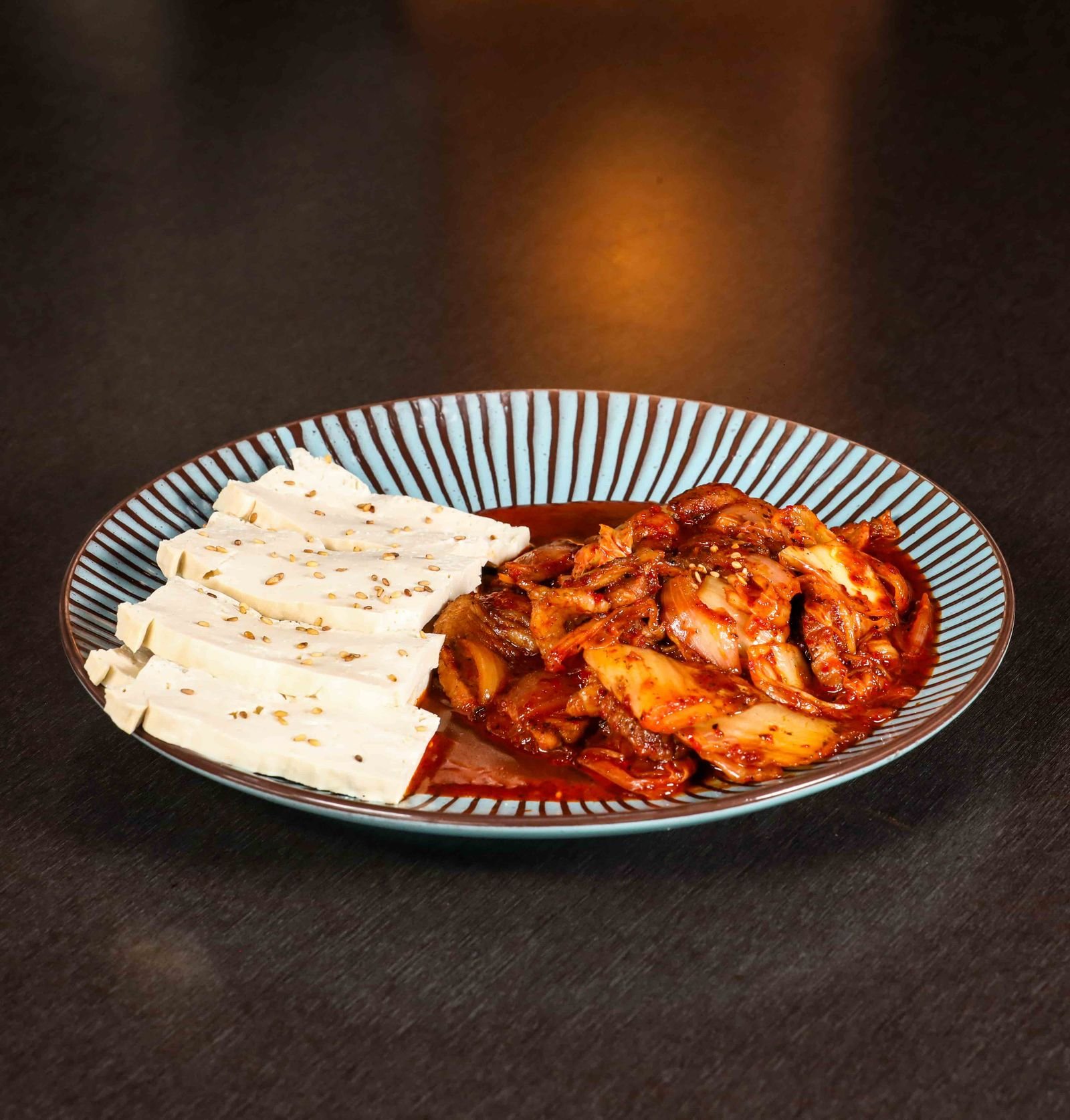
Dubu kimchi pairs cool, silky tofu with hot, tangy stir-fried kimchi in one of Korea's most loved bar snacks. The kimchi cooks down with pork belly until the edges char and the sauce turns glossy, while the tofu stays soft and mild underneath. Spoon the warm kimchi over thick slices of tofu, add a shower of sesame and green onion, and you have a dish that takes thirty minutes and tastes like a night out in Seoul.
The story behind Dubu Kimchi
Dubu means tofu and kimchi means kimchi, so the name tells you everything on the plate. The dish grew up in Korean drinking houses, where small plates of food, called anju, sit next to glasses of soju and makgeolli. Cooks needed something fast, cheap, and bold enough to stand up to strong drinks, and a pan of sizzling kimchi next to plain tofu did the job. Tofu shops and kimchi makers were everywhere, so the two ingredients were always within reach, and the pairing stuck because the contrast works so well.
In Korea, tofu and kimchi both carry deep everyday meaning. Kimchi sits on the table at nearly every meal, and families still gather in late autumn to make large batches for winter. Tofu, made fresh each morning in neighborhood shops, is a quiet staple that shows up in soups, stews, and side dishes. Putting them together on one plate feels natural, like two old friends who belong side by side. You will find dubu kimchi on pub menus from Busan to Seoul, always served the same way, with the hot pan in the middle of the table.
What makes the dish special is the contrast in every bite. The tofu is cool, soft, and almost sweet, with a clean taste that calms your palate. The kimchi is the opposite: hot from the pan, sour from fermenting, spicy from chili flakes, and rich from the pork fat it cooks in. When you lay a spoonful of warm kimchi over a slice of tofu, the heat softens the tofu a little more and the two flavors meet in the middle. A sprinkle of toasted sesame seeds and sliced green onion adds crunch and a fresh finish.
Cook this when you want something fast that still feels like a real meal. It comes together in half an hour, so it suits busy weeknights, late suppers, and last-minute guests. It also makes a great snack plate for a drinks night at home, with cold beer or soju alongside. Serve it with steamed rice and it turns into a light dinner; serve it on its own and it is the kind of food people keep reaching for while they talk.
- Prep time
- 15 mins
- Cook time
- 15 mins
- Total time
- 30 mins
- Servings
- 4 servings
- Calories
- 380
Ingredients
- 400 g firm tofu, cut into thick slices
- 2 cups well-fermented napa cabbage kimchi, roughly chopped
- 150 g pork belly, thinly sliced
- 1 tablespoon vegetable oil
- 1 tablespoon gochujang (Korean chili paste)
- 1 tablespoon soy sauce
- 1 teaspoon sugar
- 2 garlic cloves, minced
- 1 teaspoon sesame oil
- 1 green onion, thinly sliced
- 1 teaspoon toasted sesame seeds
- Steamed rice, to serve (optional)
Instructions
- Drain the tofu and pat it dry with paper towels, then cut it into slices about 1 cm thick. Dry tofu browns better and holds its shape in the pan, so take a minute over this step. Set the slices on a plate while you get the kimchi ready.
- Chop the kimchi into bite-size pieces and save any juice left in the container. The juice carries most of the sour, spicy flavor, so pour it into a small bowl instead of throwing it away. If the kimchi is very sour, a pinch of sugar later will round it out.
- Heat the oil in a large pan over medium-high heat and add the pork belly in a single layer. Let it cook for 4 to 5 minutes, turning once, until the edges crisp and the fat starts to melt into the pan. You should hear a steady sizzle and see the slices turn golden at the corners.
- Add the garlic and stir for 30 seconds until it smells sweet and nutty. Garlic burns fast at this heat, so keep it moving and do not walk away from the pan. The moment it turns pale gold, move on to the next step.
- Tip in the chopped kimchi with its juice, the gochujang, soy sauce, and sugar. Stir everything together so the pork and kimchi are coated in the red sauce. The pan will hiss and steam as the cold kimchi hits the hot fat.
- Lower the heat to medium and cook for 6 to 8 minutes, stirring now and then. The kimchi should soften, darken a shade, and smell tangy and slightly smoky. Taste a piece: it should be sour, spicy, and rich, with the pork fat tying it all together.
- While the kimchi cooks, warm a second pan over medium heat with a thin film of oil. Lay the tofu slices in and cook for 2 to 3 minutes per side until they are lightly golden. Handle them gently with a wide spatula, because warm tofu breaks easily.
- Arrange the tofu slices on a serving plate and spoon the hot kimchi and pork over the top. Drizzle with sesame oil and scatter the green onion and sesame seeds over everything. Serve at once, while the kimchi is still steaming and the tofu is warm.
- Eat it by placing a spoonful of kimchi on each slice of tofu, like a small open sandwich. The cool tofu and hot kimchi should meet in one bite. Put steamed rice on the table for anyone who wants to turn it into a fuller meal.
Pro tips
- Use kimchi that has fermented for at least a few weeks. Young, mild kimchi stays crunchy and sweet, but older kimchi gives you the sour punch this dish needs.
- Press the tofu gently between paper towels before slicing. Less water in the tofu means better browning and a firmer bite that holds up under the hot kimchi.
- Cut the pork belly thin so it crisps fast. Thick pieces stay chewy and release less fat into the pan, which leaves the kimchi less rich.
- If the pan looks dry while the kimchi cooks, add a splash of the reserved kimchi juice or water. A little liquid keeps the sauce glossy instead of letting it catch and burn.
- Serve the dish the moment it is plated. The contrast between warm kimchi and cool tofu fades fast, and the tofu soaks up the sauce if it sits too long.
Variations & serving ideas
The most common change is to leave the pork out. A meat-free version cooks the kimchi in a spoonful of oil with a little extra sesame oil at the end, and it still tastes rich because the fermented kimchi carries so much flavor on its own. Mushrooms make a good stand-in too: sliced king oyster mushrooms brown in the same pan and soak up the sauce. If you eat fish, a few spoonfuls of canned tuna stirred in at the end is a popular pub variation.
You can swap the protein for whatever you have. Thinly sliced chicken thigh works, though it needs a minute longer to cook through. Spam, cut into small cubes and crisped first, is a much-loved shortcut in Korean home kitchens. For a lighter plate, skip the meat entirely and add a soft-boiled egg on the side; the runny yolk mixes into the sauce in a good way.
Serve it as part of a bigger table or on its own. As a snack it needs nothing but drinks and a few small plates around it. As dinner, put it next to steamed rice, a simple soup, and one or two vegetable sides. The rice is useful: it soaks up the kimchi sauce and turns a snack into a meal. Cold cucumber or bean sprouts on the side cool the heat down.
Pair it with drinks that cut through the spice. Cold beer is the classic match, and makgeolli, the milky rice wine, softens the chili heat with its gentle sweetness. Soju is the traditional pub partner, served in small glasses alongside the food. If you skip alcohol, barley tea or a cold sparkling water with lemon does the same job of clearing your palate between bites. Keep the glasses small and the food coming, and the table stays lively until late. A pot of hot barley tea works for the whole table if children are eating too.
Getting it right
The key technique is cooking the kimchi long enough. Raw kimchi is crunchy and sharp; cooked kimchi turns soft, mellow, and slightly sweet, with the chili flavor sinking deeper into the leaves. Give it a full 6 to 8 minutes over medium heat and stir it often so the edges touch the hot pan. You are looking for a glossy sauce and kimchi that has lost its raw crunch but still holds its shape.
Heat control matters in both pans. The kimchi pan starts hot so the pork crisps, then drops to medium so the sauce simmers without burning. The tofu pan stays at medium all the way through: too hot and the outside burns before the center warms, too cool and the slices steam instead of browning. Listen to the pans. A loud, angry sizzle means turn the heat down, while silence means it needs more.
The common mistakes are easy to avoid. Do not crowd the pork or it steams instead of crisping; cook it in one layer. Do not skip drying the tofu, or it will stick and fall apart when you flip it. And do not rush the kimchi: pulling it off the heat too early leaves it raw-tasting and sharp. If the sauce tastes too sour, a pinch more sugar fixes it; if it tastes flat, a splash of kimchi juice wakes it up.
Storing & reheating
Leftovers keep well in the fridge for up to 3 days in a sealed container. Store the tofu and the kimchi separately if you can, because the tofu soaks up sauce and turns soft overnight. The kimchi actually improves after a day as the flavors settle, so the leftovers can taste even better than the first serving.
Reheat the kimchi in a pan over medium heat for 3 to 4 minutes until it steams, and warm the tofu gently in a separate pan or the microwave for a minute. Do not freeze this dish: frozen tofu turns spongy and the kimchi loses its texture. If you have a lot of kimchi left, stir it into fried rice the next day instead.
Frequently asked questions
What is dubu kimchi?
Dubu kimchi is a Korean dish of warm, stir-fried kimchi served over slices of soft tofu, often with pork belly. It is a classic anju, the food served with drinks, and it takes about half an hour to make at home.
Can I make dubu kimchi without pork?
Yes, it works well without meat. Cook the kimchi in oil with a little extra sesame oil, and add mushrooms or tofu for substance. The fermented kimchi gives the dish most of its flavor, so you will not miss the pork.
What kind of tofu should I use?
Firm or medium-firm tofu works best because it holds its shape when sliced and fried. Silken tofu is too soft and will fall apart in the pan. Pat the tofu dry before cooking so it browns instead of steaming.
How spicy is dubu kimchi?
It is medium-spicy from the chili flakes in the kimchi and the gochujang. The tofu cools each bite down, so it feels gentler than it looks. Use less gochujang or a milder kimchi if you want a softer heat.
What do you serve with dubu kimchi?
Steamed rice is the usual partner, along with a simple soup and a vegetable side. As a snack it needs only cold beer, makgeolli, or soju. Cucumber or bean sprouts on the side help cool the spice.
Can I use fresh kimchi instead of aged kimchi?
You can, but the dish will taste milder and less sour. Aged kimchi, fermented for several weeks, gives the deep tangy flavor that makes dubu kimchi special. If your kimchi is young, add a splash of rice vinegar.