Eomuk Guk Recipe
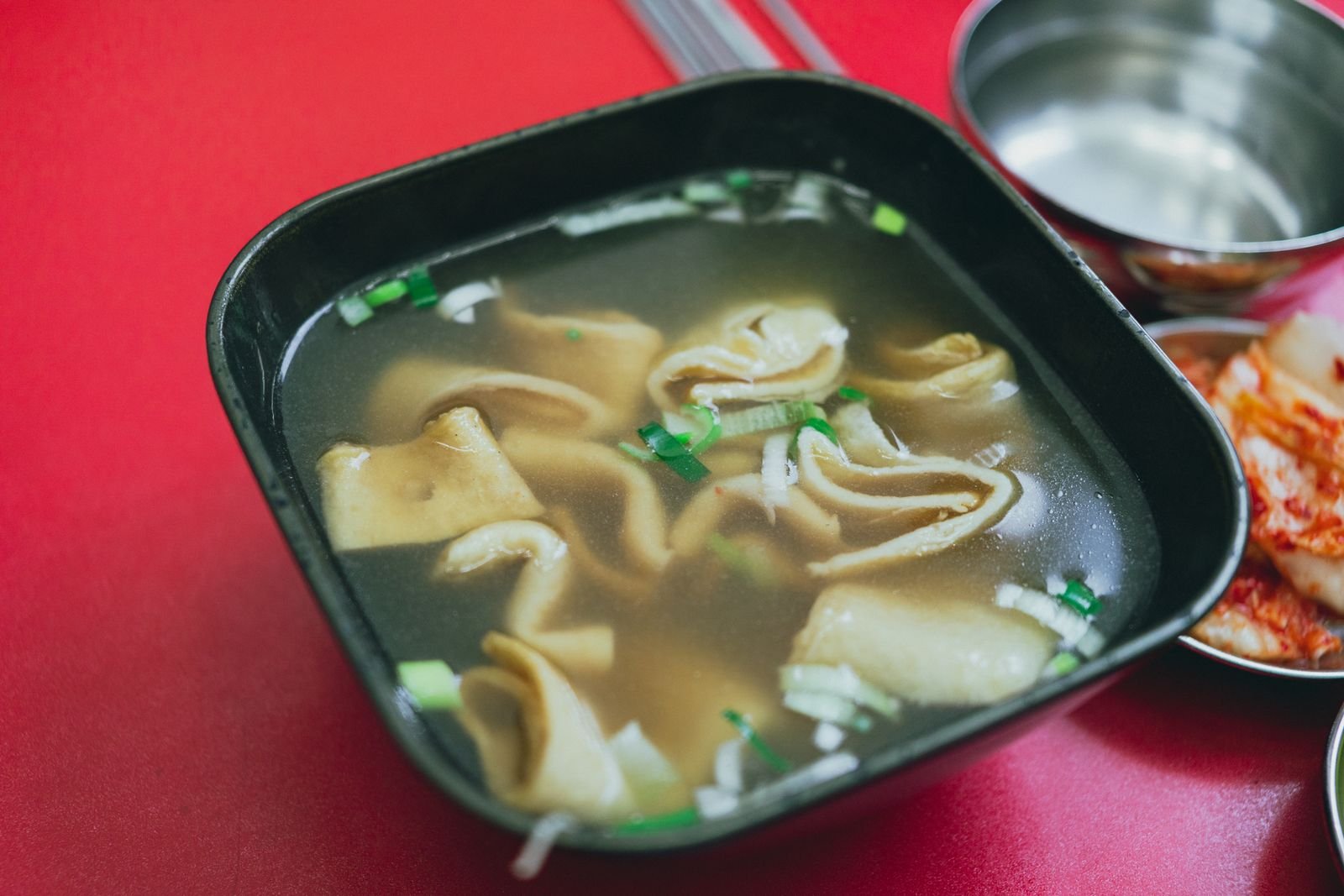
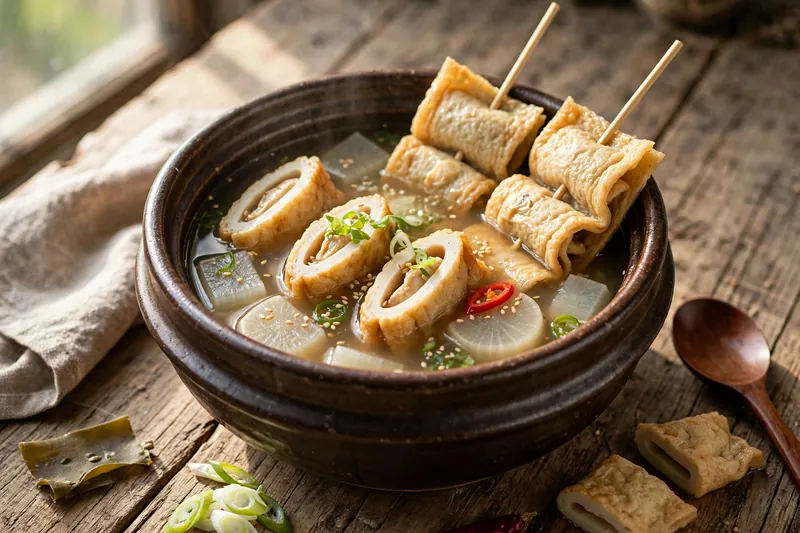
Eomuk guk is Korea's warming fish cake soup: chewy fish cake skewers simmered in a clear anchovy and kelp broth with sweet radish. The broth tastes clean and deeply savory, the fish cakes turn soft and springy, and a cup of it warms you from the inside out. It is the soup Korean street stalls ladle out on cold nights, and it comes together in forty minutes at home.
The story behind Eomuk Guk
Eomuk means fish cake and guk means soup, and this dish is one of Korea's great street foods. Fish cakes came to Korea from Japan in the early twentieth century, where a similar dish called oden simmers fish cakes in broth. Korean cooks made it their own with a clear anchovy and kelp broth, sweet radish, and fish cakes folded onto long wooden skewers. What started as a borrowed idea became something entirely Korean.
Walk past a pojangmacha, one of the orange-tented street stalls, on a cold evening and you will smell eomuk guk before you see it. Steam rises from a big pot, skewers stand in rows like a small forest, and customers eat standing up, dipping the fish cake into the broth and sipping from paper cups. Office workers stop for a skewer on the way home, students share a pot after class, and on rainy nights the stalls fill up with people waiting out the weather.
What makes the soup special is how little it needs to taste so good. The broth is built from just a few things: dried anchovies for depth, kelp for a clean sea flavor, radish for sweetness, and a little soy sauce for salt. Nothing is fried, nothing is heavy, and the fish cakes turn soft and springy as they soak up the broth. It is the kind of food that tastes simple on the first spoonful and keeps you coming back for another.
Cook this on a cold day, when you want something warm but light. It makes a gentle lunch with rice and kimchi, a soothing supper when you feel tired or under the weather, and a fun snack to share: set the pot in the middle of the table and let everyone pull out their own skewer. Children love the soup because it is mild, and adults love it because it tastes like a winter evening in Seoul.
- Prep time
- 15 mins
- Cook time
- 25 mins
- Total time
- 40 mins
- Servings
- 4 servings
- Calories
- 220
Ingredients
- 300 g eomuk (Korean fish cake sheets)
- 8 cups water (2 litres)
- 15 large dried anchovies, heads and black guts removed
- 1 piece dried kelp (dashima), about 10 cm square
- 200 g Korean radish (mu), peeled and cut into chunks
- 1 small onion, halved
- 1 tablespoon soy sauce
- 1 tablespoon soup soy sauce (guk-ganjang)
- 2 garlic cloves, minced
- 2 green onions, chopped
- Salt and ground black pepper, to taste
- 4 wooden skewers
- 1 small dried red chili (optional)
Instructions
- Snap the heads off the dried anchovies and pull out the dark guts with your fingers. This takes a few minutes, but it keeps the broth clean-tasting instead of bitter. Put the anchovies, kelp, onion, and radish chunks into a large pot with the water.
- Bring the pot to a boil over high heat, then turn it down to a gentle simmer. Skim off any foam that rises to the surface with a spoon. After 10 minutes, lift out the kelp and throw it away; kelp left in too long turns the broth bitter and slimy.
- Simmer the broth for 5 more minutes, then strain it through a fine sieve into a clean pot. Press the radish chunks gently to get their sweet juice out, then set the radish aside. You should have a clear, golden broth that smells of the sea.
- Season the broth with both soy sauces and the minced garlic. Taste it now: it should be lightly salty and savory, not strong. The fish cakes will add their own salt as they cook, so keep the seasoning gentle at this stage.
- Cut the fish cake sheets into strips about 3 cm wide. Bring a small pot of water to a boil and blanch the strips for 1 minute to wash off the surface oil. Drain them well. This step keeps the soup broth clear instead of greasy.
- Fold each strip back and forth like a ribbon and thread it onto a wooden skewer. Push the folds close together so the skewer holds them firmly. Four skewers, each with two or three strips, is right for four servings. If you prefer, cut the strips into squares and skip the skewers.
- Slide the fish cake skewers and the reserved radish chunks into the simmering broth. Cook for 10 minutes over medium heat, turning the skewers once so they cook evenly. The fish cakes should puff up slightly and turn soft and springy, and the radish should be tender enough to cut with a spoon.
- Taste the broth again and adjust with salt, pepper, or a splash more soy sauce. Drop in the dried chili now if you want a gentle warmth. Turn off the heat and let the soup rest for 2 minutes so the flavors settle together.
- Ladle the hot broth into deep bowls and lay a fish cake skewer across each one. Scatter the chopped green onion over the top and serve at once, with kimchi and steamed rice on the side. For street-stall style, serve the skewer in a tall cup with the broth poured alongside for sipping.
Pro tips
- Remove the heads and black guts from the dried anchovies before cooking. This small job takes five minutes and is the difference between a clean broth and a bitter one.
- Soak the wooden skewers in water for 10 minutes before threading the fish cakes. Wet skewers will not burn or splinter, and the fish cakes slide off easily when you eat them.
- Blanch the fish cake strips before they go into the soup. One minute in boiling water removes the surface oil and keeps the broth clear and golden.
- Taste the broth twice: once after seasoning and once at the end. The fish cakes add salt as they cook, so the final taste is always saltier than the first.
- Keep the radish chunks in the soup. They turn sweet and tender in the broth, and they are one of the best parts of the bowl.
Variations & serving ideas
Add tteok, Korean rice cakes, for a heartier soup. Drop in a handful of sliced rice cakes with the fish cakes and simmer until they turn soft and chewy, about 8 minutes. Udon or wheat noodles also work: cook them separately, put them in the bowl first, and ladle the soup and fish cakes over the top. Sliced mushrooms, spinach, or bean sprouts add color and texture without changing the character of the dish.
Make a spicy version by stirring a spoonful of gochujang or a spoonful of chili flakes into the broth. The heat suits the rich fish flavor and turns the soup into something bolder. For a richer bowl, crack an egg into the simmering broth and let it poach for 3 minutes. A splash of sesame oil at the end adds a nutty warmth that pairs well with the sea flavor of the anchovies.
Serve it as a hot pot for a group. Put the pot in the middle of the table over a small burner and let everyone fish out their own skewers with tongs. Set out extra fish cakes, rice cakes, mushrooms, and greens so people can add what they like. It turns a simple soup into a slow, sociable meal that stretches across an evening.
Pair it with the usual Korean table: steamed rice, kimchi, and a couple of small vegetable sides. A cup of hot barley tea suits the mild soup, and on a cold night a small glass of soju is the traditional street-stall partner. If you serve it as a snack, skip the rice and hand everyone a paper cup of broth alongside their skewer, exactly like the stalls in Seoul.
Getting it right
The key technique is building a clear, clean broth. Start with cold water and bring it up to a gentle simmer, never a rolling boil, so the broth stays clear instead of cloudy. Skim off the foam that rises in the first few minutes. Take the kelp out after 10 minutes: it gives up its flavor quickly, and leaving it in makes the broth bitter and slimy. Strain the broth before you add the fish cakes so no anchovy bits cloud the soup.
Heat control matters with the fish cakes too. They need a steady, gentle simmer, not a hard boil. Ten minutes is enough for them to puff up, soften, and soak in the broth flavor. Cook them longer and they turn rubbery and tough; cook them less and they stay flat and bland in the middle. Watch for the change: when the strips swell slightly and feel springy to the touch, they are ready.
The common mistakes are easy to avoid. Do not skip cleaning the anchovies, because the heads and guts are the bitter part. Do not skip blanching the fish cakes, or their surface oil will film the broth. And do not over-salt early: the fish cakes release salt as they cook, so season lightly at the start and adjust at the end. If the broth tastes flat, a splash of soup soy sauce wakes it up without darkening the soup.
Storing & reheating
Eomuk guk keeps in the fridge for up to 3 days in a sealed container. Store the fish cakes in the broth so they stay moist, but lift out the skewers first so they do not poke through the container. The broth tastes even better the next day after the flavors have had time to blend.
Reheat the soup gently in a pot over medium heat for 5 minutes until it steams; do not boil it hard or the fish cakes turn rubbery. You can freeze the broth on its own for up to a month, but freeze the fish cakes separately if you must, because they go spongy when frozen in soup. Add fresh fish cakes when you reheat the thawed broth.
Frequently asked questions
What is eomuk guk?
Eomuk guk is Korean fish cake soup. Sheets of eomuk, a mild fish cake made from pureed white fish, are folded onto skewers and simmered in a clear anchovy and kelp broth with radish. It is one of Korea's most loved street foods and a common home soup.
Where can I buy eomuk fish cakes?
Look in the frozen or chilled section of a Korean or Asian grocery store, where fish cake sheets are sold in packs. They come flat, rolled, or already cut into strips. If you cannot find them, Japanese oden fish cakes or frozen fish balls are a reasonable stand-in.
Can I use store-bought broth instead?
You can, but the homemade broth is what makes this soup special and it only takes 15 minutes. Dried anchovies and kelp give a clean, savory flavor that stock cubes cannot match. If you must use a shortcut, use a light dashi or fish stock and add the radish for sweetness.
Is eomuk guk spicy?
No, the classic version is not spicy at all. The broth is clear, mild, and savory, which is why children and older people love it. If you like heat, add a dried red chili to the broth or serve chili flakes on the side for anyone who wants them.
Can I make a vegetarian version?
Yes. Simmer dried shiitake mushrooms and kelp in water for the broth, and use a light soy sauce for seasoning. The fish cakes are the only animal ingredient, so swap them for fried tofu puffs or thick mushroom slices and the soup stays fully meat-free.
Is eomuk guk good for cold days or when I feel unwell?
Yes, it is perfect for cold days. The hot broth, the soft fish cakes, and the sweet radish make it gentle comfort food, and it is light enough to eat when your appetite is low. Keep the seasoning mild and serve it with plain rice.