Galbijjim Recipe
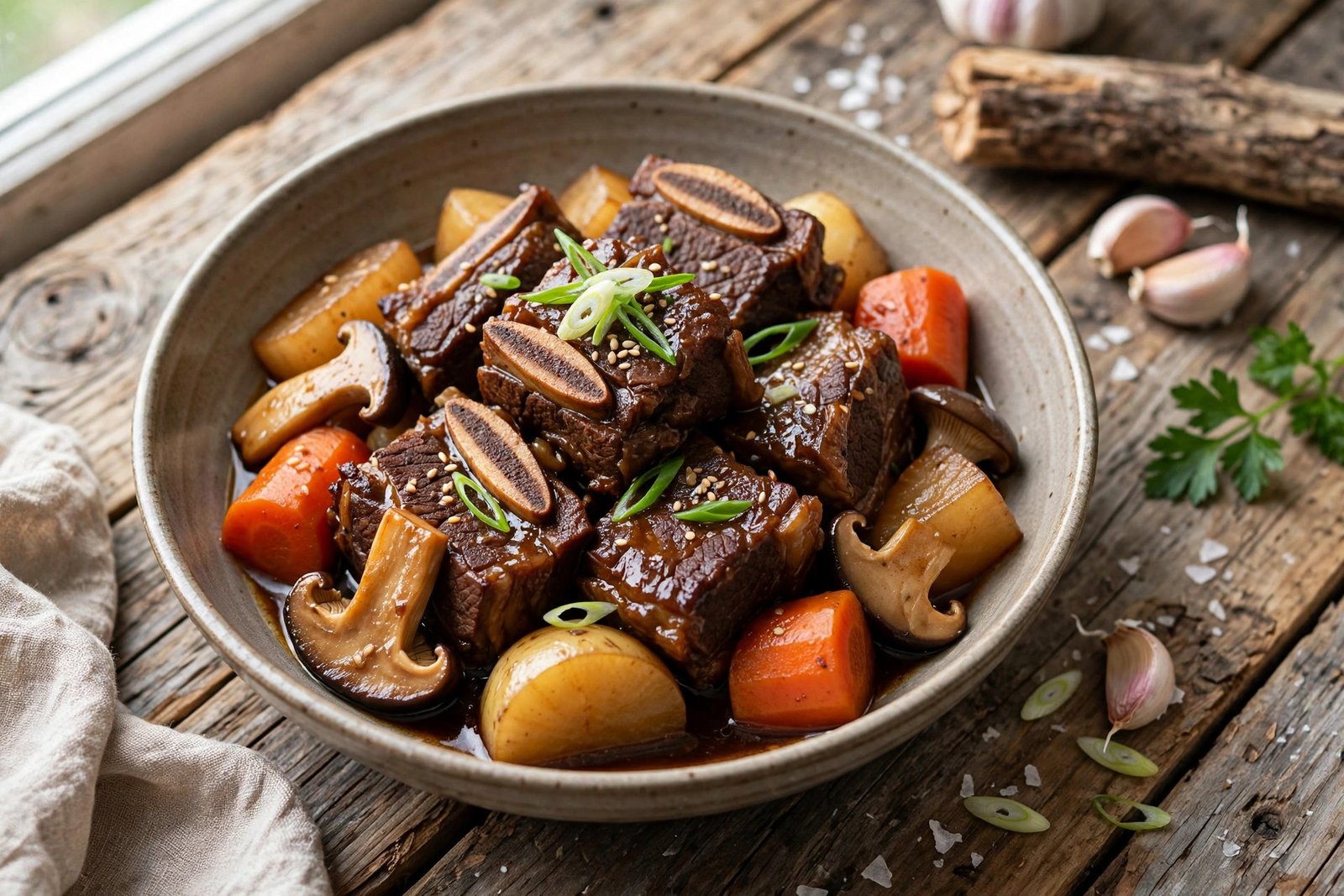
Galbijjim is Korea's celebratory braised short rib dish, slow-cooked until the meat slips from the bone and the sauce turns glossy and rich. A sweet-savoury soy marinade, soft carrots, and chestnuts give it a warm, festive depth. It is a showstopper for family gatherings, and it tastes even better the next day.
- Prep time
- 30 mins
- Cook time
- 1 hr 30 mins
- Total time
- 2 hrs
- Servings
- 4 servings
- Calories
- 680
Ingredients
- 1.2 kg beef short ribs, cut into 5 cm pieces
- 2 medium carrots, cut into large chunks
- 1 large onion, quartered
- 100 g peeled chestnuts (fresh or vacuum-packed)
- 4 dried shiitake mushrooms, soaked and halved
- 80 ml soy sauce
- 2 tablespoons honey
- 1 Asian pear, grated
- 4 cloves garlic, minced
- 1 tablespoon sesame oil
- 1 teaspoon ground black pepper
- 500 ml water
- 2 spring onions, sliced
- 1 tablespoon toasted sesame seeds
Instructions
- Soak the short ribs in cold water for 30 minutes to draw out excess blood, then drain and rinse well.
- Blanch the ribs in boiling water for 5 minutes, drain, and rinse again for a clean, clear braising liquid.
- Whisk together the soy sauce, honey, grated pear, garlic, sesame oil, and black pepper to make the braising sauce.
- Place the ribs in a heavy pot, pour over the sauce and water, and bring to a gentle boil over medium heat.
- Cover, reduce the heat to low, and braise for 1 hour, turning the ribs occasionally so they cook evenly.
- Add the carrots, onion, chestnuts, and mushrooms, then continue braising uncovered for about 30 minutes until the meat is tender and the sauce has thickened.
- Skim any excess fat, spoon the glossy sauce over the ribs, and garnish with spring onions and sesame seeds before serving with rice.
Pro tips
- Soaking and blanching the ribs first is the key to a clean-tasting sauce rather than a greasy one.
- The grated pear is a traditional tenderiser and sweetener, so do not skip it if you can find one.
- Let the finished dish rest for 15 minutes before serving so the sauce settles and the flavours deepen.
- Leftovers reheat beautifully and the sauce thickens nicely overnight in the fridge.
Frequently asked questions
What cut of beef is best for Galbijjim?
Bone-in beef short ribs are ideal because the bone and connective tissue melt down during braising, giving the sauce body and the meat a silky texture.
Can I make Galbijjim in a pressure cooker?
Yes, cook at high pressure for about 35 minutes, then finish uncovered for 10 to 15 minutes with the vegetables until the sauce thickens.
Is Galbijjim very sweet?
It is sweet-savoury rather than sugary, balanced by soy sauce, garlic, and sesame. You can reduce the honey slightly if you prefer a more savoury finish.
What do I serve with Galbijjim?
Steamed rice is essential, plus simple banchan such as kimchi or pickled radish to cut through the richness.