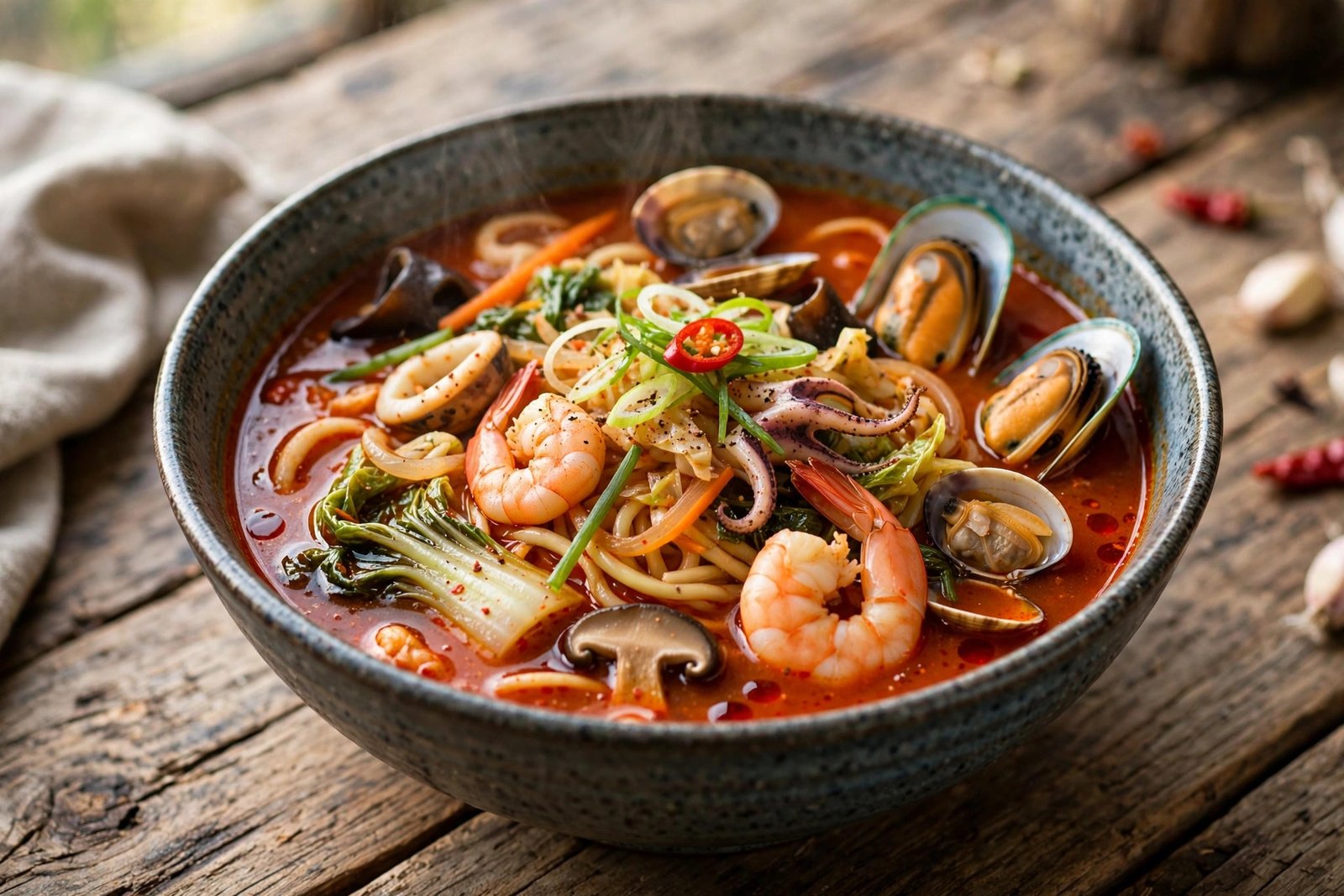
Haemul Tang Recipe
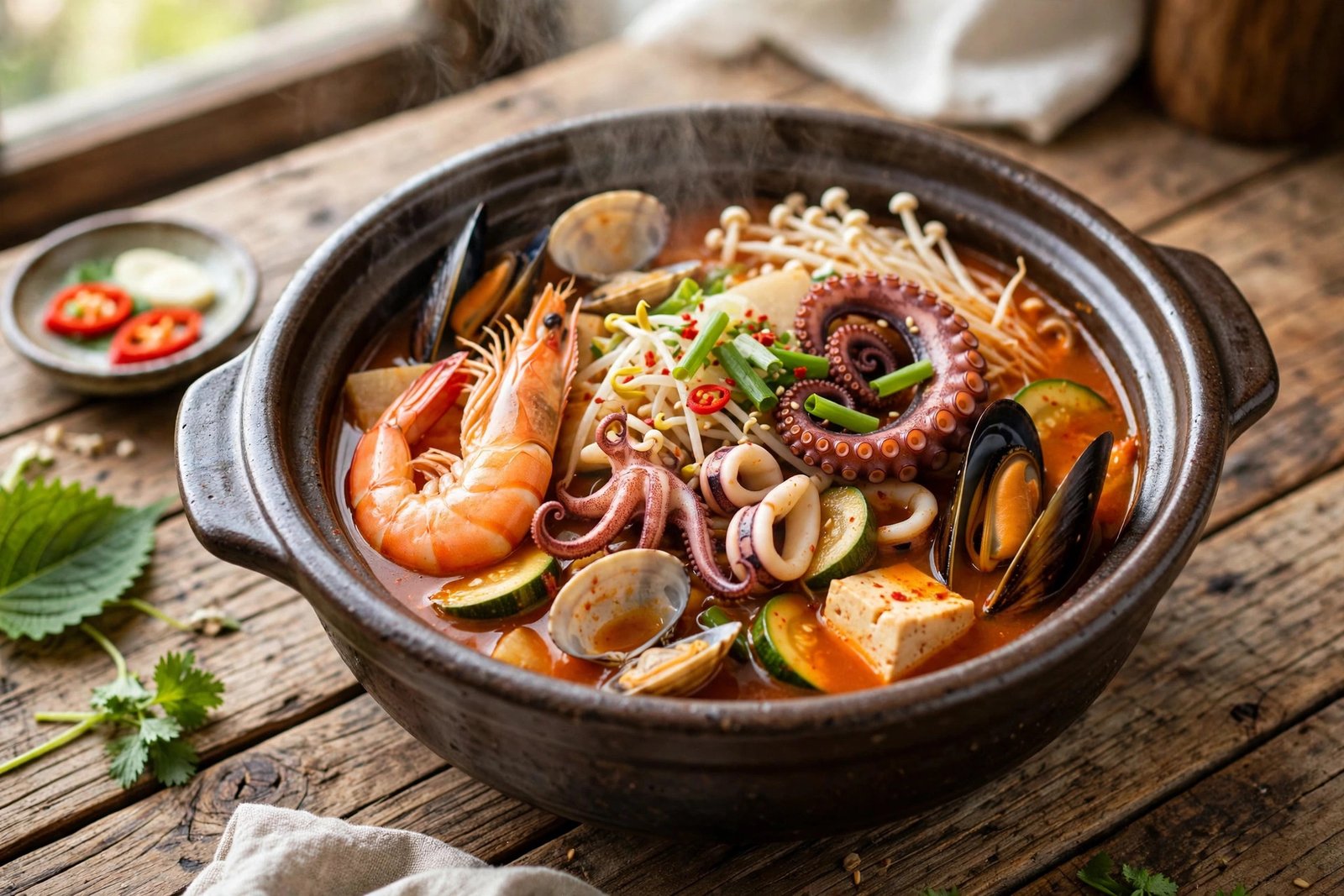
A fiery Korean seafood stew brimming with shrimp, mussels, clams, and fish in a blazing red broth. Haemul tang is bold, briny, and deeply warming — the kind of dish that turns a cold evening around. Serve it steaming with rice.
- Prep time
- 15 mins
- Cook time
- 30 mins
- Total time
- 45 mins
- Servings
- 4 servings
- Calories
- 380
Advertisement
Ingredients
- 300g firm white fish fillets (cod or snapper), cut into chunks
- 200g large shrimp, peeled and deveined
- 300g mussels, scrubbed and debearded
- 200g clams, scrubbed
- 150g squid, cleaned and cut into rings
- 1 liter anchovy stock or light fish stock
- 1 medium onion, sliced
- 200g Korean radish (mu), cut into thin half-moons
- 100g enoki mushrooms, 1 green chili and 2 red chiles, sliced
- 3 tablespoons gochugaru, 2 tablespoons gochujang
- 4 garlic cloves, minced
- 1 tablespoon soy sauce
- 2 spring onions, chopped
- Cooked rice, to serve
Instructions
- Scrub the mussels and clams, discarding any with cracked shells or that do not close when tapped.
- Combine the stock, onion, radish, garlic, gochugaru, gochujang, and soy sauce in a wide pot and bring to a boil.
- Simmer for 10 minutes until the radish turns translucent and the broth glows red.
- Add the fish chunks and squid and simmer for 4 minutes.
- Nestle in the shrimp, mussels, and clams, cover, and cook 5 minutes until the shellfish open.
- Discard any shellfish that stayed shut.
- Stir in the enoki mushrooms, green and red chiles, and spring onions.
- Serve the stew bubbling in the pot with rice for sopping up the fiery broth.
Advertisement
Pro tips
- Only cook the shellfish until they open — overcooked shrimp turn rubbery.
- Make sure every clam and mussel is scrubbed and soaked to remove grit.
- The radish sweetens the broth, so do not skip it.
- Taste before adding salt; the stock and shellfish bring plenty of saltiness.
Frequently asked questions
What fish is best for haemul tang?
Any firm white fish works — cod, snapper, or sea bass. Avoid delicate flaky fish that disintegrates in the boil.
Is haemul tang spicy?
Very — the gochugaru and fresh chiles bring real heat. Reduce them by half for a milder stew the whole family can enjoy.
Can I skip the anchovy stock?
No — the anchovy stock can be replaced with a simple vegetable stock or even water, since the seafood itself flavors the broth.
How long do leftovers keep?
Refrigerate up to 2 days. Reheat gently and expect the seafood texture to soften slightly on the second day.