Seafood Pajeon Recipe
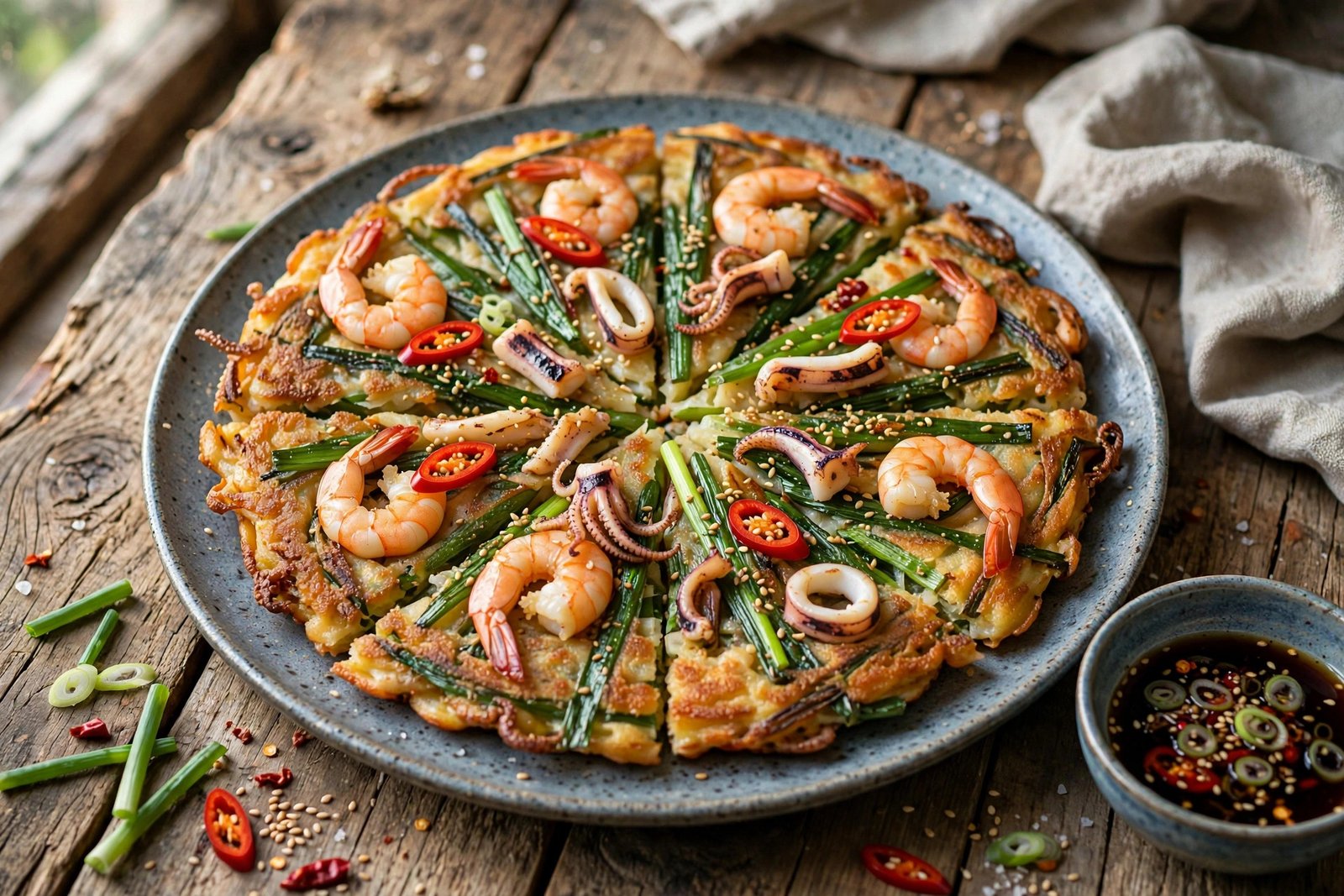
Haemul pajeon is Korea's irresistible seafood scallion pancake — crisp-edged, golden, and loaded with shrimp, squid, and whole green onions. It is the snack everyone reaches for on rainy days, especially with a sharp soy-vinegar dipping sauce and a glass of something cold.
- Prep time
- 15 mins
- Cook time
- 20 mins
- Total time
- 35 mins
- Servings
- 4 servings
- Calories
- 380
Ingredients
- 1 cup all-purpose flour
- 2 tablespoons rice flour (for extra crispness)
- 1 cup cold water
- 1 large egg, beaten
- 1/2 teaspoon salt
- 8 whole green onions, trimmed
- 1/2 lb (225 g) mixed seafood (shrimp, squid, scallops), bite-size
- 2 cloves garlic, minced
- 4 tablespoons neutral oil, divided
- 3 tablespoons soy sauce
- 1 tablespoon rice vinegar
- 1 teaspoon toasted sesame seeds
- 1/2 teaspoon sugar
Instructions
- Whisk the flour, rice flour, salt, egg, and cold water into a thin batter. Stir in the minced garlic.
- Mix the soy sauce, vinegar, sesame seeds, and sugar in a small bowl for the dipping sauce.
- Heat 2 tablespoons of oil in a large skillet over medium-high heat until shimmering.
- Pour in half the batter and spread it thin. Lay half the green onions across the surface and scatter half the seafood over them.
- Cook undisturbed 3 to 4 minutes until the bottom is deep golden and crisp around the edges.
- Slide a spatula under the pancake and flip confidently. Cook 2 to 3 minutes more, pressing gently so the seafood cooks through.
- Transfer to a cutting board and repeat with the remaining batter, onions, and seafood.
- Cut into wedges or strips with kitchen scissors and serve immediately with the dipping sauce.
Pro tips
- Cold water and rice flour are the secret to a shatteringly crisp crust.
- Dry the seafood well before adding it — extra moisture makes the pancake soggy.
- Do not crowd the pan; two thin pancakes always beat one thick one.
- Lay the green onions lengthwise for the classic pajeon look.
Frequently asked questions
What seafood works best in pajeon?
Any quick-cooking seafood works: shrimp, squid, mussels, or scallops. Frozen mixed seafood, thawed and well drained, is a perfectly good shortcut.
How do I get the pancake really crispy?
A hot pan, thin batter, and patience. Do not flip early — let the edges turn deep golden before turning. A little extra oil makes the crispiest crust.
Is it supposed to be eaten in pieces?
Yes, and that is part of its charm. Traditionally pajeon is served in rough pieces — cut it with kitchen scissors or a pizza cutter right in the pan.
How should I reheat leftovers?
Leftovers go soft quickly. Reheat in a dry skillet over medium heat, not the microwave, to bring back some of the crispness.