Tub Tim Krob Recipe
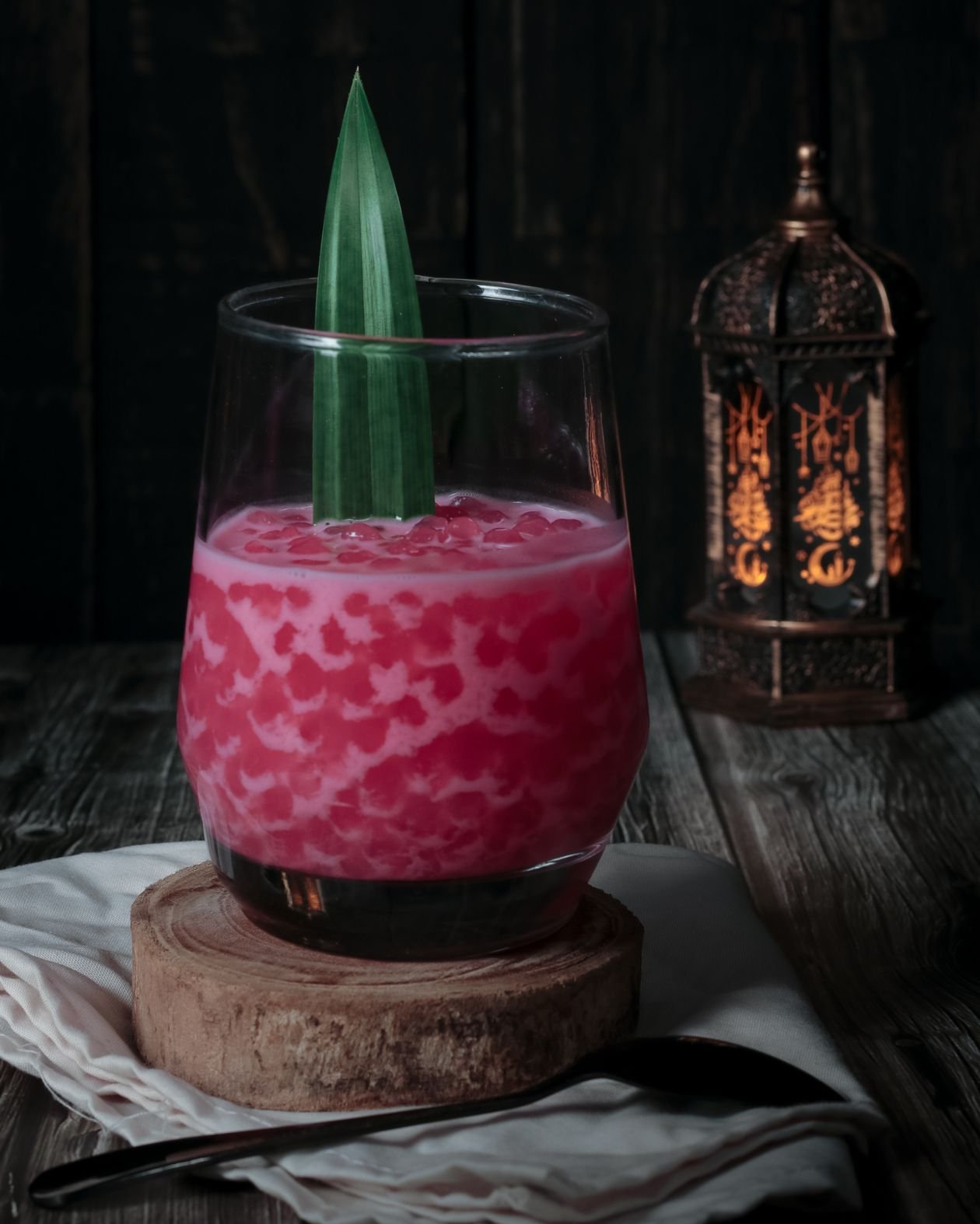
Cold, sweet coconut milk, chewy pink rubies that pop between your teeth, and a spoonful of crushed ice. Tub Tim Krob is the Thai dessert you reach for on a hot afternoon. The rubies are just water chestnuts coated in tapioca starch and tinted rose-red, so they stay crisp inside and slippery outside. It looks like a bowl of jewels and tastes like summer.
The story behind Tub Tim Krob
Tub Tim Krob translates from Thai as crispy rubies, and the name tells you exactly what to expect. The rubies are cubes of water chestnut, dyed a deep rose red, rolled in tapioca starch, and boiled until the coating turns clear and glassy. Bite one and you get two textures at once: a soft, slippery skin and a cool, crisp centre that snaps. Water chestnuts came to Thai cooking through Chinese traders centuries ago, and tapioca came later with cassava from South America, so the dessert is a meeting point of two food histories in one small bowl.
Walk through a Thai night market and you will hear the dessert before you see it. Vendors shake metal cups of crushed ice, ladle coconut milk from big steel pots, and scoop rubies from glass jars where they sit in cold syrup. The dessert is sold everywhere: outside schools at lunchtime, at temple fairs, and from carts that park by the beach in the late afternoon. It is cheap, fast, and cold, which is exactly what you want when the air is thick and your shirt is sticking to your back.
What makes Tub Tim Krob special is the contrast in every spoonful. The rubies are the star: crisp, cold, and faintly sweet, with a chew that comes from the tapioca rather than from the chestnut itself. The coconut milk is the quiet partner. It is salted just enough to make the sugar taste stronger, and it coats the rubies so each bite is creamy as well as crunchy. Then the ice melts into the milk as you eat, thinning it into something you can drink from the bowl when the rubies are gone.
This is a dessert for hot days and full tables. Make it after a spicy Thai meal, when everyone needs something cold and sweet to settle the heat. It works for a dinner party too, because you can cook the rubies ahead and keep them in cold water, then build the bowls in two minutes when people are ready. Kids love the colour, adults love the texture, and nobody needs a recipe card to understand it. One bowl is rarely enough, so plan on seconds.
- Prep time
- 30 minutes
- Cook time
- 20 minutes
- Total time
- 50 minutes
- Servings
- 4 servings
- Calories
- 320
Ingredients
- 1 can (225 g) water chestnuts, drained and rinsed
- 1/2 teaspoon red food coloring
- 1 cup (120 g) tapioca starch, plus a little extra for dusting
- 400 ml full-fat coconut milk
- 1/2 cup (100 g) sugar
- 1/4 teaspoon fine salt
- 1 pandan leaf, tied in a loose knot (optional)
- 2 cups crushed ice, for serving
- 1/2 cup young coconut flesh, cut into strips (optional)
- 1 tablespoon toasted sesame seeds, for sprinkling (optional)
Instructions
- Put the coconut milk in the fridge first so it is properly cold by serving time. Tip the drained water chestnuts into a bowl and toss them with the red food coloring until every cube is evenly pink. Leave them for 10 minutes so the colour soaks in, then drain off any liquid that has pooled at the bottom.
- Spread the tapioca starch on a wide plate. Drop in a handful of the dyed chestnuts and roll them around until each cube is thickly coated on all sides. Shake off the loose starch and set the coated cubes on a dry tray. Repeat with the rest, working in small batches so the cubes do not clump together.
- Bring a large pot of water to a rolling boil over high heat. Drop in half the coated chestnuts and stir gently once so they do not stick to the bottom. The starch will look cloudy at first, then turn clear and glassy after 2 to 3 minutes, and the rubies will float to the top when they are done.
- Lift the cooked rubies out with a slotted spoon and drop them straight into cold water. The cold water stops the cooking and keeps the coating chewy instead of soft and gummy. Leave them there while you cook the second batch in the same pot.
- Pour the coconut milk into a small saucepan and set it over medium heat. Add the sugar, the salt, and the pandan leaf if you are using one. Stir until the sugar has dissolved, about 2 minutes, and take the pan off the heat just before the milk simmers. Never let coconut milk boil hard or it can split and turn grainy.
- Fish out the pandan leaf and let the milk cool for 10 minutes, then chill it in the fridge until cold. Warm coconut milk melts the ice in seconds and turns the dessert into lukewarm soup, so do not rush this step. The milk should feel cold to the touch before you build the bowls.
- Drain the rubies well and divide them between four bowls. Add a few strips of young coconut flesh if you have it, and spoon over a generous ladle of the cold coconut milk. The rubies should sit in the milk like jewels in a pool, with just enough liquid to cover them halfway.
- Top each bowl with crushed ice and a sprinkle of sesame seeds. Serve right away, while the ice is still crunchy and the rubies are cold. Tell everyone to stir once, so the melting ice lightens the milk as they eat.
- Taste a ruby before you serve. It should be crisp in the middle and chewy outside, with the coating clear rather than white. If the coating still looks cloudy, give the next batch another minute in the boiling water. If the milk tastes flat, add a pinch more salt, not more sugar.
Pro tips
- Use canned water chestnuts, not fresh ones, for your first batch. They are already peeled and cut to an even size, so the rubies cook at the same speed and you skip the fiddly peeling entirely.
- Do not skip the cold water bath after boiling. It sets the tapioca coating and keeps the rubies separate. Rubies left to cool in a dry bowl will glue themselves into one sticky lump.
- Keep the coconut milk cold and the ice crushed fine. Big ice cubes melt slowly and leave the milk too rich, while fine crushed ice melts just enough to turn the milk into a light, drinkable cream.
- Salt matters more than sugar here. A quarter teaspoon of salt makes the coconut milk taste rounder and the sugar taste stronger, so the dessert needs less sweetness overall to feel satisfying.
- Cook the rubies no more than a few hours before serving. They are at their best the same day: crisp inside, chewy outside. Left overnight they soften and lose the snap that makes the dish worth making, so plan your timing around serving time, not the other way round.
Variations & serving ideas
The classic version is red, but Thai vendors sell rubies in several colours, and you can do the same at home. Green rubies use pandan juice or a few drops of green food coloring, and they taste faintly grassy and fresh. Yellow rubies come from a pinch of turmeric or egg yolk colouring, and blue ones from butterfly pea flower tea. Make two colours in one batch and the bowl looks like a jewel box, which children especially love. Natural colourings need a longer soak, about 15 to 20 minutes, and the colour will be softer than the bright red you get from a bottle, so do not expect the same jewel-bright result.
Swap the water chestnuts for other crisp centres if you cannot find them. Diced jicama works well because it stays crunchy after boiling, and firm canned lychees give a softer, floral version. Some cooks use cubes of sweet potato, but those turn soft rather than crisp, so the texture changes completely. Whatever you use, cut the pieces small and even, about the size of a pea, so they coat evenly and cook in the same time. Cut everything the same size or the small pieces will overcook while the big ones stay raw in the middle.
Serve it your way. Street vendors pile on shaved ice and hand over a long spoon, but at home you can serve smaller portions in glasses for a dinner party, layering rubies, coconut milk, and ice like a parfait. A spoonful of sweetened red beans or a few cubes of coconut jelly turns it into a fuller dessert. For a lighter bowl, skip the ice and serve the rubies in well-chilled coconut milk with a squeeze of lime.
Pair Tub Tim Krob with the food that comes before it, not after it. It follows spicy dishes best: a hot green curry, a plate of pad see ew, or a fiery som tam. The cold, sweet milk calms the heat in a way that plain fruit cannot. Serve it with Thai iced tea and the meal stays in the same sweet, cold lane, or offer hot jasmine tea for guests who want contrast.
Getting it right
The coating is the whole skill in this dessert, and it comes down to starch, water, and timing. Tapioca starch needs a rolling boil to turn clear: water that is only simmering will leave the coating white, powdery, and raw-tasting. Coat the chestnuts thickly, shake off only the loose dust, and drop them into water that is bubbling hard. Stir once, gently, then leave them alone so the coating sets instead of washing off into the pot.
Heat control matters most in the coconut milk, not the rubies. Coconut milk splits when it boils, and split milk looks grainy and tastes oily, which ruins a dessert that should feel silky. Keep the heat at medium, stir while the sugar dissolves, and pull the pan off the moment you see the first small bubbles at the edge. The leftover heat finishes the job, and the milk stays smooth. If it does split, you can sometimes rescue it by whisking in a spoonful of cold milk off the heat.
The common mistakes are all easy to fix once you know them. Rubies that stick together were crowded into the pot or skipped the cold water bath, so cook in two batches and always shock them cold. Coating that falls off means the chestnuts were wet when they hit the starch, so pat them dry first. Rubies that turn soft overnight were simply stored too long, so cook only what you need for the day and keep any extras in cold water for a few hours at most.
Storing & reheating
Keep the parts separate and the dessert stays good. Cooked rubies hold in a covered container of cold water in the fridge for up to 2 days, though they are best on the first day and soften after that. The sweetened coconut milk keeps in a sealed jar in the fridge for 3 days. Never store the finished bowls, because the ice melts, the milk thins, and the rubies go soft.
To serve leftovers, drain the rubies and drop them into fresh cold water for 10 minutes to firm them up again. Stir the coconut milk well before pouring, since the cream rises to the top in the fridge. Do not freeze the rubies: the tapioca coating turns rubbery and the chestnuts go mushy when they thaw. The coconut milk freezes fine on its own, but thaw it slowly in the fridge and whisk it smooth.
Frequently asked questions
Can I use fresh water chestnuts instead of canned ones?
Yes, but peel them carefully and cut them into even pea-sized cubes first. Fresh chestnuts are crunchier and a little sweeter, so they make a wonderful ruby. Canned ones are easier and more consistent, which is why most home cooks start with them.
Why did my tapioca coating turn out white and powdery?
The water was not boiling hard enough when the rubies went in. Tapioca starch needs a rolling boil to turn clear and glassy. Bring the pot back to a full boil, cook the next batch a minute longer, and make sure the chestnuts are dry before coating.
Can I make Tub Tim Krob ahead of time?
Yes, cook the rubies and the coconut milk up to a day ahead and store them separately in the fridge. Keep the rubies in cold water and the milk in a sealed jar. Build the bowls with fresh crushed ice just before serving so everything stays cold and crisp.
What can I use instead of red food coloring?
Beetroot juice gives a soft pink colour and a very mild earthy note, while roselle or hibiscus tea gives a deeper red. Use either in place of the coloring and soak the chestnuts for 15 minutes. The colour will be gentler than the classic bright red.
Is Tub Tim Krob gluten-free?
Yes, as long as you use pure tapioca starch, which is naturally gluten-free. Water chestnuts, coconut milk, sugar, and salt are all gluten-free too. Just check the label on your food coloring and starch to be sure nothing else was added.
Why does the recipe include salt in a sweet dessert?
Salt makes sweet things taste sweeter and rounder, and coconut milk in particular tastes flat without it. A small pinch sharpens the coconut flavour and stops the sugar from tasting one-note. You will not taste salt at all, only a fuller, creamier sweetness.