Yam Som O Recipe
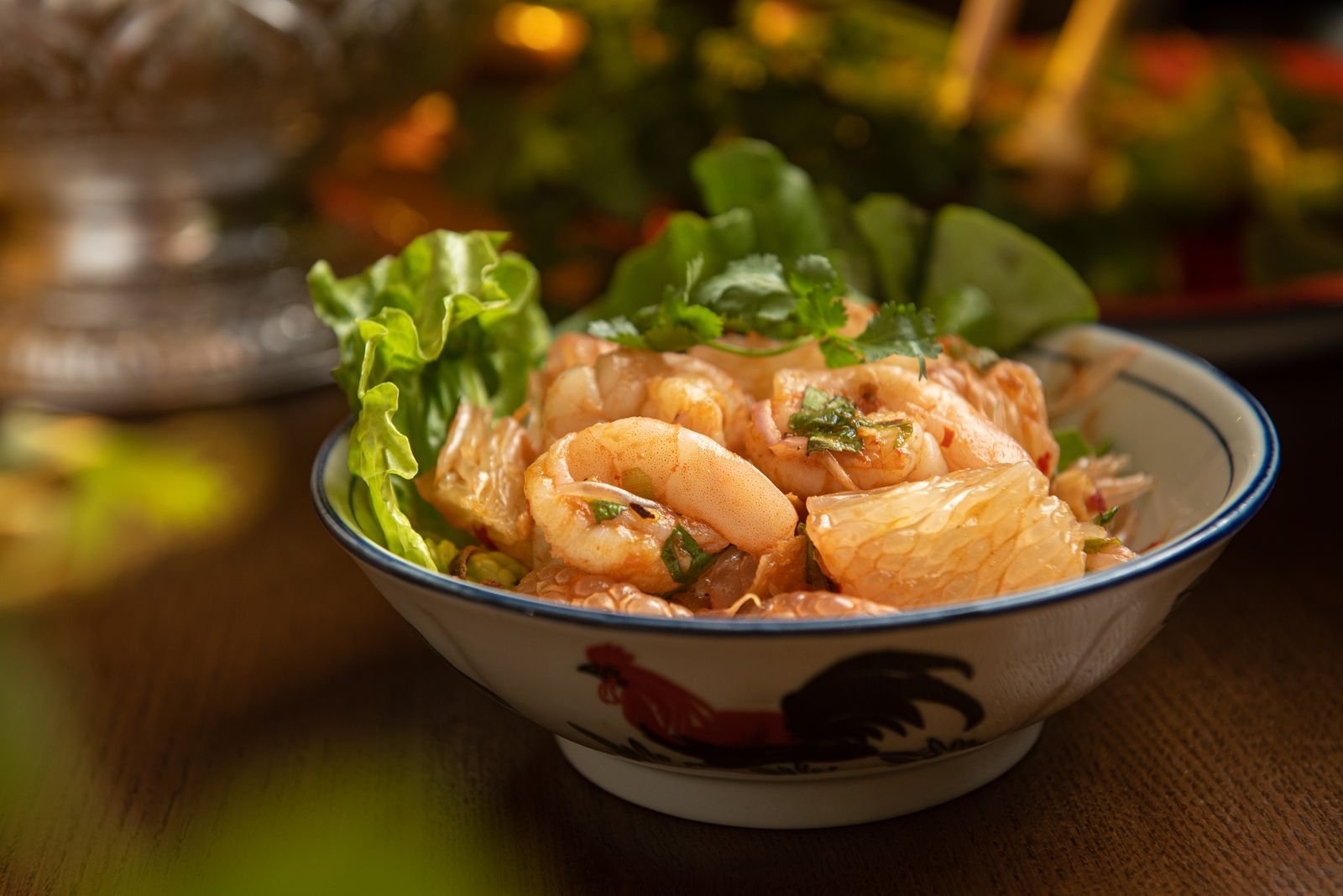
Juicy pomelo segments tossed with prawns, toasted coconut, roasted peanuts and a tangy chilli-lime dressing — yam som o is bright, crunchy and deeply refreshing. It is the kind of salad that wakes up your whole meal, and it takes less than half an hour to put together. It makes a beautiful centrepiece too, especially when served in the hollowed pomelo shell with extra herbs scattered over the top.
The story behind Yam Som O
Som o is the Thai name for pomelo, the large citrus fruit that grows all over Thailand, and yam simply means a tossed salad, so yam som o is a salad built around pomelo. It comes from central Thailand, where pomelos grow thick-skinned and sweet, and where cooks have long paired citrus with seafood, peanuts and fresh herbs. The dish is a classic example of how Thai cooking balances sweet, sour, salty and hot in a single bowl. Pomelos are a symbol of good luck in Thailand, and the fruit appears at festivals and family gatherings as a sign of prosperity and abundance.
In Thailand this salad is eaten as part of a shared meal, sitting alongside a curry, a soup and rice, rather than on its own as a starter. Its bright, sharp flavours cut through rich dishes and reset your palate between bites. You will find it at family lunches, at market stalls, and on restaurant menus, where it is often served in a hollowed-out pomelo shell that doubles as a bowl. The salad also shows the Thai love of texture, with soft fruit, crisp shallots, crunchy peanuts and the gentle chew of toasted coconut in every bite. The balance is the whole point.
What makes it special is the pomelo itself. Unlike grapefruit, a good pomelo is sweet with only a gentle bitterness, and its segments break apart into juicy, bead-like sacs that pop as you eat them. Against that soft, juicy fruit, the toasted coconut adds warmth, the peanuts add crunch, and the dressing brings lime, fish sauce, chilli and a little sugar into balance.
Cook it when you want something light, fresh and impressive without turning on the stove for long. It suits hot weather, a barbecue side dish, or a starter before a Thai curry. The pomelo needs a little patience to peel and segment, but once that is done the salad comes together in minutes, and it tastes best served within the hour. It is also a good dish for warm evenings, since it needs almost no cooking and tastes best when the fruit is lightly chilled.
- Prep time
- 25 mins
- Cook time
- 10 mins
- Total time
- 35 mins
- Servings
- 4 servings
- Calories
- 320
Ingredients
- 1 large pomelo, about 1 kg, peeled and segmented, heavy for its size
- 200 g cooked prawns, peeled, tails removed, or use cooked chicken instead
- 3 tablespoons desiccated coconut, toasted until golden
- 3 tablespoons roasted peanuts, roughly chopped
- 2 shallots, thinly sliced into rings
- 1 red chilli, deseeded and finely sliced
- 10 g fresh mint leaves, torn
- 10 g fresh coriander leaves, roughly chopped
- 2 spring onions, thinly sliced
- 3 tablespoons lime juice, freshly squeezed
- 2 tablespoons fish sauce
- 1 tablespoon palm sugar, finely grated
- 1 tablespoon crispy fried shallots, to garnish
Instructions
- Cut the pomelo in half and peel away the thick rind, then pull the segments apart and tear the flesh into bite-size pieces, removing any tough membrane and pips as you go. You should end up with about 400 g of juicy pomelo flesh; taste a piece, and if it is very tart, you will want a touch more sugar in the dressing, and set the pips aside for the bin.
- Toast the desiccated coconut in a dry frying pan over medium heat for 2 to 3 minutes, shaking the pan often, until it turns an even golden colour and smells warm and nutty. Tip it straight onto a plate to cool, since it keeps browning in the hot pan and can burn in seconds if you look away.
- Whisk the lime juice, fish sauce and palm sugar together in a small bowl until the sugar has fully dissolved. Taste it and adjust: it should be bright and sour first, then salty, then faintly sweet, with the sugar softening the lime rather than making the dressing taste sugary.
- Put the pomelo, prawns, shallots, chilli, mint, coriander and spring onions in a large bowl. Pour over half the dressing and toss very gently with your hands or two spoons, lifting the fruit rather than stirring it, so the segments stay intact and do not break into mush, and work gently so nothing breaks apart.
- Add the toasted coconut and peanuts and toss once more, just enough to scatter them through the salad. Taste a piece of pomelo with a little dressing and add the rest of the dressing if it needs more brightness, or leave it if the balance already tastes right.
- Pile the salad onto a serving plate or into a hollowed pomelo shell if you have one. The shell makes a beautiful presentation and catches any extra dressing, though a wide, shallow bowl works just as well for everyday serving, and let the colours show through the pale fruit.
- Scatter the crispy fried shallots over the top and add a few extra mint leaves for colour. The shallots should go on at the last moment so they stay crisp and do not soften in the dressing.
- Serve within 30 minutes, while the pomelo is still juicy and the peanuts still crunch. If the salad sits too long, the citrus releases juice, the dressing pools at the bottom, and the peanuts lose their texture.
- If you are making it ahead, keep the pomelo, prawns and herbs in one container and the dressing in another, then toss everything together just before serving. The coconut and peanuts should always be added last, right before the salad reaches the table.
Pro tips
- Choose a heavy pomelo with smooth, thin skin, since a light fruit is often dry inside and gives little flesh for the work. A light fruit is often dry inside and gives little flesh for the work.
- Tear the segments by hand instead of cutting them, which keeps the juice sacs whole and gives the salad a better texture. Cutting breaks the juice sacs and lets the salad turn wet and soft.
- Toast the coconut and peanuts yourself rather than buying them ready-toasted, because the fresh, warm nuttiness makes a real difference. The fresh, warm nuttiness makes a real difference to the finished dish. The difference is easy to taste.
- Taste the dressing on a piece of pomelo, not on its own, since the fruit changes how sour and sweet it reads. The fruit changes how sour and sweet the dressing reads on the tongue.
- Serve the salad lightly chilled, because a cold pomelo salad tastes far more refreshing than one served at room temperature. A cold pomelo salad tastes far more refreshing than one served at room temperature. Chilled fruit tastes brighter.
Variations & serving ideas
For a richer version, add shredded cooked chicken or grilled squid alongside the prawns, which turns the salad into a light main course. Some cooks add thin slices of pomelo pith, which is bitter and not to everyone's taste, so leave it out unless you enjoy that edge. A spoonful of tamarind paste in the dressing adds a deeper sourness that works well when the pomelo is very sweet. A spoonful of tamarind paste in the dressing adds a deeper sourness that works well when the pomelo is very sweet and the lime alone is not enough.
If pomelo is hard to find, grapefruit makes the closest substitute, though it is sharper and needs a little more sugar in the dressing. Orange segments work too, but they are softer and sweeter, so use a firm variety and handle them gently. Green mango is another option, giving a tart, crisp salad with the same dressing. Green mango is another option, giving a tart, crisp salad with the same dressing, though you will want a little more palm sugar to soften its sharpness.
Serve yam som o as part of a Thai meal with a curry and jasmine rice, or on its own as a light lunch with a bowl of soup. It also works as a starter before grilled fish or satay, where its sharp citrus wakes up the palate. A cold beer, a lime soda, or iced lemongrass tea all pair well with it. It also works as a starter before grilled fish or satay, where its sharp citrus wakes up the palate and prepares you for the richer dishes to come.
To turn it into a fuller meal, serve it over a bed of rice noodles or beside a plate of sticky rice and grilled chicken. The salad keeps its character in any of these settings, because the pomelo and the dressing are strong enough to stand next to richer dishes without being overwhelmed. A cold beer, a lime soda, or iced lemongrass tea all pair well with it, and each one refreshes the palate between bites of the bright, tangy salad.
Getting it right
The key technique is handling the pomelo with care. Cut through the thick rind, peel the segments free of their membrane, and tear the flesh gently so the juice sacs stay whole. If you squeeze or chop the fruit, it releases juice into the bowl and the salad turns wet and soft. A little patience here is the difference between a bright, jewel-like salad and a soggy one. Take your time here, since a little patience is the difference between a bright, jewel-like salad and a soggy one.
Balance the dressing before it meets the salad. Lime, fish sauce and palm sugar should be tasted together, and the dressing should be slightly stronger than you think it needs to be, since the mild pomelo and prawns will soften it. Make the dressing first and let it sit for a few minutes so the sugar dissolves fully and the flavours settle.
The most common mistake is dressing the salad too early. Once the lime juice meets the pomelo, the fruit starts to release juice and the peanuts go soft within half an hour. Another common slip is using too much fish sauce, which overwhelms the delicate citrus, so add it a spoonful at a time and taste as you go. If the salad tastes flat, it almost always needs more lime, not more salt. If the salad tastes flat, it almost always needs more lime, not more salt, so reach for the lime first. Taste the dressing again after tossing, since the fruit softens it.
Storing & reheating
This salad is best eaten fresh and does not keep well once dressed. If you have leftovers, store them in a sealed container in the fridge for up to 1 day, though the peanuts will soften and the pomelo will release juice. Eat them cold, straight from the fridge, rather than reheating. A squeeze of fresh lime when you serve them lifts the flavours again.
To prepare ahead, keep the undressed components separate: pomelo and prawns in one container, herbs and shallots in another, and the dressing in a small jar. Everything keeps for 1 day in the fridge this way, and you can toss it together in two minutes before serving. Do not freeze this salad; the pomelo turns mushy and the herbs go black. The coconut and peanuts should be added fresh, since they go soft in the fridge.
Frequently asked questions
Where can I buy pomelo?
Look in Asian supermarkets, large grocery stores, or fruit markets, especially in winter when pomelos are in season. Choose one that feels heavy for its size with smooth, thin skin, which usually means plenty of juicy flesh inside. Choose one that feels heavy for its size with smooth, thin skin, which usually means plenty of juicy flesh.
Can I use grapefruit instead of pomelo?
Yes, grapefruit is the closest substitute, though it is sharper and more bitter than pomelo. Add a little extra palm sugar to the dressing and taste carefully, since grapefruit needs more sweetness to balance its sour edge. Add a little extra palm sugar to the dressing and taste carefully as you go.
Is yam som o spicy?
It has a gentle warmth from one sliced chilli, but it is not a hot dish. Leave the chilli out for a mild version, or add a second chilli and keep the seeds in if you want a noticeable kick. Leave the chilli out for a mild version that everyone at the table can enjoy.
Can I make it without prawns?
Yes, leave the prawns out for a vegetarian version, or swap them for shredded chicken, tofu or grilled squid. The salad still tastes complete, since the pomelo, coconut and peanuts carry plenty of flavour on their own. The salad still tastes complete, since the pomelo and coconut carry plenty of flavour on their own.
How do I peel a pomelo easily?
Score the thick rind in four places with a knife, then peel it away in sections like an orange. Pull the segments apart, peel off the tough membrane around each one, and tear the flesh gently into pieces. Pull the segments apart and peel off the tough membrane around each one before tearing the flesh.
What is palm sugar and can I substitute it?
Palm sugar is a soft, caramel-flavoured sugar made from palm sap, sold in Asian shops. Brown sugar or honey both work as substitutes, though they taste a little different, so add them gradually and taste the dressing. Brown sugar or honey both work as substitutes, though they taste a little different, so add them gradually.