Yam Taley Recipe
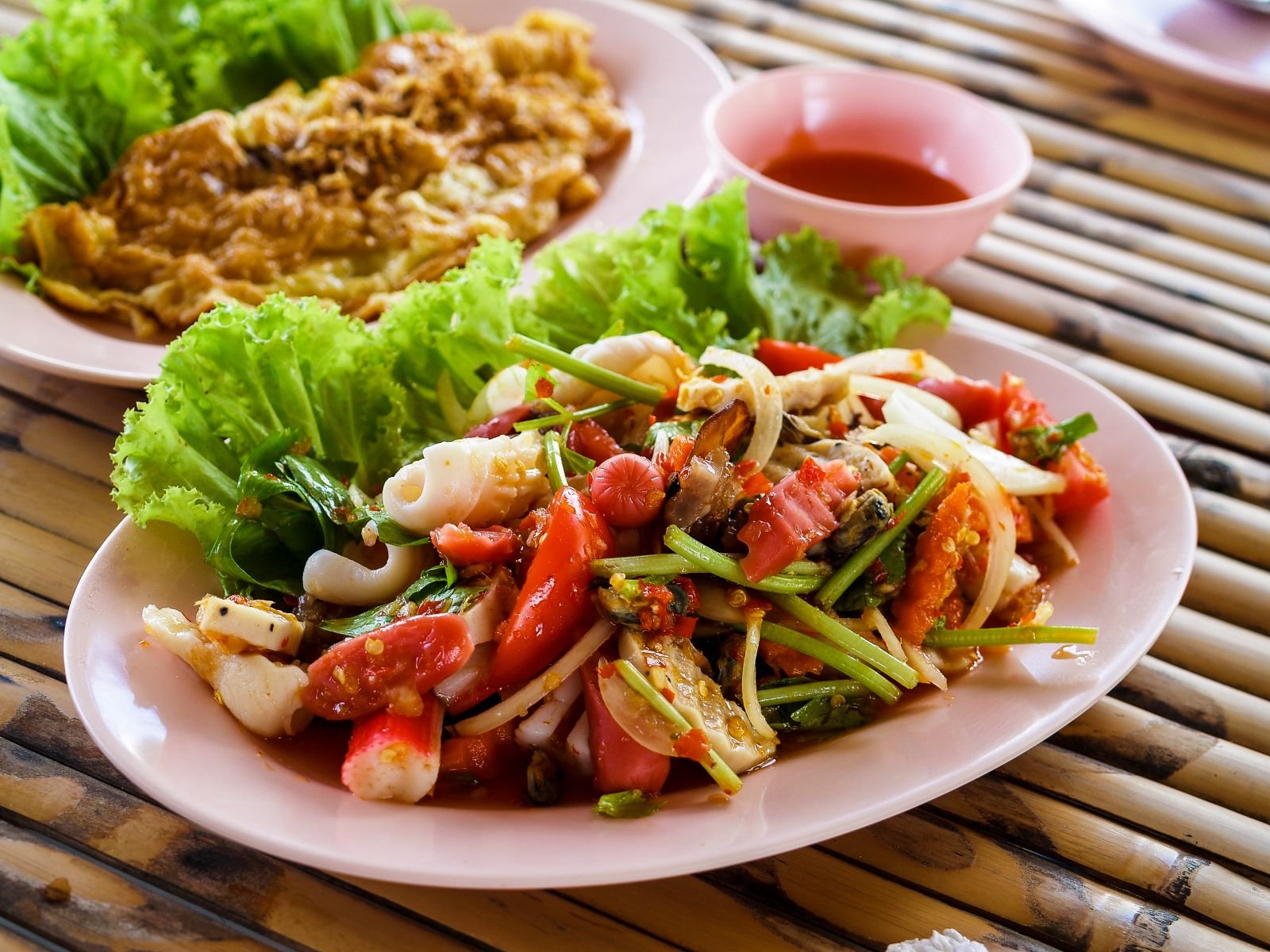
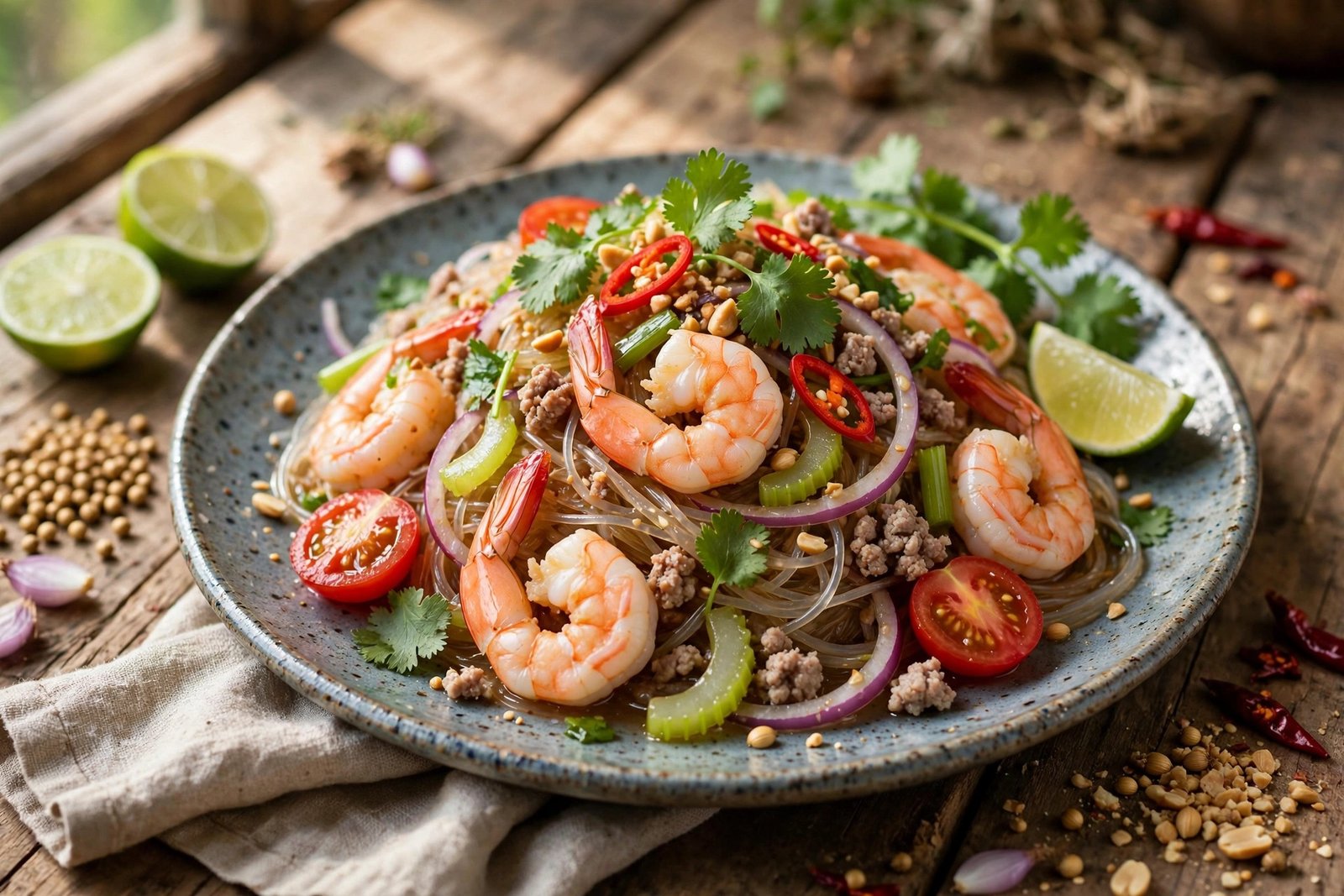
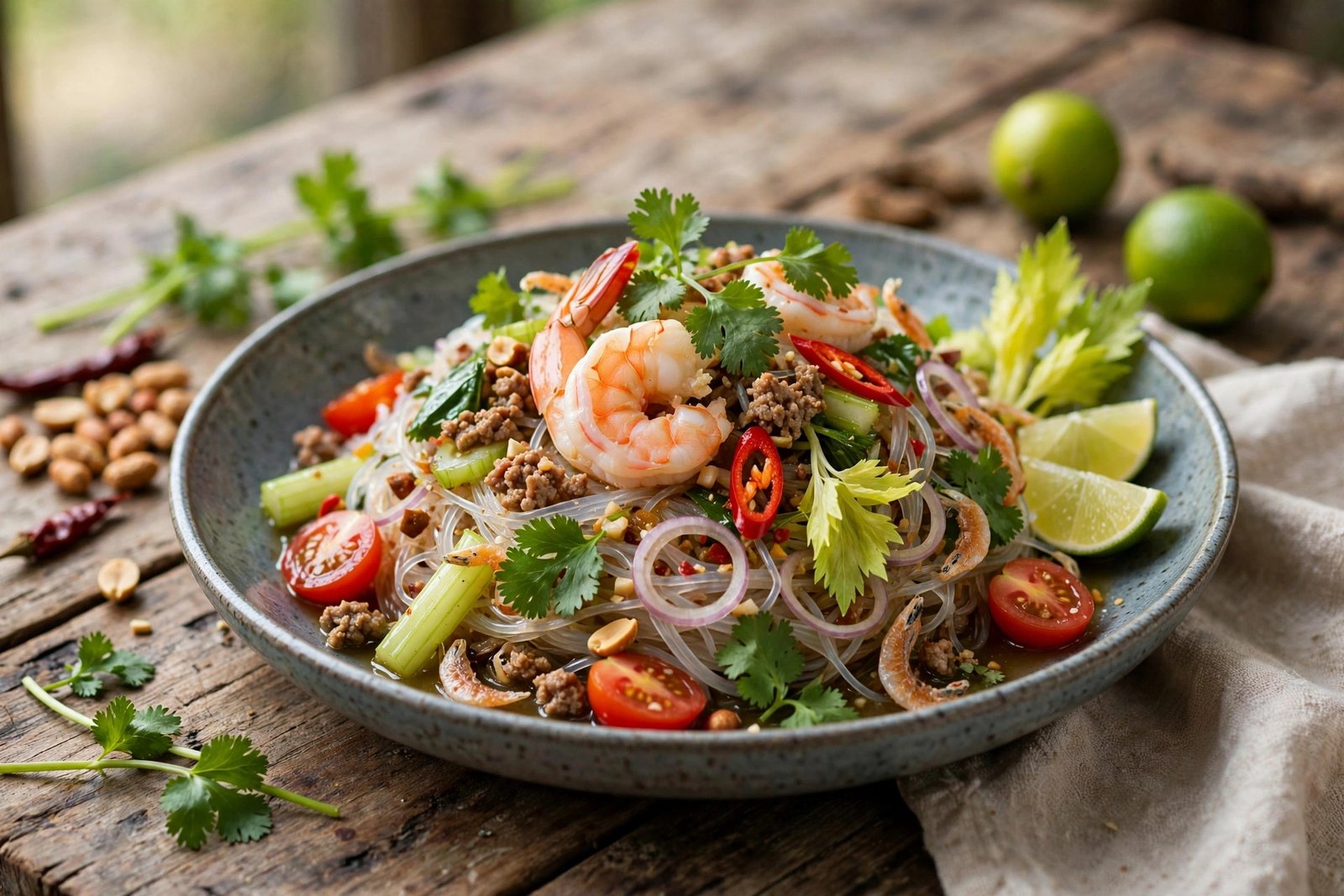
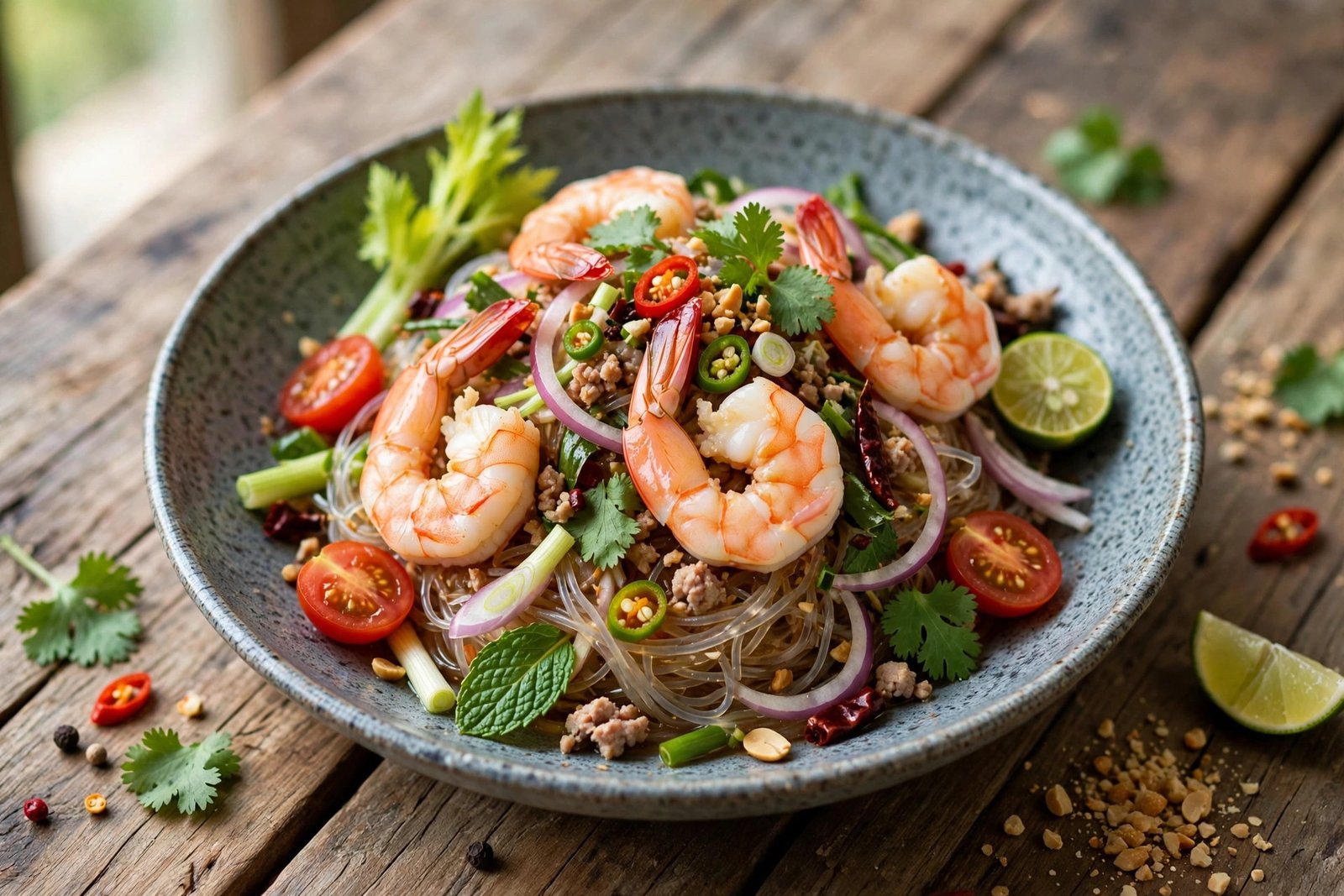
Yam taley is a Thai seafood salad that wakes up your whole mouth. Plump shrimp, tender squid and sweet mussels get tossed with lime, fish sauce, chillies and a heap of fresh herbs. It is light, fast and full of sharp, clean flavour, and it comes together in about half an hour with one pot of boiling water and a mixing bowl.
The story behind Yam Taley
The name tells you exactly what this dish is. In Thai, yam means to toss or mix, and talay means the sea, so yam taley is quite literally a tossed salad from the ocean. It comes from the coastal towns of southern Thailand, where fishing boats come in early and the catch goes straight to the market stalls. Cooks there built a salad around whatever the boats brought in that morning, and the recipe has stayed loose and practical ever since.
Yam dishes sit at the heart of Thai cooking. A Thai meal is rarely one big plate; it is a spread of dishes that balance each other, and a yam brings the sharp, sour, spicy notes that cut through richer food. You will find yam taley at beach restaurants, night markets and family tables, usually next to a pot of rice and a mild soup or a grilled fish. It is the dish people reach for when the weather is hot and nobody wants anything heavy. The contrast is the point — cool seafood, sharp dressing, crisp herbs — and every forkful should give you a little of each. Put the bowl in the middle of the table and let people help themselves; it disappears fast. What makes yam taley special is the way it treats seafood. Nothing is fried or smothered. Each piece is blanched for seconds, just long enough to cook through, then cooled and tossed in a dressing that is sour from lime, salty from fish sauce, sweet from palm sugar and hot from fresh chillies. The herbs do as much work as the dressing: mint cools, coriander adds a green bite, and lemongrass gives a clean citrus note that ties it all together.
Cook this when you want something impressive that does not keep you in the kitchen. It suits a summer lunch, a light dinner after a long day, or a starter for a Thai-themed meal with friends. Buy the best seafood you can find, keep everything cold until you cook it, and serve the salad within an hour of tossing it. That short window is when the shrimp are plump, the herbs are crisp and the dressing tastes its brightest.
- Prep time
- 20 mins
- Cook time
- 10 mins
- Total time
- 30 mins
- Servings
- 4 servings
- Calories
- 320
Ingredients
- 400 g raw shrimp, peeled and deveined
- 300 g squid, cleaned and sliced into rings
- 300 g mussels, cleaned and debearded
- 3 tablespoons fresh lime juice
- 2 tablespoons fish sauce
- 1 tablespoon palm sugar, finely chopped
- 2 Thai bird chillies, finely sliced
- 2 cloves garlic, minced
- 1 stalk lemongrass, white part only, finely sliced
- 1 small red onion, thinly sliced
- 150 g cherry tomatoes, halved
- 1 small cucumber, halved and sliced
- 1/2 cup fresh mint leaves
- 1/2 cup fresh coriander leaves
Instructions
- Bring a large pot of water to a rolling boil and add a pinch of salt. Drop in the squid rings first and cook for 30 to 40 seconds, just until they turn opaque and curl. Lift them out with a slotted spoon and set them aside to cool.
- Return the water to a boil and add the shrimp. Cook for 1 to 2 minutes until they turn pink and curl into a loose C shape. Remove them at once so they stay tender, then drain well and set aside with the squid. Watch the colour change closely: the moment the last grey patch turns pink, they are done.
- Add the mussels to the same boiling water and cook for 2 to 3 minutes until the shells open wide. Discard any that stay shut. Pull the meat from the shells, drain, and let it cool with the rest of the seafood.
- Whisk the lime juice, fish sauce and palm sugar together in a large mixing bowl. Stir for a minute until the sugar has fully dissolved and the dressing looks clear. Taste it now: it should be sour first, salty second, with a gentle sweetness underneath.
- Stir the sliced chillies, garlic and lemongrass into the dressing. Let it sit for 2 minutes so the aromatics soften and their flavour spreads through the liquid. You should be able to smell the lemongrass rising from the bowl.
- Add the cooled seafood, red onion, cherry tomatoes and cucumber to the bowl. Toss everything gently with your hands or two spoons so each piece gets coated without breaking the squid rings or tearing the shrimp. Take your time here, because a well-coated salad tastes seasoned in every bite, not just on the surface.
- Fold in the mint and coriander leaves last, so they stay bright and do not wilt. Toss once more, lightly, and let the salad sit for 5 minutes so the seafood picks up the dressing.
- Taste a piece of shrimp and adjust if needed. Add a squeeze more lime if it tastes flat, a few drops of fish sauce if it needs salt, or a pinch of sugar if the sourness is too sharp.
- Pile the salad onto a serving platter or into a wide, shallow bowl. Spoon any dressing left in the mixing bowl over the top and serve at once, with steamed jasmine rice on the side if you like.
Pro tips
- Buy shrimp that smell like the sea and nothing else. Any sharp or ammonia smell means they are past their best, and no dressing will hide it. If you can, buy them the same morning you plan to cook.
- Score the squid lightly in a crosshatch pattern before slicing it into rings. The cuts help it curl into pretty shapes and catch more dressing.
- Chill the serving bowl in the fridge for 15 minutes before you toss the salad. A cold bowl keeps the seafood cool and the herbs crisp. A warm bowl dulls the dressing and softens the herbs faster than you would think.
- Slice the lemongrass as thin as you possibly can, using only the pale lower stalk. Thick pieces stay woody and get in the way of every bite.
- Keep a little extra lime and fish sauce beside you while you toss. A final squeeze or a few drops at the end lifts the whole salad better than adding more at the start. The dressing will taste stronger on its own than it does once it coats the seafood, so do not be shy with it.
Variations & serving ideas
Swap the seafood to suit what your fishmonger has. Scallops are a lovely addition: sear them for a minute a side instead of blanching, then slice them in half. Crab meat, clams or even firm white fish cut into chunks all work, as long as you cook each type separately and keep the total weight about the same. A mix of three seafoods gives the best texture and looks generous on the plate. For a party-sized bowl, buy a whole cooked crab and pick the meat yourself; it tastes sweeter than pre-picked crab and makes the salad feel special. Shredded carrot and thinly sliced celery also fit in well, adding sweetness and crunch without changing the character of the dish. For a lighter version, skip the mussels and add more cucumber and cherry tomatoes, or stir in shredded green mango for extra sour crunch. If you want it richer, toss in a spoonful of roasted chilli paste, which adds a smoky depth and a darker colour. A few crushed roasted peanuts on top give crunch, though that is not the classic way to serve it. If you are feeding a crowd, double the recipe and toss it in two batches so the bowl does not overflow. A wedge of lime on the side lets people sharpen their own portion. A squeeze of lime over the finished plate wakes everything up again, and a few extra mint leaves scattered on top make it look as good as it tastes.
Serve yam taley as a starter with cold drinks, or make it the main event with steamed jasmine rice and a simple clear soup. It also works as part of a bigger Thai spread next to a curry or grilled meat, where its sharpness balances the richer dishes. A cold beer or a glass of iced tea is the natural partner.
If chillies are a worry, serve the sliced chillies on the side instead of mixing them in. Everyone can add their own heat. For a family-friendly bowl, leave the chillies out of the dressing entirely and add a pinch of chilli flakes to the adult portions at the table.
Getting it right
The whole dish turns on blanching. Seafood goes from perfect to rubbery in seconds, so cook each type on its own and pull it out the moment it changes. Shrimp are done when they turn pink and curl into a loose C; a tight O means they have gone too far. Squid needs only 30 to 40 seconds, and mussels are ready as soon as their shells open. Cool everything quickly so it stops cooking in its own heat.
Heat control matters in a different way here, because the only real cooking is the pot of water. Keep it at a full rolling boil so the seafood cooks fast and evenly. If the water is only simmering, the shrimp sit in it too long and turn tough. Bring the water back to a boil between batches, and use a slotted spoon so you can lift the seafood out fast without pouring off the water. A third mistake is using too little dressing, which leaves parts of the salad plain; make a little more than you think you need and spoon any extra over the top.
The most common mistake is dressing the salad while the seafood is still warm, which wilts the herbs and dulls the lime. Let the seafood cool to room temperature first. The second mistake is an unbalanced dressing: taste it before it touches the seafood and fix it there, because once it is tossed you cannot take flavour back. If the salad sits and starts to weep liquid, you added the dressing too early or the seafood was not drained well enough.
Storing & reheating
Yam taley is best eaten the day you make it, and it does not improve with time in the fridge. If you have leftovers, store them in a sealed container and eat them within 24 hours. The herbs will soften and the seafood will keep absorbing the dressing, so the salad will taste saltier and less bright the next day. Pick out the herbs before storing if you want the seafood to hold up a little better.
Do not freeze yam taley. The seafood turns rubbery when thawed and the herbs go limp. If you want to plan ahead, you can blanch the seafood a day early and keep it sealed in the fridge, then mix the dressing and chop the herbs on the day. Toss everything together just before serving. To reheat leftovers, do not use a microwave; eat them cold or let them come to room temperature for 20 minutes.
Frequently asked questions
Can I use frozen seafood for yam taley?
Yes, and it is one of the best ways to use it. Thaw the seafood fully in the fridge overnight, then pat it dry before cooking. Frozen squid and shrimp cook just as well as fresh ones here, since everything is blanched quickly and served at room temperature.
How spicy is yam taley, and can I make it milder?
Use two to three Thai bird chillies for a warm heat, or just one if you want it mild. The dressing should taste sour first, then salty, then sweet, with heat sitting in the background. Taste it before you pour it over the seafood and adjust.
Can I use bottled lime juice instead of fresh limes?
Fresh lime juice is essential and bottled juice will not give the same bright flavour. If you are out of limes, lemon juice works in a pinch, but use a little less and add a pinch more sugar to balance the sharper sourness.
Can I make yam taley ahead of time?
Serve it the same day, within a few hours of making it. The seafood is at its best when it is just cool, and the herbs stay crisp. If you must hold it, keep the seafood and dressing apart and toss them together right before serving.
What other seafood can I add to yam taley?
Scallops, crab meat and clams all work well. Add them in the same blanching step, cooking each type just until done. Keep the total amount of seafood the same so the dressing still coats everything evenly and no single flavour takes over.
Is yam taley gluten-free?
Yes. Use tamari or a gluten-free fish sauce, and check that your chilli paste is gluten-free too. The rest of the ingredients are naturally free of gluten, so the swap is simple and the flavour stays the same. Serve it with plain rice and the meal is safe.