Jjajangmyeon Recipe
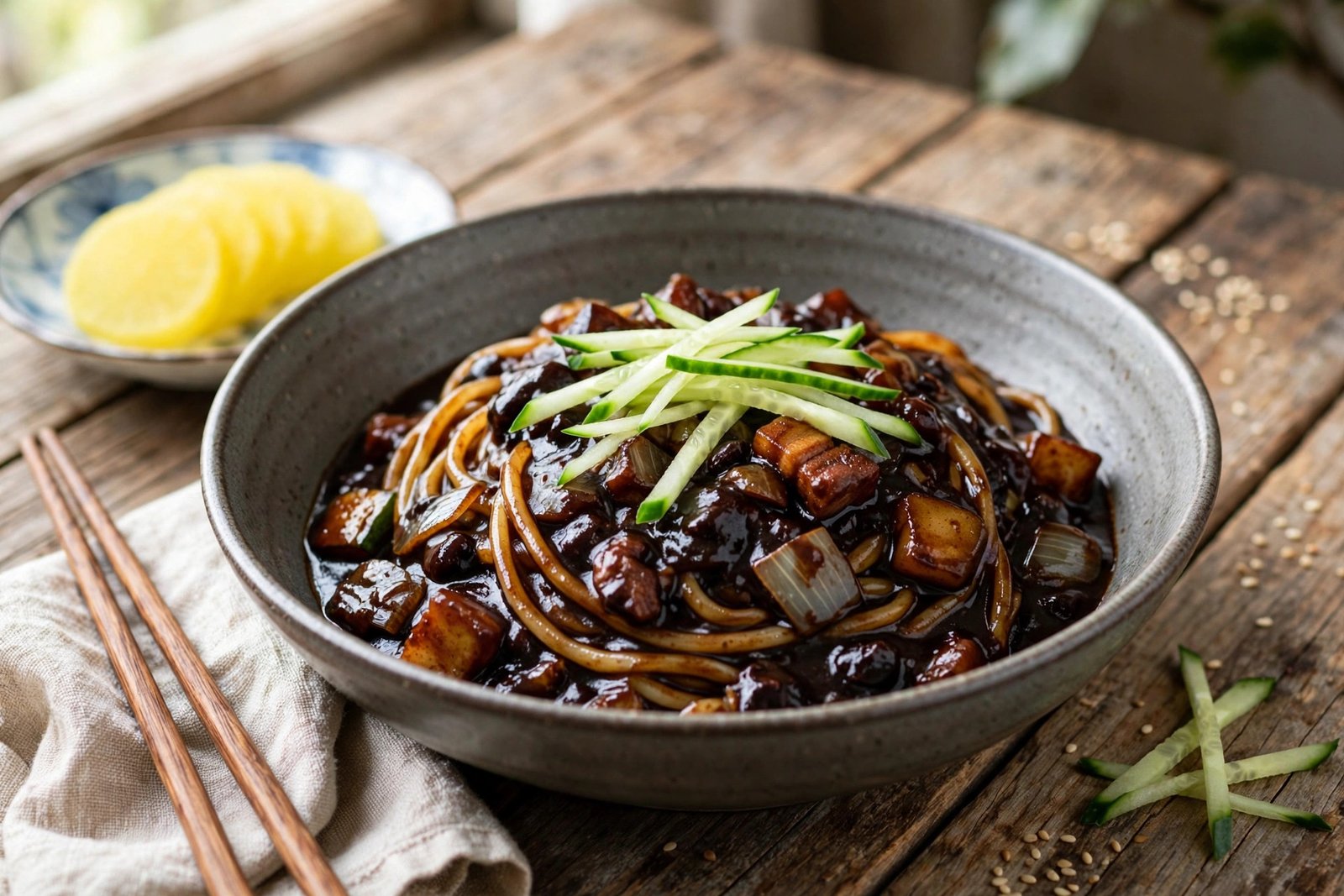
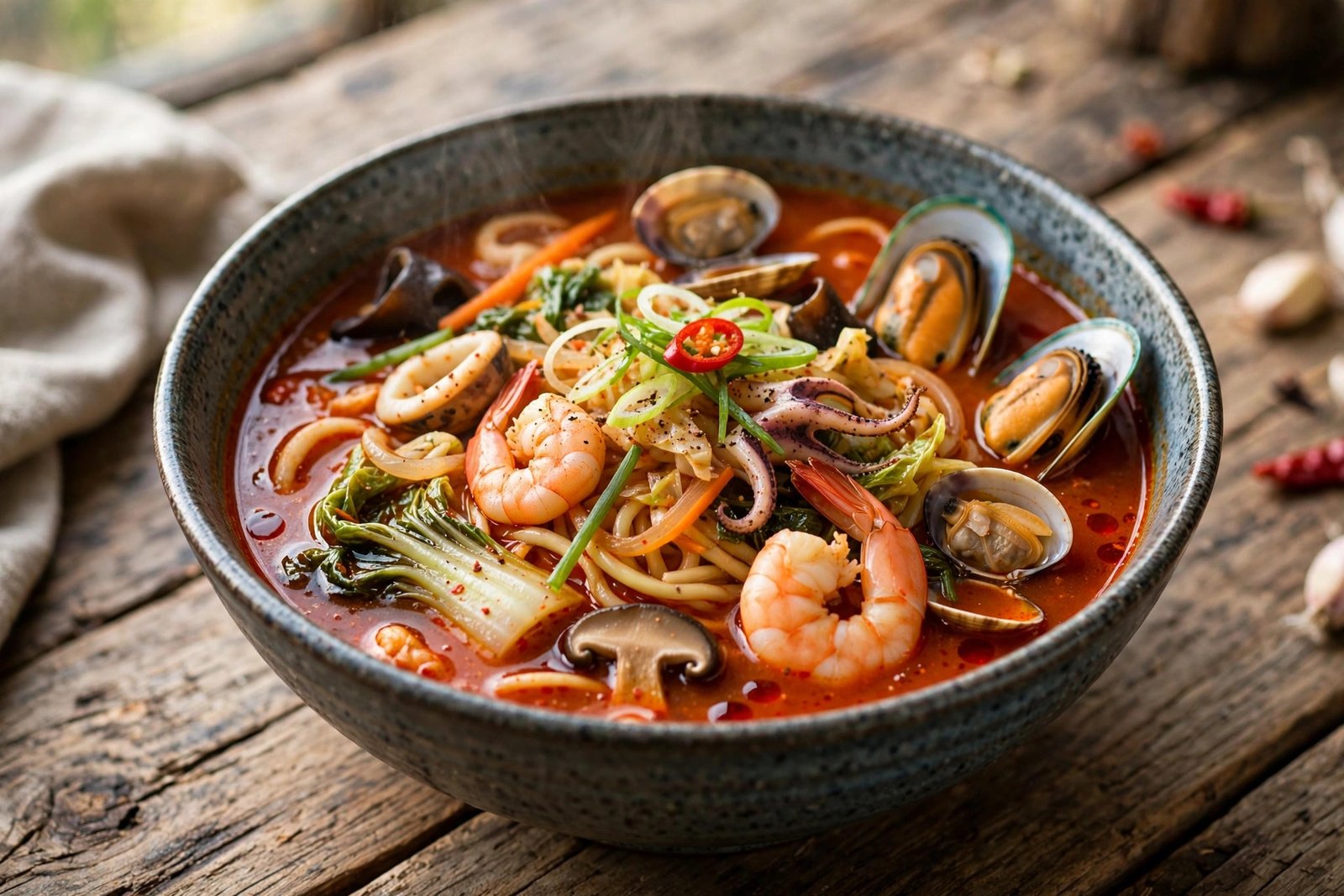
Thick wheat noodles coated in a glossy black bean sauce with pork and vegetables — jjajangmyeon is Korea's favourite comfort noodle, beloved on every occasion.
- Prep time
- 15 mins
- Cook time
- 25 mins
- Total time
- 40 mins
- Servings
- 4 servings
- Calories
- 640
Advertisement
Ingredients
- 400 g fresh jjajangmyeon noodles (or thick udon)
- 250 g pork belly or shoulder, diced small
- 1 large onion, diced
- 1 small zucchini, diced
- 1 medium potato, diced small
- 1/2 cabbage, chopped
- 4 tablespoons chunjang (Korean black bean paste)
- 2 tablespoons vegetable oil
- 1 tablespoon sugar
- 1 tablespoon oyster sauce
- 240 ml water or stock
- 1 tablespoon cornflour mixed with 2 tablespoons water
- 1 cucumber, julienned, to garnish
Instructions
- Fry the chunjang in a dry pan over low heat for 2 to 3 minutes, stirring constantly, until it smells nutty. Set aside.
- Heat the oil in a wok and brown the pork for 4 minutes, then add the onion, zucchini, potato and cabbage and stir-fry for 5 minutes.
- Stir in the fried chunjang, sugar and oyster sauce and cook for 2 minutes.
- Add the water, bring to a simmer, cover and cook for 10 minutes until the vegetables are tender.
- Stir in the cornflour mixture and simmer 1 minute more until the sauce is thick and glossy.
- Cook the noodles, drain, and top with the black bean sauce and julienned cucumber.
Pro tips
- Frying the chunjang first removes its bitterness and deepens the flavour.
- Dice the vegetables small so they cook evenly and blend into the sauce.
- Serve the noodles and sauce separately so each person can mix their own bowl.
Frequently asked questions
What is chunjang?
Chunjang is a fermented Korean black bean paste, salty and deeply savoury. Find it at Korean grocery stores; it is not the same as Chinese tianmianjiang.
Can I make jjajangmyeon vegetarian?
Yes. Replace the pork with mushrooms and extra cabbage, and use a vegetarian oyster sauce or extra soy sauce.
What noodles should I use?
Fresh jjajangmyeon noodles are ideal, but thick udon noodles are a good substitute.
How do I store leftover sauce?
Refrigerate the sauce for up to 4 days. Cook fresh noodles when serving; the sauce reheats well.