Kimchi Jjigae Recipe
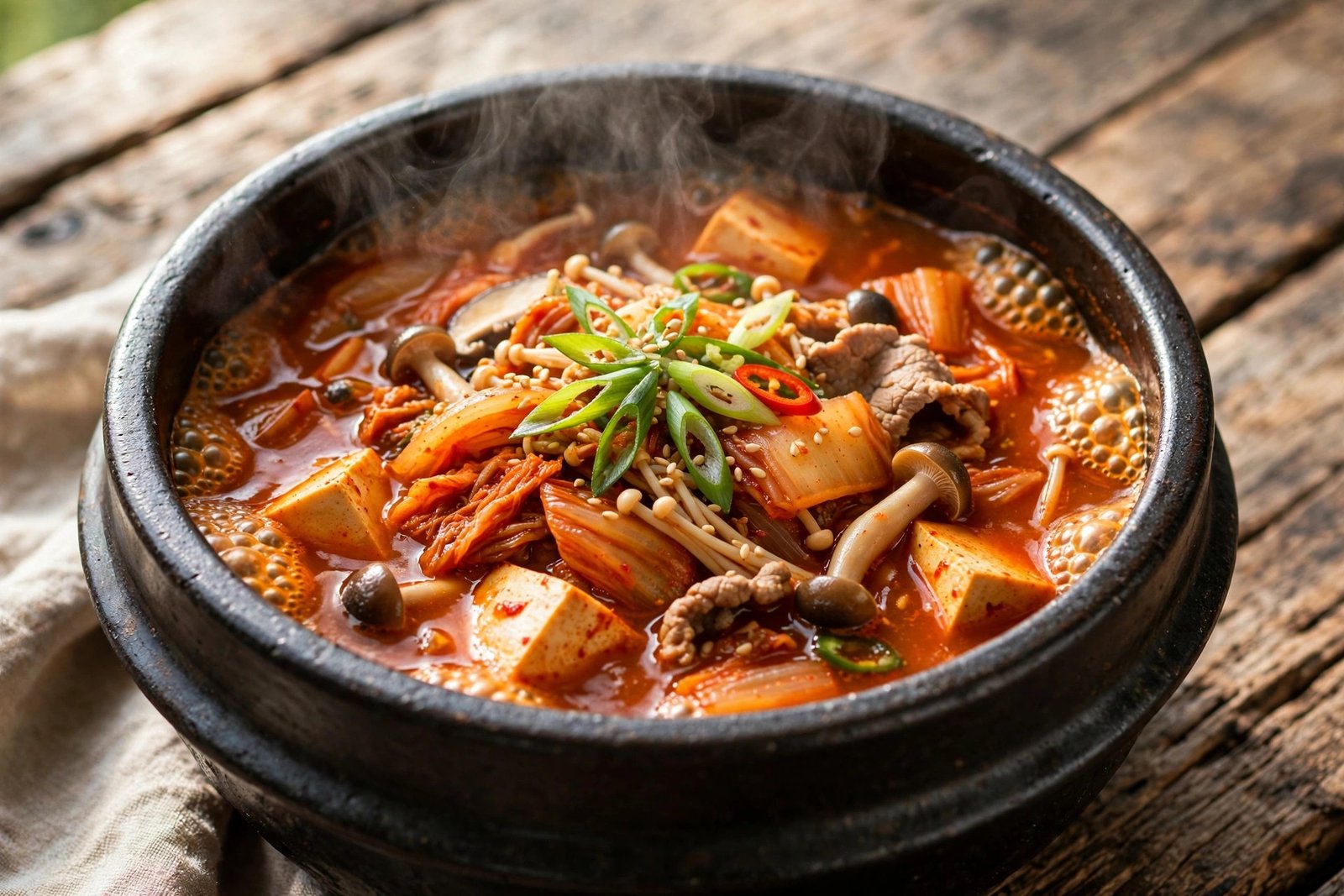
Kimchi jjigae is Korea's most beloved comfort stew — a bubbling, fiery broth built on well-aged kimchi, tender pork belly, and silky tofu. It is the kind of dish that warms you from the inside out, and it tastes even better the next day when the flavors have had time to marry.
- Prep time
- 15 mins
- Cook time
- 30 mins
- Total time
- 45 mins
- Servings
- 4 servings
- Calories
- 340
Ingredients
- 2 cups well-fermented napa cabbage kimchi, roughly chopped
- 1/2 lb (225 g) pork belly, cut into bite-size pieces
- 1 block (14 oz / 400 g) soft or medium tofu, cubed
- 3 cups water or light anchovy stock
- 2 cloves garlic, minced
- 1 tablespoon gochugaru (Korean red chili flakes)
- 1 tablespoon gochujang (Korean chili paste)
- 1 tablespoon soy sauce
- 1 teaspoon sugar
- 2 green onions, sliced
- 1/2 teaspoon toasted sesame oil
- Steamed rice, for serving
Instructions
- Heat a heavy pot over medium heat and add the pork belly. Render until lightly browned, about 6 to 8 minutes.
- Stir in the chopped kimchi, garlic, gochugaru, and sugar. Cook 3 minutes until the kimchi is fragrant and glossy.
- Add the water or stock, gochujang, and soy sauce. Bring to a boil, then lower to a steady simmer.
- Simmer uncovered for 20 minutes so the broth deepens and the kimchi softens fully.
- Gently slide in the tofu cubes and simmer 5 minutes more without stirring too roughly — the tofu should stay in chunks.
- Stir in the green onions and sesame oil. Serve bubbling hot with steamed rice.
Pro tips
- Use kimchi that has been fermenting at least two weeks — sour kimchi is the heart of this stew.
- Do not add the tofu too early; it breaks down if boiled hard for long.
- A pinch of sugar balances the sourness without making the stew sweet.
- Serve it still bubbling in the pot — presentation is half the joy.
Frequently asked questions
Does the kimchi really need to be old and sour?
Yes — the single most important ingredient is old, sour kimchi. Fresh kimchi gives a flat stew; at least two to three weeks of fermentation gives the deep tangy flavor that defines the dish.
Can I make a vegetarian version?
Absolutely. Omit the pork and use a vegetable broth or water; mushroom caps and zucchini add plenty of body. The dish is naturally vegetarian-friendly once the meat is skipped.
How do I make it less spicy?
Reduce the gochugaru to half a teaspoon or skip it entirely — the kimchi itself provides the base heat. Taste before adding more.
Can I freeze kimchi jjigae?
Yes, both freeze well. The tofu softens a little after thawing, but the broth flavor stays excellent. Reheat gently and stir in fresh tofu if you like.