Homemade Kimchi Recipe
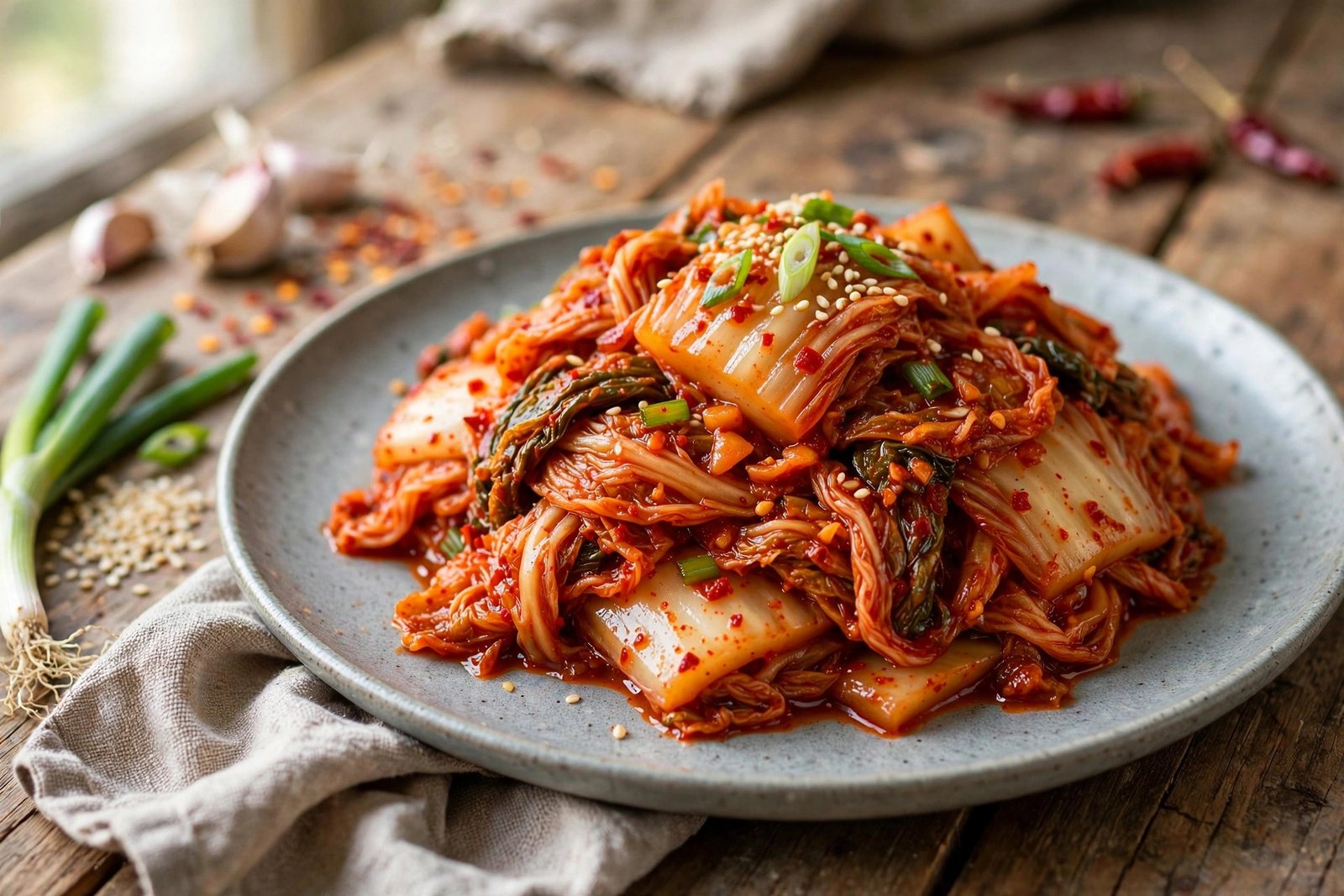
Kimchi is Korea's iconic fermented side dish, and homemade beats store-bought every time. Salted napa cabbage is coated in a spicy paste of chili flakes, garlic, and ginger, then left to ferment into something tangy, crunchy, and deeply savory. It is a living food — the flavor keeps developing in the fridge for weeks.
- Prep time
- 40 mins
- Cook time
- 0 mins
- Total time
- 40 mins (+ 3 days fermenting)
- Servings
- 16 servings (about 2 quarts)
- Calories
- 45
Ingredients
- 1 large napa cabbage (about 2 lbs / 900 g)
- 1/4 cup kosher salt (not table salt)
- 4 cups cold water, for brining
- 1 tablespoon glutinous rice flour
- 1/2 cup water, for the porridge
- 4 cloves garlic, minced
- 1 tablespoon fresh ginger, grated
- 1/3 cup gochugaru (Korean chili flakes)
- 2 tablespoons fish sauce
- 4 scallions, cut into 2-inch pieces
- 1 medium daikon radish, cut into thin matchsticks
Instructions
- Cut the cabbage lengthwise into quarters, then chop into 2-inch pieces. Toss with the kosher salt and 4 cups cold water in a large bowl, making sure every leaf is salted. Let it brine for 6 to 8 hours, tossing once or twice.
- Rinse the cabbage three times under cold water to remove excess salt, then drain well and squeeze gently.
- Make a thin porridge: whisk the rice flour into 1/2 cup water and simmer for 2 minutes until it thickens slightly. Let it cool.
- Stir the garlic, ginger, gochugaru, fish sauce, and the cooled porridge into a thick red paste.
- Wearing gloves, massage the paste into the cabbage along with the scallions and daikon until every piece is coated.
- Pack the kimchi tightly into a clean glass jar, pressing out air pockets, and leave 1 inch of headspace. Seal the lid.
- Ferment at room temperature for 2 to 3 days, opening the lid once a day to release gas and pressing the kimchi back down.
- Taste it — when it is pleasantly tangy, move the jar to the refrigerator. It keeps for 2 to 3 months and gets more sour over time.
Pro tips
- Use kosher or sea salt, never iodized table salt — iodine can inhibit fermentation and add off flavors.
- If your kitchen is warm (above 75°F / 24°C), ferment for just 1 to 2 days; heat speeds everything up.
- For vegetarian kimchi, swap the fish sauce for soy sauce or salted kelp water.
- Always use clean utensils when serving — introduced bacteria can spoil the batch.
Frequently asked questions
How long does homemade kimchi ferment?
At room temperature, 2 to 3 days gives a nicely tangy kimchi. In a cool kitchen it may take 4 to 5 days. Once it tastes right to you, refrigerate it.
Why is my kimchi fizzy?
Fizz is normal — it is carbon dioxide from active fermentation. Just burp the jar daily and press the kimchi back under its liquid.
Can I use regular chili flakes instead of gochugaru?
Gochugaru has a distinctive fruity heat and coarse texture that defines kimchi. Regular flakes work in a pinch but the flavor and color will differ.
How long does kimchi last in the fridge?
Properly refrigerated kimchi keeps 2 to 3 months. It gets more sour with age, which makes older kimchi perfect for stews and fried rice.