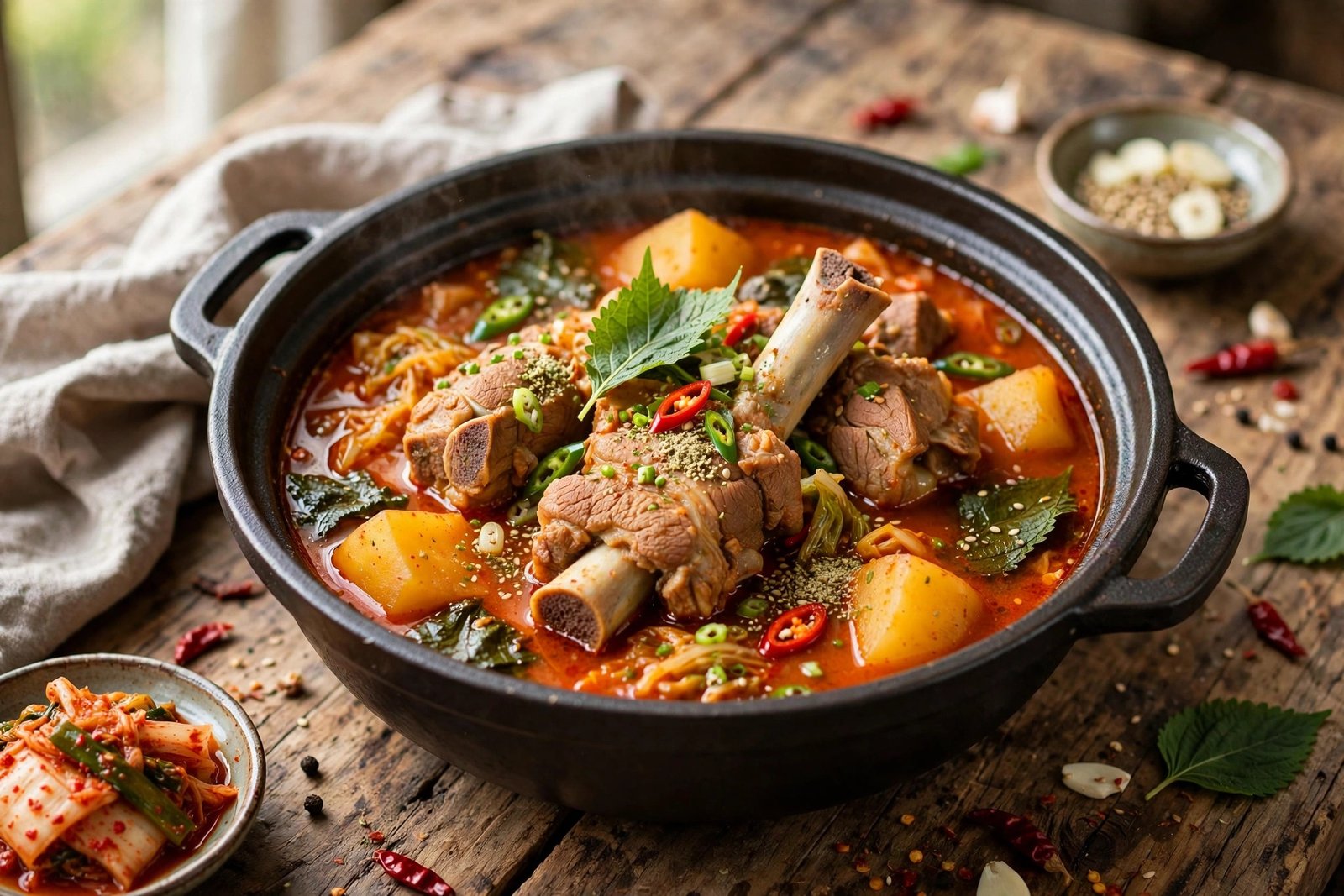
Dakgalbi Recipe
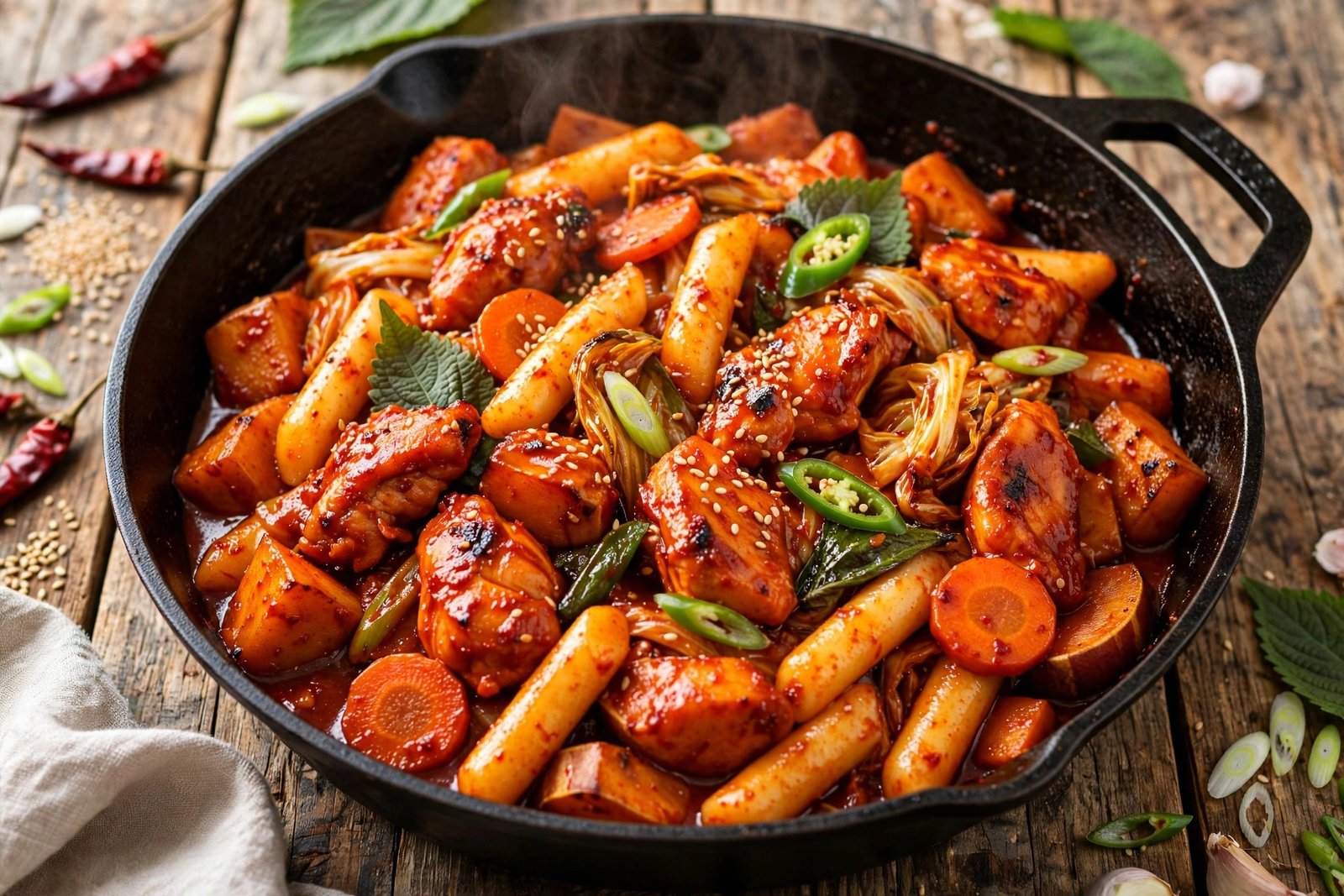
Dakgalbi is a sizzling Korean stir-fry of marinated chicken, cabbage, sweet potato, and chewy rice cakes, all coated in a fiery gochujang sauce. Cooked in one big pan and shared straight from the table, it is loud, saucy, and deeply satisfying. Finish it with melted cheese or fried rice stirred through the leftover sauce for the full experience.
- Prep time
- 20 mins
- Cook time
- 25 mins
- Total time
- 45 mins
- Servings
- 4 servings
- Calories
- 540
Ingredients
- 700 g boneless chicken thighs, cut into bite-sized pieces
- 3 tablespoons gochujang (Korean chili paste)
- 2 tablespoons soy sauce
- 1 tablespoon gochugaru (Korean chili flakes)
- 1 tablespoon sugar
- 1 tablespoon rice wine (mirin)
- 3 cloves garlic, minced
- 1 teaspoon grated ginger
- 200 g cabbage, roughly chopped
- 1 medium sweet potato, peeled and thinly sliced
- 1 onion, sliced
- 150 g tteok (Korean rice cakes), soaked if dried
- 2 spring onions, cut into lengths
- 100 g mozzarella cheese, grated (optional)
Instructions
- Mix the gochujang, soy sauce, gochugaru, sugar, mirin, garlic, and ginger into a smooth marinade.
- Toss the chicken pieces in the marinade and leave for at least 15 minutes while you prepare the vegetables.
- Heat a large, wide pan or cast-iron skillet over medium-high heat and add the chicken with all its marinade.
- Add the sweet potato and onion, then cook for about 8 minutes, stirring often, until the chicken is nearly cooked through.
- Stir in the cabbage and rice cakes with a splash of water, cover, and cook for 6 to 8 minutes until the sweet potato is tender.
- Uncover and stir-fry for a few more minutes so the sauce thickens and clings to everything.
- Scatter over the spring onions, top with mozzarella if using, cover briefly until melted, and serve straight from the pan.
Pro tips
- Chicken thighs stay juicy under high heat, while breast meat can dry out in this bold sauce.
- Slice the sweet potato thinly so it cooks through in the same time as the chicken.
- If the sauce gets too thick, add water a splash at a time rather than more marinade.
- Save some sauce at the end to stir-fry leftover rice in the same pan for a classic finish.
Frequently asked questions
How spicy is Dakgalbi?
It is pleasantly fiery but not punishing. Reduce the gochugaru for a milder version, or add an extra spoonful for serious heat lovers.
What is tteok and where do I buy it?
Tteok are chewy Korean rice cakes, sold fresh or frozen at Korean grocery stores. Soak dried ones in warm water for 20 minutes before cooking.
Can I add cheese to Dakgalbi?
Yes, melted mozzarella over the top is a very popular modern twist and it softens the spice beautifully.
What do I serve with Dakgalbi?
It is a complete one-pan meal, but steamed rice, lettuce leaves for wrapping, and pickled radish all go wonderfully alongside.