Doenjang Jjigae Recipe
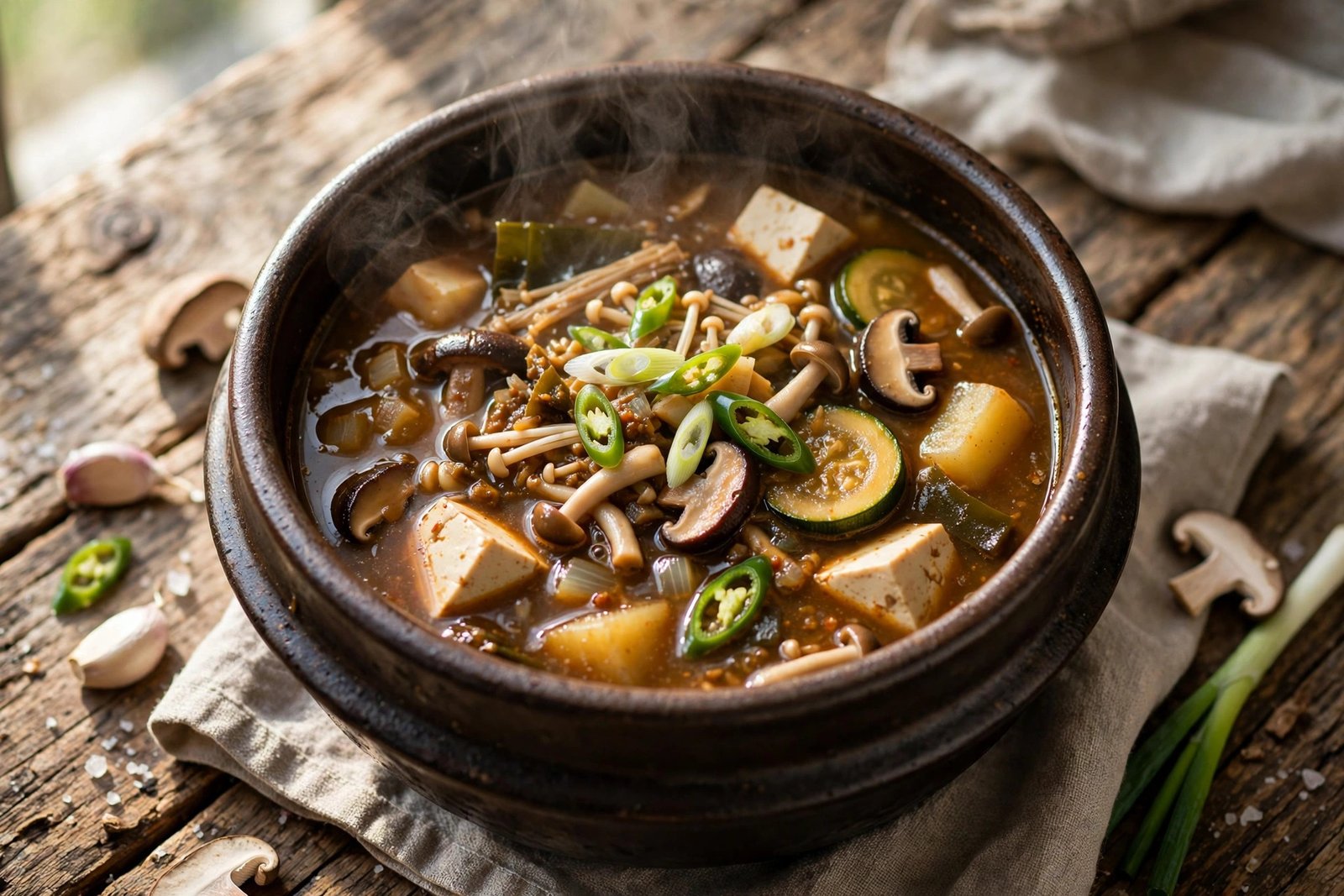
A bubbling clay pot of pungent fermented soybean soup loaded with tofu, zucchini, and mushrooms. Earthy, savory, and deeply comforting, doenjang jjigae is the taste of a Korean home. Serve it with rice and it needs nothing else.
- Prep time
- 15 mins
- Cook time
- 25 mins
- Total time
- 40 mins
- Servings
- 4 servings
- Calories
- 280
Ingredients
- 3 tablespoons doenjang (Korean fermented soybean paste)
- 1 liter anchovy-kombu stock or beef stock
- 150g beef sirloin or mushrooms, thinly sliced
- 300g medium-firm tofu, cut into cubes
- 1 medium zucchini, cut into half-moons
- 1 medium potato, cut into small cubes
- 100g shiitake mushrooms, sliced
- 1 medium onion, roughly chopped
- 1 green chili, sliced
- 2 garlic cloves, minced
- 1 tablespoon gochugaru (optional, for gentle heat)
- 2 spring onions, chopped
- Cooked short-grain rice, to serve
Instructions
- Stir the doenjang into the cold stock in a clay pot or heavy saucepan until mostly dissolved.
- Add the potato, onion, garlic, and beef or mushrooms, then bring to a gentle boil.
- Simmer for 10 minutes until the potato is nearly tender.
- Stir in the zucchini, shiitake, tofu, green chili, and gochugaru if using.
- Simmer 10 minutes more until the vegetables are tender and the broth tastes savory and deep.
- Taste and add a little more doenjang if it needs punch — never add salt; the paste does the seasoning.
- Scatter the spring onions over the top.
- Serve bubbling straight from the pot with rice, kimchi, and banchan.
Pro tips
- Dissolve the doenjang in cold stock to avoid lumps.
- Every brand of doenjang is saltier or milder than the last — taste before adding more.
- A clay pot (ttukbaegi) keeps it bubbling dramatically at the table.
- Add the tofu last so it stays in intact, silky cubes.
Frequently asked questions
What is doenjang? Is it the same as miso?
Doenjang is Korean fermented soybean paste — thicker, saltier, and more pungent than Japanese miso. They are related but not identical; use real doenjang for the true flavor.
Is doenjang jjigae spicy?
Traditionally it is not very spicy at all — the flavor is savory and earthy. A little gochugaru adds gentle warmth.
Can I make it vegetarian?
Yes — skip the beef and use anchovy stock instead of the beef-and-kombu stock, or plain vegetable stock. Doenjang itself is vegan.
Does it keep well?
Refrigerate up to 4 days; the flavors deepen. Reheat gently and add fresh tofu pieces if the original tofu has gone soft.