Bossam Kimchi Recipe
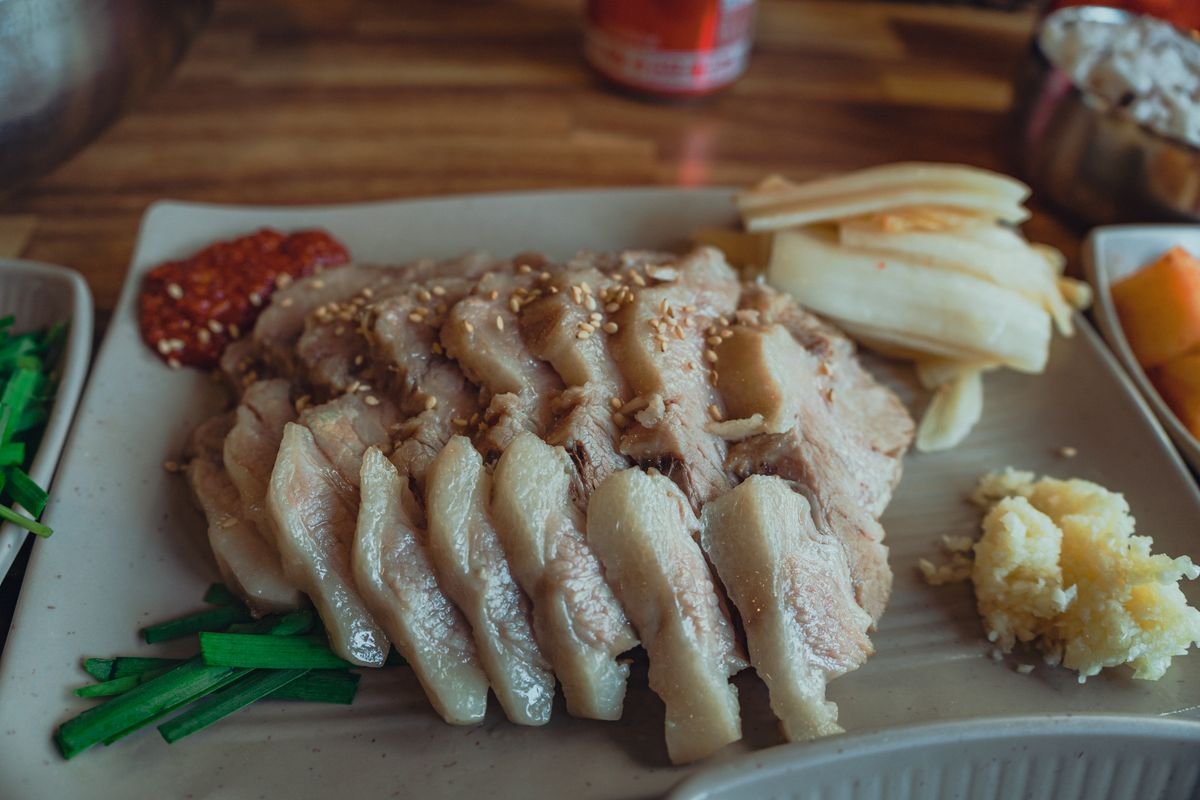
Bossam is Korea's great sharing dish: a whole piece of pork belly, simmered gently with aromatics until it is soft and fragrant, then sliced thin and eaten wrapped in lettuce with kimchi, garlic and ssamjang. Each wrap is a little parcel of flavour, rich pork, sharp kimchi and fresh leaves, and the table is meant to be slow, generous and full of conversation. A slow, generous meal for a table full of people.
The story behind Bossam Kimchi
Bossam has its roots in the Korean tradition of kimjang, the communal making of kimchi for the winter. After a long day of salting cabbage and mixing seasoning, the workers were fed with boiled pork, a rich reward for hard labour. The pork was wrapped in fresh kimchi leaves, and the meal became a custom in its own right, eaten whenever kimchi was made. The workers would gather around a large pot, and the pork was their reward after hours of salting cabbage and mixing seasoning by hand.
The dish grew beyond kimjang and became a fixture of Korean celebrations and family gatherings. It is the food of a long table, where the pork is carved in the middle and everyone builds their own wraps. The name comes from the word ssam, meaning to wrap, and the wrapping is the point: each person makes their own parcel, choosing how much pork, kimchi and sauce to include. The wraps are eaten in one or two bites, and the mix of rich pork, sharp kimchi and fresh lettuce is what makes each one so satisfying.
What makes it special is the pork itself. Boiling the belly slowly in water flavoured with ginger, garlic, onion and soybean paste keeps it moist and removes the heaviness, leaving meat that is soft, mild and fragrant. Sliced thin, it is rich without being greasy, and the kimchi cuts through it with sourness and spice. The cooking liquid is flavoured with doenjang, ginger and garlic, which keeps the meat fragrant and removes any strong pork smell.
Cook it when you have time and people to feed. It suits a weekend lunch, a family gathering, or any evening when the meal is the event. Serve it in the middle of the table with lettuce, kimchi and sauces, and let everyone build their own wraps at their own pace.
- Prep time
- 30 mins
- Cook time
- 1 hour
- Total time
- 1 hour 30 mins
- Servings
- 4 servings
- Calories
- 520
Ingredients
- 800 g pork belly, skin on, in one piece
- 1 onion, halved, and 6 garlic cloves, crushed
- 1 thumb fresh ginger, sliced
- 2 tablespoons doenjang (Korean soybean paste)
- 1 tablespoon instant coffee granules
- 1 teaspoon black peppercorns
- 2 bay leaves
- 1 tablespoon light soy sauce
- 2 tablespoons ssamjang, to serve
- 1 head butter lettuce, leaves separated
- 300 g well-fermented kimchi
- 4 garlic cloves, thinly sliced, to serve
- 2 spring onions, finely sliced, to serve
- Steamed short-grain rice, to serve
Instructions
- Rinse the pork belly under cold water and pat it dry. Score the skin lightly with a sharp knife in a few places, which helps the fat render and lets the aromatics reach the meat.
- Put the pork in a large pot with the onion, crushed garlic, ginger, doenjang, coffee granules, peppercorns and bay leaves. Pour in enough cold water to cover the pork by 3 cm. The coffee may sound odd, but it removes any strong pork smell and deepens the flavour. Make sure the pork is fully covered by the water, adding more if needed so it cooks evenly.
- Bring the pot to a boil over high heat, then skim off any foam that rises. Lower the heat to a gentle simmer, with small bubbles breaking at the surface, and cover with a lid left slightly open.
- Simmer the pork for 50 to 60 minutes, turning it once halfway through. The meat is ready when a chopstick slides into the thickest part with little resistance and the skin feels soft. Do not rush this stage.
- Lift the pork out and rest it on a board for 10 minutes. This rest lets the juices settle back into the meat, so the slices stay moist. While it rests, arrange the lettuce, kimchi, sliced garlic and spring onions on a serving platter.
- Slice the pork belly thinly, about 5 mm thick, across the grain. Lay the slices in overlapping rows on a warm plate, skin side up, so the layers of meat and fat show. The slices should be tender and hold together when lifted. Use a sharp knife and slice across the grain, so the meat stays tender and does not fall apart.
- Stir the soy sauce into the warm cooking liquid and taste it. It should be savoury and mild. Spoon a little over the sliced pork, or serve it on the side as a light dipping sauce.
- Set the table with the pork in the middle, surrounded by lettuce leaves, kimchi, ssamjang, garlic and spring onions, and bowls of steamed rice. Each person takes a lettuce leaf, adds a slice of pork, kimchi, garlic and a dab of ssamjang, then folds it into a parcel.
- Eat the wraps in one or two bites, while the pork is still warm. The lettuce should be crisp, the kimchi sharp, and the pork soft and rich. Keep slicing more pork as the platter empties.
Pro tips
- Do not skip the coffee granules. They sound strange, but they are a common Korean trick for boiled pork: they take away the strong pork smell and leave the meat tasting clean and mild. If you do not have instant coffee, a spoonful of soybean paste does a similar job of taming the pork smell.
- Keep the simmer gentle. A hard boil makes the meat tough and the broth cloudy, while a slow simmer over 50 minutes gives you soft, sliceable pork with a tender skin.
- Rest the pork before slicing. Ten minutes on the board lets the juices settle, so the slices stay moist instead of drying out the moment the knife goes through.
- Slice the pork thin, about 5 mm. Thick slices are hard to wrap and feel heavy, while thin slices fold neatly into a lettuce leaf and let the kimchi shine through.
- Use well-fermented kimchi. Young kimchi is mild and crunchy, but the sour, softer kimchi that has been in the fridge for a few weeks is the classic partner for rich pork. Taste the kimchi first: if it is very sour, use a little less in each wrap and add more ssamjang to balance it.
Variations & serving ideas
For a quicker version, use pork shoulder instead of belly and cut it into two pieces. It cooks in about 40 minutes and is leaner, though it lacks the silky fat layers that make belly so good. The same aromatics and method apply. Pork shoulder is also easier to find and cheaper than belly, which makes it a good choice for a weeknight version of the dish.
Swap the pork for a whole chicken if you prefer poultry. Simmer it for 30 to 35 minutes with the same aromatics, then shred the meat and serve it the same way. The wraps work just as well, and the meal feels lighter. Shred the chicken while it is still warm, so it stays moist, and serve it with the same lettuce, kimchi and ssamjang.
Add a plate of pickled radish and a bowl of kimchi jjigae, the kimchi stew, to make a fuller Korean spread. The stew uses the same kimchi and adds a hot, sour counterpoint to the rich pork. A few slices of raw garlic and fresh chillies on the table let people add heat to their own wraps. A plate of steamed rice and a bowl of kimchi jjigae turn the meal into a full Korean spread, with something hot, sour and rich on the table.
Serve it with steamed rice and a cold beer or a glass of soju, the classic pairing. A light, crisp lager works well too. Keep the meal slow and generous, and let people build their own wraps for as long as the pork lasts. Soju is the classic drink, served in small glasses alongside the meal, though a cold lager works just as well.
Getting it right
The key technique is the slow simmer. The pork needs 50 to 60 minutes in water that barely bubbles, with the aromatics doing their work. This gentle heat breaks down the fat and the connective tissue without drying the meat, and it leaves the skin soft enough to slice. The water should barely bubble, with small bubbles breaking at the surface, and the lid left slightly open so the steam can escape. A rolling boil would toughen it.
Heat and timing matter most at the start. Bring the pot to a boil, skim the foam, then drop the heat at once to a lazy simmer. If the water is still boiling hard after 10 minutes, the meat will be tough. Check it with a chopstick at 50 minutes: it should slide in with little resistance. Turn the pork once halfway through, so both sides cook evenly and the skin softens all over.
The common mistake is slicing the pork while it is still hot from the pot. The juices run out, the slices fall apart, and the meat dries. Rest it for 10 minutes, then slice thinly across the grain with a sharp knife. If the pork tastes flat, brush it with a little of the seasoned cooking liquid before serving. A sharp knife is essential, since a dull blade tears the soft meat and leaves ragged slices that fall apart in the wrap.
Storing & reheating
Leftovers keep in a sealed container in the fridge for up to 3 days. Keep the pork whole or in thick slices, wrapped tightly, so it does not dry out. The cooking liquid can be stored separately and used to moisten the meat when reheating. Keep the lettuce and kimchi in separate containers, so they stay crisp and fresh for the next meal.
Reheat the pork gently in a covered pan with a splash of the cooking liquid over low heat, until it is warm through. Do not microwave it for long, as the fat renders out and the meat turns dry. Slice it thin just before serving, and serve with fresh lettuce and kimchi. The pork also makes a fine filling for sandwiches or rice bowls the next day, sliced thin and warmed gently.
Frequently asked questions
What is bossam?
Bossam is a Korean dish of boiled pork belly, sliced thin and eaten wrapped in lettuce leaves with kimchi, garlic and ssamjang. It is a sharing dish, served in the middle of the table for everyone to build their own wraps. The name comes from ssam, meaning to wrap, and the wrapping is the whole point of the meal.
Why add coffee to the pork?
Instant coffee is a common Korean trick for boiled pork. It removes the strong pork smell and leaves the meat tasting clean. You cannot taste coffee in the finished dish, only a mild, savoury flavour. Two tablespoons of instant coffee granules in the cooking water is enough for a whole piece of pork belly.
Can I use pork shoulder instead?
Yes. Shoulder is leaner and cooks faster, about 40 minutes, but it lacks the silky fat layers of belly. Cut it into two pieces so it cooks evenly, and use the same aromatics and method. Cut it into two pieces so it cooks evenly, and check it at 40 minutes with a chopstick.
What is ssamjang?
Ssamjang is a Korean dipping paste made from doenjang, gochujang, sesame oil, garlic and spring onion. It is thick, savoury and slightly spicy, and it is the classic sauce for lettuce wraps. You can buy it ready-made in a Korean grocery, or mix doenjang, gochujang and sesame oil at home.
How do I eat bossam?
Take a lettuce leaf, add a slice of pork, a little kimchi, garlic and a dab of ssamjang, then fold it into a parcel and eat it in one or two bites. Each person builds their own wrap. Fold the lettuce around the filling and eat it in one bite, so nothing falls out.
Is bossam spicy?
The pork itself is mild, but the kimchi and ssamjang bring heat. You control the spice by how much kimchi and sauce you add to each wrap, so the dish suits both mild and hot tastes. The pork itself is mild, so the heat comes entirely from the kimchi and the ssamjang you add.