Cheonggukjang Recipe
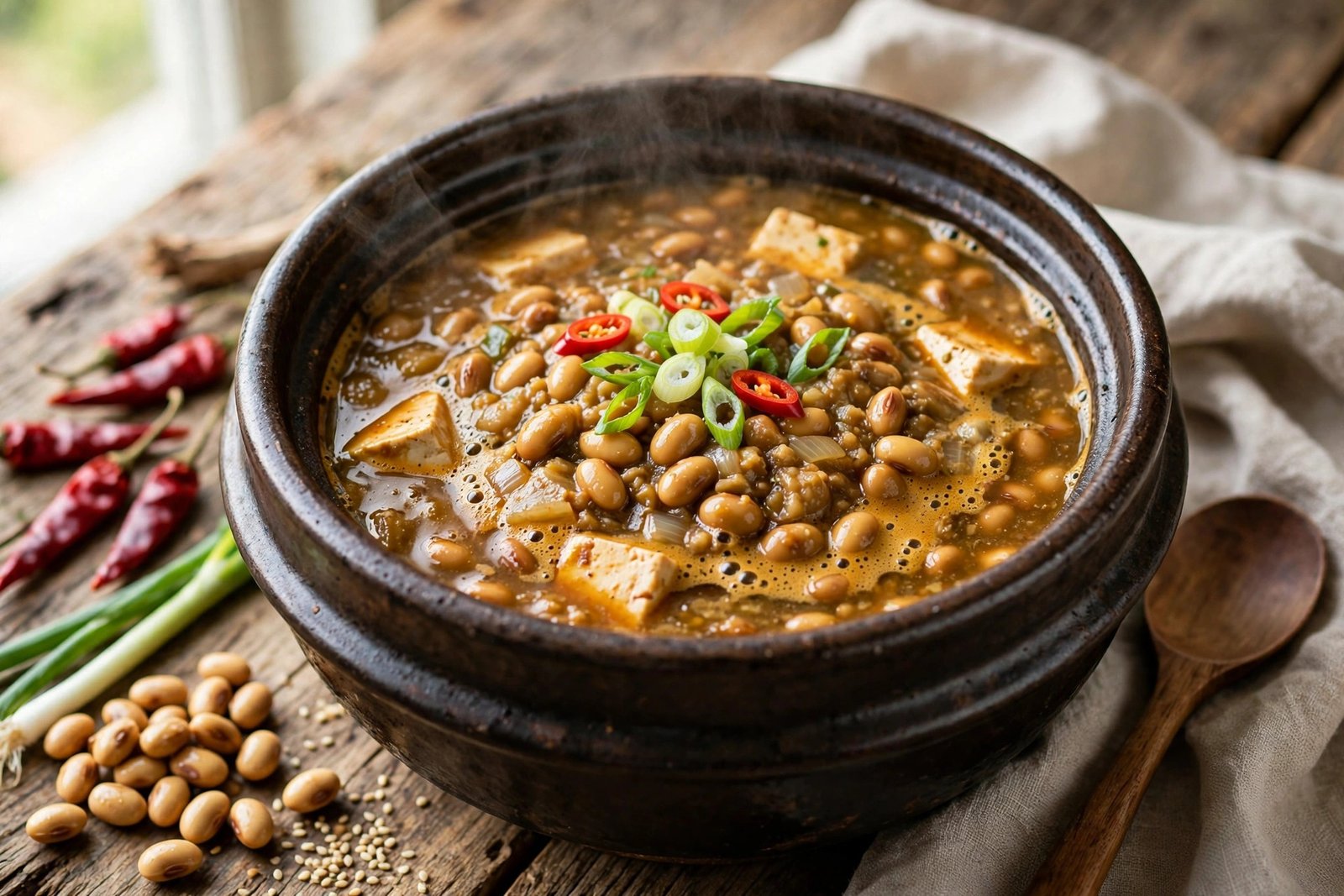
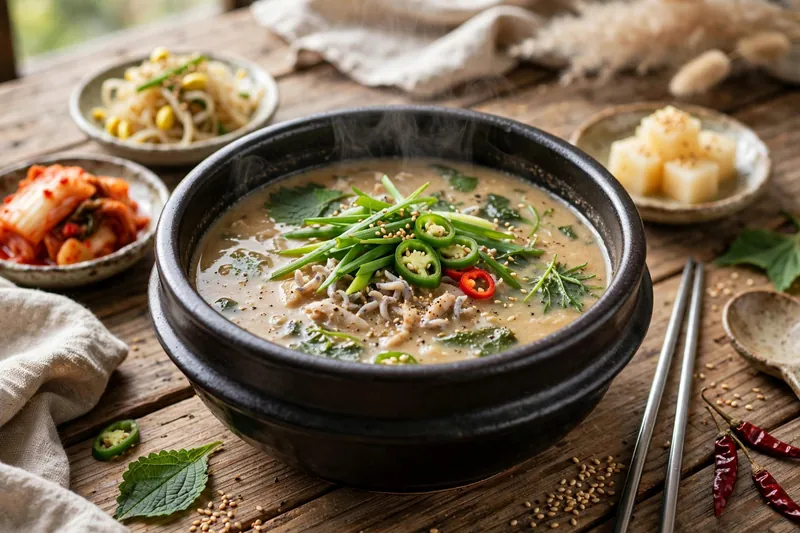
Cheonggukjang is a bold Korean fermented soybean stew, famous for its strong aroma and deep, earthy flavour. It is packed with tofu, mushrooms and greens, and is beloved as a hearty, healthy comfort food. Serve it bubbling hot with steamed rice and kimchi.
- Prep time
- 15 mins
- Cook time
- 25 mins
- Total time
- 40 mins
- Servings
- 4 servings
- Calories
- 320
Ingredients
- 200 g cheonggukjang (fermented soybean paste)
- 1 litre water or anchovy stock
- 200 g firm tofu, cubed
- 100 g mushrooms, sliced
- 1 small courgette, diced
- 1/2 onion, sliced
- 2 spring onions, chopped
- 1 tbsp soy sauce
- 1 garlic clove, minced
- 1 green chilli, sliced
- 1 tsp gochugaru (Korean chilli flakes)
- Steamed rice, to serve
Instructions
- Bring the water or stock to a boil in a pot. Stir in the cheonggukjang paste until it dissolves.
- Add the onion, courgette and mushrooms and simmer for 10 minutes until the vegetables soften.
- Stir in the tofu, garlic, soy sauce and gochugaru. Simmer for 8 minutes more.
- Add the spring onions and green chilli and cook for 2 minutes.
- Taste and adjust the seasoning; the stew should be deeply savoury with a gentle heat.
- Serve bubbling hot in bowls with steamed rice and kimchi on the side.
Pro tips
- Cheonggukjang has a strong smell while cooking, so open a window or switch on the extractor fan.
- Use a good-quality paste from a Korean supermarket for the most authentic flavour.
- Add the tofu late so it keeps its shape.
- Leftovers taste even better the next day as the flavours develop.
Frequently asked questions
What is cheonggukjang?
Cheonggukjang is a Korean fermented soybean paste, similar to doenjang but fermented for a shorter time, giving it a stronger flavour and aroma.
Is cheonggukjang healthy?
Yes, it is rich in protein, fibre and probiotics from fermentation, and is traditionally eaten as a wholesome, nourishing stew.
What is the difference between cheonggukjang and doenjang?
Cheonggukjang ferments for only a few days, so it is stronger and more pungent, while doenjang ferments for months and is milder and sweeter.
Can I add meat?
Yes, small pieces of pork or beef are sometimes added, but the classic version is made with tofu and vegetables.