Dak Galbi
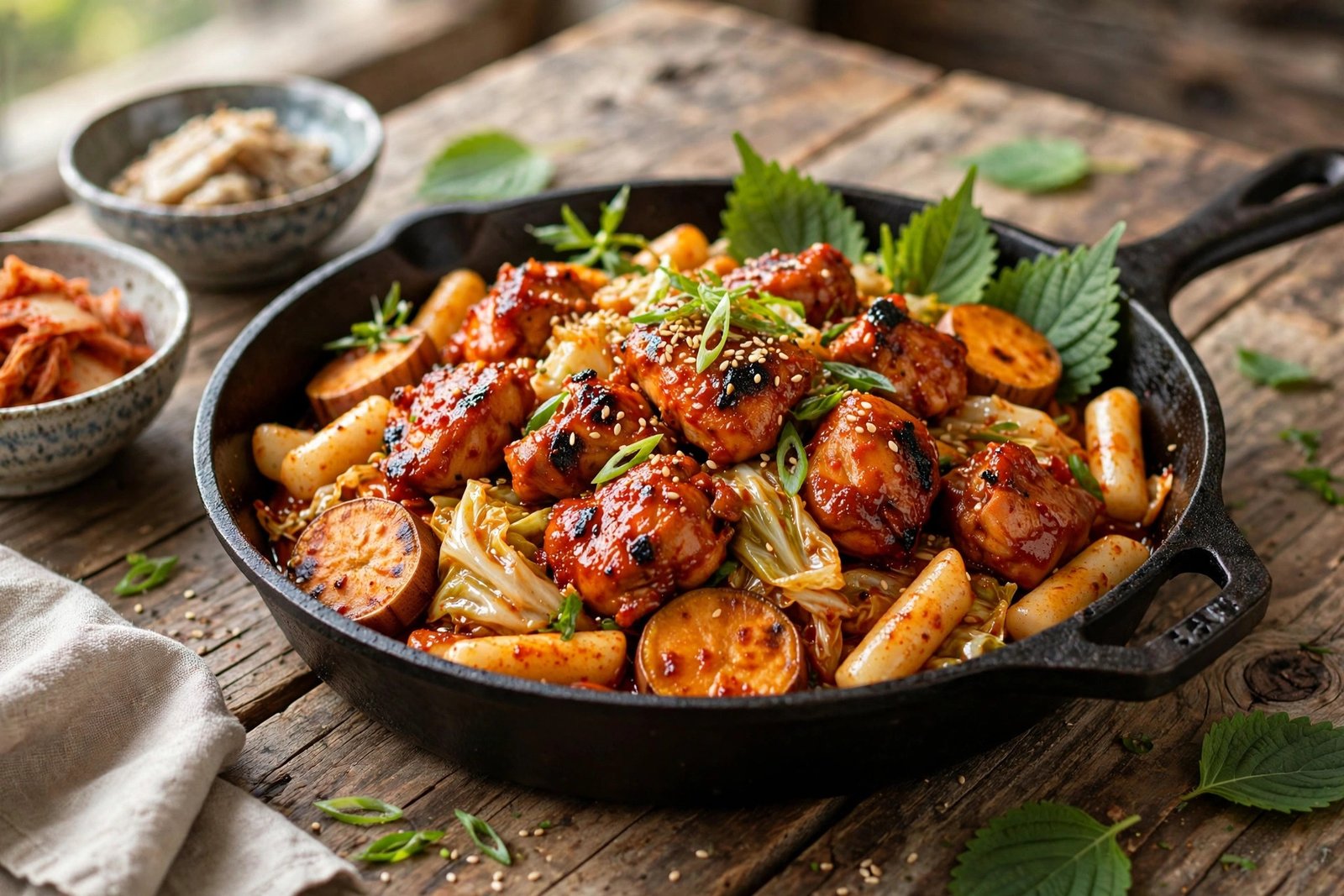
Chicken thighs sizzle in a fiery gochujang glaze with cabbage, sweet potato, and chewy rice cakes in this Korean street-food favorite. It is sweet, spicy, and deeply satisfying. Add a blanket of melted cheese for the full experience.
- Prep time
- 25 mins
- Cook time
- 25 mins
- Total time
- 50 mins
- Servings
- 4 servings
- Calories
- 490
Ingredients
- 700g boneless, skinless chicken thighs, cut into bite-size pieces
- 3 tablespoons gochujang (Korean chilli paste)
- 1 tablespoon gochugaru (Korean chilli flakes)
- 2 tablespoons soy sauce
- 1 tablespoon sugar
- 1 tablespoon grated garlic (about 3 cloves)
- 1 teaspoon grated fresh ginger
- 1 tablespoon sesame oil, plus more for serving
- 300g green cabbage, cut into bite-size pieces
- 1 medium sweet potato (about 200g), peeled and thinly sliced
- 200g Korean rice cakes (tteok), soaked if refrigerated
- 4 spring onions, cut into 5cm lengths
- 1 tablespoon toasted sesame seeds
Instructions
- Stir together the gochujang, gochugaru, soy sauce, sugar, garlic, ginger, and sesame oil. Coat the chicken thoroughly and marinate for at least 20 minutes, or overnight in the fridge for deeper flavor.
- Heat a large heavy skillet or wok over medium-high heat with a drizzle of neutral oil.
- Add the sweet potato and cabbage and stir-fry for 3 to 4 minutes until the cabbage just begins to wilt.
- Push the vegetables aside, add the chicken with all its marinade, and cook for 8 to 10 minutes, stirring, until the chicken is nearly cooked through.
- Stir in the rice cakes and a splash of water, cover, and steam for 3 to 4 minutes until the rice cakes turn soft and chewy.
- Uncover and stir-fry for 2 to 3 more minutes until the sauce thickens into a glossy glaze coating everything.
- Toss through the spring onions and sesame seeds, and drizzle with a little more sesame oil.
- Serve bubbling hot, with steamed rice on the side — and a blanket of melted mozzarella on top if you like it Korean street-style.
Pro tips
- Marinate overnight when you can; the gochujang penetrates the chicken and the flavor deepens remarkably.
- Keep the heat high and the pan uncrowded so everything sears rather than stews.
- If your rice cakes were refrigerated, soak them in warm water for 10 minutes first so they cook evenly.
- For the classic finish, stir cooked rice into the leftover sauce in the pan and crisp it into fried rice.
Frequently asked questions
How spicy is dak galbi?
It has a warming, building heat rather than a fierce burn. Reduce the gochugaru by half for a milder version, or add an extra spoonful if you love heat.
What can I use instead of Korean rice cakes?
Sliced firm rice cakes are traditional, but gnocchi or thick udon noodles make surprisingly good substitutes for that chewy bite.
What do you serve with dak galbi?
Steamed white rice is essential for catching the sauce, plus simple banchan like kimchi and pickled radish to cut the richness.
Can I make dak galbi with chicken breast?
You can, but thighs stay juicier. If using breast, cut the pieces slightly larger and be careful not to overcook them.