Baek Kimchi Recipe
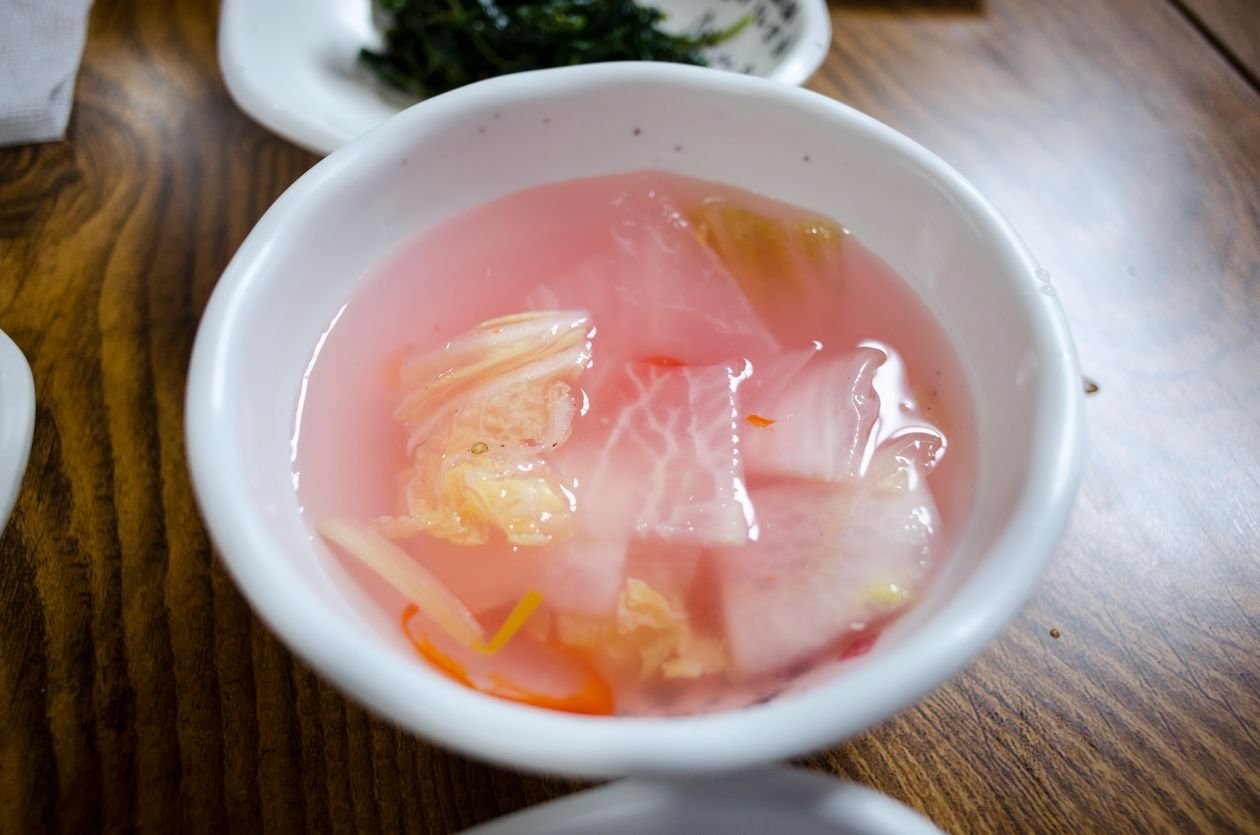
Cool, crisp, and gently tangy, baek kimchi is Korea's white kimchi, made without chilli flakes. Nappa cabbage and Korean radish soak in a light, pear-sweetened brine with pine nuts and jujube, then ferment slowly into something clean and refreshing. It is the kimchi for people who love crunch and brightness without the heat, and it sits beautifully next to rich or spicy food.
The story behind Baek Kimchi
Kimchi is Korea's best-known food, and most people picture the red, chilli-flecked version first. Baek kimchi is its quieter sibling. White kimchi is made without gochugaru, the chilli flakes that give red kimchi its colour and heat, and it has been part of Korean cooking for centuries, long before chillies even reached Korea from the Americas in the 1500s. Early kimchi was always white: salted vegetables kept in brine through the winter, when fresh greens were scarce. Baek kimchi keeps that older tradition alive.
In Korean homes, white kimchi is a royal-court dish that became a family staple. It was served at court because its pale, clear brine looked elegant and its flavour was gentle enough to sit beside any dish. Today it appears as a banchan, one of the small side dishes that fill a Korean table, and it is the kimchi people reach for when they want something cool and refreshing. It is especially popular in summer, when its crisp texture and mild tang cut through the heat of grilled meat and spicy stews.
What makes baek kimchi special is its restraint. Without chilli paste, every other flavour has to earn its place: the pear gives a soft sweetness, the pine nuts add a buttery richness, the jujubes bring a gentle, date-like note, and the ginger and garlic give a clean warmth without any burn. The brine itself is the star, clear and lightly salty, turning slowly sour as the good bacteria do their work. A spoonful of the brine is as much a part of the dish as the cabbage.
Cook this when you want to try fermentation without the wait or the heat of red kimchi. The hands-on work takes about 45 minutes, and the kimchi is ready to eat in 2 days, far faster than many fermented foods. It is a good first kimchi for a beginner, and a good change of pace for anyone who already makes the red kind. Serve it cold, in a small bowl, and watch how quickly it disappears next to anything rich or spicy.
- Prep time
- 45 mins
- Cook time
- 0 mins
- Total time
- 45 mins
- Servings
- 4 servings
- Calories
- 90
Ingredients
- 1 medium nappa cabbage (about 1 kg), cut into large pieces
- 120 g coarse sea salt, for brining
- 1 small Korean radish or daikon (about 300 g), cut into thin strips
- 1 Asian pear, peeled and cut into thin strips
- 4 spring onions, cut into 4 cm pieces
- 3 garlic cloves, thinly sliced
- 1 tablespoon fresh ginger, cut into thin strips
- 1 tablespoon pine nuts
- 4 dried jujubes, pitted and sliced
- 1 red chilli, deseeded and sliced, plus chilli threads to garnish
- 2 tablespoons fish sauce
- 1 tablespoon sugar
- 1 litre water, for the brine
Instructions
- Cut the nappa cabbage into large pieces, about 5 cm across, and put them in a big bowl. Sprinkle the coarse sea salt over the leaves, turning them as you go so the salt reaches every layer. Leave the cabbage for 2 hours, turning it once halfway through. The salt draws the water out, and the leaves will wilt and soften noticeably.
- Rinse the cabbage three times in cold water to wash away the extra salt, then squeeze each piece gently to remove as much water as you can. Taste a leaf: it should be pleasantly salty but not harsh. If it tastes too salty, rinse it once more. Drain the cabbage well in a colander for 20 minutes.
- While the cabbage drains, make the brine. Stir the water, fish sauce, and sugar together in a jug until the sugar dissolves. This brine is deliberately light and clear, because baek kimchi has no chilli paste to hide behind; the balance of salt, sweet, and sour is the whole flavour.
- Put the drained cabbage in a large clean bowl and add the radish strips, pear strips, spring onions, garlic, ginger, pine nuts, jujubes, and sliced chilli. Toss everything gently with your hands so the ingredients are spread through the cabbage leaves, not clumped in one spot. The pear and the radish should be tucked between the leaves.
- Pack the mixture into a clean glass jar or a kimchi container, pressing down firmly so there are no air pockets. Pour the brine over the top until the cabbage is fully covered. Leave about 3 cm of space at the top of the jar, because the brine will rise and bubble as the kimchi ferments.
- Put the lid on loosely, or cover the jar with a cloth held in place with a rubber band, and leave it at room temperature for 2 days. You will see small bubbles rising through the brine and smell a gentle sourness developing. This is the fermentation at work, and it is exactly what you want to see.
- Taste the kimchi after 2 days. The brine should taste lightly tangy and the cabbage should be crisp and pleasantly sour. If it still tastes plain and salty, leave it for one more day. When you are happy with the tang, screw the lid on tightly and move the jar to the fridge.
- Chill the kimchi for at least 1 day before serving, so the flavours settle and the brine clears. Serve it cold, in a small bowl, with a little of its brine spooned over the top. It is at its best within the first 2 weeks, while the cabbage is still crisp and the flavour is bright and clean.
Pro tips
- Use coarse sea salt, not fine table salt. Fine salt dissolves too fast and can make the cabbage mushy, while coarse salt draws the water out slowly and evenly.
- Taste a rinsed leaf before you pack the jar. It should be pleasantly salty, not harsh. If it is too salty, rinse once more; if it is bland, sprinkle on a little more salt.
- Leave 3 cm of space at the top of the jar. The brine rises and bubbles as the kimchi ferments, and a jar filled to the brim will overflow onto your counter.
- Keep the vegetables pressed under the brine. A small clean glass weight, or even a zip-lock bag of salted water, works well to hold everything down.
- Start tasting after 2 days. The difference between crisp and tangy, and soft and sour, can be a single warm afternoon, so check it daily.
Variations & serving ideas
Swap the pear for a crisp apple if Asian pears are hard to find. The apple gives the same gentle sweetness, though the flavour is a little sharper. A few slices of Korean radish are essential for crunch, but daikon works just as well, and a little kohlrabi adds a similar bite. If you like a touch of colour without heat, add a few thin strips of red pepper or a small handful of chilli threads on top for garnish only.
For a richer version, add a spoonful of pine nuts and a few more jujubes, which are the classic royal-court touches. For a simpler everyday version, leave the pine nuts and jujubes out entirely; the kimchi is still good with just cabbage, radish, pear, ginger, and garlic. A splash of the juice from a jar of pickled radish, if you have one, gives the brine a head start on its tang.
Serve baek kimchi as a banchan alongside rice, grilled meat, or a spicy stew, where its cool crunch balances the main dish. It is also good chopped into a cold noodle soup or served with a bowl of hot rice porridge, where the mild sourness wakes up the plain flavours. The brine makes a lovely base for a chilled cucumber soup, too, thinned with a little water and served with ice.
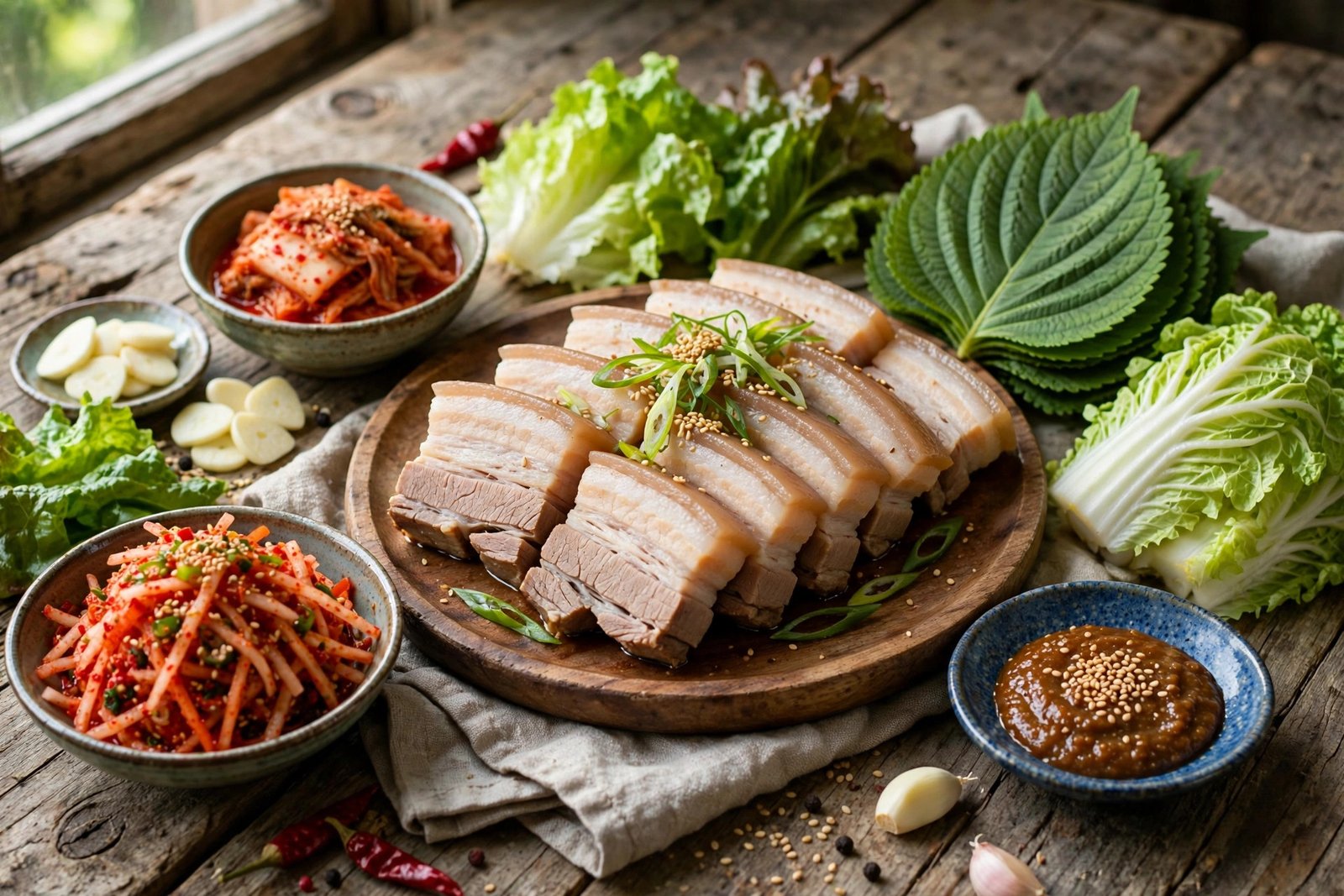
Pair the kimchi with foods that need a fresh, crisp contrast. Grilled pork belly, fried chicken, and rich stews all benefit from a small bowl of white kimchi on the side. A cold barley tea or a light lager sits well alongside it, and the meal stays balanced without anything heavy. Keep the rest of the table simple; the kimchi is there to refresh the palate, not to compete with the main dish.
Getting it right
The key technique is salting the cabbage properly. Coarse sea salt draws water out of the leaves, which does two things: it makes the cabbage flexible enough to fold into the jar, and it creates the salty environment the good bacteria need to ferment safely. Two hours is about right for nappa cabbage; less, and the leaves stay stiff and the kimchi turns watery. Rinse well afterwards, because too much salt left on the leaves will make the finished kimchi harsh.
Temperature control is the second skill. Fermentation moves faster in a warm room and slower in a cool one, so taste the kimchi daily once it has been out for a day. You are looking for a light, pleasant tang, not a sharp sourness. When it tastes right, move it to the fridge, because the cold slows the bacteria down and holds the flavour where you want it. Leaving it out too long gives you a sour, soft kimchi instead of a crisp, mild one.
The common mistakes are easy to fix. Kimchi that turns mushy was usually salted too briefly or left at room temperature too long; next time, salt a little longer and refrigerate a day earlier. A jar with vegetables poking above the brine can develop an off smell, so press everything down and top up with a little salted water if the level drops. And always use clean hands and clean jars; stray bacteria from dirty equipment are the one thing that can truly spoil a batch.
Storing & reheating
Baek kimchi keeps in the fridge for 4 to 6 weeks in a sealed jar, and the flavour slowly deepens as it ages. Always use a clean fork or tongs to take some out, because stray food or dirty hands can spoil the batch. Keep the vegetables pressed down under the brine, since any pieces left exposed to the air can soften or develop an off smell.
Do not freeze kimchi. Freezing kills the live cultures and turns the cabbage limp and watery when it thaws. If you have made a large batch, it is better to keep it cold in the fridge and eat it over a few weeks. The brine itself can be reused once to start a new batch of lightly pickled vegetables, though the second batch will be milder than the first.
Frequently asked questions
Can I make baek kimchi without chillies?
Yes, and it is an easy one. Just leave out the chillies and the chilli threads. The kimchi is still full of flavour from the ginger, garlic, pear, and brine, and it stays mild and refreshing.
How do I know when the kimchi is ready?
Start tasting it after 2 days at room temperature. When it smells pleasantly sour and the brine tastes lightly tangy, move it to the fridge. In a cool kitchen it may take 3 days; in a warm one, it can be ready in 1 to 2 days.
Why is the brine bubbly?
It is normal. The pear and the natural sugars in the cabbage feed the good bacteria, and a little fizz is a sign the fermentation is active. As long as it smells fresh and sour, not rotten, it is fine. Give it a stir and move it to the fridge.
Can I keep baek kimchi for a long time?
Yes, and this is the best way to keep it. Unopened, it can keep for 2 to 3 months in the fridge, and the flavour slowly deepens. Once you open it, use a clean fork each time and it will keep well for several weeks.
Can I use a different cabbage?
Nappa cabbage is the classic choice because its leaves are tender and fold well. Savoy cabbage works as a substitute, but it is tougher and less sweet, so salt it a little longer and expect a firmer bite.
How do I serve baek kimchi?
Serve it as a banchan, a small side dish, alongside rice and a main course. It is especially good with grilled meat, fried food, and spicy stews, where its cool crunch balances the heat and the richness.