Bossam Recipe
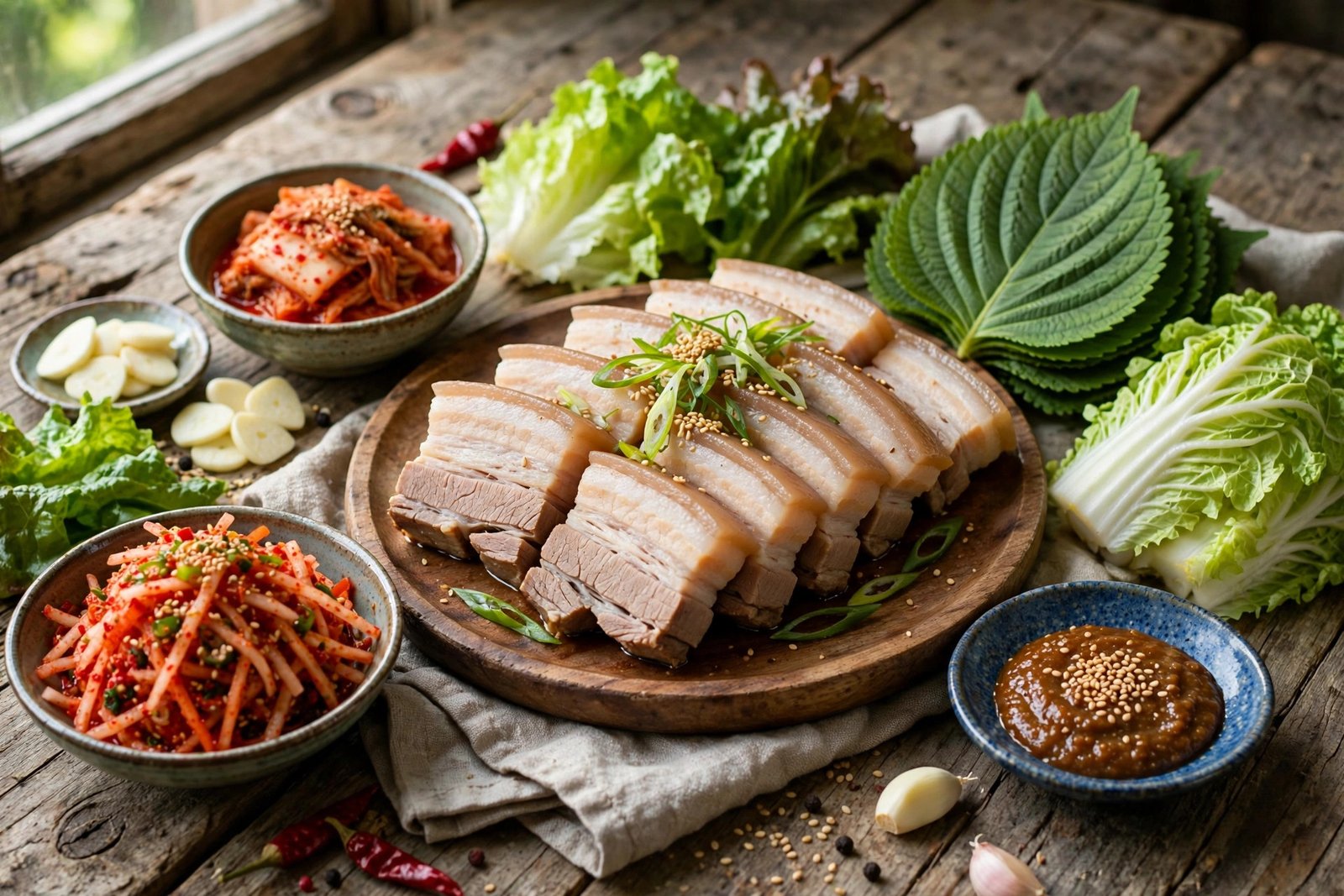
Tender slices of boiled pork belly wrapped in lettuce with kimchi, garlic, and ssamjang — Bossam is Korea's most sociable dish, built for sharing around the table. It is fresh, savory, and endlessly customizable.
Advertisement
- Prep time
- 15 mins
- Cook time
- 1 hr 10 mins
- Total time
- 1 hr 25 mins
- Servings
- 4 servings
- Calories
- 640
Advertisement
Ingredients
- 1.5 lb (700 g) pork belly, in one piece
- 1 small onion, quartered
- 1 (2-inch) piece fresh ginger, sliced
- 4 cloves garlic, smashed
- 2 tablespoons doenjang (Korean soybean paste)
- 1 tablespoon sugar
- 1 teaspoon black peppercorns
- 2 bay leaves
- 1 head butter lettuce or romaine, leaves separated
- 1 cup kimchi, chopped
- 4 cloves garlic, thinly sliced
- 2 green onions, thinly sliced
- 3 tablespoons ssamjang, to serve
- 1 green chili, thinly sliced, to serve
Instructions
- Place the pork belly in a large pot with the onion, ginger, smashed garlic, doenjang, sugar, peppercorns, and bay leaves. Cover with water.
- Bring to a boil, then reduce to a gentle simmer. Cook for 60 minutes until the pork is tender when pierced with a skewer.
- Remove the pork and rest for 10 minutes. Reserve the cooking liquid for soup if you like.
Advertisement
- Slice the pork belly into thin, even slices, about 1/4 inch thick.
- Arrange the pork on a platter with the lettuce leaves, kimchi, sliced garlic, green onions, ssamjang, and chili.
- To eat, place a slice of pork on a lettuce leaf, add kimchi, garlic, and a dab of ssamjang, fold into a small bundle, and eat in one bite.
Advertisement
Pro tips
- Simmer, never boil hard — gentle heat keeps the pork tender and juicy.
- Doenjang in the cooking water removes any porky smell and adds a subtle savory depth.
- Rest the pork before slicing so the juices settle and the slices hold together.
- Serve everything at the table and let everyone build their own wraps.
Advertisement
Frequently asked questions
What is bossam?
Boiled pork belly served with lettuce leaves, kimchi, garlic, and ssamjang for wrapping. It is a classic Korean party dish, eaten with the hands.
Can I use pork shoulder instead of belly?
Yes — pork shoulder works well and is leaner, though it will be slightly less rich. Cook it the same way.
What is ssamjang?
A savory dipping paste made from doenjang and gochujang, often with garlic and sesame. It is the classic partner for lettuce wraps.
What do I do with the cooking liquid?
Strain it and use it as a light soup base, or simmer it down with kimchi for a quick kimchi jjigae.
Advertisement