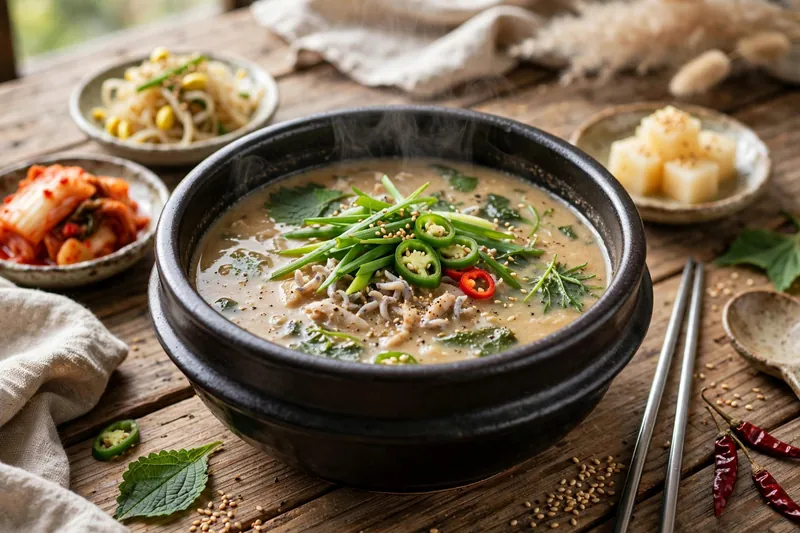
Bibimbap Recipe

Bibimbap, which means mixed rice in Korean, is one of Korea's most beloved comfort dishes. Warm steamed rice is topped with colorful seasoned vegetables, savory marinated beef, and a sunny fried egg, then finished with a spoonful of spicy gochujang sauce. Just before eating, everything is mixed together into a warm, crunchy, deeply satisfying bowl.
- Prep time
- 30 mins
- Cook time
- 25 mins
- Total time
- 55 mins
- Servings
- 4 servings
- Calories
- 640
Ingredients
- 4 cups cooked short-grain white rice, kept warm
- 1/2 lb (225 g) beef sirloin, cut into thin strips
- 2 tablespoons soy sauce
- 1 tablespoon sesame oil, plus more for drizzling
- 2 cloves garlic, minced
- 1 teaspoon sugar
- 2 cups fresh spinach
- 2 medium carrots, cut into thin matchsticks
- 1 cup bean sprouts
- 4 shiitake mushrooms, thinly sliced
- 4 large eggs
- 4 tablespoons gochujang (Korean chili paste), for serving
Instructions
- In a bowl, toss the beef strips with the soy sauce, 1 tablespoon sesame oil, the minced garlic, and the sugar. Set aside to marinate for 15 minutes while you prepare the vegetables.
- Blanch the spinach in boiling salted water for 30 seconds, then rinse under cold water and squeeze dry. Toss with a drizzle of sesame oil and a pinch of salt. Blanch the bean sprouts the same way for 1 minute and season lightly.
- Heat a large skillet over medium-high heat with a little oil. Sear the marinated beef for 3 to 4 minutes until browned and cooked through, then transfer to a plate.
- In the same skillet, saute the carrots for 2 minutes until just tender, then the mushrooms for 3 minutes until golden. Season each vegetable with a pinch of salt as you go.
- Fry the eggs sunny-side up in a lightly oiled pan until the whites are set but the yolks are still runny, about 3 minutes.
- Divide the warm rice among four wide bowls. Arrange the beef, spinach, bean sprouts, carrots, and mushrooms in neat sections over the rice.
- Top each bowl with a fried egg, add a spoonful of gochujang, and drizzle with sesame oil. Mix everything together at the table and enjoy.
Pro tips
- For the classic crispy bottom (dolsot bibimbap), assemble in a very hot oiled stone or cast-iron bowl so the rice crackles.
- Keep each vegetable separate and lightly seasoned so every bite tastes different before mixing.
- Start with 1 tablespoon of gochujang per bowl and add more to taste — it is spicier than it looks.
- Short-grain rice works best because it is sticky enough to hold the toppings.
Frequently asked questions
What does bibimbap mean?
Bibimbap literally means mixed rice in Korean. The name describes how you stir all the toppings into the rice with gochujang sauce right before eating.
Can I make bibimbap vegetarian?
Yes. Skip the beef and add extra mushrooms, tofu, or a second egg. The seasoned vegetables and gochujang carry plenty of flavor on their own.
What can I use instead of gochujang?
Gochujang gives bibimbap its signature sweet heat. In a pinch, mix sriracha with a little miso paste and honey, though the flavor will be different.
How do I get crispy rice at the bottom?
Use a screaming-hot oiled stone bowl (dolsot) or cast-iron skillet, press the rice down firmly, and let it sit undisturbed for 2 to 3 minutes before adding the toppings.