Hijiki no Nimono Recipe
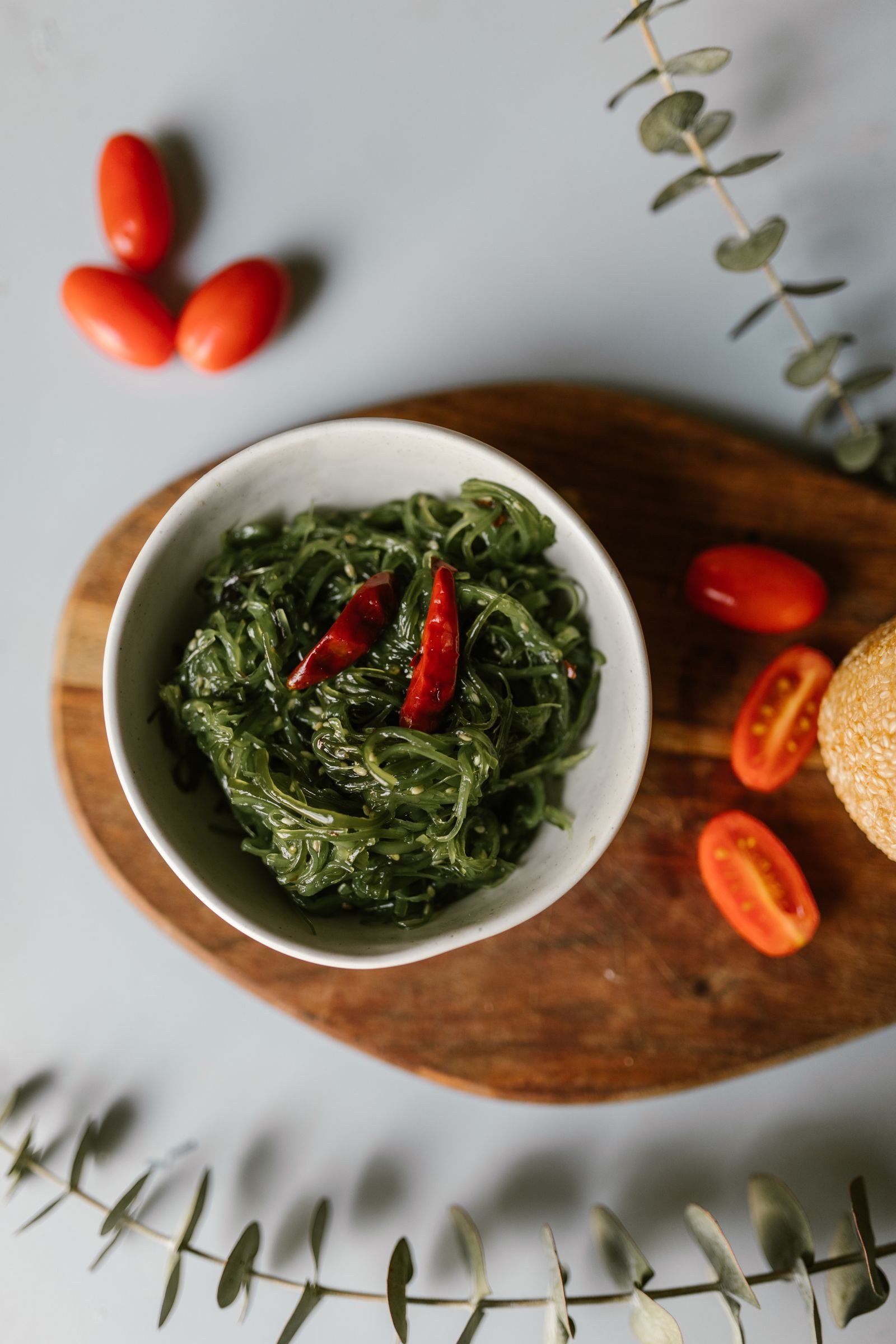
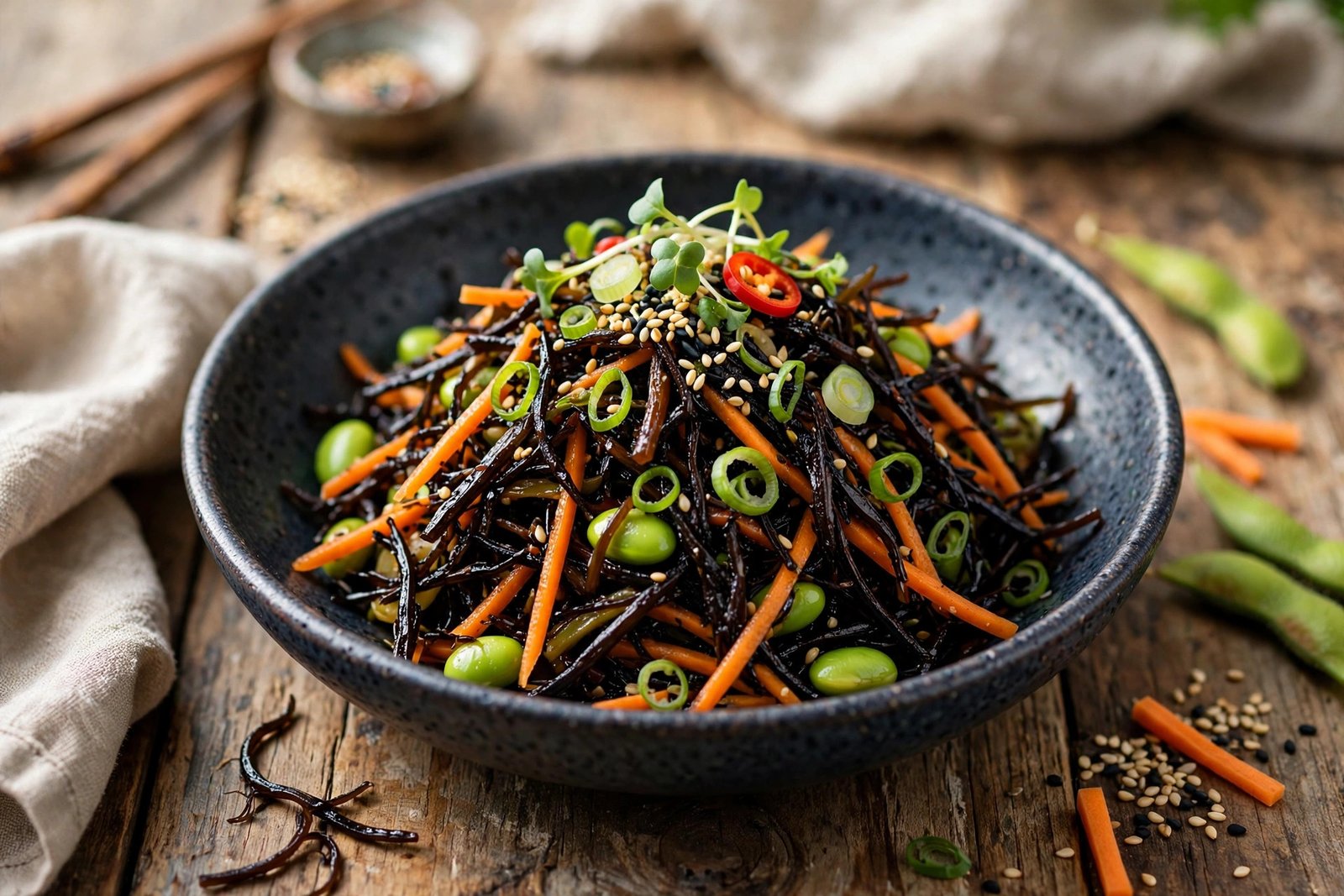
Hijiki no Nimono is a quiet classic of Japanese home cooking: dark hijiki seaweed simmered with carrots, fried tofu and edamame in a sweet-savoury dashi broth. It is soft, salty-sweet and deeply savoury, and it sits happily next to rice, grilled fish or a bowl of miso soup. It is the kind of dish that makes a meal feel complete. It is soft, salty-sweet and deeply savoury.
The story behind Hijiki no Nimono
Hijiki is a brown seaweed that grows on the rocky coasts of Japan, Korea and China, and it has been gathered and eaten in Japan for centuries. After harvesting, it is boiled, dried and sold in small dark strands that swell up when soaked. It was once a staple of coastal villages, where seaweed was a free and reliable source of food from the shore. After harvesting, the seaweed is boiled, dried and sold in small dark strands that swell up when soaked, and it was once a staple of coastal villages.
Nimono means simmered food, and this dish is a classic example of the style: a few simple ingredients cooked slowly in dashi, soy sauce, mirin and sake until the flavours sink in. It belongs to the world of Japanese home cooking, the kind of food grandmothers made in large pots and served as part of a spread of small dishes. It also appears in obento lunch boxes, where its dark colour and long keeping time make it practical. It belongs to the world of Japanese home cooking, the kind of food made in large pots and served as part of a spread of small dishes at the table.
What makes it special is the texture and the taste. The hijiki turns soft and slightly chewy, the carrots stay firm and sweet, and the fried tofu soaks up the broth like a sponge. The seasoning is gentle: sweet from the mirin, salty from the soy, and savoury from the dashi. It is a dish that rewards patience, and it tastes better the next day. The seasoning is gentle, with sweetness from the mirin, salt from the soy, and a savoury depth from the dashi, so it tastes balanced rather than strong.
Cook it when you want a healthy, make-ahead side dish. It suits a Japanese-style dinner, a packed lunch, or any meal that needs a small, savoury vegetable dish on the side. Make a batch, keep it in the fridge, and spoon a little onto the table for several days. Make a batch, keep it in the fridge, and spoon a little onto the table for several days, since it tastes better the next day than on the day you make it.
- Prep time
- 20 mins
- Cook time
- 25 mins
- Total time
- 45 mins
- Servings
- 4 servings
- Calories
- 180
Ingredients
- 30 g dried hijiki seaweed
- 1 medium carrot, peeled and cut into thin matchsticks
- 1 sheet aburaage (fried tofu pouch), blanched and sliced into strips
- 80 g shelled edamame, fresh or frozen
- 200 ml dashi stock
- 2 tablespoons soy sauce
- 2 tablespoons mirin
- 1 tablespoon sake
- 1 tablespoon sugar
- 1 tablespoon vegetable oil
- 1 teaspoon toasted sesame seeds, to serve
Instructions
- Put the dried hijiki in a bowl and cover with plenty of cold water. Leave it to soak for 15 to 20 minutes, until the strands swell and soften. Drain it in a fine sieve and rinse under cold water, then squeeze out the excess water gently.
- Blanch the aburaage by pouring boiling water over it in a sieve, which removes the excess oil. Let it cool for a minute, then slice it into thin strips about 5 mm wide. This step keeps the finished dish from tasting greasy.
- Warm the oil in a wide frying pan or a shallow pot over medium heat and add the drained hijiki. Stir-fry for 2 minutes, until the strands glisten and smell faintly of the sea. This brief fry wakes up the flavour of the seaweed.
- Add the carrot matchsticks and the aburaage strips and stir-fry for 1 minute more, so everything is coated in oil and the carrots start to soften at the edges.
- Pour in the dashi, soy sauce, mirin, sake and sugar and stir well. Bring the liquid to a gentle simmer, with small bubbles breaking across the surface, and turn the heat down to low.
- Simmer, uncovered, for 15 minutes, stirring now and then, until the liquid has reduced by about two thirds and the hijiki has turned soft and glossy. The carrots should be tender but still hold their shape.
- Stir in the edamame and cook for 2 minutes more, just long enough to heat them through and let them pick up the flavour of the broth. Taste and add a splash more soy sauce if it needs salt.
- While the hijiki soaks, peel and cut the carrot into matchsticks, so everything is ready to go into the pan at the same time.
- While the dish simmers, toast the sesame seeds in a dry pan over medium heat for 1 to 2 minutes, shaking the pan often, until they smell nutty and turn a shade darker. Set them aside in a small bowl, and check the hijiki for tenderness, tasting a strand to make sure it is soft and glossy before you add the edamame, and add a splash more soy sauce if the broth tastes flat.
- Take the pan off the heat and let the dish cool for 10 minutes so the remaining broth soaks into the hijiki. Serve warm or at room temperature, sprinkled with toasted sesame seeds.
Pro tips
- Soak the hijiki properly. Fifteen to twenty minutes in cold water is enough to soften it, but dried strands that go into the pan too soon will stay tough and chewy no matter how long you simmer them.
- Blanch the aburaage before you use it. The pouch is fried in oil, and pouring boiling water over it removes the excess so the dish stays clean-tasting rather than greasy.
- Do not overcook the carrots. They should be tender but still have a little bite, and they will keep cooking in the hot broth after you take the pan off the heat.
- Simmer the dish uncovered so the liquid reduces. A lid traps the steam and leaves the broth thin, while an open pan lets it thicken into a glossy coating that clings to the seaweed.
- Let it rest before serving. The hijiki keeps absorbing the broth as it cools, and the flavour deepens noticeably after 10 minutes. This dish is often better the next day than it is on the day you make it. The hijiki keeps absorbing the broth as it cools, and the flavour deepens noticeably after 10 minutes, so let it rest before serving.
Variations & serving ideas
For a richer version, add a handful of sliced shiitake mushrooms with the carrots. They bring a deep, earthy flavour and a meaty texture that suits the sweet-savoury broth. Dried shiitake work well too, if you soak them first and use the soaking liquid as part of the dashi. They bring a deep, earthy flavour and a meaty texture that suits the sweet-savoury broth, so add them with the carrots and let them simmer together. A few slices of simmered shiitake mushrooms add an earthy depth that suits the sweet-savoury broth very well.
Swap the edamame for cooked soybeans or a few snow peas, added in the last 2 minutes so they stay bright and crisp. Konnyaku, cut into small pieces and blanched, is another traditional addition that adds a chewy, springy texture to the dish. Konnyaku, cut into small pieces and blanched, is another traditional addition that adds a chewy, springy texture to the dish. If you cannot find hijiki, use wakame instead, though it is softer and milder, so simmer it for only five minutes.
If you cannot find dashi, use a light vegetable stock with a pinch of dried seaweed flakes, or a teaspoon of instant dashi powder dissolved in hot water. The flavour will be close, though the real dashi gives a cleaner, more delicate result. The flavour will be close, though the real dashi gives a cleaner, more delicate result that is worth the extra effort when you have it. Serve it in small bowls as part of a larger spread, with rice, grilled fish and miso soup alongside.
Serve it as a small side dish with steamed rice, grilled fish and miso soup, or pack it into a bento box where it keeps well. It pairs nicely with a cup of green tea, and a little goes a long way, so a small bowl is enough for each person. It pairs nicely with a cup of green tea, and a little goes a long way, so a small bowl is enough for each person at the table. A cup of green tea is the ideal partner, as its clean flavour matches the gentle seasoning of the dish.
Getting it right
The key technique is the simmer. Once the seasonings go in, the dish needs a gentle, uncovered simmer for about 15 minutes, with the liquid reducing slowly. This gives the hijiki time to absorb the broth and turn soft and glossy. Rushing it leaves the seaweed dry and the broth thin. Rushing it leaves the seaweed dry and the broth thin, while a slow simmer gives the hijiki time to absorb the broth and turn soft and glossy. Stir the pot now and then so the hijiki cooks evenly and the broth reduces at the same rate all over.
Heat and timing matter most at the start. The oil should be warm enough to fry the hijiki without burning it, and the carrots should go in before the liquid so they get a brief fry too. Once the broth is in, keep the heat low and steady, with small bubbles, never a rolling boil that would toughen the seaweed. Once the broth is in, keep the heat low and steady, with small bubbles, never a rolling boil that would toughen the seaweed.
The common mistake is adding too much liquid. The hijiki only needs enough broth to simmer in, and the dish should finish with the liquid mostly absorbed, not swimming. If you add too much dashi, the flavour will be diluted and the seaweed will taste watery. Measure the stock and let it reduce. If you add too much dashi, the flavour will be diluted and the seaweed will taste watery, so measure the stock and let it reduce.
Storing & reheating
This dish keeps well in a sealed container in the fridge for up to 4 days, and the flavour improves after the first night. Serve it cold or at room temperature straight from the fridge, or warm it gently in a pan over low heat. Serve it cold or at room temperature straight from the fridge, or warm it gently in a pan over low heat until it is just heated through.
It also freezes well for up to 1 month. Portion it into small containers and thaw overnight in the fridge. The hijiki holds its texture, though the carrots soften a little. It is one of the best Japanese dishes for making ahead and keeping on hand. The hijiki holds its texture, though the carrots soften a little, and it is one of the best Japanese dishes for making ahead and keeping on hand.
Frequently asked questions
What is hijiki seaweed?
Hijiki is a dark brown seaweed that grows on rocky coasts in East Asia. It is sold dried in thin strands, and it swells to several times its size when soaked. It has a mild, slightly sweet flavour and a soft, chewy texture. It is sold dried in thin strands that swell up when soaked.
Where can I buy hijiki?
Look in a Japanese or Asian grocery shop, where dried hijiki is sold in small packets, usually near the dried seaweed and mushrooms. It is also available online from Japanese food suppliers. Look in a Japanese or Asian grocery shop, where dried hijiki is sold in small packets, usually near the dried seaweed and mushrooms.
Is hijiki healthy?
Yes. Hijiki is rich in minerals, fibre and iron, and it is very low in calories. It is a traditional health food in Japan, often eaten as a small side dish rather than a main course. It is rich in minerals, fibre and iron, and very low in calories.
Can I use a different seaweed?
Wakame works too, though it is softer, so simmer it for only 5 minutes. The dish will taste different, but it still works well. Soak it briefly, as it swells fast, and simmer it for only 5 minutes, since wakame is softer and milder than hijiki.
What is aburaage?
Aburaage is a thin pouch of deep-fried tofu, sold in sheets in Japanese shops. It has a chewy texture and soaks up broth well. Blanching it in boiling water removes the excess oil before cooking. It has a chewy texture and soaks up broth well, and blanching it in boiling water removes the excess oil before cooking.
Can I make this dish ahead?
Yes, and it is better the next day. The hijiki absorbs the broth as it rests, and the flavour deepens. Make it up to 4 days ahead and keep it in the fridge. The hijiki absorbs the broth as it rests, and the flavour deepens, so make it up to 4 days ahead and keep it in the fridge.