Japanese Cheesecake Recipe
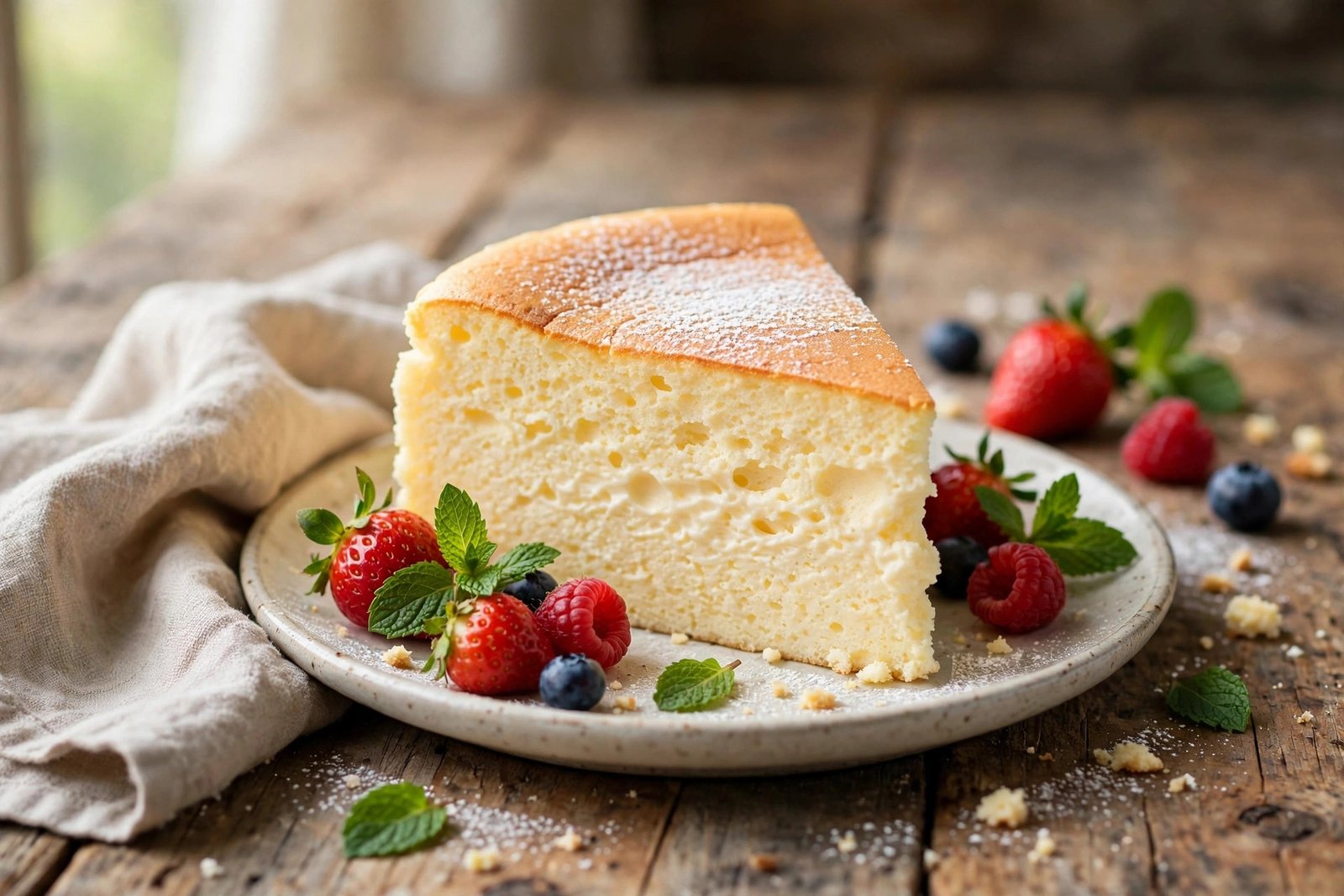
Japanese Cheesecake, also called cotton cheesecake, is famously light: a soufflé-like cake that wobbles gently and melts on the tongue. It is less sweet and less dense than Western cheesecake, with a delicate tang from the cream cheese.
Advertisement
- Prep time
- 20 mins
- Cook time
- 60 mins
- Total time
- 80 mins
- Servings
- 4 servings
- Calories
- 320
Ingredients
- 200 g cream cheese, softened
- 50 g unsalted butter
- 100 ml whole milk
- 6 large eggs, separated
- 60 g plain flour
- 20 g cornflour
- 120 g caster sugar
- 1 teaspoon lemon juice
- 1/4 teaspoon cream of tartar
- Icing sugar, for dusting
Instructions
- Heat the oven to 160°C and line a 20 cm round cake tin with baking paper, wrapping the outside in foil.
- Melt the cream cheese, butter and milk in a bowl over simmering water, stirring until smooth, then cool slightly.
- Whisk in the egg yolks one at a time, then sift in the flour and cornflour and mix until smooth.
- Beat the egg whites with the cream of tartar until foamy, then add the sugar gradually and beat to soft peaks.
- Fold one-third of the whites into the cheese mixture to loosen it, then fold in the rest gently in two batches.
- Pour into the tin, place in a deep tray and pour boiling water halfway up the tin for a water bath.
- Bake for 60 minutes, then turn off the oven and leave the cake inside for 15 minutes before cooling completely.
- Chill for at least 2 hours, dust with icing sugar and serve in thick slices.
Advertisement
Pro tips
- Room-temperature cream cheese melts smoothly and prevents lumps.
- Fold the egg whites gently; deflating them is the main reason the cake sinks.
- A water bath keeps the bake even and the texture soft and moist.
- Cool the cake slowly in the oven to avoid a dramatic collapse.
Frequently asked questions
Why is it called cotton cheesecake?
The name comes from its texture: soft, airy and light as cotton, thanks to the whipped egg whites folded into the batter.
Why did my cheesecake sink?
Overbeaten whites, a too-hot oven or opening the door early can all cause sinking. Bake gently and cool slowly.
Can I make it without a water bath?
You can, but the texture will be drier and the top may crack. The water bath is worth the extra step.
How long does it keep?
It keeps in the fridge for up to 3 days and tastes best chilled, dusted with icing sugar just before serving.