Chicken Katsu
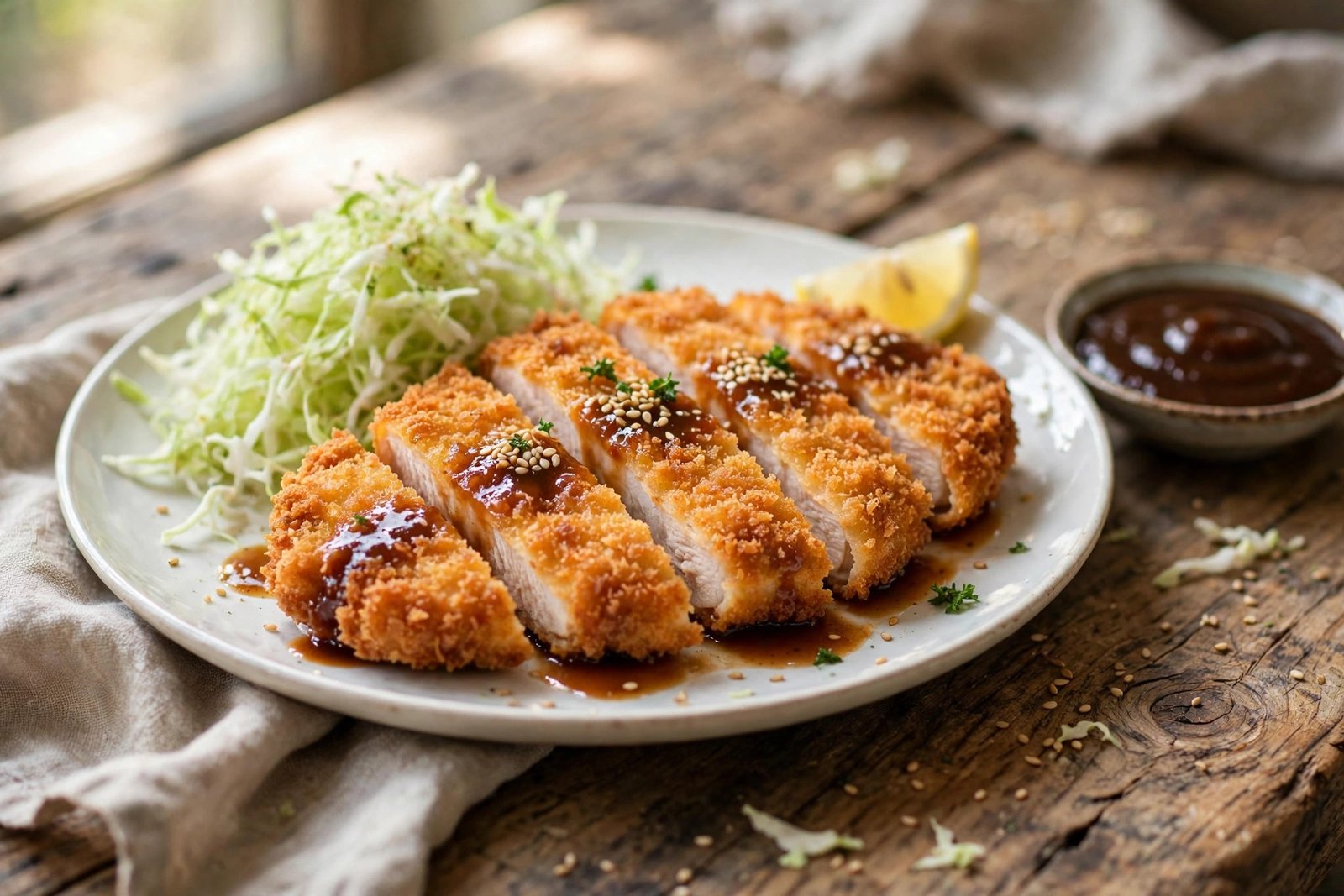
Chicken katsu is Japan's favorite comfort-food cutlet — juicy chicken breast in a shatteringly crisp panko crust, served with a sweet-savory tonkatsu sauce. Pounding the chicken evenly and breading it carefully gives a cutlet that stays crunchy without ever being greasy. Slice it over rice with shredded cabbage for a restaurant-style katsu plate at home.
- Prep time
- 15 mins
- Cook time
- 25 mins
- Total time
- 40 mins
- Servings
- 4 servings
- Calories
- 650
Ingredients
- 4 boneless chicken breasts (about 180 g each)
- 1 teaspoon salt
- 1/2 teaspoon black pepper
- 80 g all-purpose flour
- 2 large eggs, beaten
- 120 g panko breadcrumbs
- 500 ml neutral oil, for shallow frying
- 80 ml ketchup
- 2 tablespoons Worcestershire sauce
- 1 tablespoon oyster sauce
- 1 teaspoon sugar
- 2 cups finely shredded cabbage, to serve
- 2 cups steamed short-grain rice, to serve
Instructions
- Place each chicken breast between sheets of plastic wrap and pound to an even 1.5 cm thickness. Season both sides with salt and pepper.
- Set up a breading station: flour in one shallow dish, beaten eggs in a second, and panko in a third. Press each cutlet firmly into the flour, dip in egg, then coat thickly with panko, pressing so the crumbs adhere.
- Stir the ketchup, Worcestershire sauce, oyster sauce, and sugar in a small bowl until smooth to make the tonkatsu sauce. Set aside.
- Heat the oil in a large skillet to 170°C (340°F) over medium heat — the oil should come about halfway up the cutlets. A few panko crumbs dropped in should sizzle gently.
- Fry two cutlets at a time for 4 to 5 minutes per side until deep golden and crisp. Keep the temperature steady so the crust browns evenly.
- Transfer to a wire rack to drain for 2 minutes and rest. Check the thickest cutlet reads at least 74°C (165°F) inside.
- Slice each cutlet into 2 cm strips with a sharp knife, wiping the blade between cuts for clean edges.
- Serve over steamed rice with a mound of shredded cabbage, a generous drizzle of tonkatsu sauce, and a lemon wedge if you like.
Pro tips
- Pounding the chicken to an even thickness is the key — it cooks through at the same rate the crust turns golden.
- Press the panko on firmly; a loose coating falls off in the oil and leaves bald spots.
- Keep finished cutlets warm in a 120°C oven on a wire rack while you fry the second batch — never stack them on paper towels.
- For extra-crisp panko, buy coarse Japanese panko rather than fine crumbs.
- The tonkatsu sauce keeps in the fridge for 2 weeks and is also great on fries or grilled vegetables.
Frequently asked questions
Can I bake chicken katsu instead of frying?
You can — spray the breaded cutlets generously with oil and bake at 200°C for about 20 minutes, flipping once. It will be less crisp than fried katsu but still tasty.
Why did my coating fall off?
Usually the cutlets were wet or the crumbs weren't pressed on firmly enough. Pat the chicken dry, press the panko on hard, and rest the breaded cutlets 5 minutes before frying.
Can I use chicken thighs instead of breast?
Absolutely — boneless, skinless thighs make a juicier katsu. Pound them to even thickness and add about 1 minute per side to the frying time.
Is chicken katsu the same as tonkatsu?
Tonkatsu is the pork version; chicken katsu follows the same technique with chicken instead. The breading, sauce, and cabbage accompaniment are identical.