Kakavia Recipe
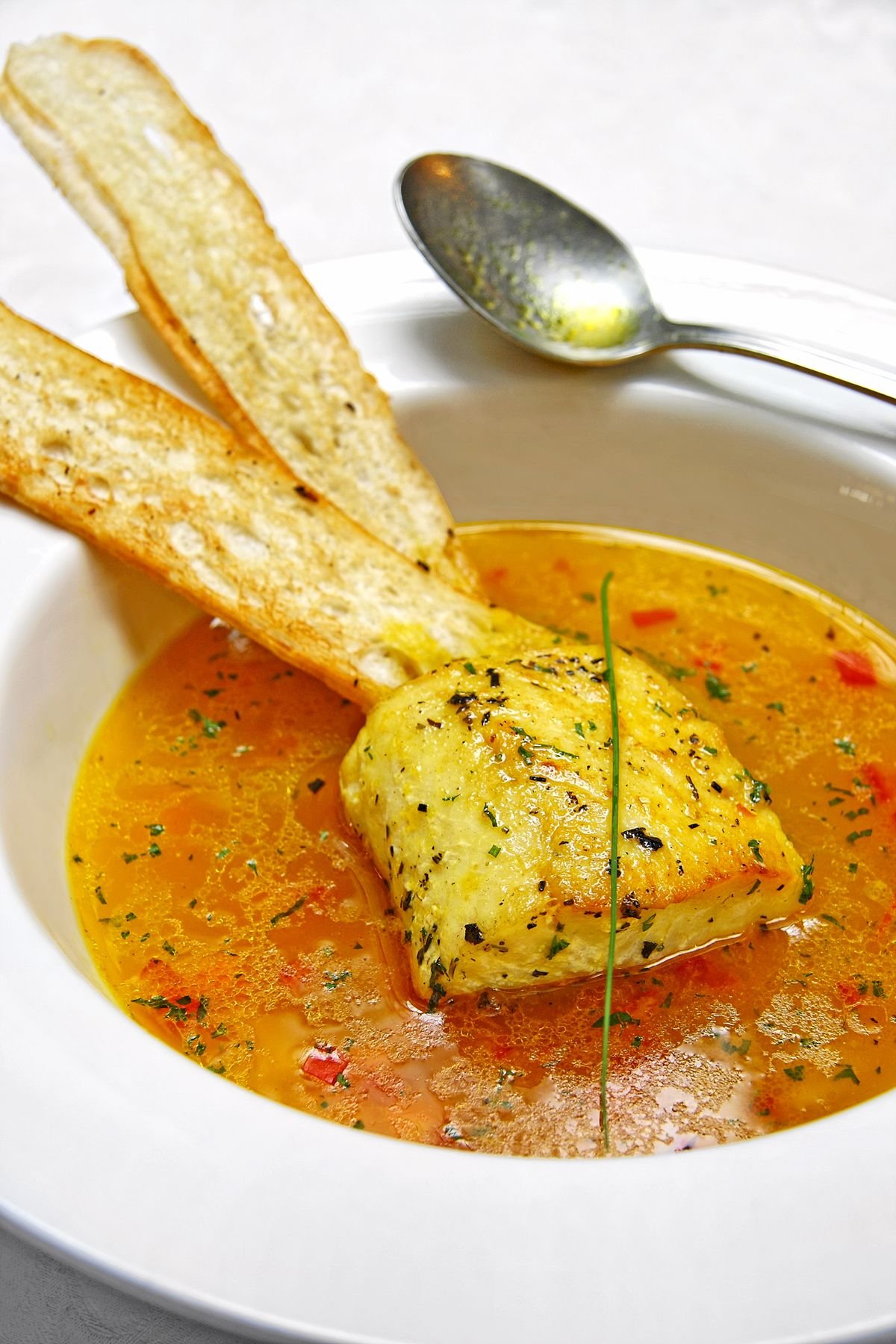
Kakavia is the fisherman's soup of Greece, a clear, golden broth made from the catch of the day, potatoes, onions and olive oil. It is humble food at its best: whole fish simmered gently until the flesh falls from the bone, the broth scented with lemon and bay. Ladle it into deep bowls, drizzle with good olive oil, and serve it with crusty bread for mopping up every last drop.
The story behind Kakavia
Kakavia is the oldest soup in Greece, and it was born on fishing boats. Fishermen would take the smallest fish from the catch — the ones too little to sell — and simmer them in a pot of seawater with onions and olive oil, right there on the deck. There was no recipe, just what the sea gave that day and what the boat carried. The name comes from kakavi, the three-legged iron pot that hung over the fire on the boat. It is food made from necessity, and it tastes like the sea itself.
On the Greek islands, kakavia is still the soup of the harbour. Fishermen bring their catch to the taverna in the morning, and by lunchtime the pot is on the stove. Families order it with bread and a glass of white wine, and the table goes quiet while everyone fishes pieces of fish out of the broth. It is a communal dish, served in the pot in the middle of the table, with everyone helping themselves and picking the bones clean with their fingers.
What makes a good kakavia is the broth. It should be clear and golden, tasting of the sea with a gentle sweetness from the vegetables and a lift of lemon. That clarity comes from patience: a gentle simmer, never a boil, and skimming the foam as it rises. The fish matters too — a mix of kinds gives a deeper broth than any single fish can. Potatoes thicken the soup just enough, and the olive oil, added generously at the end, gives it a soft, golden sheen.
Cook kakavia when you find truly fresh fish and want to let it speak for itself. It is a wonderful light lunch for a warm day in Australia, made in the morning and eaten on the veranda with crusty bread and a glass of white wine. It suits a seaside holiday table, a slow Sunday lunch, or any evening when you want something clean, simple and deeply satisfying. Buy the best fish you can, keep the heat low, and the soup will take care of the rest.
- Prep time
- 20 mins
- Cook time
- 40 mins
- Total time
- 1 hr
- Servings
- 4 servings
- Calories
- 380
Ingredients
- 1 kg mixed firm white fish, cleaned and cut into large pieces
- 3 medium potatoes, peeled and cut into chunks
- 2 onions, roughly chopped
- 2 carrots, peeled and sliced into rounds
- 3 tablespoons olive oil, plus extra to serve
- 2 bay leaves
- 1 lemon, halved, plus extra wedges to serve
- 1 teaspoon salt
- 1/2 teaspoon black peppercorns
- 4 cups water or light fish stock
- 2 tablespoons fresh parsley, chopped
- 2 celery stalks, sliced
- Crusty bread, to serve
Instructions
- Rinse the fish pieces under cold water and pat them dry with kitchen paper. Check for any stray bones or scales, and set the fish aside on a plate. A mix of fish gives the best broth — use two or three kinds if you can, with at least one oily fish like red mullet or a little salmon for richness, and firm white fish for the body of the soup.
- Pour the olive oil into a large, heavy pot over medium heat and add the onions, carrots and celery. Cook for 5 to 6 minutes, stirring often, until the onions turn soft and translucent and the vegetables smell sweet. Do not let them brown — kakavia is a pale, clear soup, and browned onions would darken the broth and change its flavour.
- Add the potatoes, bay leaves, black peppercorns and salt, then pour in the water or fish stock. The liquid should cover the vegetables by about 3 cm. Bring it to a gentle boil, then turn the heat down and simmer for 15 minutes, until the potatoes are almost tender when you pierce them with a knife. Skim off any foam that rises to the surface.
- Lay the fish pieces gently into the pot, starting with the thickest pieces and the fish heads if you have them, and spooning a little broth over the top. The fish should sit in a single layer if you can manage it, so every piece cooks evenly. Turn the heat down to the lowest setting — the broth should barely tremble, not boil.
- Simmer the soup very gently for 12 to 15 minutes, without stirring, until the fish is opaque all the way through and the flesh flakes easily when you press it with a fork. You will see the broth turn a pale gold from the olive oil and the fish juices. If foam rises, skim it off carefully so the broth stays clear.
- Squeeze the lemon halves into the pot and drop the squeezed halves in for the last 2 minutes of cooking. The lemon lifts the whole soup and cuts through the richness of the oil. Taste the broth and add more salt if it needs it — the soup should taste of the sea, brightened by lemon, with the vegetables sweet in the background.
- Take the pot off the heat and lift out the fish pieces carefully with a slotted spoon, setting them on a warm plate. Check each piece for bones as you lift it out, and remove the bay leaves from the broth. Let the soup rest for 5 minutes so the flavours settle and the broth clears a little more.
- Ladle the hot broth and vegetables into deep bowls, then lay a piece of fish gently on top of each one. Drizzle with a good spoonful of extra virgin olive oil and scatter the chopped parsley over the top. Serve at once with lemon wedges and plenty of crusty bread for dipping into the golden broth.
Pro tips
- Buy the freshest fish you can find, and use a mix of kinds. A combination of firm white fish with one oily fish gives the broth a depth that a single kind cannot match. Ask your fishmonger what came in today, and let the catch of the day decide the soup.
- Keep the heat as low as you can once the fish goes in. The broth should barely tremble, with only the occasional bubble breaking the surface. A gentle simmer keeps the fish whole, the broth clear and the potatoes intact, while a hard boil ruins all three at once.
- Skim the foam off the surface during the first 10 minutes of cooking. It takes only a moment with a spoon, and it is what keeps the broth clear and golden instead of cloudy. A clean broth is the mark of a careful kakavia, and it tastes cleaner too.
- Do not stir the soup after the fish goes in. Stirring breaks the flesh into flakes and clouds the broth, so leave the pot alone and let the gentle heat do the work. If you need to move a piece, nudge it gently with a spoon instead of stirring the whole pot.
- Add the lemon at the very end, in the last 2 minutes of cooking. Lemon juice simmered for a long time turns bitter and flat, while lemon added late stays bright and lifts the whole soup. Squeeze it in, drop the halves in for a moment, then take the pot off the heat.
Variations & serving ideas
For a richer kakavia, add a handful of prawns in the last 5 minutes of cooking, or a few mussels in the last 8 minutes. The shells add a deep sweetness to the broth, and the seafood makes the soup feel like a feast. Discard any mussels that do not open, and serve the shells in the bowls so everyone can pick them out as they eat.
You can change the vegetables to suit the season. Fennel adds a gentle anise note that suits fish beautifully, and a few cherry tomatoes stirred in at the end give the broth a blush of colour and a little acidity. Some island cooks add a splash of white wine with the stock, which lifts the flavour, and a pinch of saffron turns the broth a soft gold.
Serve kakavia in deep bowls with a generous drizzle of extra virgin olive oil and plenty of crusty bread for dipping. In Australia, it makes a lovely light lunch on a warm day — set the pot in the middle of the table, put out bread, lemon wedges and a bottle of white wine, and let everyone help themselves. A simple green salad with lemon and olive oil is all you need alongside.
Pair kakavia with a crisp white wine like a sauvignon blanc or a Greek assyrtiko, and finish with fresh fruit rather than a heavy dessert. The soup is light enough to follow a plate of grilled octopus or a tomato salad, and the leftover broth makes a wonderful base for a fish risotto or a seafood pasta the next day.
Getting it right
The key technique is the gentle simmer. Kakavia is a clear soup, and a rolling boil is its enemy: it breaks the fish apart, clouds the broth and makes the potatoes fall to pieces. Keep the heat at the lowest setting, where the surface barely trembles and a bubble breaks every few seconds. If the pot starts to boil, lift it off the heat for a moment and turn the burner down before you carry on.
Skimming is the second skill. As the fish and vegetables cook, foam and small bits of protein rise to the surface. Skim them off with a spoon during the first 10 minutes, and the broth will stay clear and golden. This takes only a minute or two, but it is the difference between a bright, clean soup and a murky one. Do not stir the soup while the fish cooks, or you will break the flesh into flakes.
The most common mistakes are overcooking the fish, adding the lemon too early and crowding the pot. Fish needs only 12 to 15 minutes in the gentle heat — any longer and it turns dry and falls apart. Lemon added too early turns bitter in the long simmer, so squeeze it in during the last 2 minutes. And if the pot is too small, the fish cooks unevenly, so use your largest pot and lay the fish in a single layer if you can.
Storing & reheating
Kakavia keeps in the fridge for up to 2 days in a sealed container, with the fish stored in the broth so it stays moist. The flavour actually deepens overnight as the fish and vegetables settle into the soup. For longer storage, freeze the broth and vegetables for up to a month, but freeze the fish separately or eat it fresh, as reheated fish can turn dry.
To reheat, warm the soup gently over low heat until it just simmers — never boil it hard, or the fish will fall apart and the broth will cloud. Add the lemon juice and fresh parsley only after reheating, so they stay bright. Serve with fresh bread, as the bread will have gone stale by the next day.
Frequently asked questions
Why is my kakavia broth cloudy?
A cloudy broth usually means the soup boiled too hard. Keep the heat at the gentlest simmer, with only the occasional bubble breaking the surface, and skim the foam off the top during the first 10 minutes. A clear broth is the mark of a careful kakavia.
What fish is best for kakavia?
Use any firm white fish you can find — snapper, sea bass, cod, haddock or even monkfish all work. Avoid very oily fish like mackerel for the main soup, though a small piece adds flavour. Ask your fishmonger for the freshest catch of the day and use what is best.
Can I add prawns or mussels?
Yes, and many fishermen do exactly that. Shells add a deep sweetness to the broth, so add prawns in the last 5 minutes and mussels or clams in the last 8 minutes, discarding any that do not open. Remove the shells before serving or leave them in the bowls.
Can I blend kakavia to make it thicker?
It is not traditional to blend kakavia — the clear broth and the chunks of fish and potato are the point. If you like a thicker soup, lift out some of the potato and mash it into the broth, then return the fish and serve. That keeps the flavour while giving the soup more body.
Can I make kakavia ahead of time?
Yes, kakavia keeps well in the fridge for 2 days, and the flavour deepens overnight. Keep the fish in the broth so it stays moist, and reheat it gently over low heat. Add the lemon juice and fresh herbs only when you serve it, so they stay bright.
Is kakavia gluten free?
Traditional kakavia is made with olive oil, fish and vegetables, so it is naturally gluten free. Just serve it with gluten-free bread or rice instead of crusty wheat bread, and check that your stock, if you use it, is gluten free too.