Kalamari Tiganito Recipe
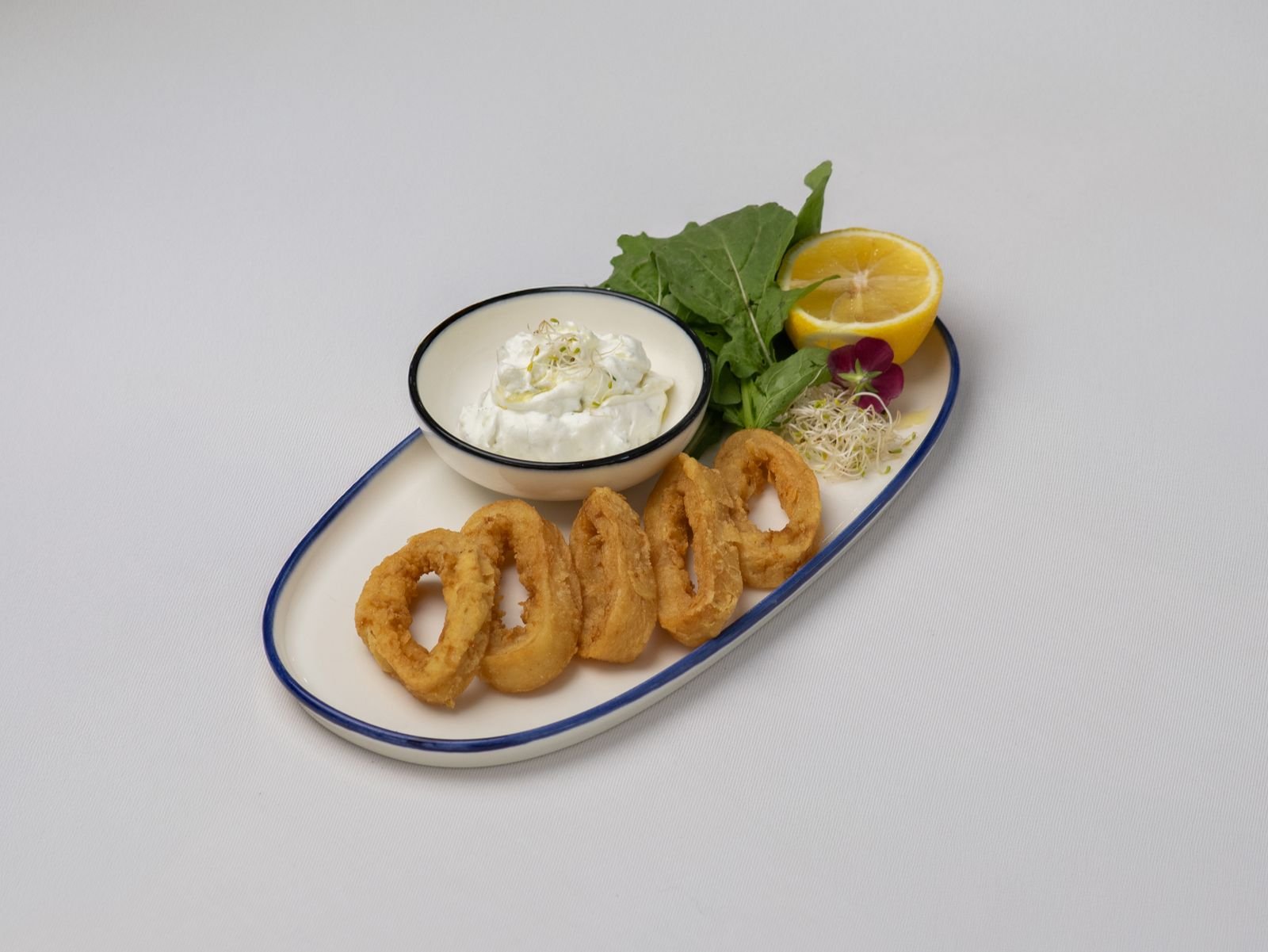
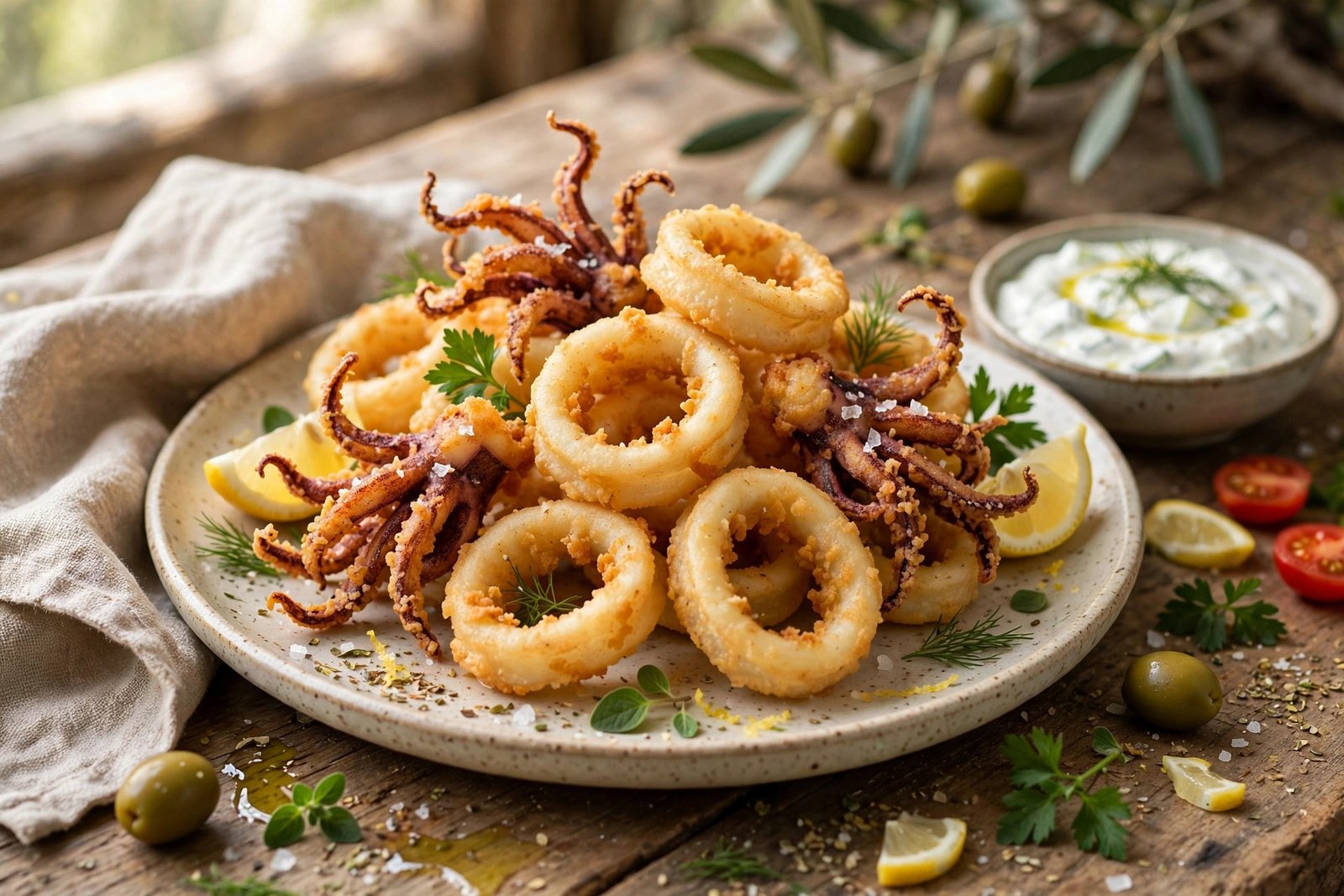
Golden, crackling rings of squid with a light flour coating and a squeeze of lemon — this is the fried calamari every Greek taverna serves. The coating stays crisp, the squid stays tender, and the whole plate disappears fast. Serve it hot with lemon wedges and a cool dip. Serve it the moment it leaves the oil, while the coating is still crackling, with lemon wedges, a cold drink and a simple salad.
The story behind Kalamari Tiganito
Fried calamari turns up on menus all around the Mediterranean, but the Greek version, kalamari tiganito, has its own character. Squid has been fished in Greek waters for thousands of years, and frying it in a light flour coating is one of the oldest and simplest ways to cook it. No batter, no fuss: just flour, hot oil and lemon. Squid was cheap and plentiful, so frying it quickly became an everyday way for fishing families to turn the catch into supper. The dish is still cooked the same way today.
In Greece this is classic taverna food, ordered as a shared starter or as part of a seafood spread. It arrives in a pile on a plate lined with paper, with lemon wedges and maybe a small bowl of tzatziki or skordalia. People eat it with their fingers, standing at a beach bar or sitting around a table with a cold drink, and it never lasts long. It also appears at festivals and beach bars, where it is eaten standing up with a cold beer and a wedge of lemon, salt still on your fingers.
What makes it special is the contrast between the coating and the squid. The flour fries into a thin, sandy-crisp shell that shatters when you bite it, while the squid inside stays soft and sweet. The trick is speed: squid goes from tender to rubbery in less than a minute of extra cooking, so the frying is fast and the oil is hot. The flour coating is deliberately thin, so it crisps in seconds and never hides the sweet, mild flavour of the squid inside.
Cook it when you want a crowd-pleaser that feels like a holiday. It suits a Friday-night seafood supper, a starter for guests, or a light dinner with a big salad and bread. The squid itself cooks in minutes, so most of the time goes to cleaning and drying it, and the payoff is a plate that everyone reaches for at once. Keep the rest of the meal simple and let the calamari lead, because a plate this crisp and salty needs little else around it.
- Prep time
- 20 mins
- Cook time
- 15 mins
- Total time
- 35 mins
- Servings
- 4 servings
- Calories
- 480
Ingredients
- 600 g cleaned squid tubes and tentacles
- 100 g plain flour, sifted if lumpy
- 2 tablespoons fine semolina or cornmeal, or use polenta for extra crunch
- 1 teaspoon fine sea salt
- 1/2 teaspoon black pepper
- 1/2 teaspoon sweet paprika
- 1/2 teaspoon dried oregano
- 500 ml sunflower or vegetable oil, for frying
- 1 lemon, cut into wedges
- 2 tablespoons chopped flat-leaf parsley
- Tzatziki, to serve
- Flaky sea salt, to finish
Instructions
- Cut the squid tubes across into rings about 1 cm wide. Leave the tentacles whole, or cut large ones in half. Put the pieces in a colander, rinse under cold water, and pat them very dry with kitchen paper or a clean tea towel. Wet squid makes the coating slide off and the oil spit, and work in batches so the pieces dry evenly.
- Mix the flour, semolina, salt, pepper, paprika and oregano in a wide shallow bowl. The semolina adds crunch, so do not skip it unless you have none; plain flour alone still works but gives a softer crust, and mix it well so the seasoning is spread through the flour.
- Pour the oil into a deep, wide pan until it is about 3 cm deep. Heat over medium-high heat until it reaches 180 C. If you have no thermometer, drop in a pinch of flour: it should sizzle hard at once and turn golden in about 30 seconds.
- Toss a small handful of squid rings in the flour mixture, shaking off the excess so each ring wears only a thin, even coat. Too much flour makes a thick, doughy crust, so shake the pieces well in a sieve if needed, and tap the sieve gently to knock off the loose flour.
- Lower the rings gently into the hot oil, a few at a time, and do not crowd the pan. Fry for 2 to 3 minutes, turning once with tongs, until the coating is pale gold and crisp and the squid has just turned opaque, and listen for a strong, steady sizzle.
- Lift the rings out with a slotted spoon and drain on a wire rack set over a tray, not on kitchen paper, which traps steam and softens the crust. Sprinkle with a little flaky salt while they are still hot, and season them the moment they leave the oil.
- Repeat with the remaining squid in batches, letting the oil come back up to temperature between batches. If the oil cools, the coating soaks up fat and turns soggy, so give it 30 seconds to recover each time.
- Fry the tentacles last, in one batch, for about 2 minutes until crisp and curled. They cook fast and their thin arms crisp beautifully, so watch them closely and lift them out the moment they colour.
- Pile the calamari on a warm plate, scatter over the parsley, and serve at once with lemon wedges and tzatziki. Eat it while the coating is still crackling; it softens within minutes.
Pro tips
- Dry the squid thoroughly — this is the single most important step for a crisp coating that actually sticks. Wet squid also makes the hot oil spit, so take your time here. A few minutes with kitchen paper is time well spent.
- Fry in small batches so the oil temperature stays high; crowded oil drops fast and the calamari turns greasy. The oil needs a moment to recover its heat after each batch.
- Use a wire rack for draining, since paper towels trap steam underneath and soften the crust you just made. Airflow underneath keeps the crust crisp on all sides. The rack lets air flow underneath, which keeps the crust crisp.
- Season the flour, not just the finished squid, so every bite carries flavour instead of tasting plain. A well seasoned coating makes all the difference to the finished plate.
- Serve within 5 minutes of frying, because fried calamari waits for no one and the crunch fades quickly. Set the table before you start frying, so nothing keeps the calamari waiting. Have the lemon wedges cut and the tzatziki ready before you start frying.
Variations & serving ideas
For a lighter coating, use rice flour instead of plain flour, which fries up extra crisp and stays crunchy longer. Some cooks add a pinch of cayenne or a little garlic powder to the flour for warmth, and a spoonful of grated Parmesan in the mix gives a savoury edge. A beer batter version exists too, but the classic Greek coating is flour only, and it lets the squid shine. A pinch of cayenne or garlic powder in the flour gives the coating a gentle warmth without changing the classic character. A little lemon zest in the flour adds brightness without changing the classic character.
If squid is hard to find, the same method works for small white fish strips, prawns, or even slices of courgette and aubergine. Prawns need 2 minutes per side, fish strips need 3 minutes, and vegetables need about 2 minutes until golden. Keep the pieces small and even so everything cooks at the same speed. Fish strips need about 3 minutes in the oil, while courgette and aubergine slices need around 2 minutes until golden.
Serve kalamari tiganito as part of a seafood mezze with grilled octopus, taramasalata and a Greek salad, or as a main with chips, a green salad and plenty of lemon. A cold lager, a glass of ouzo over ice, or a crisp white wine all pair well, and the salt and lemon make it very easy to keep eating. A cold lager, a glass of ouzo over ice, or a crisp white wine all pair well with the salt and lemon.
To turn it into a fuller meal, tuck the rings into warm pitta bread with shredded lettuce, tomato and tzatziki for a quick sandwich. The same rings also work over a salad of rocket, red onion and cherry tomatoes, dressed with lemon and olive oil, where the warm crunch plays against the cool leaves. The same rings also work over a salad of rocket, red onion and cherry tomatoes, dressed with lemon and olive oil. Warm pitta bread and a bowl of tzatziki turn the rings into a quick, satisfying lunch.
Getting it right
The key technique is hot oil and dry squid. Oil at 180 C seals the flour coating at once, so the squid steams gently inside its crisp shell instead of soaking up fat. If the oil is too cool, the coating turns soggy and heavy; if it is too hot, the flour browns before the squid cooks. A thermometer takes the guesswork out, but the flour test works well once you know what a fierce sizzle looks like. A thermometer takes the guesswork out, but the flour test works well once you know what a fierce sizzle looks like.
Heat control between batches is where most people slip. Each batch cools the oil, so let it climb back to temperature before adding more squid. Listen for the sound: a strong, steady sizzle means the oil is ready, while a weak, lazy bubble means you should wait. A deep pan with plenty of oil holds its heat better than a shallow one. A deep pan with plenty of oil holds its heat better than a shallow one, so use the biggest pan you have.
The most common mistake is overcooking the squid. Rings need only 2 to 3 minutes; leave them in for 5 and they turn into rubber bands. Another common slip is a coating that is too thick, which tastes doughy and hides the squid. Shake off every bit of excess flour, fry briefly, and salt the rings while they are hot so the salt sticks. Shake off every bit of excess flour, fry briefly, and salt the rings while they are hot so the salt sticks.
Storing & reheating
Fried calamari is at its best eaten fresh, and it does not keep its crunch. If you have leftovers, store them in a container lined with kitchen paper in the fridge for up to 1 day. The coating will soften, but the squid is still fine to eat cold in a salad. The coating will soften, but the squid is still fine to eat cold in a salad the next day.
To reheat, spread the rings on a tray and bake at 200 C for 5 to 6 minutes until hot and crisp again. Avoid the microwave, which makes the coating soggy and the squid tough. Do not freeze cooked calamari; the texture suffers badly. Raw squid, on the other hand, freezes well for up to 2 months if wrapped tightly. Raw squid freezes well for up to 2 months if wrapped tightly.
Frequently asked questions
How do I stop calamari from turning rubbery?
Fry it fast in hot oil, 180 C, for only 2 to 3 minutes. Squid toughens when it cooks slowly or for too long, so high heat and a short fry keep it tender. Pull the rings out the moment the coating turns pale gold and the squid looks opaque.
Can I use frozen squid?
Yes, thaw it fully in the fridge overnight, then rinse and dry it very well. Frozen squid releases more water, so extra drying time with kitchen paper matters even more than with fresh squid. Frozen squid releases more water, so extra drying time with kitchen paper matters even more.
What oil is best for frying calamari?
A neutral oil with a high smoke point, such as sunflower or vegetable oil, works best. Olive oil can be used, but it smokes at frying temperature and adds a strong flavour, so save it for dressing instead. Olive oil can be used, but it smokes at frying temperature and adds a strong flavour.
Do I need to remove the skin from the squid?
Most cleaned squid sold in shops is already skinned, so check and peel off any purple membrane left on the tubes. It comes away easily under cold water and gives a cleaner, paler finish. It comes away easily under cold water and gives a cleaner, paler finish.
Can I make it in an air fryer?
You can, though the crust is lighter than deep-fried. Spray the coated rings generously with oil and cook at 200 C for 6 to 8 minutes, turning halfway. Work in a single layer so the hot air reaches every piece. Work in a single layer so the hot air reaches every piece.
What dips go well with kalamari?
Tzatziki is the classic choice, and skordalia, the Greek garlic and potato dip, is another favourite. Lemon wedges alone are enough too, and a simple garlic mayonnaise works if you want something richer. Lemon wedges alone are enough too, and a simple garlic mayonnaise works if you want something richer.