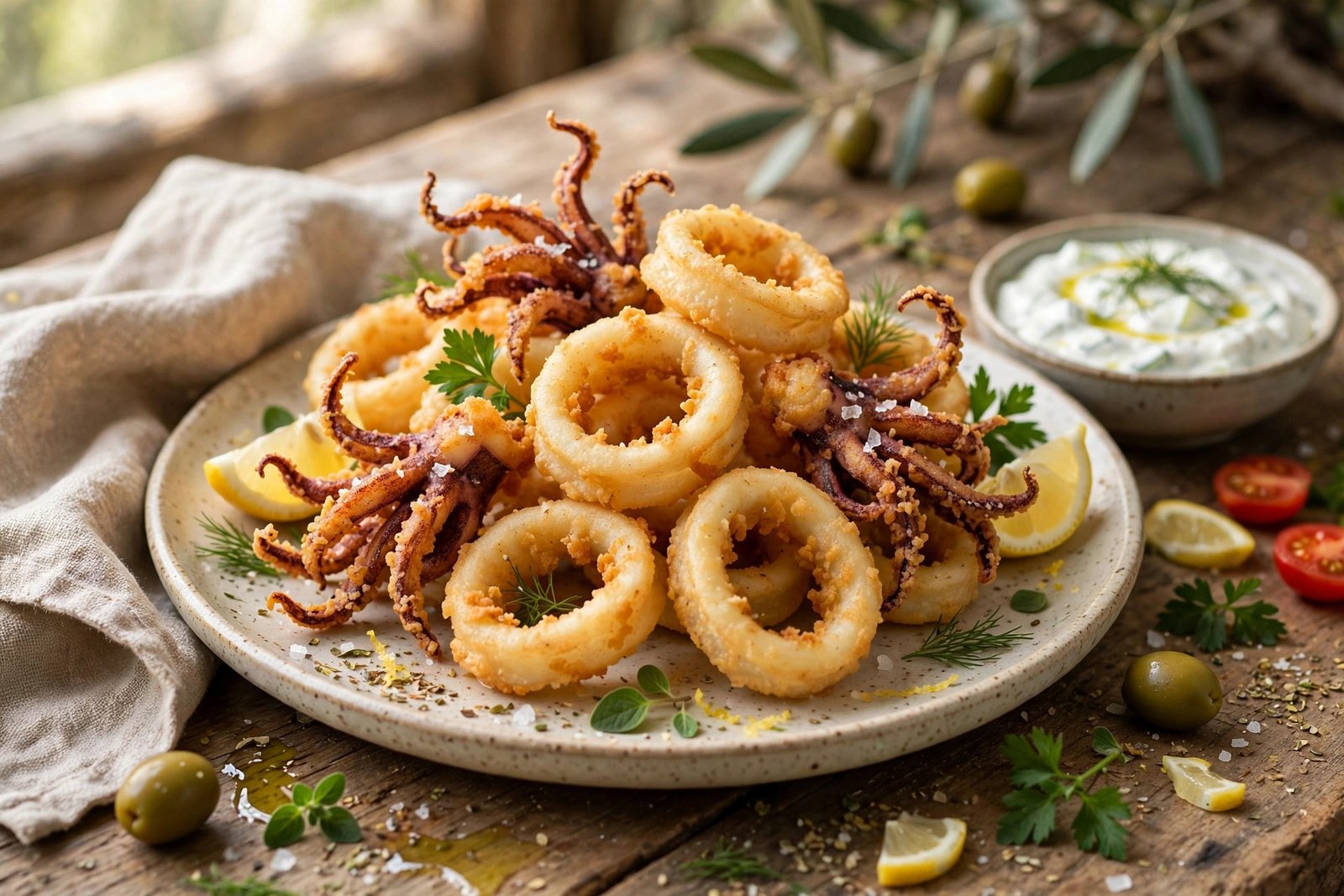
Htapodi Krasato Recipe

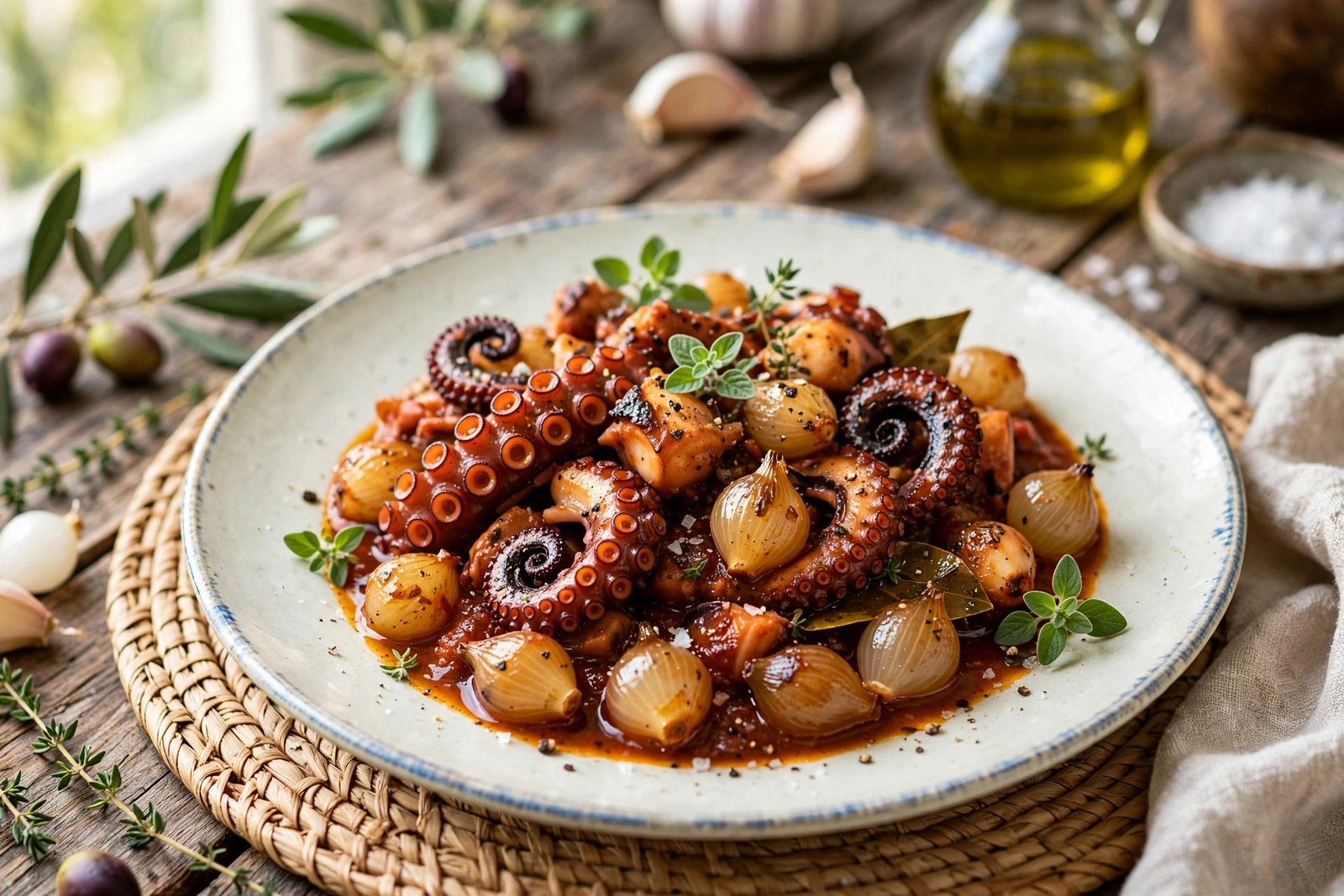
Htapodi krasato is Greek octopus braised slowly in red wine until the tentacles turn tender and the sauce thickens into something dark, glossy and savoury. Bay leaves, garlic and a splash of red wine vinegar round out the wine, while a drizzle of olive oil gives the dish its shine. Serve it warm with crusty bread for mopping up every drop, or spoon it over rice. It tastes like a long lunch by the Aegean, and it cooks mostly hands-off.
The story behind Htapodi Krasato
Octopus has fed Greek islanders for centuries, and htapodi krasato is one of the oldest ways to cook it. Fishermen brought the catch straight from the boat to the taverna, where the cook dropped it into a pot with the same red wine the table was drinking. There was no fancy technique and no long list of spices. The wine did the work, softening the firm flesh and turning into a dark, winey sauce as it reduced.
On the islands this is meze food, the kind of dish that lands in the middle of the table while the ouzo glasses are still being filled. Nobody eats a whole plate of it alone. You spear a piece of tentacle with a fork, tear off some bread, and talk for an hour while the pot stays warm on the stove. It shows up at name-day gatherings, long Sunday lunches and the first warm evenings of summer, when the octopus is at its best. The dish belongs to that slow, shared way of eating where the food is only half the point.
What makes it special is the change the wine works on the octopus. Raw octopus is firm and rubbery, the kind of thing that fights back when you chew it. An hour in gently bubbling wine turns it into something else entirely: the tentacles curl, the skin takes on a deep purple-red colour, and the flesh goes soft enough to cut with the side of a fork. The sauce matters just as much. It starts as plain wine and ends as a thick, glossy spoonful of flavour, sweet from the onion and sharp from the vinegar. Bread is not optional here. It is the tool you use to finish the plate.
Cook it when you have an afternoon to spare and people you like coming over. It is a weekend dish, not a weeknight rush, because the octopus needs its hour and the sauce needs time to reduce without being hurried. It also suits a dinner party, since the pot sits happily on low heat while you pour drinks and set the table. Leftovers are rare, but if you do have some, they reheat well and taste even better the next day, once the wine and garlic have had a night to settle into the flesh.
- Prep time
- 25 mins
- Cook time
- 1 hr 15 mins
- Total time
- 1 hr 40 mins
- Servings
- 4 servings
- Calories
- 380
Ingredients
- 1.5 kg whole octopus, cleaned, with the beak and eyes removed
- 250 ml dry red wine
- 3 tablespoons extra virgin olive oil, plus extra to serve
- 1 large onion, finely sliced
- 4 garlic cloves, thinly sliced
- 2 bay leaves
- 1 tablespoon tomato paste
- 2 tablespoons red wine vinegar
- 8 black peppercorns
- 1 teaspoon dried oregano
- 1 lemon, cut into wedges
- 2 tablespoons chopped fresh flat-leaf parsley
Instructions
- Rinse the octopus under cold running water and check that the beak and eyes are gone, then pat it dry with kitchen paper. A dry octopus browns better and spits less when it hits the hot oil.
- Warm the olive oil in a heavy pot over medium heat until it shimmers. Add the onion and cook for 4 to 5 minutes, stirring now and then, until soft and pale gold. Stir in the garlic and tomato paste and cook for one more minute, until the garlic smells sweet and the paste darkens.
- Turn the heat to medium-high and lay the octopus in the pot, leaving it still for 2 minutes so the skin firms and takes a little colour. Turn it once with tongs, then pour in the red wine. It will hiss and steam — that is the pot deglazing, and it is exactly what you want.
- Add the bay leaves, peppercorns, vinegar and oregano, then bring the wine to a lively bubble. Scrape the bottom with a wooden spoon to lift up the browned bits — those bits are flavour, and the wine pulls them into the sauce.
- Turn the heat down until the wine barely bubbles, just a lazy blip every second or so. Put the lid on slightly ajar and leave the pot alone for 1 hour 15 minutes. If the liquid drops below halfway up the octopus, add a splash of hot water.
- After an hour, test the thickest part of a tentacle with a knife: it should slide in with almost no resistance, like cutting into a ripe avocado. If it still fights the knife, give it another 15 minutes and test again, checking often once you are close.
- Lift the octopus out onto a board and rest it for 5 minutes. Turn the heat up under the pot and boil the sauce for 5 to 8 minutes, until it coats the back of a spoon. Taste it and add a pinch of salt or a drop more vinegar if it needs sharpening.
- Cut the tentacles into thick pieces and the head into wide strips, then return them to the pot and turn gently in the sauce for a minute, so every piece gets coated. They should look glossy and dark red, with the sauce clinging rather than pooling.
- Spoon the octopus and sauce into a wide, shallow bowl. Scatter over the parsley, drizzle with olive oil, and tuck lemon wedges around the edge. Serve at once with warm crusty bread, and put the bread on the table before the pot — people will reach for it first.
Pro tips
- Buy the octopus already cleaned if you can — fishmongers do it in seconds, and it saves you the least pleasant part of the job. If it comes frozen, thaw it slowly in the fridge overnight, never in hot water, which toughens the flesh.
- Use a wine you would happily drink: the sauce is mostly wine, so a rough bottle gives you a rough sauce. A dry red such as Agiorgitiko or a basic Cotes du Rhone works well, and you do not need anything expensive.
- Do not add salt at the start. The liquid reduces a lot over an hour, and salt added early ends up concentrated. Season at the end, once the sauce has thickened and you can taste what it actually is.
- Resist the urge to crank the heat. A hard boil makes octopus seize up and stay chewy, while a slow simmer lets the fibres relax. If the pot is bubbling hard, turn it down — patience is the whole technique.
- If the sauce tastes flat, it usually needs acid, not more salt. A teaspoon of red wine vinegar or a squeeze of lemon wakes it up at once. Add a little at a time and taste after each drop.
Variations & serving ideas
Swap the red wine for white and you get a lighter, brighter version that suits summer. Use a dry white, keep the same bay and garlic, and finish with plenty of lemon zest instead of vinegar. The sauce stays pale gold and the octopus tastes cleaner and sharper. Some cooks add a pinch of chilli flakes with the garlic, which gives the sauce a slow warmth at the back of the throat without changing the character of the dish. A splash of ouzo in place of half the vinegar is another island habit, though it divides opinion — it adds an aniseed note that suits the octopus but can easily take over, so use no more than a tablespoon.
No fresh octopus where you live? Frozen works well and is often more tender, since freezing breaks down some of the tough fibres. Thaw it fully in the fridge first. If red wine vinegar is missing, white wine vinegar or a squeeze of lemon does the job. Tomato paste can be swapped for two grated fresh tomatoes, added with the wine, though the sauce will take a few extra minutes to thicken. A pinch of sugar is sometimes stirred in at the end, to round off the sharpness of the vinegar.
Serve it as a meze with other small plates — olives, feta, a simple green salad and a bowl of tzatziki — and let everyone pick at the table. As a main course, spoon it over short pasta such as orzo or hilopites, or over rice that has been cooked in water with a bay leaf. The sauce soaks into pasta beautifully. Warm pita works too, torn into pieces and used to scoop up the sauce.
A glass of the same dry red you cooked with is the obvious partner, poured cold from the fridge if the day is hot. If you prefer white, a crisp Assyrtiko cuts through the richness of the sauce. Keep the rest of the table simple: this is a dish that wants bread, a salad and good company, not a crowd of competing flavours. If you are cooking for people who do not drink, the alcohol cooks off during the long braise, leaving only the flavour of the wine behind.
Getting it right
The whole dish rests on one skill: holding a gentle simmer for over an hour. Octopus muscle is dense, and it only relaxes when it is heated slowly and kept there. A rolling boil squeezes the fibres tight and the meat turns to rubber, while a lazy bubble lets the collagen break down into softness. Set the heat so you see a bubble rise every second or so, and check the pot each time you pass it. The pot should never go silent, and it should never boil hard.
Start hot to brown the aromatics and build flavour, then go low the moment the wine goes in. The first ten minutes matter: the wine needs a real bubble to cook off its raw alcohol edge, then the heat comes down. The octopus is done when a knife slides into the thickest tentacle with almost no push. Start testing at one hour, then every ten minutes after — the window between tough and tender is shorter than you think.
The most common mistake is salting early, which concentrates as the sauce reduces and leaves the dish harsh. Another is lifting the lid every five minutes to check, which drops the temperature and stretches the cooking time. If your octopus is still chewy after 90 minutes, it is not ruined: add a splash of water, turn the heat down a touch and give it another 20 minutes. Tough octopus almost always just needs more time, not a rescue. Taste the sauce before you serve it, and remember it will taste saltier once it cools a little.
Storing & reheating
Cool the octopus in its sauce, then move it to a sealed container and refrigerate for up to 3 days. The sauce thickens as it chills and the flavours deepen, so many cooks say day two tastes better than day one. Freeze it in portions with the sauce for up to 2 months, and thaw overnight in the fridge before reheating.
Reheat gently in a covered pan over low heat for about 8 minutes, with a splash of water if the sauce has gone too thick. Avoid the microwave, which heats unevenly and can turn the tentacles rubbery. Warm the bread separately, in the oven or a dry pan, and serve the dish as soon as it is hot through.
Frequently asked questions
Do I need to tenderise the octopus before cooking it?
No. The slow braise in wine does the tenderising for you. Old tricks like beating the octopus are unnecessary here, and freezing mainly helps if your octopus is very large. Just give it a full, gentle hour in the pot and test it with a knife before you call it done.
Can I use frozen octopus for htapodi krasato?
Yes, and it often turns out more tender than fresh, because freezing breaks down some of the tough fibres. Thaw it in the fridge overnight, pat it dry, and cook it the same way. Never thaw it in hot water, which tightens the flesh before it reaches the pot.
What red wine works best in htapodi krasato?
A dry red you would drink: Agiorgitiko is the Greek classic, but a basic Cotes du Rhone, Tempranillo or Chianti all work. Avoid sweet or heavily oaked wines, which make the sauce taste jammy. The wine reduces a lot, so its character concentrates — a bottle you dislike will not improve.
Why is my octopus still tough after an hour?
It just needs more time. Octopus varies a lot by size and age, and a big one can need 90 minutes or more. Keep the heat low, add a splash of water if the pot is drying out, and test every 10 minutes with a knife. It turns tender suddenly, so stay close once you pass the hour mark.
Can I make htapodi krasato ahead of time?
Yes, and it is often better the next day. Cook it fully, cool it in its sauce and refrigerate overnight, then reheat gently in a covered pan. The wine, garlic and bay settle into the flesh as it rests, and it keeps for 3 days in the fridge.
What should I serve with htapodi krasato?
Crusty bread is the first choice, for mopping up the sauce. It also works spooned over orzo, hilopites or plain rice, or in a meze spread with olives, feta and salad. A green salad and a glass of the same dry red round out the meal.