Piperade Recipe
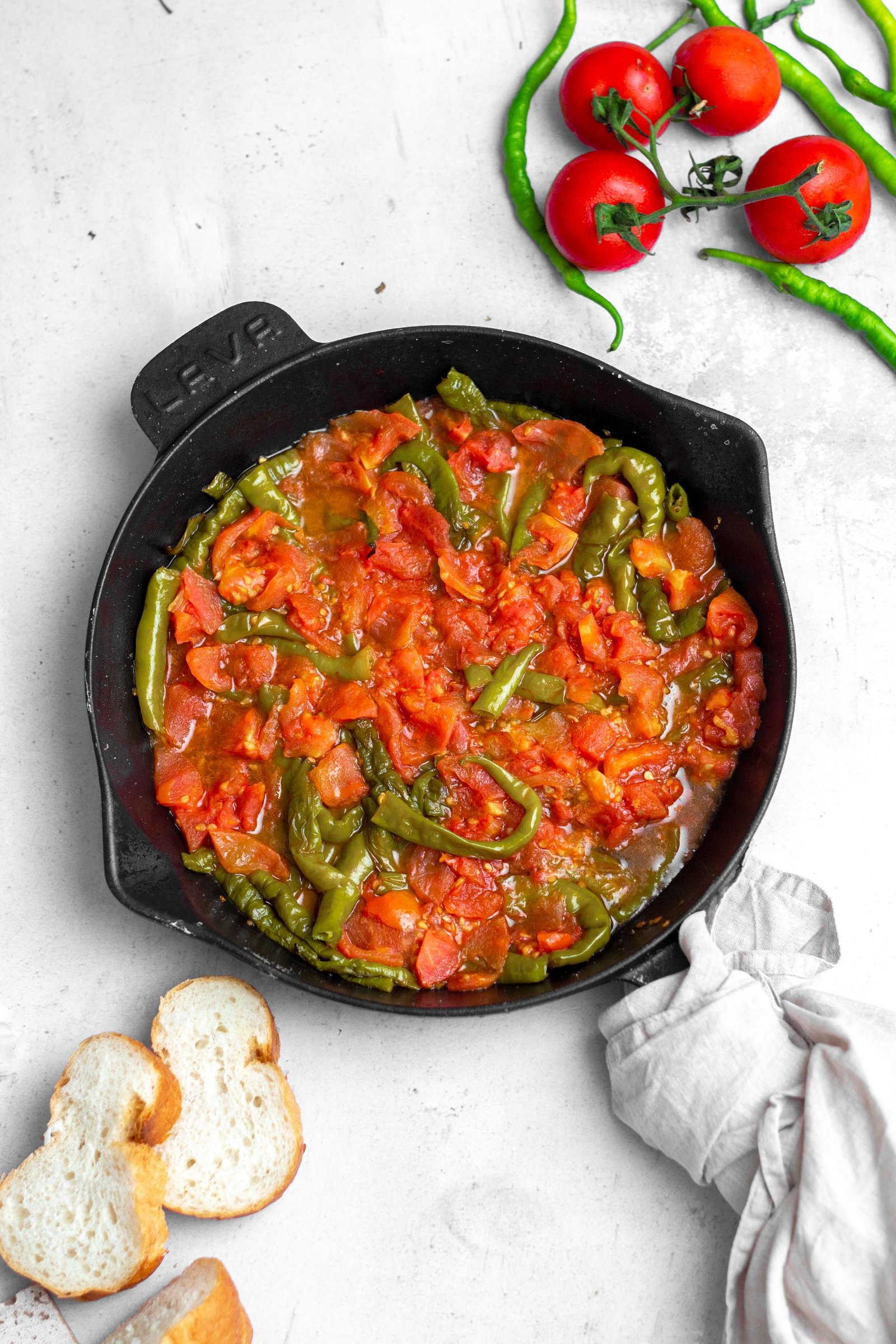
Piperade is the Basque country's sunny answer to scrambled eggs: sweet peppers, onions, and tomatoes cooked slowly in olive oil until they melt together, then finished with eggs stirred in until just set. It is soft, sweet, and gently smoky from Espelette pepper. Serve it straight from the pan with warm crusty bread, and let everyone mop up the juices.
The story behind Piperade
Piperade comes from the Basque country, the green, hilly region straddling south-west France and northern Spain, where peppers grow well and lunch is taken seriously. The name comes from piper, the word for pepper in both Gascon and Basque. The dish is a simple one: onions, green peppers, and tomatoes cooked slowly in olive oil, seasoned with red Espelette pepper, and finished with eggs. The colours on the plate, red, green, and white, happen to match the Basque flag, which the locals are quietly pleased about.
In Basque homes, piperade is everyday cooking. It turns up for breakfast, for a light lunch, or as a side dish next to grilled fish or a slice of Bayonne ham. Farmers made it with what the garden gave them, and the recipe bends to the season: more tomatoes in late summer, more peppers when they are cheap and plentiful. It is the kind of dish that gets cooked without a recipe, by feel, and every family has a slightly different version.
What makes piperade special is patience. The peppers and onions are not rushed. They cook gently in olive oil until they soften and sweeten, and the tomatoes break down into a sauce that is rich without being heavy. The eggs go in last and are stirred until they are just set, like soft folds of silk running through the vegetables. Done right, it is not a scramble and not a stew, but something in between, and the bread on the side is not optional.
Cook piperade when peppers are good and you want something warm and easy. It is a fine weekend brunch, a quick supper after a long day, or a side dish for grilled meat. Make it for a relaxed family meal in Canada on a slow Sunday morning, put the pan in the middle of the table with a loaf of crusty bread, and let everyone help themselves straight from the pan. In late summer, when peppers are at their sweetest and tomatoes are heavy on the vine, piperade tastes like the season itself, and a pan of it with good bread is all the lunch anyone needs.
- Prep time
- 15 mins
- Cook time
- 35 mins
- Total time
- 50 mins
- Servings
- 4 servings
- Calories
- 310
Ingredients
- 3 tablespoons olive oil
- 2 large onions, thinly sliced
- 3 green bell peppers, seeded and cut into thin strips
- 1 red bell pepper, seeded and cut into thin strips
- 4 ripe tomatoes, chopped, or 1 can (400 g) chopped tomatoes
- 2 garlic cloves, thinly sliced
- 1 teaspoon Espelette pepper, or 1/2 teaspoon smoked paprika plus a pinch of chilli flakes
- 1 teaspoon fine sea salt
- 1/2 teaspoon black pepper
- 6 large eggs
- 2 tablespoons chopped fresh parsley, to serve
- 1 loaf crusty bread, to serve
Instructions
- Heat the olive oil in a large, deep frying pan or sauté pan over medium heat. When the oil shimmers, add the sliced onions and a pinch of salt. Cook them gently for 8 to 10 minutes, stirring now and then, until they turn soft, sweet, and translucent. Do not let them brown. If they start to colour, turn the heat down and add a splash of water.
- Add the green and red pepper strips to the pan and stir them through the onions. Cook for another 8 minutes, until the peppers soften and lose their raw crunch. You should hear a gentle sizzle, not a fierce fry, and the peppers should start to smell sweet and grassy as they cook down.
- Stir in the garlic and cook for 1 minute, just until you can smell it. Then add the chopped tomatoes, the Espelette pepper, salt, and black pepper. Turn the heat down to low, put a lid on the pan, and let everything simmer for 12 to 15 minutes. The tomatoes should break down into a thick, jammy sauce that coats the peppers.
- While the vegetables simmer, crack the eggs into a bowl and beat them lightly with a fork, just until the yolks and whites come together. Do not whisk them into a froth. Season with a small pinch of salt. Set the bowl beside the stove so it is ready when you need it.
- Take the lid off the pan and check the vegetables. If there is a lot of liquid, turn the heat up for a minute or two and let it bubble away until the mixture looks thick and glossy. The pan should be moist, not watery, or the eggs will turn soupy when they go in.
- Turn the heat down to low and pour in the beaten eggs. Stir slowly with a wooden spoon, scraping the bottom of the pan as you go. The eggs will start to set in soft ribbons after about a minute. Keep stirring gently for 2 to 3 minutes, until the eggs are just set and creamy, with no runny liquid left.
- Take the pan off the heat while the eggs still look slightly glossy. They will keep cooking in the heat of the pan, and a minute too long turns them dry and rubbery. The finished piperade should look soft and moist, with the eggs in loose folds among the peppers and tomatoes.
- Taste and adjust the salt and Espelette pepper. A little more heat is welcome here, but add it a pinch at a time. Scatter the chopped parsley over the top and bring the pan straight to the table.
- Serve the piperade hot, straight from the pan, with thick slices of crusty bread for mopping up the juices. It also works spooned over toasted bread, or alongside grilled ham, sausages, or a piece of fish. Leftovers are good cold the next day, folded into a sandwich.
Pro tips
- Cook the onions slowly and keep them pale. Browned onions taste bitter here, and the dish should be sweet and gentle. Medium-low heat and a little patience give you the right result.
- Use ripe, flavourful tomatoes. Out-of-season tomatoes are watery and sharp, so a tin of good chopped tomatoes is a better choice in winter than pale fresh ones. A tin of chopped tomatoes is a better choice in winter than pale fresh ones, and draining off a little of the juice first keeps the sauce thick and glossy rather than watery.
- Do not overcook the eggs. Take the pan off the heat while they still look a touch glossy, because they keep setting in the hot pan. Dry, rubbery eggs are the one thing that can spoil this dish.
- Espelette pepper is mild and fruity, not fiery. If you cannot find it, smoked paprika with a pinch of chilli flakes is a good stand-in, but use half the amount at first and taste.
- A heavy pan helps. A thin pan scorches the tomatoes and dries the eggs, while a heavy skillet holds a steady, gentle heat and lets everything cook evenly.
Variations & serving ideas
The classic piperade has eggs stirred through, but you can leave them out and serve the pepper and tomato mixture as a side dish instead. It is excellent next to grilled chicken, white fish, or a pork chop, and it keeps well in the fridge for days. Add a spoonful of it to a sandwich, or spoon it over rice for a quick lunch.
Bayonne ham is the traditional addition in the French Basque country. Cut a few slices into strips and stir them in with the tomatoes, so they warm through and lend a salty, smoky note. Chorizo works the same way if Bayonne ham is hard to find in Canada. Add it with the peppers so the fat renders into the pan and flavours everything. A spoonful of the pepper mixture spooned over grilled bread makes a quick bruschetta, and any leftovers folded into an omelette the next morning taste like a second meal, not a repeat.
For a richer version, stir in a spoonful of cream or a knob of butter with the eggs, and finish with grated cheese. A soft goat cheese crumbled over the top just before serving melts into the warm vegetables and adds a gentle tang. If you want heat, add a finely chopped fresh chilli with the peppers, or a good pinch of chilli flakes. A spoonful of crème fraîche on top cools the heat a little, and a handful of grated cheese stirred in at the end makes the eggs richer for a heartier brunch.
Serve piperade as a brunch dish with toast and a green salad, as a light supper with bread and a glass of rosé, or as part of a Basque-style spread with olives, cheese, and cured meats. It pairs well with a dry white wine, a light red, or sparkling water with lemon. In summer, it is also good at room temperature, spooned over grilled bread like a bruschetta topping. A glass of dry rosé suits it well, and in winter a pot of piperade with sausages turns a light dish into a proper supper without any extra work.
Getting it right
The heart of piperade is slow, gentle cooking. The onions and peppers need time to soften and sweeten, and rushing them on high heat just browns the edges and leaves the middles raw. Keep the heat at medium or medium-low, stir now and then, and listen: a soft, steady sizzle is right, while loud spitting means the pan is too hot. The vegetables should slump and glisten, not fry and crisp.
The tomatoes need a covered simmer to break down properly. With the lid on, the steam softens everything and the juices mingle. After 12 to 15 minutes the sauce should be thick and jammy. If it is still watery when the lid comes off, turn the heat up briefly and let the extra liquid bubble away before the eggs go in. Watery vegetables make watery eggs, and there is no fixing that once the eggs are in.
The eggs are the final test. Low heat, slow stirring, and an early finish are the rules. Pour the eggs in, stir with a wooden spoon in slow, wide strokes, and watch for soft ribbons forming. Pull the pan off the heat while the eggs still look slightly wet and glossy. They will finish setting in the heat of the pan, and you will get creamy folds instead of dry crumbs. If the eggs do set too far, a spoonful of cream stirred in off the heat softens them again, though it is better to pull the pan early and let the heat of the vegetables finish the job.
Storing & reheating
Piperade keeps in the fridge for up to 3 days in a sealed container. The flavours actually improve overnight as the peppers and tomatoes settle together. Reheat it gently in a covered pan over low heat, stirring now and then, until it is hot through. Avoid the microwave, which can make the eggs rubbery. The eggs reheat better than you might expect if you warm them slowly, covered, over the lowest heat, and a fresh scattering of parsley wakes the whole pan up again.
For longer storage, freeze the vegetable base without the eggs for up to 2 months. Thaw it overnight in the fridge, reheat it in a pan, and then stir in fresh beaten eggs as in the recipe. Leftover piperade with eggs is also good cold, spooned into a sandwich or folded into an omelette the next day.
Frequently asked questions
What is Espelette pepper, and what can I use instead?
Espelette pepper is a mild, fruity red pepper from the Basque town of Espelette in France. It adds warmth and a gentle smokiness without much heat. Smoked paprika with a pinch of chilli flakes is the closest substitute, or use sweet paprika if you prefer no heat at all.
Can I make piperade without eggs?
Yes, the pepper and tomato base is a dish on its own. Cook it exactly the same way and serve it as a side dish with grilled meat or fish, or spoon it over toast or rice. It keeps well and tastes even better the next day.
Can I use canned tomatoes for piperade?
Yes, and in winter they are often better than fresh. Use one 400 g tin of good-quality chopped tomatoes and drain off a little of the juice first so the sauce does not turn watery. In summer, ripe fresh tomatoes are the best choice.
Why did my piperade turn out watery?
The most likely cause is undercooked tomatoes or too much liquid before the eggs went in. Simmer the vegetables uncovered for a few extra minutes until the sauce thickens and looks glossy. The pan should be moist, not swimming, when you add the eggs.
Is piperade a breakfast, lunch, or dinner dish?
All three. In the Basque country it is eaten for breakfast with bread, as a light lunch, or as a side dish at dinner. It also works as a brunch dish for a crowd, served straight from the pan with plenty of crusty bread.
Can I make piperade ahead of time?
You can cook the vegetable base up to 2 days ahead and keep it in the fridge. When you are ready to eat, reheat it gently in a pan and stir in freshly beaten eggs at the last minute. This keeps the eggs soft and creamy.