Lotte à l'Armoricaine Recipe
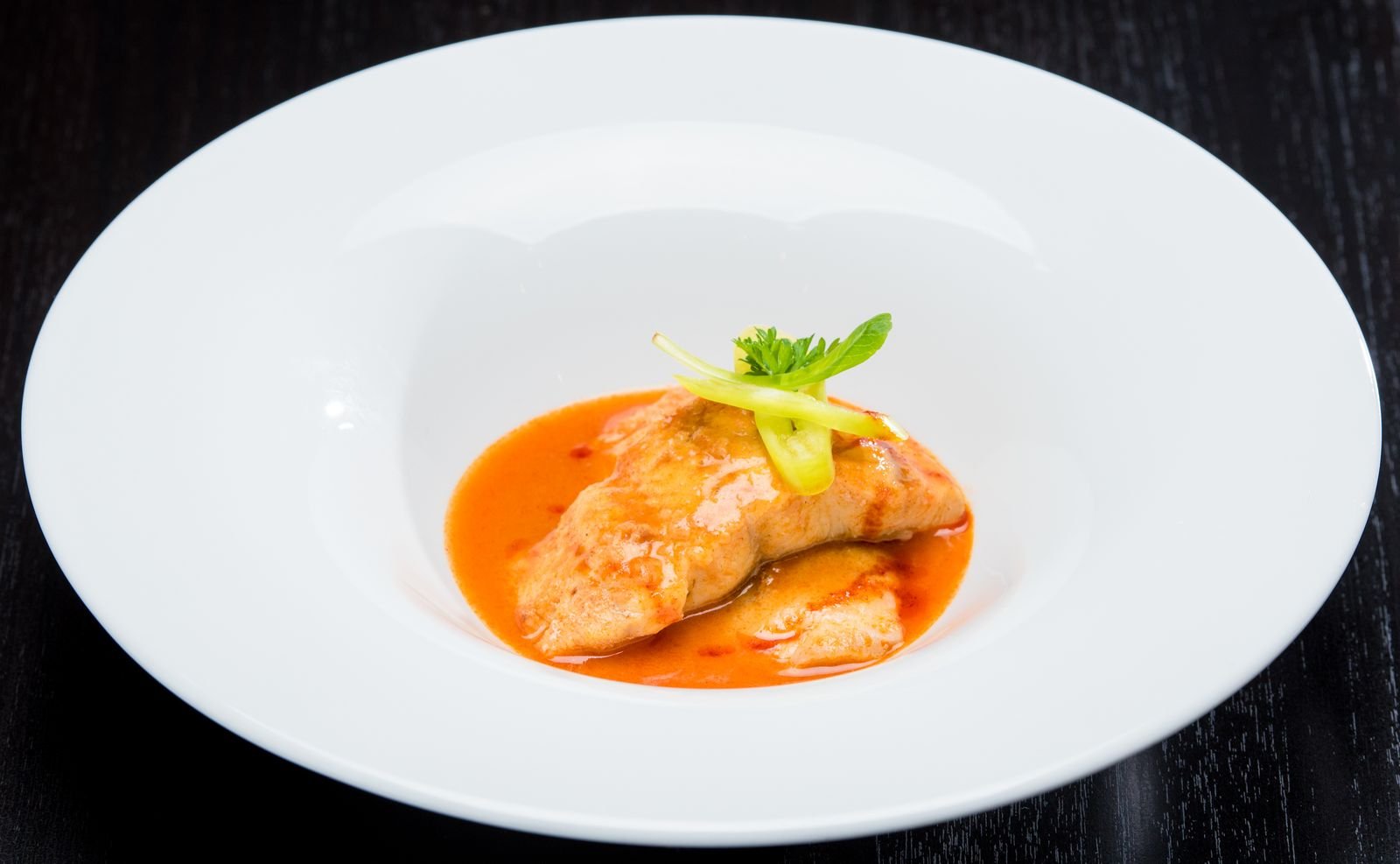
Firm monkfish medallions simmered in a rich sauce of tomato, brandy, garlic and cream — lotte à l'Armoricaine is an elegant French classic from the Brittany coast. It tastes like a special occasion, yet it comes together in under an hour with everyday ingredients. Serve it hot and enjoy. The sauce is rich enough for a celebration, yet the fish itself cooks in minutes.
The story behind Lotte à l'Armoricaine
Lotte à l'Armoricaine comes from Brittany, the rugged Atlantic coast of north-west France, where monkfish has been fished for centuries. The sauce is named after Armorica, the old Roman name for the region, and it is a classic of French coastal cooking: tomatoes, garlic, shallots, brandy and a touch of cream, all simmered into a rich sauce that flatters firm white fish. The Bretons have fished these waters for centuries, and their cooking is built on butter, cream and the catch of the day. The region is famous for its butter, its cream and its seafood.
The dish grew out of the kitchens of Breton fishing ports, where the day's catch was cooked simply and served with bread and wine. Monkfish, once considered a poor fish because of its ugly head, became prized for its firm, meaty flesh, which holds its shape in a sauce in a way that delicate fish cannot. Today it is one of the most respected fish on French menus. Fishermen's wives once cooked the catch in whatever the kitchen held, and this sauce is one of the happiest results. The fish was once overlooked.
What makes it special is the contrast between the firm, almost meaty fish and the silky, aromatic sauce. The brandy adds warmth and depth, the tomato brings sweetness and colour, and the cream rounds everything out without dulling the sea flavour. A pinch of cayenne gives the sauce a gentle heat that builds slowly as you eat. The sauce owes its colour to the tomatoes, which turn a deep, appetising red as they simmer with the brandy.
Cook it when you want a fish dish that feels like a celebration. It suits a dinner party, a romantic meal, or a weekend supper when you want something a little more refined than your usual fish. The sauce takes most of the time, and the fish itself cooks in minutes, so the whole dish is ready in under an hour. It is also a good choice when you want to impress without spending hours in the kitchen. The dish is ready in under an hour.
- Prep time
- 20 mins
- Cook time
- 35 mins
- Total time
- 55 mins
- Servings
- 4 servings
- Calories
- 420
Ingredients
- 600 g monkfish tail, cut into thick medallions about 4 cm
- 2 tablespoons plain flour, seasoned with salt and pepper
- 2 tablespoons butter, unsalted, for frying
- 1 tablespoon olive oil
- 2 shallots, finely chopped
- 3 garlic cloves, finely chopped
- 60 ml brandy or Cognac and 150 ml dry white wine
- 400 g tin chopped tomatoes and 1 tablespoon tomato paste
- 200 ml fish stock or light chicken stock
- 100 ml double cream
- 1 pinch cayenne pepper, plus salt and black pepper to taste
- 2 tablespoons chopped fresh parsley
- 1 bay leaf
- Crusty bread or steamed rice, to serve
Instructions
- Pat the monkfish medallions dry with kitchen paper and season them with salt and pepper, then dust them lightly with the seasoned flour. The flour helps the fish brown and thickens the sauce slightly, so shake off the excess and keep the coating thin and even.
- Melt the butter with the olive oil over medium-high heat until the butter foams. Lay the monkfish in the pan and sear for 2 minutes on each side, until lightly golden, then lift the pieces out onto a plate. The fish is not cooked yet; it will finish in the sauce, and sear until lightly golden on each side.
- Lower the heat to medium and add the shallots to the same pan, cooking for 3 to 4 minutes until soft and pale gold. Stir in the garlic and tomato paste and cook for 1 minute more, until the paste darkens a shade and smells sweet rather than raw and tinny.
- Pour in the brandy and let it bubble for 1 minute, scraping the bottom of the pan. The alcohol cooks off quickly, leaving a warm, rounded flavour behind, and the sauce will smell rich and slightly sweet, and scrape the bottom of the pan clean.
- Add the white wine, chopped tomatoes, fish stock, bay leaf and cayenne, then season lightly with salt and pepper. Bring the sauce to a simmer and cook for 15 minutes, stirring now and then, until it thickens enough to coat a spoon and the tomato tastes mellow rather than sharp.
- Stir in the cream and taste the sauce, adjusting the salt, cayenne and a pinch of sugar if the tomatoes are acidic. The sauce should be rich and glossy, with a gentle warmth at the back of your throat, and it should taste balanced rather than sharp or overly creamy, and taste it before the fish goes in.
- Return the monkfish to the pan, nestling the medallions into the sauce so they are mostly covered. Cover the pan and cook over low heat for 6 to 8 minutes, until the fish is opaque all the way through and flakes easily when you press it with a fork.
- Remove the bay leaf. Spoon the sauce over the fish and let the pan sit off the heat for 2 minutes, so the flavours settle and the fish relaxes in the warm sauce before serving.
- Serve the monkfish in wide, shallow bowls with plenty of sauce spooned over each piece, alongside crusty bread or steamed rice. Eat it while the sauce is hot and glossy, and do not be shy about mopping up every last spoonful.
Pro tips
- Buy monkfish tail, not fillet, since the tail is thick, firm and holds its shape in the sauce without falling apart. The tail is the thickest part of the fish, and it cooks evenly in the sauce.
- Sear the fish quickly and take it out, because monkfish that is cooked twice, once in the pan and once in the sauce, turns tough. The fish finishes cooking in the sauce, so the sear is only for colour.
- Let the sauce simmer for the full 15 minutes before the fish goes in, so the tomato loses its raw edge and the flavours deepen. The tomato should taste mellow, not sharp, before the fish goes anywhere near the pan.
- Taste the sauce before adding the fish, since it is much easier to fix the seasoning now than once the fish is in the pan. Seasoning the sauce now saves you from chasing the flavour once the fish is in.
- Serve the dish in warm bowls, because the cream sauce cools quickly and tastes best when it is hot and glossy. A warm bowl keeps the cream sauce hot and glossy right to the last spoonful.
Variations & serving ideas
For a lighter version, leave out the cream and finish the sauce with a knob of cold butter instead, which gives a silky shine without the richness. Some cooks add a pinch of saffron to the sauce, which turns it golden and adds a subtle, floral note that suits the monkfish beautifully. A spoonful of Pernod in place of the brandy gives the sauce a gentle aniseed flavour, which is very much in the Breton spirit. A few strands of saffron steeped in the stock turn the sauce golden and add a delicate, floral note. Saffron turns the sauce golden.
If monkfish is hard to find or too expensive, the same sauce works well with other firm fish such as cod, hake or halibut. Cod needs about 5 minutes in the sauce, hake needs 6, and halibut needs 7, so adjust the timing to the thickness of the fish. Large prawns are another good option, and they need only 3 to 4 minutes until they turn pink and curl. Scallops are another good option, and they need only 2 to 3 minutes in the hot sauce.
Serve lotte à l'Armoricaine with steamed rice, which soaks up the sauce, or with crusty bread and a simple green salad. A glass of dry white wine such as Muscadet, which comes from the same region, is the natural partner, and a crisp, cold white works well with the rich, creamy sauce. A simple green salad with a lemon dressing keeps the meal balanced and light.
To make it a fuller meal, start with a light salad or a bowl of shellfish soup, then serve the monkfish as the main course with rice and green beans. The dish also works for a dinner party, since the sauce can be made ahead and the fish added at the last moment, so you spend less time in the kitchen and more time at the table. The sauce can be made while guests are having a drink, so you are free to enjoy the evening. The sauce can be made ahead, which makes the evening easier. It is a lovely meal.
Getting it right
The key technique is cooking the sauce fully before the fish goes in. Monkfish cooks in minutes, so the sauce must already taste finished, rich and well seasoned, before the medallions are added. If you rush this step, the fish overcooks while you wait for the tomato to mellow, and the whole dish suffers. Give the sauce its 15 minutes and taste it properly. The tomato paste needs a minute in the hot pan to lose its raw taste and turn sweet.
Heat control matters at two moments. Keep the sauce at a gentle simmer, not a hard boil, so the cream does not split and the tomato reduces slowly, and keep the fish on low heat once it goes in, so it cooks through gently and stays moist. A fierce boil toughens monkfish quickly and turns its firm flesh dry and stringy. A wooden spoon is your best tool here, since it scrapes up the browned bits without scratching the pan.
The most common mistake is overcooking the monkfish. Check it after 6 minutes by pressing a medallion with a fork; it should flake easily and look opaque all the way through, with no translucent centre. If it still looks underdone, give it one more minute, but no more. Another common slip is adding too much cream, which drowns the tomato and brandy, so use just enough to round out the sauce. A little sugar helps if the tomatoes are sharp, but taste first, since good tinned tomatoes are often sweet enough.
Storing & reheating
Leftovers keep in a sealed container in the fridge for up to 2 days, though the fish will firm up a little and the sauce may thicken. Reheat gently in a covered pan over low heat for 5 to 6 minutes, adding a splash of stock or water if the sauce is too thick, and take care not to let it boil.
This dish does not freeze well, since the cream sauce can split and the monkfish turns rubbery after thawing. If you must freeze it, freeze the sauce on its own for up to 2 months and cook fresh fish when you reheat it. Always let leftovers cool before covering them, and never reheat fish more than once, since the texture suffers badly the second time around. The fish is best eaten within 2 days, so plan the meal for when you buy it fresh.
Frequently asked questions
What is monkfish and where do I buy it?
Monkfish is a firm, meaty white fish sold as tail fillets in fishmongers and large supermarkets. Ask for the tail, since it is thick and holds its shape in a sauce, and buy it as fresh as you can. Look for firm, white flesh with no fishy smell, and buy it on the day you plan to cook it.
Can I make the sauce without brandy?
Yes, use extra white wine or a splash of fish stock instead, though the brandy adds a warm depth that is hard to replace. A spoonful of Pernod gives a different but equally good flavour, with a gentle aniseed note. The brandy adds warmth, but a splash of extra wine works if you prefer to skip it.
How do I know when monkfish is cooked?
Press a medallion with a fork after 6 minutes in the sauce; it should flake easily and look opaque all the way through. If the centre still looks translucent, give it one more minute. The flesh turns opaque and flakes with a fork, and that is the moment to take it off the heat.
Can I use a different fish?
Yes, cod, hake or halibut all work well in the same sauce, though they are softer than monkfish and need a little less time. Large prawns are another good option and need only 3 to 4 minutes until they turn pink. Hake is a good budget choice, and it takes the same rich sauce beautifully.
What should I serve with lotte à l'Armoricaine?
Steamed rice is the classic partner, since it soaks up the rich sauce, and crusty bread works just as well. Add a simple green salad and a glass of dry white wine such as Muscadet. Crusty bread is just as good as rice, and it is perfect for mopping up the sauce.
Can I make the sauce ahead of time?
Yes, make the sauce up to the point before the fish goes in, then cool and refrigerate it for up to 2 days. Reheat it gently, taste and adjust the seasoning, then add the fresh fish and cook as directed. Make it a day ahead and keep it in the fridge, then reheat it gently before adding the fish.