Moules Frites Recipe
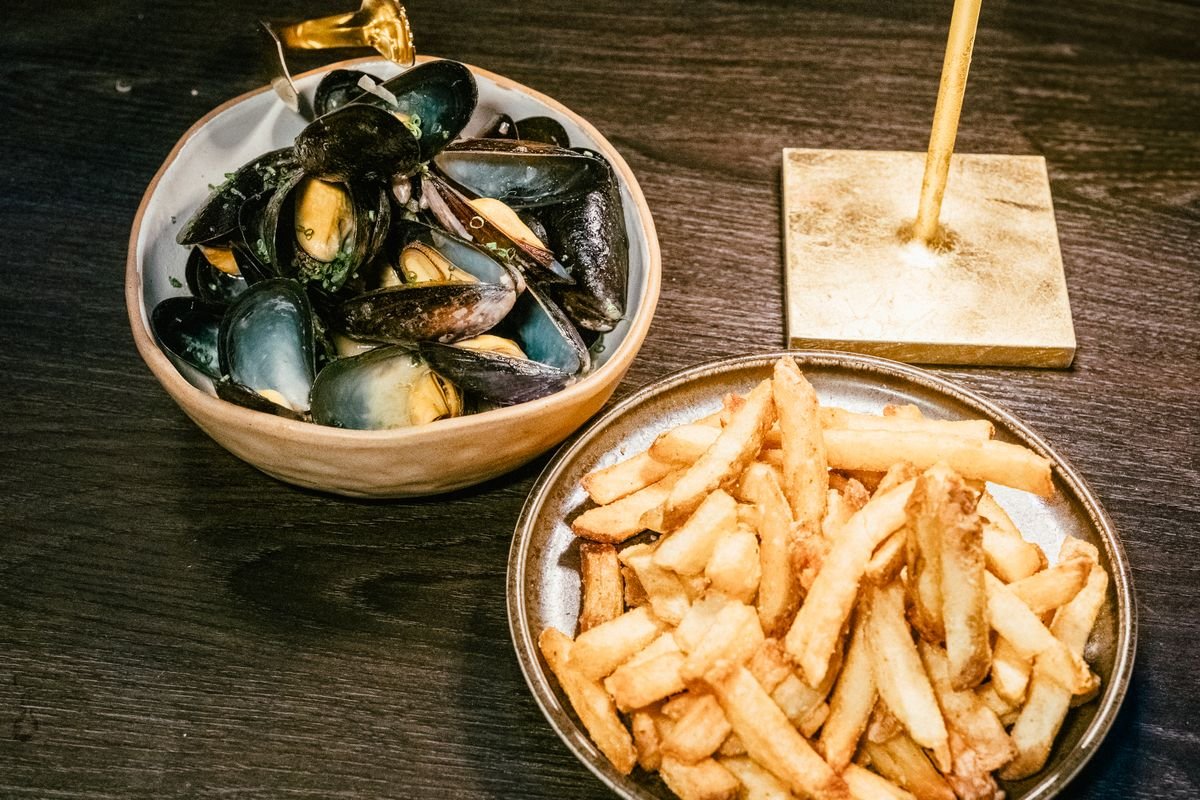
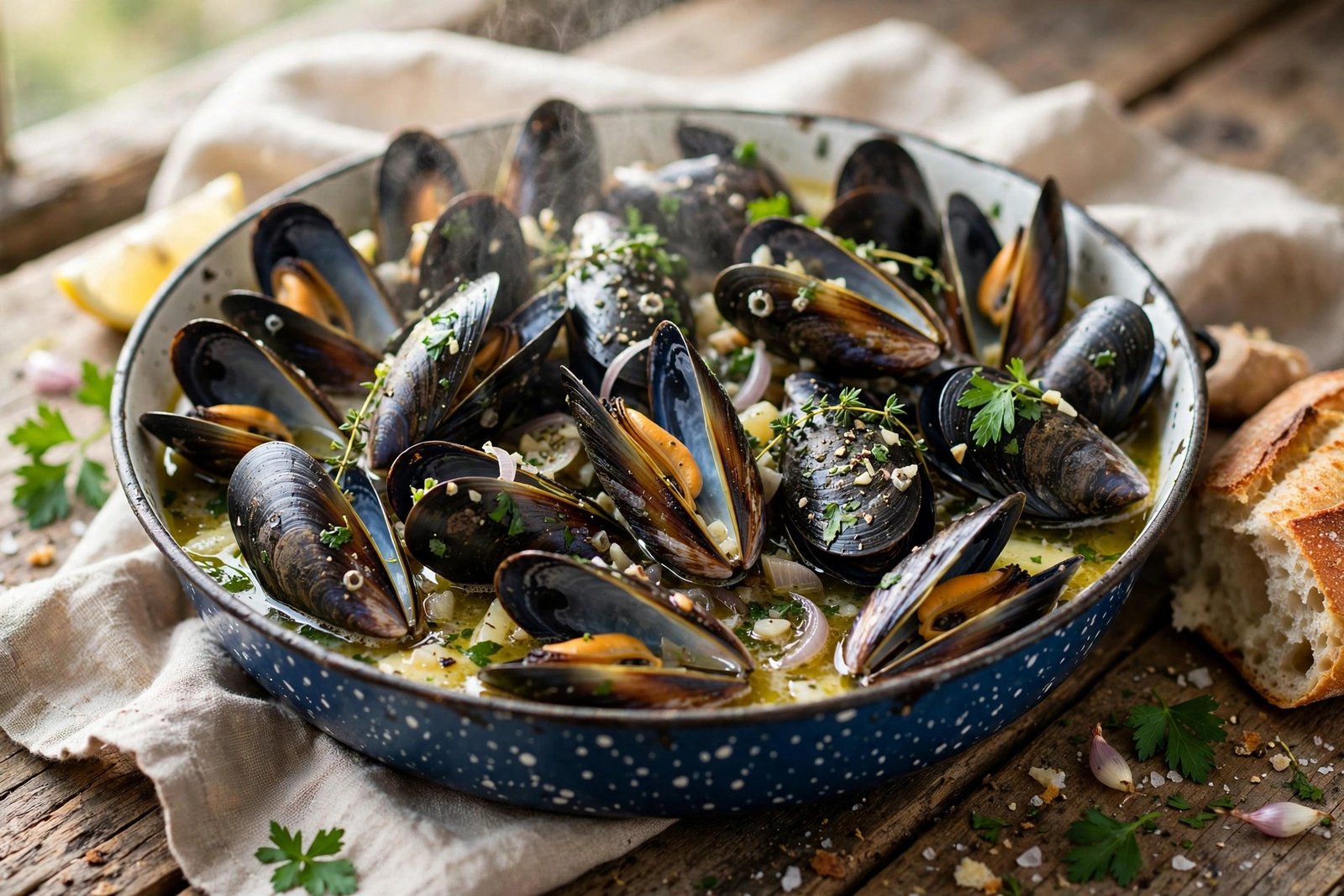
Steaming mussels in white wine and cream, piled next to a heap of golden, twice-cooked fries — this is the bistro plate that northern France and Belgium both claim as their own. The mussels open in a garlicky wine broth in under ten minutes, and the fries come out crisp outside and soft inside. Serve it straight from the pot with bread for the broth and a spoonful of mayonnaise, and dinner feels like a small holiday.
The story behind Moules Frites
Mussels have been gathered along the cold shores of northern France and Belgium for centuries, and the dish grew out of simple fishermen's cooking. The day's catch went into a pot with whatever was at hand — onion, a splash of wine, a knob of butter — and steamed until the shells sprang open. Fries arrived later, sold from carts and small shops in Belgian towns, and at some point in the 1800s the two met on the same plate in the brasseries of Lille and Brussels. Nobody agrees on the exact moment, but the pairing stuck because it works.
In France and Belgium this is everyday food, not a special-occasion dish. You will find it on chalkboards in train-station cafes, seaside restaurants and city brasseries alike, usually written as the plat du jour with a glass of white wine or a small beer. People eat it with their hands, using an empty shell as a pincer to pull the meat from the next one, and the table ends up covered in shells. At the Braderie de Lille, the huge flea market held each September, restaurants compete to pile the tallest heap of empty shells outside their doors.
What makes the dish so good is the contrast on the plate. The mussels are soft, briny and sweet, bathed in a broth that tastes of wine, garlic and the sea. The fries are salty and crisp, and they give you something to drag through the broth and the mayonnaise. The whole meal comes together in under an hour, yet it feels generous and a little bit celebratory. It is one of those recipes where simple ingredients, treated well, beat anything fancy.
Cook this on a Friday night when you want something fast and sociable, or for friends who like to eat with their hands and linger at the table. It suits cool evenings best, when mussels are at their plumpest and a steaming pot feels right. Buy the mussels the same day you cook them, keep them cold, and check every shell before it goes in the pot. Once you have made it a couple of times, the rhythm becomes second nature and the dish earns a regular place in your week.
- Prep time
- 20 mins
- Cook time
- 35 mins
- Total time
- 55 mins
- Servings
- 4 servings
- Calories
- 680
Ingredients
- 2 kg fresh mussels, scrubbed and debearded
- 1 kg floury potatoes, such as Maris Piper or King Edward
- 2 tablespoons sunflower oil, for frying
- 2 tablespoons unsalted butter
- 2 shallots, finely chopped
- 3 garlic cloves, thinly sliced
- 200 ml dry white wine
- 150 ml double cream
- 1 small bunch flat-leaf parsley, chopped
- 1 tablespoon Dijon mustard
- 1 lemon, cut into wedges
- Sea salt and black pepper
- Mayonnaise, to serve
Instructions
- Start with the mussels. Tip them into a colander and rinse under cold water, scrubbing each shell with a stiff brush and pulling off any beards. Tap any open mussel sharply on the counter; if it does not close within a few seconds, throw it away. Discard any cracked shells too. This sorting takes ten minutes and it is the most important part of the recipe.
- Cut the potatoes into batons about 1 cm thick, keeping them as even as you can so they cook at the same rate. Rinse them in cold water until the water runs clear, then dry them well in a clean tea towel. Wet potatoes spit in hot oil, so take your time here. Seasoning comes later, once they are cooked.
- Heat the oil in a deep, heavy pan to 150°C. Fry the potatoes in small batches for 5 to 6 minutes, until they are pale and soft but not coloured. Lift them out with a slotted spoon and drain on kitchen paper. This first fry cooks the inside; the second fry, later, makes them crisp. Let them cool for at least 10 minutes while you start the mussels.
- Melt the butter in a very large, wide pot over medium heat. Add the shallots and cook for 3 to 4 minutes until they turn soft and sweet-smelling, then add the garlic and cook for 30 seconds more. You want the garlic pale gold, not brown, because browned garlic turns bitter and will flavour the whole broth.
- Pour in the white wine and turn the heat up. Let it bubble hard for a minute so the raw alcohol smell cooks off, then tip in the mussels and clamp the lid on. Shake the pot once or twice as they steam. After 4 to 5 minutes, lift the lid: most shells should be wide open and the kitchen should smell of the sea.
- Stir in the cream and the mustard, then scatter over half the parsley. Let the sauce simmer for one minute until it turns pale and lightly coats a spoon. Taste and add salt and pepper — the mussels bring their own salt, so go gently. Any mussel that stayed shut goes straight in the bin; never force it open.
- While the mussels finish, bring the oil back up to 180°C. Fry the potatoes again in small batches for 2 to 3 minutes until they are deep gold and you can hear them crackle. Drain them on fresh kitchen paper and salt them at once, while the surface is still hot and the salt sticks.
- Ladle the mussels and their broth into wide, warm bowls, spooning plenty of sauce over the top. Pile the fries alongside or in a separate bowl, and scatter the rest of the parsley over everything. Put lemon wedges and a good spoonful of mayonnaise on the table, plus a big empty bowl for shells.
- Serve right away, while the broth is steaming and the fries are still crisp. Show anyone new to the dish how to use an empty shell as a pincer — it is the easiest way to eat a mussel. Keep crusty bread nearby for the last of the broth, because leaving it in the bowl would be a shame.
Pro tips
- Buy mussels from a fishmonger you trust and cook them the same day. Fresh mussels should smell of clean seawater, never fishy, and most shells should be tightly closed in the bag.
- Never soak mussels in fresh water for long. A quick rinse is enough — long soaking drowns them and washes away the sea flavour you want in the broth.
- Use a pot much bigger than you think you need. Mussels need room to steam evenly, and a crowded pot leaves the ones at the bottom overcooked and the ones on top raw.
- Salt the fries the second they leave the oil. Salt bounces off cold fries, so keep the shaker ready and season each batch while it is still glistening.
- Warm the serving bowls before you ladle the mussels in. A cold bowl chills the broth fast, and this dish is at its best when it arrives at the table steaming.
Variations & serving ideas
The classic version uses white wine, but the dish changes character happily with other liquids. Cider gives a softer, slightly sweet broth that suits autumn, while a pale lager makes a lighter, more bitter sauce that pairs well with strong mustard. In Normandy, cooks sometimes finish the sauce with a splash of Calvados, and in the south of France a pinch of saffron and a little tomato turn the broth golden. Try one change at a time and you will find the version your table likes best.
If you want a richer sauce, stir in an extra spoonful of cream and a knob of cold butter at the end, off the heat, until it turns glossy. For a lighter plate, skip the cream altogether and finish with olive oil, lemon juice and plenty of chopped herbs. Blue cheese crumbled over the fries is a Belgian habit worth copying, and a spoonful of aioli next to the mayonnaise gives everyone a second dip to argue about.
The fries are half the dish, so treat them with respect. Sweet potatoes make a good change if you like a sweeter crunch, though they brown faster and need a gentler second fry. Oven chips work on a busy night: toss the batons in oil, roast at 220°C for 25 minutes, and turn them once so both sides crisp. They will not match a double fry for crunch, but they save you a pot of oil and the house stays cooler.
Serve moules frites the way a brasserie does — the pot in the middle of the table, a stack of bowls, and bread for the broth. A glass of dry white wine such as Muscadet or a small lager is the natural partner, and a simple green salad with a sharp dressing cuts through the richness. For dessert, keep it simple: a scoop of vanilla ice cream or a piece of fruit tart is all the meal needs after such a generous main course.
Getting it right
The heart of this recipe is the double fry, and it is worth learning properly. The first fry at 150°C cooks the potato through without colouring it; the starch inside turns soft and fluffy while the outside stays pale. Cooling the chips for ten minutes lets steam escape and the surface dry out. The second fry at 180°C then drives off the last moisture and builds a crisp shell. Skip the rest and the chips steam instead of crisping, and you end up with limp fries.
Heat control matters for the mussels too. The pot must be properly hot before the wine goes in, so the liquid boils the moment the mussels land and steam fills the pot in seconds. If the heat is too low, the mussels sit in warm liquid and slowly toughen instead of opening fast. Keep the lid on and resist peeking: every lift lets the steam out and adds a minute to the cooking. Shake the pot once, firmly, halfway through so the shells at the bottom swap places with the ones on top.
The most common mistake is overcooking the mussels. They only need 4 to 5 minutes; after that the meat shrinks, turns rubbery and loses its sweetness. Start checking at 4 minutes and pull the pot off the heat as soon as most shells are open. A few closed ones are normal — discard them, they were never going to open. The other mistake is under-seasoning the fries, so salt them hot and taste one before serving. Get those two points right and the dish is hard to spoil.
Storing & reheating
Mussels do not keep well once cooked, so this is a dish to make and eat in one sitting. If you do have leftovers, pick the meat from the shells, cool it fast and refrigerate in the broth for no more than a day. Reheat gently in the sauce over low heat for two or three minutes, and stop the moment it is warm — any longer and the mussels turn tough.
The fries reheat better than the mussels. Spread them on a tray and bake at 200°C for 5 to 6 minutes until they crisp again; a microwave will only make them soft. Do not freeze cooked mussels, and never reheat a mussel that was left at room temperature for hours. Fresh mussels, uncooked, keep in the fridge for a day in a bowl covered with a damp cloth, never sealed in a plastic bag.
Frequently asked questions
How do I know if my mussels are fresh?
Fresh mussels smell of clean seawater and feel heavy for their size. Most shells should be closed, and any that are open should snap shut when you tap them firmly. Discard any that stay open, smell fishy, or have cracked shells.
Can I make moules frites without white wine?
Yes. Cider is the easiest swap and gives a gentle, fruity broth. Beer works too, though it adds a bitter note. You can also use fish or chicken stock with a squeeze of lemon, but add the lemon at the end so the broth stays bright.
Why do my fries come out soggy?
Soggy fries usually mean the oil was not hot enough, the pan was overcrowded, or the chips skipped the cooling rest between fries. Fry in small batches, let the oil come back to temperature between batches, and rest the chips for at least ten minutes after the first fry.
Do I have to debeard the mussels?
Yes, pull off the stringy beard sticking out of each shell before cooking. It is tough and unpleasant to eat. Grip it firmly and tug toward the hinge of the shell. A quick scrub under cold water at the same time removes grit and sand.
What do I do with mussels that stay closed?
Throw them away. A closed mussel after cooking was either dead before it went in the pot or never opened, and it is not safe to force it. This is normal — even a good batch usually has one or two that stay shut.
Can I use frozen mussels for this recipe?
You can, but the result is not as good. Frozen mussels are usually sold without shells and cook faster, so add them to the hot broth and simmer for just two or three minutes. Fresh mussels give a better texture and a richer broth, so use them when you can.