Axoa de Veau Recipe
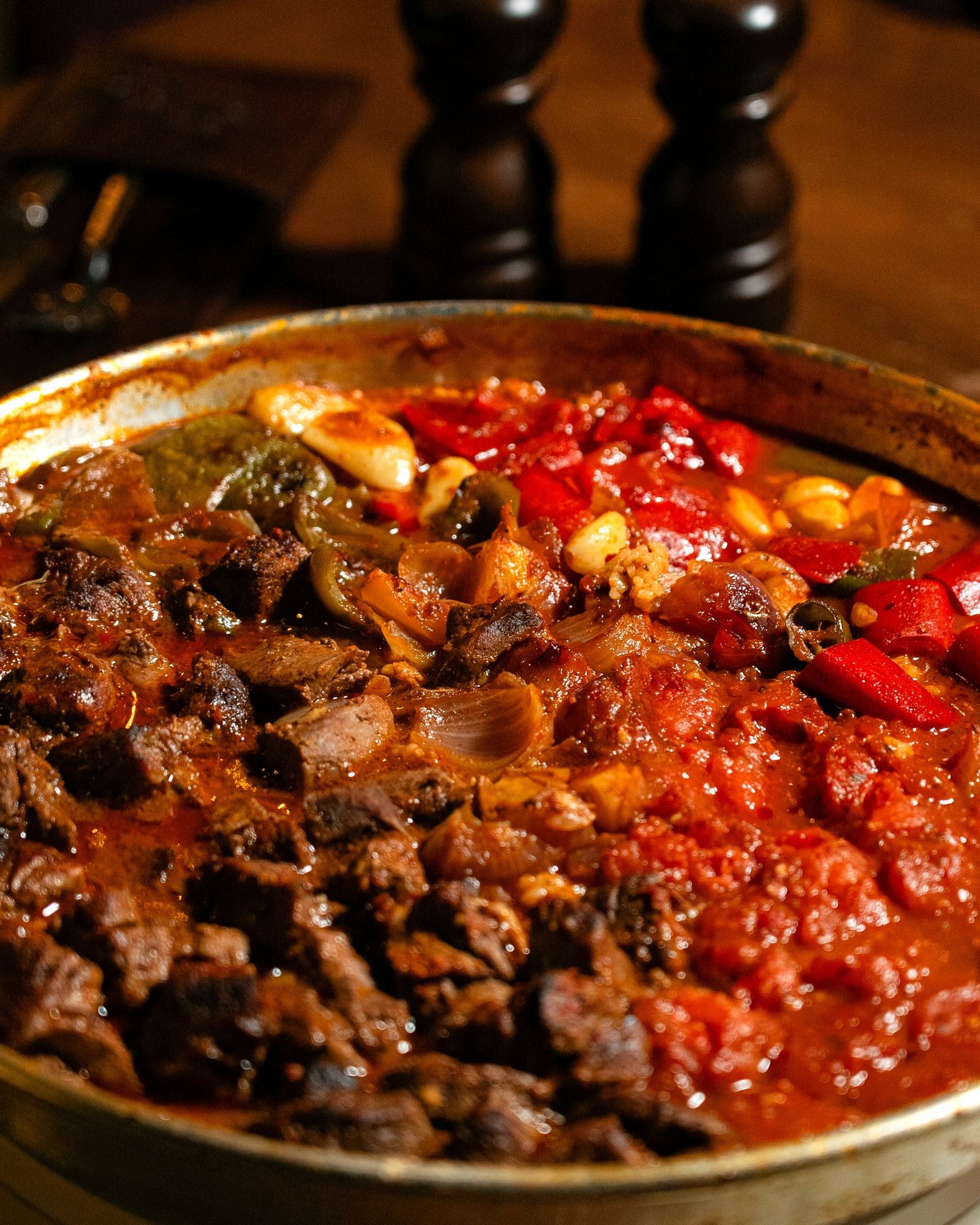
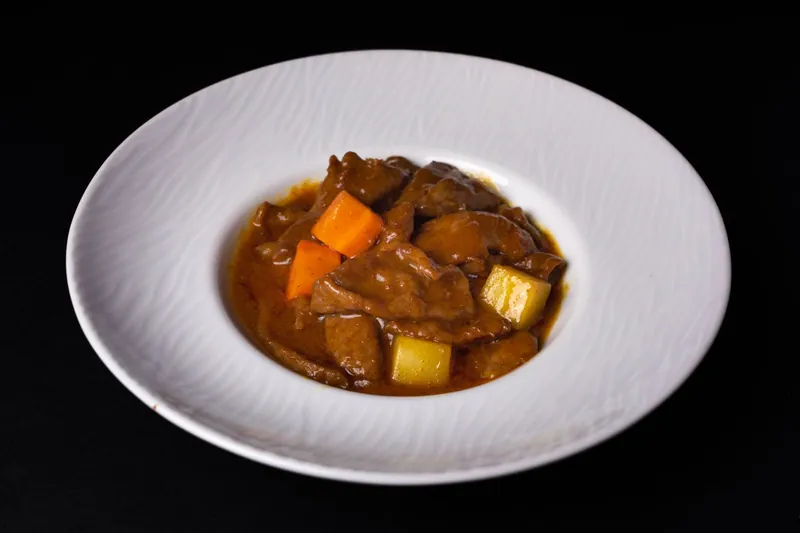
Axoa de veau is the Basque country's answer to a slow Sunday stew: tender cubes of veal simmered with sweet peppers, onions, tomatoes, and a warm flicker of Espelette pepper. The sauce turns silky and rich, the meat goes soft enough to cut with a fork, and the whole pot smells of garlic and sweet peppers. Serve it over rice or with boiled potatoes and let the sauce do the talking.
The story behind Axoa de Veau
Axoa de veau comes from the French Basque country, around the village of Espelette, where the famous red pepper that carries the village name is grown and dried. The dish is a stew of diced veal cooked with peppers, onions, tomatoes, garlic, and white wine, seasoned with that same Espelette pepper. It is farmhouse cooking: a pot, a sharp knife, and whatever the garden and the butcher provided. The veal is cut small, so it cooks faster than a big stewing joint, and the peppers melt into the sauce as they cook.
In Basque homes, axoa is a dish for the table, not for a restaurant menu, though you will find it on menus all over the region now. It is cooked in a heavy pot, often a cast-iron cocotte, and served family-style with rice or potatoes to soak up the sauce. The flavours are gentle rather than fiery. Espelette pepper gives warmth and a faint smokiness, but the dish is about sweetness: sweet peppers, sweet onions, and tomatoes cooked down until they taste like themselves, only more so. The dish is forgiving about the exact peppers you use, but the Espelette pepper is not optional in spirit: it is the warmth that ties the pot together and the flavour that marks the dish as Basque.
What makes axoa special is the texture of the veal. Cut into small cubes and browned properly, then simmered slowly, it turns tender without falling apart, and each piece carries the sauce. The peppers, meanwhile, soften into ribbons that all but disappear into the pot. By the time it is done, you have a stew where the meat and the sauce taste of each other, and a spoonful of rice underneath catches everything that runs off.
This is a cold-weather dish, the kind you start in the afternoon and eat when the house smells wonderful. It suits a weekend, when there is time to let a pot simmer without hurry. Make it for a family meal in Canada on a chilly evening, put the pot in the middle of the table, and let everyone spoon their own. It is the sort of cooking that makes a kitchen feel like the centre of the house.
- Prep time
- 20 mins
- Cook time
- 1 hr 10 mins
- Total time
- 1 hr 30 mins
- Servings
- 4 servings
- Calories
- 480
Ingredients
- 800 g veal shoulder or stewing veal, cut into 2 cm cubes
- 2 tablespoons olive oil
- 1 tablespoon butter
- 2 onions, finely chopped
- 2 green bell peppers, seeded and cut into strips
- 1 red bell pepper, seeded and cut into strips
- 4 garlic cloves, finely chopped
- 400 g ripe tomatoes, chopped, or 1 can (400 g) chopped tomatoes
- 120 ml dry white wine
- 1 teaspoon Espelette pepper
- 1 bay leaf
- 1 teaspoon fine sea salt, plus more to taste, and 1/2 teaspoon black pepper
- 2 tablespoons chopped fresh parsley, to serve
- Cooked rice or boiled potatoes, to serve
Instructions
- Pat the veal cubes dry with paper towels and season them with salt and black pepper. Dry meat browns properly; wet meat steams and turns grey. Heat the olive oil in a heavy pot over medium-high heat until it shimmers. Brown the veal in two batches, letting each cube sit undisturbed for 2 to 3 minutes per side until it has a deep golden crust. Lift the browned meat out and set it aside.
- Turn the heat down to medium and add the butter to the same pot. Tip in the chopped onions and cook for 6 to 8 minutes, stirring now and then, until they are soft and translucent. Scrape the bottom of the pot as you stir, because the browned bits left from the veal are full of flavour and will dissolve into the sauce.
- Add the green and red pepper strips and cook for 5 minutes, until they start to soften and their edges go limp. Then stir in the garlic and cook for 1 minute, just until it smells fragrant. Do not let the garlic brown, or it will taste bitter and spoil the sweetness of the peppers.
- Pour in the white wine and let it bubble for 2 minutes, scraping the bottom of the pot with a wooden spoon. The wine will hiss and steam as it hits the hot pot, and the browned bits will lift off and dissolve. Let the wine reduce by about half, until the sharp alcohol smell fades.
- Return the veal and any juices from the plate to the pot. Add the chopped tomatoes, the Espelette pepper, and the bay leaf. Stir everything together, then bring the pot to a gentle simmer. You want a few lazy bubbles breaking the surface, not a rolling boil.
- Put the lid on slightly ajar and cook on low heat for 55 to 60 minutes, stirring every 15 minutes. The veal should grow tender and the sauce should thicken and darken. If the sauce looks too thick, add a splash of water. If it looks too thin near the end, take the lid off for the last 10 minutes and let it reduce.
- After an hour, test a cube of veal with a fork. It should yield easily and pull apart with gentle pressure. Taste the sauce and adjust the salt and Espelette pepper. A little more heat is fine here, but add it a pinch at a time and stir it in well before tasting again.
- Fish out the bay leaf and throw it away. Let the pot sit off the heat for 5 minutes so the sauce settles and the flavours come together. Scatter the chopped parsley over the top.
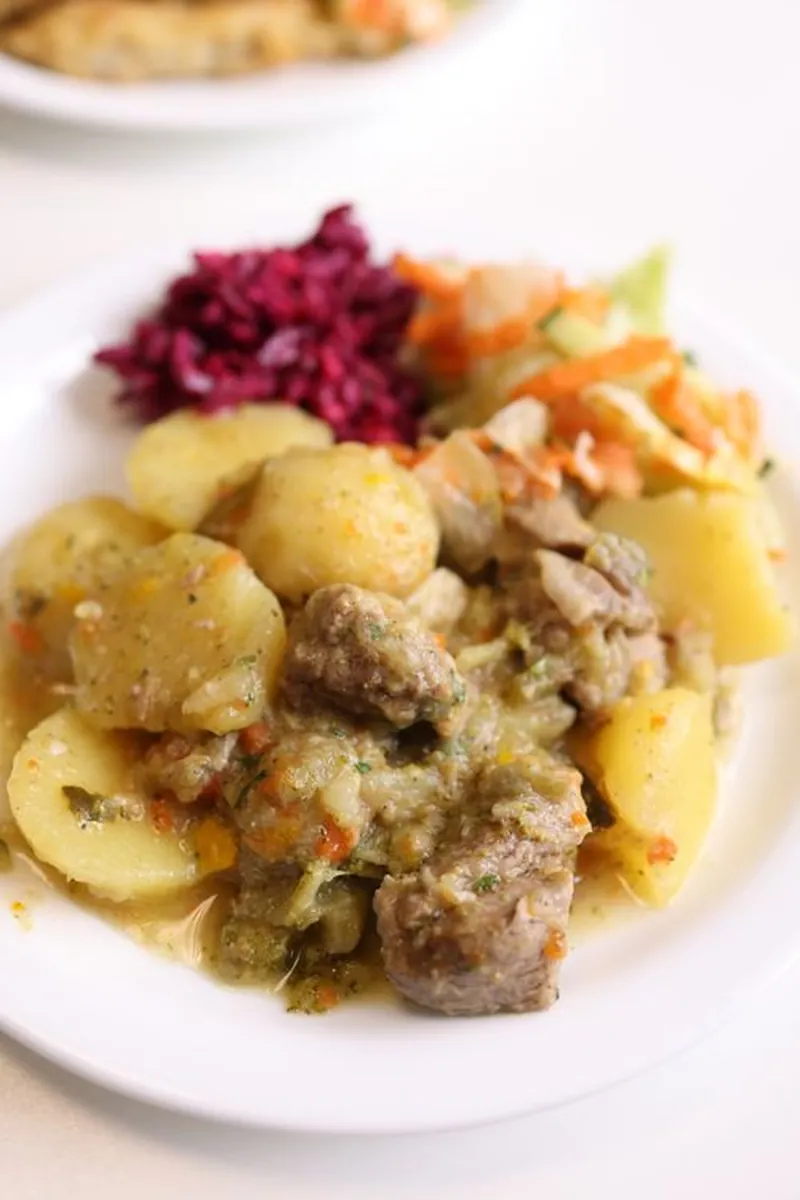
- Serve the axoa hot, spooned over steamed rice or beside boiled potatoes, with the sauce ladled generously over everything. Crusty bread on the side is useful for the last of the sauce, and a simple green salad keeps the plate balanced.
Pro tips
- Brown the veal in batches and do not crowd the pan. Crowded meat steams instead of browning, and without that golden crust the sauce loses depth. Two batches is worth the extra few minutes. Let each cube sit undisturbed for a full 2 to 3 minutes per side; the crust forms while the meat is still, and constant turning only steams it.
- Cut the veal into even cubes, about 2 cm across. Even pieces cook at the same rate, so you do not end up with some cubes tender and others still tough after an hour.
- Keep the simmer gentle. A hard boil tightens the meat and makes it chewy, while a slow simmer lets the fibres relax and the sauce thicken. A few lazy bubbles is the right speed.
- Espelette pepper is mild and fruity, so do not expect chilli heat. If you cannot find it, use sweet paprika with a small pinch of chilli flakes, and taste before adding more.
- Let the pot rest for 5 minutes before serving. Resting lets the sauce thicken slightly and the flavours settle, and the veal relaxes after its long simmer.
Variations & serving ideas
Veal is the classic choice, but this dish works well with other meats. Pork shoulder, cut the same way, gives a richer stew and needs the same cooking time. Chicken thighs, bone-in or boneless, cook faster, so check them after 40 minutes. Beef chuck also works, though it needs a longer simmer, closer to 90 minutes, to turn properly tender. Pork shoulder is a good budget swap and turns just as tender, though it gives a richer, fattier sauce, so skim any fat from the surface before serving if you prefer a lighter pot.
The peppers can change with the season. In late summer, when peppers are sweet and cheap, use three or four and let them melt right down. In winter, a jar of roasted red peppers, drained and sliced, is a good stand-in and adds a smoky note. A pinch of smoked paprika alongside the Espelette pepper deepens the flavour further. A jar of roasted red peppers, drained and sliced, is a good stand-in in winter and adds a smoky note that suits the veal well.
For a heartier pot, add a handful of diced potatoes or a tin of drained white beans in the last 30 minutes of cooking. The potatoes soak up the sauce and turn buttery, and the beans add body. Both make the dish stretch further, which is useful when extra people turn up for dinner. A tin of drained white beans stirred in for the last 30 minutes adds body and stretches the pot for extra guests, while diced potatoes cooked in the sauce turn buttery and soak up the flavour.
Serve axoa over steamed rice, with boiled or mashed potatoes, or with thick slices of country bread. A dry white wine from the south-west of France is the traditional partner, but a light red works too. A simple green salad with a sharp dressing is the only side you need, and the pot is just as good, if not better, the next day. A dry white wine from the south-west of France is the traditional partner, though a light red works just as well on a cold evening at the table.
Getting it right
Browning is the step that makes this stew. The golden crust on the veal is not just colour; it is flavour, built by the heat of the pan on the surface of the meat. For it to happen, the pan must be hot, the meat must be dry, and the cubes must have room. Pat the veal dry, season it, and let each cube sit still for 2 to 3 minutes before turning. If you keep poking and moving the meat, it never gets the chance to brown. If the pan is not hot enough, the meat will stick and tear, so wait until a drop of water flicked into the oil sizzles and dances before the first cubes go in.
Heat control carries the rest of the dish. The onions and peppers cook on medium heat, softening without browning, and the long simmer runs on low. If the pot boils hard, the veal tightens and the sauce reduces too fast. You are looking for a gentle simmer with a few bubbles breaking the surface, and a lid left slightly ajar so a little steam escapes and the sauce thickens slowly.
The most common mistake is rushing the simmer. At 40 minutes the veal will still be firm, and the sauce will taste thin and sharp. Give it the full hour. Taste a cube with a fork: when it yields with gentle pressure and the sauce coats a spoon, it is ready. If the sauce is thin at the end, take the lid off for 10 minutes rather than adding flour, which dulls the flavour.
Storing & reheating
Axoa keeps beautifully in the fridge for up to 3 days in a sealed container, and many cooks say it tastes better the next day, once the peppers and sauce have settled together. Reheat it gently in a covered pot over low heat, adding a splash of water if the sauce has thickened too much.
For longer storage, freeze the stew in portions for up to 3 months. Thaw overnight in the fridge, then reheat slowly on the stove. Cook fresh rice or potatoes to serve with it, since reheated rice goes dry. Do not freeze the dish with rice mixed in. Label the container with the date, since a spiced stew like this looks much like every other stew in the freezer after a month.
Frequently asked questions
What cut of veal is best for axoa de veau?
Veal shoulder or stewing veal is ideal because it has enough connective tissue to turn tender and silky during a slow simmer. Ask your butcher for stewing veal and cut it into even 2 cm cubes. Avoid very lean cuts like veal escalopes, which dry out in a stew.
Can I make axoa with beef instead of veal?
Yes, beef chuck works well and gives a deeper flavour. Cut it the same way and brown it in batches, then simmer for about 90 minutes instead of an hour, since beef needs longer to turn tender. The rest of the recipe stays exactly the same.
What is Espelette pepper, and what can I use instead?
Espelette pepper is a mild, fruity red pepper from the Basque village of Espelette. It adds warmth and a gentle smokiness. Sweet paprika with a pinch of chilli flakes is the closest substitute, or use a mild chilli powder if that is what you have on hand.
Can I cook axoa in a slow cooker?
Yes. Brown the veal and soften the onions and peppers on the stove first, then transfer everything to a slow cooker with the wine, tomatoes, and seasoning. Cook on low for 5 to 6 hours or on high for 3 hours, until the veal is tender.
Why is my veal still tough after an hour?
Tough veal usually means it either boiled too hard or has not cooked long enough. A hard boil tightens the meat, so keep the simmer gentle. If the cubes are large, they may need another 15 to 20 minutes. Test with a fork rather than watching the clock.
What should I serve with axoa de veau?
Steamed rice is the classic partner, and it catches the sauce perfectly. Boiled or mashed potatoes work just as well, and crusty bread is useful for mopping the plate. A simple green salad with a sharp vinaigrette balances the richness of the stew.