Bœuf en Daube Recipe
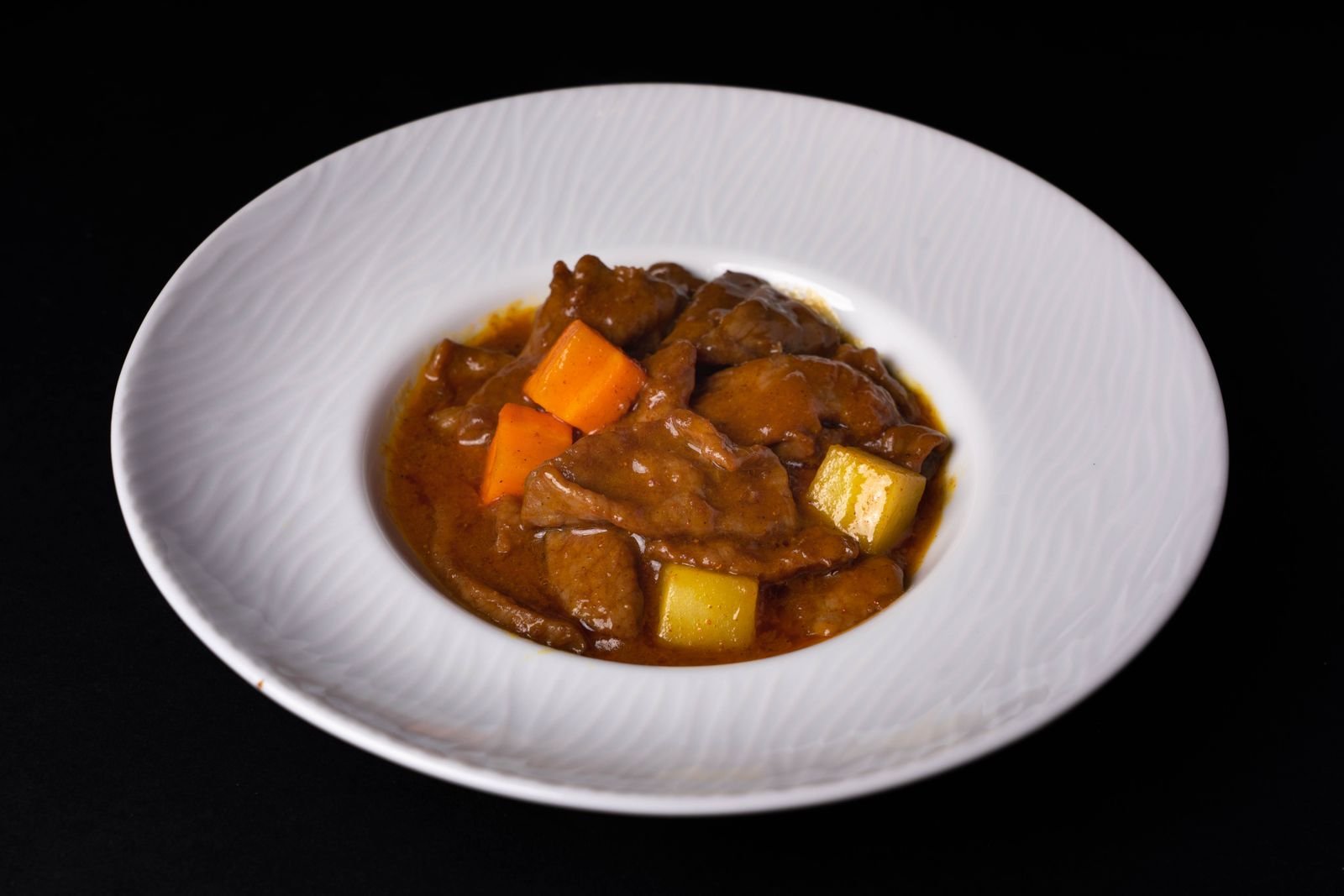
This is the beef stew Provence cooks when the day turns cool and the table fills up. Chunks of beef simmer for hours in red wine with orange peel, olives, and herbs until the meat gives way at the touch of a fork. The sauce turns dark and glossy, rich enough to spoon over mashed potatoes or polenta. It tastes like a long Sunday lunch, and it reheats even better the next day.
The story behind Bœuf en Daube
A daube is one of the oldest slow-cooked dishes in Provence, in the south of France. The name comes from the daubière, a squat earthenware pot with a tight lid that cooks would seal with a ring of flour-and-water paste, then set over low embers for hours. Tough, cheap cuts of beef went in with local red wine, garlic, and herbs, and time did the work that a quick fry never could. The pot stayed closed so nothing escaped, and the meat came out spoon-tender in a sauce that had cooked down to something deep and dark. The pot itself mattered as much as the recipe, because thick earthenware held a low, even heat for hours and kept the lid sealed tight so the wine and juices had nowhere to escape.
In Provençal homes the daube was a dish for Sundays and feast days, made the day before so the flavours could settle overnight. Cooks argued, fondly, about the right wine, the right cut, and whether olives belonged in the pot or on the side. Every village had its own version, and every family guarded its own small changes. What never changed was the patience: a daube cannot be hurried, and nobody in Provence would try.
What sets this stew apart from other beef braises is the strip of orange peel and the handful of black olives. The orange lifts the whole pot, cutting through the richness of the wine and beef with a clean, bitter brightness you can smell the moment you lift the lid. The olives add salt and a faint earthiness, and a little anchovy melted into the sauce gives it depth without tasting fishy at all. Together they make a stew that tastes unmistakably of the Mediterranean rather than of a generic brown gravy. A little grated dark chocolate is sometimes stirred in at the very end, not enough to taste as chocolate, just enough to deepen the colour and round off the wine.
Cook this when you have an afternoon at home and people coming for dinner. It asks for about half an hour of hands-on work and then looks after itself in the oven for three hours. Serve it with mashed potatoes, buttered pasta, or soft polenta, and put the pot in the middle of the table so everyone can help themselves. It is also one of the best make-ahead dishes you will ever cook, because a night in the fridge only makes it better.
- Prep time
- 30 mins
- Cook time
- 3 hrs
- Total time
- 3 hrs 30 mins
- Servings
- 6 servings
- Calories
- 640
Ingredients
- 1.5 kg beef chuck, cut into 5 cm chunks
- 750 ml full-bodied red wine, such as Côtes du Rhône
- 2 tablespoons olive oil
- 2 onions, finely chopped
- 4 garlic cloves, thinly sliced
- 2 carrots, peeled and cut into thick rounds
- 2 tablespoons tomato paste
- 2 strips orange peel, pith removed
- 1 bouquet garni (thyme, bay leaf, parsley stalks)
- 100 g pitted black olives
- 2 anchovy fillets, finely chopped
- Salt and black pepper, to taste
Instructions
- Put the beef in a large bowl and pour over the red wine. Add half the sliced garlic and one strip of orange peel, cover, and leave it in the fridge for at least 4 hours, or overnight if you can. The wine starts to soften the meat and seasons it right through before the cooking even begins.
- Lift the beef out of the marinade and pat each piece very dry with kitchen paper. Keep the marinade, because it becomes the cooking liquid. Wet meat will steam instead of browning, and browning is where the deep flavour of this stew starts.
- Heat the olive oil in a heavy casserole over medium-high heat until it shimmers. Brown the beef in batches, leaving space between the pieces, for about 3 minutes a side until each piece has a dark crust. Move the browned meat to a plate and season it with salt and pepper.
- Turn the heat down to medium and add the onions and carrots to the same pot. Cook them for 6 to 8 minutes, scraping the bottom with a wooden spoon, until the onions soften and turn golden and the browned bits stuck to the pot start to loosen.
- Stir in the tomato paste and the chopped anchovy and cook for 2 minutes until the paste darkens a shade and smells sweet rather than raw. Add the remaining garlic and cook for 1 more minute, just until it smells fragrant. Garlic burns fast, so keep it moving.
- Pour the reserved marinade into the pot and bring it to a boil, scraping the bottom well to lift every browned bit into the liquid. Those bits are pure flavour, and the wine will bubble and smell sharp for a minute before it settles down.
- Return the beef to the pot with the second strip of orange peel and the bouquet garni. The liquid should just about cover the meat. Put the lid on and slide the pot into a 150°C oven for 2 hours and 45 minutes.
- After about 2 hours, stir in the olives and check the liquid. If the sauce looks thin, take the lid off for the last 30 minutes so it can reduce. The beef is ready when a piece pulls apart easily with two forks and the sauce coats the back of a spoon.
- Lift out the bouquet garni and the orange peel, taste the sauce, and adjust the salt and pepper. Let the stew rest for 15 minutes before serving so the sauce thickens slightly and the flavours settle. Serve it hot, with the sauce spooned generously over the top.
Pro tips
- Use beef chuck or shin, never a lean steak cut. The fat and connective tissue in chuck melt during the long braise and keep the meat moist; lean beef just dries out. Ask the butcher for chuck cut into large pieces, so you can trim it and cut it yourself.
- Marinate overnight when you can. Four hours works, but a full night in the wine gives the beef a deeper colour and a flavour that reaches the centre of each piece. If you are short on time, even two hours of marinating is better than none, though the flavour will not reach quite as deep.
- Brown the meat properly, in batches, and do not crowd the pot. A dark crust on every piece is the difference between a rich stew and a grey, boiled-tasting one.
- Keep the oven low and the lid on. A gentle braise at 150°C turns tough beef tender; a hard boil tightens the fibres and squeezes the moisture out.
- Make it a day ahead if you can. Cool it, chill it overnight, lift off any fat that sets on top, and reheat it gently. The flavours knit together and the sauce tastes rounder.
Variations & serving ideas
The classic Provençal version sometimes swaps the olives for prunes, which soften in the sauce and add a dark sweetness that works beautifully with the wine. A few cooks add a splash of brandy to the marinade, or a square of dark chocolate stirred in at the end for extra depth. If you prefer a lighter pot, use white wine and add mushrooms in the last hour instead of olives. Some cooks in Nice add a few dried porcini, soaked and chopped, which give the sauce an earthy depth that suits the olives and orange.
Beef shin makes a fine substitute for chuck and gives an even silkier sauce, because it carries more gelatine. Short ribs work too, though they need an extra 30 minutes in the oven. If you only have stewing beef already cut up, it will still work, but check it after 2 hours so it does not overcook. Pork cheek is a less common but very good change, with a softer, richer result. A splash of brandy in the marinade adds warmth, and a few strips of smoked bacon layered in the pot give the sauce a deeper, smoky backbone.
Serve the daube the way they do in Provence, with macaroni or penne tossed in the sauce, or with creamy mashed potatoes that soak up every drop. Soft polenta is another good partner, and a simple green salad with a sharp vinaigrette cuts the richness nicely. Crusty bread is not optional in my kitchen, because the sauce deserves to be mopped up. Soft polenta is another good partner, and a spoonful of gremolata scattered over the top just before serving adds a fresh, green lift.
Pour the same red wine you cooked with, or something close to it, because the flavours will match the pot. A Côtes du Rhône or a simple red from the south of France is the natural choice. For a non-alcoholic table, serve sparkling water with a slice of lemon and let the stew do the talking. For a winter table, follow the daube with a simple cheese course and fruit, because a heavy dessert after such a rich stew is more than most people want.
Getting it right
The heart of a daube is the long, gentle braise. Tough cuts like chuck are full of collagen, a protein that only turns into soft gelatine after hours at a low, steady temperature. That is why the oven matters more than the hob: an oven holds 150°C evenly all around the pot, while a burner heats only from below and can scorch the bottom. The lid traps moisture so the meat braises instead of drying out.
Heat control is simple once you trust it. Brown the meat over real heat, then drop everything down for the braise and leave it alone. Resist the urge to lift the lid every twenty minutes, because each peek lets out heat and steam and stretches the cooking time. One check halfway through is enough, and that is when you add the olives so they keep their shape. A heavy cast-iron pot helps here, because it holds heat evenly and does not scorch the bottom the way a thin pan can.
The most common mistake is impatience: pulling the pot out while the meat still resists a fork. If the beef feels tough, it is not overcooked, it is undercooked, and another 30 minutes will fix it. The other mistake is a sauce that stays thin, which usually means the lid stayed on too long; finish with the lid off and let it reduce. If the sauce tastes sharp, a pinch of sugar and a knob of butter stirred in at the end will round it out.
Storing & reheating
Cool the daube quickly and store it in a sealed container in the fridge for up to 4 days. It improves overnight, so leftovers are something to look forward to rather than a chore. For longer keeping, freeze portions in freezer bags or containers for up to 3 months, with the sauce covering the meat so it does not dry out. A layer of sauce over the meat keeps it from drying out in the fridge.
Reheat it gently on the hob over low heat, or in a 160°C oven with the lid on, until it is steaming all the way through. Add a splash of water or stock if the sauce has thickened too much. Avoid the microwave if you can, because it heats unevenly and can toughen the meat at the edges.
Frequently asked questions
What cut of beef is best for Bœuf en Daube?
Beef chuck is the best choice, with shin a close second. Both have the fat and collagen that melt into a rich sauce during a long braise. Lean cuts such as sirloin dry out and turn stringy, so save those for quick cooking.
Do I have to marinate the beef overnight?
No, four hours in the fridge gives a good result and is enough for the wine to season the meat. Overnight is better because the flavour reaches deeper and the colour turns a lovely dark red, but do not skip the dish just because you are short on time.
Can I cook Bœuf en Daube on the hob instead of the oven?
Yes, keep it on the lowest flame with a diffuser if you have one, and check that it barely bubbles. The oven is more reliable because the heat surrounds the pot evenly, but a careful low simmer on the hob works fine.
What wine should I use for a daube?
Use a full-bodied red you would happily drink, such as a Côtes du Rhône or a Syrah. Avoid very tannic young wines and never use cooking wine, which tastes harsh and salty. The wine is a main ingredient, not a background note.
Why is there orange peel in a beef stew?
Orange peel is the signature Provençal touch. Its bitter oils lift the richness of the beef and wine and add a clean, fresh note you notice as soon as you lift the lid. Use wide strips with the white pith scraped off, and remove them before serving.
Can I freeze Bœuf en Daube?
Yes, it freezes very well for up to 3 months. Cool it fully, pack it in portions with the sauce covering the meat, and thaw it overnight in the fridge. Reheat it gently on the hob and it will taste as good as the day you made it.