Sajji Recipe
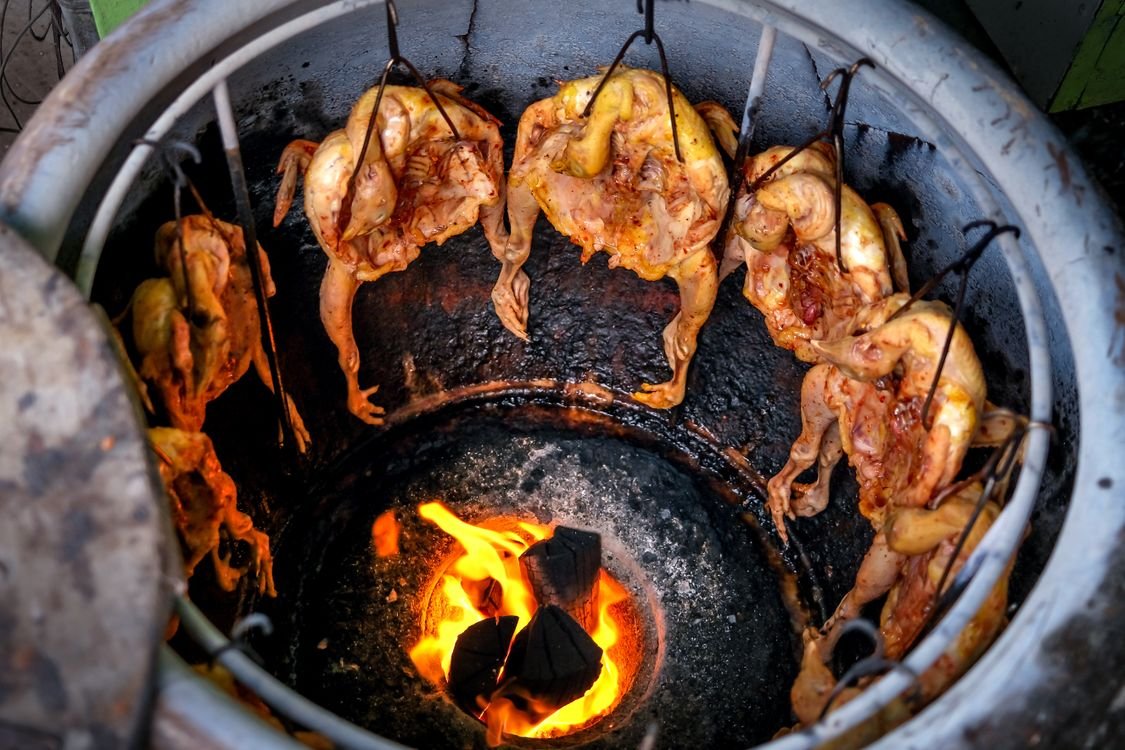
Sajji is a whole chicken rubbed with salt, lemon juice and crushed green chillies, then roasted slowly over glowing coals until the skin turns crisp and golden and the meat stays juicy inside. There is no heavy spice mix and no thick sauce, just smoke, salt and time doing the work. Served with warm naan, raw onions and a green chutney, it brings everyone to the table at once.
The story behind Sajji
Sajji comes from Balochistan, where it began as the food of herders and travellers cooking over an open fire. A whole chicken or a leg of lamb was rubbed with salt, tied to a spit and turned slowly beside glowing coals until the outside crisped and the inside cooked through. There were no ovens, no long lists of spices and no sauces to hide behind, so the quality of the meat and the patience of the cook were all that mattered. The dish travelled with Baloch families into the cities, and today sajji shops glow with charcoal fires in Karachi, Lahore and Quetta.
In Baloch culture, sajji is a dish for guests and for the table that gathers around a celebration. A whole roasted bird is generous by nature: it is carried to the table intact, set down in the middle, and pulled apart by hand so everyone takes what they want. That shared, hands-on way of eating is part of the pleasure, and it is why sajji shows up at weddings, on Eid and at weekend family gatherings. The host who serves a good sajji is saying something simple and warm: you are welcome here, and there is plenty for everyone.
What makes sajji special is its honesty. The seasoning is little more than salt, lemon and green chilli, and the flavour comes from the fire itself. As the chicken turns over the coals, the fat under the skin melts slowly, basting the meat from the inside, while the outside dries and crisps. The smoke adds a gentle, savoury note that no spice jar can copy. Cut into it and you get crackling skin, then meat that is juicy and lightly scented with lemon and chilli.
Cook sajji when you have a slow afternoon, a grill or an oven, and people to feed. It suits winter evenings, backyard gatherings and any weekend lunch where the cooking is part of the fun. Start the marinade in the morning or the night before, and let the bird sit in the fridge while you get on with the day. Give yourself time for the roast and the rest afterwards, and have the naan warm so the chicken comes to the table hot.
- Prep time
- 2 hrs 30 mins
- Cook time
- 2 hrs
- Total time
- 4 hrs 30 mins
- Servings
- 4 servings
- Calories
- 480
Ingredients
- 1 whole chicken (about 1.5 kg), giblets removed
- 2 tablespoons lemon juice
- 1 tablespoon salt, plus more to taste
- 6 green chillies, finely crushed
- 4 garlic cloves, finely crushed
- 1 teaspoon black pepper, coarsely cracked
- 2 tablespoons oil or melted ghee
- 1 teaspoon cumin seeds, lightly crushed
- 1 onion, cut into thick rings, to serve
- 2 lemons, cut into wedges, to serve
- 2 tablespoons chopped fresh coriander, to serve
- 4 fresh naan, to serve
Instructions
- Rinse the chicken inside and out under cold running water and pat it completely dry with kitchen paper, inside and out. Dry skin is the secret to crisp skin, so take your time. Use a sharp knife to make 3 deep slashes on each breast and 2 on each thigh, cutting down to the bone.
- Mix the lemon juice, salt, crushed green chillies, crushed garlic, cracked black pepper, cumin seeds and oil in a small bowl. Rub the mixture all over the bird, into the slashes and under the breast skin, and rub a spoonful inside the cavity too.
- Cover and marinate in the fridge for at least 2 hours, or overnight if you have time. A longer marinade lets the salt and lemon work deeper. Take the bird out 30 minutes before cooking so it is not cold when it meets the heat.
- For charcoal, light the coals and let them burn down to grey ash with red glowing underneath. You want a steady, medium heat, not roaring flames. In an oven, heat to 200C (180C fan) and set the bird on a rack over a tin.
- Tie the legs together with kitchen string and tuck the wing tips behind the back so the bird holds a neat shape and cooks evenly. Place the chicken breast side up and leave it for the first 30 minutes, while the skin tightens and turns pale gold.
- Turn the chicken every 20 to 25 minutes so each side takes its turn facing the heat. Each time you turn it, brush the skin with the pan juices or oil. The skin should turn deep, even gold, so move the bird to a cooler spot if one side darkens too fast.
- After about 1 hour and 45 minutes, test the thickest part of the thigh with a thermometer. The juices should run clear, not pink, and the thigh should read 74C. If the juices are still pink, give the bird another 15 minutes and test again.
- Lift the chicken onto a board and let it rest for 15 minutes before you cut into it. Resting lets the juices settle back into the meat, so the chicken carves cleanly. While it rests, warm the naan, slice the onion and cut the lemons.
- Carve the sajji at the table, pulling the legs and wings off first and slicing the breast into thick pieces. Arrange the pieces on a platter, pour the board juices over the top and scatter the coriander over everything. Serve at once with the naan, onion rings, lemon wedges and green chutney.
Pro tips
- Pat the chicken completely dry before you season it. Wet skin steams instead of crisping, and no amount of hot coals will fix skin that went into the heat damp.
- Rub salt and marinade under the skin of the breast as well as on top. The breast is the thickest, driest part of the bird, and seasoning it from underneath keeps it juicy. A little marinade inside the cavity seasons the meat from within as it roasts.
- Cook over medium coals, not fierce flames. High heat blackens the skin long before the meat near the bone is done, while steady, moderate heat cooks the bird through evenly.
- Let the sajji rest for 15 minutes before carving. Cutting into a hot bird lets the juices run out onto the board, and the meat will taste drier for it.
- Save the pan juices or the drippings from the roasting tin. Spooned over the carved meat or brushed onto the naan, they carry the smoke and the lemon and make the whole plate taste better. Warm the naan just before serving so it is soft enough to scoop up the juices.
Variations & serving ideas
Lamb sajji is the grander, older version of the dish, made with a whole leg of lamb instead of a chicken. Rub the leg with the same salt, lemon and green chilli mixture, score the thickest parts deeply and roast it over coals for 2 hours and 30 minutes to 3 hours, turning it often. The lamb turns smoky and crisp outside and pink and juicy inside, and it feeds 6 people easily. Let it rest for 20 minutes before carving into thick slices.
If you have no charcoal grill, an oven gives a very good sajji. Roast the bird at 200C on a rack over a tin, turning it once halfway through, and finish it under a hot grill for 5 minutes to crisp the skin. You will miss the smoky note of real coals, but the meat will still be juicy and the skin golden. A pinch of smoked paprika in the marinade adds a little of that smoky flavour back, though it is a shortcut rather than a substitute.
For a spicier sajji, add a paste of 2 dried red chillies, soaked and ground, to the marinade, or rub the bird with a spoonful of red chilli powder mixed with oil. The heat sits on the skin and gives the first bite a warm kick before the lemon and salt come through. Another popular version adds 2 tablespoons of yogurt to the marinade, which keeps the meat extra moist and helps the skin brown more deeply, though the skin will be a little less crisp.
Serve sajji with warm naan, raw onion rings, lemon wedges and a fresh green chutney of coriander, mint and green chilli. A simple tomato and cucumber salad adds crunch and freshness, and a bowl of plain yogurt cools the chilli heat. For a bigger meal, serve it with a fragrant pulao, but keep the rice plain so it does not compete with the smoky chicken. Cold drinks and a pot of green tea afterwards suit the meal well. If you are feeding a crowd, roast two birds at once and double the salad and naan.
Getting it right
The key technique in sajji is slow, even heat. Coals or oven, the bird must cook gently enough that the heat reaches the bone before the skin burns. That means medium coals with a grey ash coating, or an oven at 200C, and a bird set far enough from the heat to cook rather than scorch. Turning the chicken every 20 minutes keeps the browning even and stops one side drying out.
Heat and timing control comes down to watching the skin and testing the thigh. The skin tells you the heat is right when it turns a deep, even gold and crackles slightly when you touch it with tongs. Black spots mean the heat is too high or the bird is too close to the coals, so move it to a cooler spot at once. The thigh is the slowest part to cook, so test there: clear juices and 74C at the thickest part mean the bird is done, while pink juices mean another 15 minutes.
The most common mistake is cooking over coals that are too hot, which burns the skin while the meat by the bone stays raw. Let the coals burn down to grey ash first and be patient. The second mistake is skipping the rest, which leaves the meat dry even when the cooking was perfect. The third is under-seasoning the inside: a bird rubbed only on the outside tastes plain in the middle, so get the marinade into the slashes and the cavity. If the skin does blacken in spots, scrape the worst of it off and serve the bird carved.
Storing & reheating
Leftover sajji keeps in the fridge for 3 days. Let it cool, then wrap the pieces tightly or store them in a covered container. Keep the bones and any pan juices too, because they make a good stock. It also freezes well for up to 2 months; wrap the pieces in foil, then put them in a freezer bag and press out the air before sealing.
Reheat in the oven at 180C, covered loosely with foil, for 15 to 20 minutes until hot all the way through, then uncover for the last 5 minutes to crisp the skin again. Add a spoonful of water or stock to the tray so the meat does not dry out. Avoid the microwave if you can, because it turns the crisp skin soft and rubbery, though it works in a pinch for a quick lunch.
Frequently asked questions
What is sajji and where does it come from?
Sajji is a whole chicken or leg of lamb roasted slowly over charcoal, from Balochistan. It is rubbed with salt, lemon and green chillies, then turned over glowing coals until the skin is crisp and the meat is juicy. The dish is traditionally cooked over charcoal, which gives it its gentle smoky flavour.
How long should I marinate sajji?
At least 2 hours, and overnight is better. The salt and lemon need time to work into the meat, especially in the thick breast and thigh. A short marinade seasons only the surface, so plan ahead when you can. Overnight in the fridge gives the best result, and the chicken stays moist.
Can I cook sajji in the oven?
Yes, and it turns out very well. Roast at 200C on a rack over a tin for about 2 hours, turning once halfway, and finish under a hot grill for 5 minutes to crisp the skin. You miss the coal smoke, but the meat stays juicy.
How do I know when sajji is done?
Test the thickest part of the thigh. The juices should run clear when pierced, the leg should feel loose, and a thermometer should read 74C. If the juices are pink, give it another 15 minutes and test again. The leg should also feel loose when you wiggle it gently.
Why did my sajji skin burn before the meat cooked?
The heat was too high or the bird was too close to the coals. Let charcoal burn down to grey ash first, keep the bird about 25 cm above the heat, and turn it every 20 minutes so no one side takes all the heat.
What do you serve with sajji?
Warm naan, raw onion rings, lemon wedges and a green chutney of coriander, mint and green chilli. A tomato and cucumber salad adds freshness, and a plain pulao turns it into a bigger meal for guests. Keep the chutney and lemon on the table so everyone seasons their own plate.