Gola Kabab Recipe
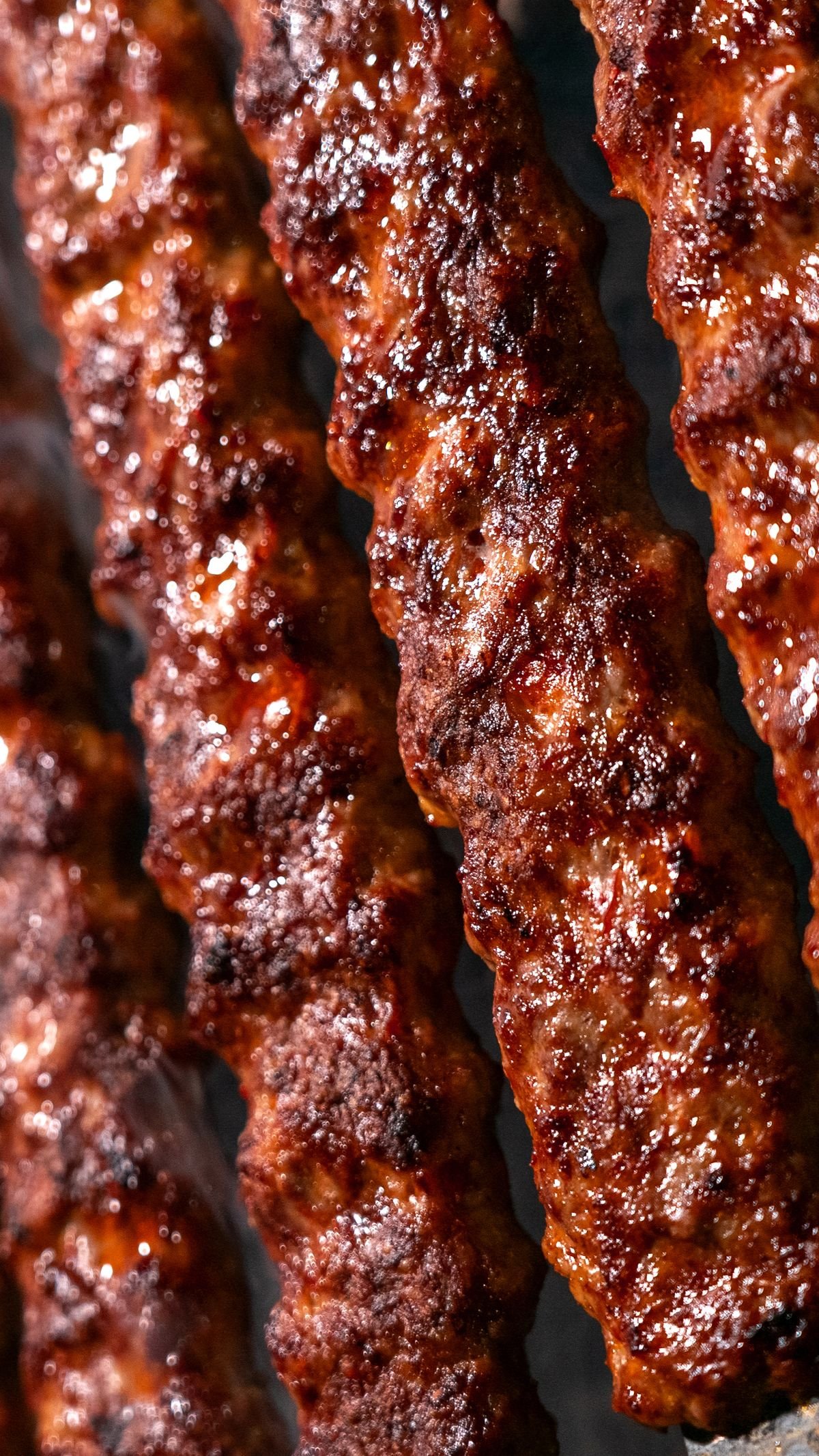
Gola kabab are round, melt-in-the-mouth kebabs made from finely minced meat, kneaded with warm spices until smooth and grilled over high heat. The outside turns dark and lightly charred while the inside stays juicy and tender, with smoke, green chilli and ginger in every bite. Serve them straight off the grill with naan, sliced onions and green chutney, and watch them disappear fast.
The story behind Gola Kabab
Gola kabab comes from the kebab houses of Lucknow and the wider Awadhi tradition, where royal cooks turned minced meat into an art. The name says it plainly: gola means round, and these kebabs are shaped into neat, plump discs rather than the long fingers of a seekh kabab. The meat is ground fine, kneaded with spices until it turns smooth, and cooked fast over fierce heat so the outside chars while the inside stays soft. It is street food and celebration food at once, sold from roadside grills and served at weddings in equal measure.
In Pakistan and North India, gola kabab belongs to the barbecue. Charcoal smoke, a circle of friends and a plate of hot kebabs with naan is the shape of a good evening. At home, the mince is mixed in the afternoon and grilled as the sun goes down, with children crowding round the grill to claim the first ones off the coals. During Eid and wedding season, whole trays are grilled in batches, wrapped in foil and carried to the table still sizzling. The kebab needs no knife and no fuss — you tear a piece of naan, wrap it round the meat and eat.
What makes a good gola kabab is the mince. It must be ground fine, with enough fat to stay juicy, and kneaded until it binds into a smooth, sticky mass. That kneading is what separates a kebab that holds together from one that crumbles on the grill. The papaya paste works quietly in the background, softening the meat fibres so the kebab melts rather than chews. High heat does the rest: a fast sear builds a dark, smoky crust while the centre stays tender and full of juice.
Cook gola kabab when friends are coming over and the grill is already lit, or as the centrepiece of a weekend barbecue. For a UK Sunday lunch, serve them with warm naan, raita, sliced onions and a sharp green chutney, and let everyone build their own wraps at the table. They also roll beautifully into parathas for a packed lunch. Once you learn how the mince should feel in your hands — smooth, sticky and cool — you will make them all summer long.
- Prep time
- 55 mins
- Cook time
- 15 mins
- Total time
- 1 hr 10 mins
- Servings
- 4 servings
- Calories
- 520
Ingredients
- 500 g beef mince (20 percent fat), finely ground
- 1 small onion, finely grated and squeezed dry
- 1 tablespoon ginger-garlic paste
- 2 green chillies, finely chopped
- 1 tablespoon raw papaya paste
- 1 teaspoon garam masala
- 1 teaspoon red chilli powder
- 1 teaspoon ground cumin
- 1 teaspoon ground coriander
- 1 teaspoon salt
- 2 tablespoons fresh coriander leaves, chopped
- 2 tablespoons ghee or melted butter, for basting
Instructions
- Tip the beef mince into a large bowl and add the squeezed onion, ginger-garlic paste, green chillies and raw papaya paste. The onion must be squeezed dry first — hold it in your fist over the sink and press hard — because onion juice is the main reason kebabs fall apart on the grill.
- Add the garam masala, red chilli powder, cumin, ground coriander, salt and fresh coriander leaves. Mix everything together with your hands, then knead the mixture firmly for 5 minutes, pressing and folding it until it turns smooth, sticky and slightly springy. The mix should hold together when you squeeze a handful, with no crumbs falling away.
- Cover the bowl with cling film and rest the kebab mixture in the fridge for 30 minutes. This rest lets the spices soak into the meat, firms the fat slightly and makes shaping much easier. If you are short on time, 15 minutes will do, but the full half hour gives a better texture.
- Divide the mixture into 8 equal portions and shape each one into a smooth ball, rolling it between wet palms. Flatten each ball gently into a round disc about 7 cm across and 2 cm thick — the gola, or round, shape that gives the kebab its name. Smooth the edges with your fingers so no cracks show, because cracks split open on the grill.
- If you are using skewers, thread each disc through the centre on a flat metal skewer, pressing the meat gently around it. Flat skewers grip the meat better than round ones and stop the kebab spinning when you turn it. If you are cooking without skewers, set the shaped discs on a plate and keep them cold until the grill is ready.
- Heat a charcoal grill until the coals glow white-hot, or heat a grill pan over high heat until a drop of water dances and vanishes. Brush the grill or pan lightly with oil. High heat matters here: the kebabs need a fast sear to form a crust that seals in the juices before the inside cooks.
- Place the kebabs on the grill with a little space between them and cook for 6 to 7 minutes on the first side without moving them. You will hear a strong sizzle and smell smoke and toasted spices. When the underside is dark brown with charred edges, turn each kebab once and cook for another 5 to 6 minutes on the second side.
- Brush the kebabs with ghee or melted butter as they finish cooking, turning them once more so both sides glisten. The ghee adds shine, keeps the surface moist and carries the smoky flavour. Do not press the kebabs down with a spatula, because that squeezes the juices out and dries them from the inside.
- Rest the kebabs on a warm plate for 3 to 4 minutes so the juices settle back into the meat. Serve them hot with warm naan, thinly sliced red onion, lemon wedges and green chutney. Sprinkle a little chaat masala over the top if you like, and eat them while the char is still warm and the centre is juicy.
Pro tips
- Choose mince with about 20 percent fat. Lean mince makes dry, crumbly kebabs that fall apart on the grill, while the fat keeps the meat juicy, helps it bind and bastes the kebab from the inside as it cooks. Ask your butcher for a coarse mince ground twice for the smoothest texture.
- Knead the mixture for the full 5 minutes. This is the step most people rush, and it is the one that decides whether the kebabs hold together. Keep pressing and folding until the mix feels sticky and smooth, and test a small piece by shaping it in your palm — it should hold firm without cracking at the edges.
- Squeeze the grated onion until it is as dry as you can manage. Onion juice is the biggest cause of kebabs that split on the grill, and a dry onion still gives you all the sweetness and flavour without weakening the bind. A clean tea towel wrung hard works well.
- Let the grill get properly hot before the kebabs go on. A lukewarm grill makes the meat stick, steam and fall apart, while a hot grill sears a crust in the first minute and lets you turn the kebabs cleanly. On charcoal, wait for the coals to glow white with no open flames.
- Rest the kebabs for 3 to 4 minutes before serving. The juices need a moment to settle back into the meat, and a kebab cut open straight off the grill will lose them onto the plate. A short rest keeps every bite juicy, and the kebabs stay warm while you set out the naan and chutney.
Variations & serving ideas
Lamb mince makes a softer, slightly sweeter gola kabab, while a mix of beef and lamb gives you the best of both. Chicken mince works too, though it dries out faster, so add an extra spoonful of ghee to the mix and cook it for a minute less on each side. For a richer version, press a small cube of mozzarella or cheddar into the centre of each kebab before shaping, so it melts into a gooey middle.
For a smoky edge without charcoal, try the coal method: heat a small piece of charcoal until it glows, set it in a small steel bowl in the middle of the cooked kebabs, drizzle a few drops of ghee over it and cover the dish for 2 minutes. The smoke perfumes the meat beautifully. You can also add a pinch of smoked paprika to the spice mix for a gentler smoky note.
Serve gola kabab the classic way with naan, sliced onions, lemon and green chutney, or roll them into warm parathas with onion and chutney for a quick wrap. They also work as a starter with a simple salad, or piled onto a platter for a barbecue spread with seekh kabab and chicken tikka. For a UK Sunday lunch, set out the kebabs with naan, raita and a tomato salad and let everyone build their own plate.
Pair gola kabab with a cooling raita or a glass of sweet lassi to balance the heat, and keep the sides simple so the smoky meat stays the focus. A mint chutney cuts through the richness, while a tamarind chutney adds a sweet-sour note. Leftover kebabs crumble nicely into fried rice or a spicy pasta the next day.
Getting it right
The key technique is the kneading. Minced meat only binds when you work it hard, pressing and folding for a full 5 minutes until the proteins link up and the mixture turns sticky and smooth. A loose, crumbly mix will fall apart on the grill no matter how careful you are. Test it by squeezing a handful: it should hold its shape firmly and feel springy, not grainy. Squeezing the onion dry before mixing is just as important, because juice weakens the bind.
Heat control is the second skill. Gola kabab need fierce, direct heat so the outside sears before the inside dries out. On charcoal, wait until the coals glow white and the flames have died down. On a grill pan, heat it until a drop of water sizzles away in seconds. Once the kebabs go on, leave them alone for the first few minutes — moving them too soon tears the crust and sticks the meat to the grill.
The most common mistakes are lean mince, wet onion and pressing the kebabs while they cook. Lean mince dries out and crumbles, so choose mince with around 20 percent fat. Wet onion loosens the mix, so squeeze it hard. And never press a kebab with a spatula: it forces the juices out and leaves you with a dry, flat disc. If a kebab does crack on the grill, leave it where it is — it will still hold together once the crust sets.
Storing & reheating
Cooked gola kabab keep in the fridge for up to 3 days in an airtight container, and the raw marinated mixture keeps for a day. To freeze, shape the kebabs, lay them in a single layer on a tray until firm, then pack them into a freezer bag with baking paper between the layers. They keep for up to a month this way.
To reheat cooked kebabs, warm them on a hot grill or in a 180C oven for 6 to 8 minutes until heated through and the outside crisps again. A quick brush of ghee before reheating keeps them moist. Avoid the microwave, which makes the meat rubbery and the char soggy. Thaw frozen kebabs in the fridge overnight before cooking.
Frequently asked questions
Why do my gola kabab fall apart on the grill?
Kebabs fall apart when the mince is too coarse, too lean or not kneaded enough. Use mince with about 20 percent fat, knead the mix for a full 5 minutes until it turns sticky and smooth, and squeeze out the onion juice before adding it.
Is beef or lamb better for gola kabab?
Both work well. Beef gives a deeper, richer flavour and holds its shape nicely, while lamb is softer and slightly sweeter. Chicken mince works too, but it dries out faster, so add an extra spoonful of ghee and cook it for a minute less.
Can I make gola kabab without skewers?
Yes, you can shape the kebabs by hand into round, slightly flattened discs and cook them in a hot, oiled grill pan or a cast iron skillet. Press them gently with a spatula for the first minute so they make full contact and get a good char.
What can I use instead of raw papaya paste?
Raw papaya paste is the classic tenderiser, but a tablespoon of grated raw papaya is not always easy to find. A teaspoon of meat tenderiser powder works, or a small piece of kiwi mashed into the mix. Use only a little, or the kebabs can turn mushy.
Can I cook gola kabab in the oven?
Yes, a hot oven works well. Shape the kebabs, place them on a wire rack over a tray and grill at 220C for 10 to 12 minutes, turning once. They will not have the same smoky edge as charcoal, but the texture stays soft and juicy.
Can I freeze gola kabab?
Yes, gola kabab freeze very well. Shape them, lay them in a single layer on a tray to freeze firm, then pack them into a freezer bag for up to a month. Thaw in the fridge before grilling, and never refreeze them once thawed.