Karahi Gosht Recipe
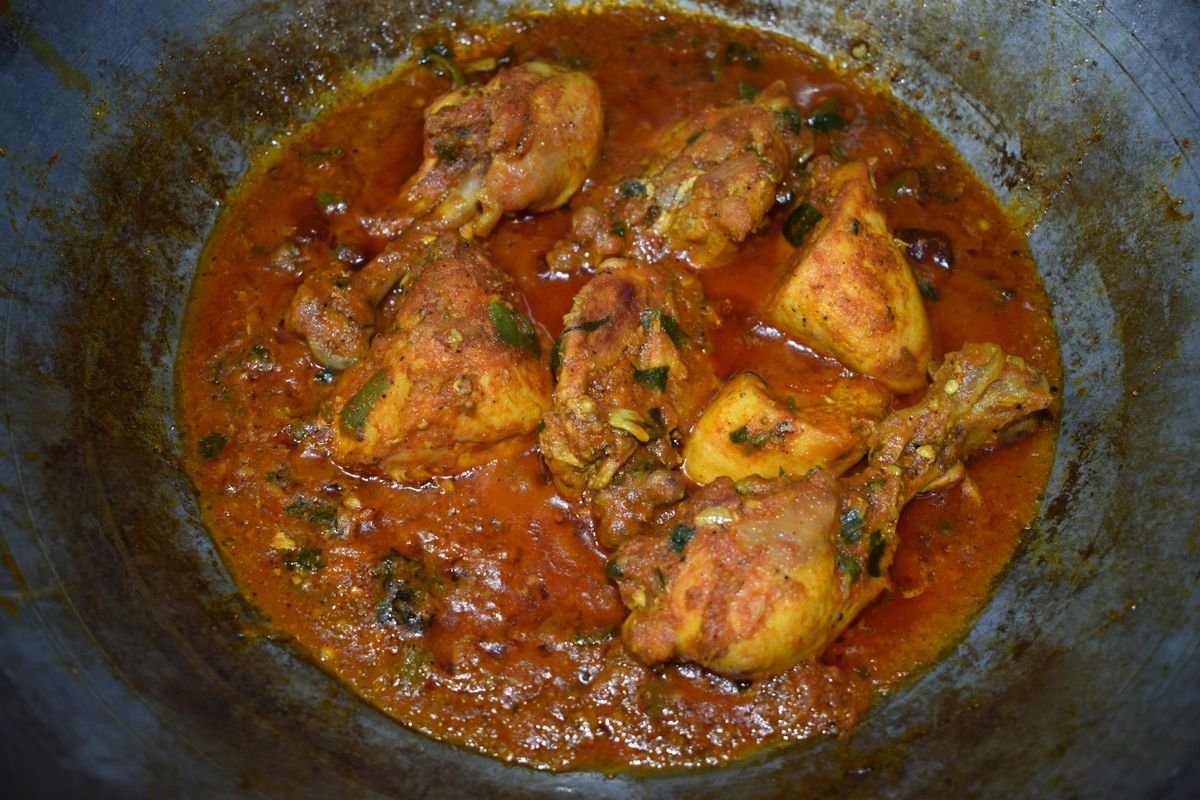
Karahi Gosht is the dish that fills a Pakistani restaurant with its smell before you even sit down. Tender mutton cooks fast and hot in a wok with tomatoes, ginger and green chillies, until the gravy is thick, the oil glistens, and the meat is soft enough to pull apart. It is bold, fresh and fiercely simple, and it is best eaten straight from the pan.
The story behind Karahi Gosht
The karahi is a round, deep wok that has been used in South Asian cooking for centuries, and the dish takes its name from it. The shape matters: the curved sides let the cook stir fast and fry hard, and the high heat drives off water quickly, so the tomatoes collapse into a thick masala instead of a thin sauce. This is cooking at full tilt, not a slow simmer. The curved sides let the cook stir fast and fry hard, and the high heat drives off water quickly, so the tomatoes collapse into a thick masala instead of a thin sauce.
The dish became a legend in Lahore, where roadside dhabas and small restaurants built their names on it. Travellers would stop at a dhaba, point at a live goat, and have the karahi made to order in front of them, the meat going from the butcher's block to the wok in minutes. The show was part of the food: the clang of the ladle, the steam, the smell of ginger and chillies hitting hot oil. Travellers would stop at a dhaba, point at a live goat, and have the karahi made to order in front of them, the meat going from the butcher's block to the wok in minutes.
What makes it special is the freshness. Unlike slow curries that build flavour over hours, a karahi is cooked fast and finished with raw ginger, green chillies and coriander, so the flavours stay bright and sharp. The tomatoes give body and tang, the ginger gives warmth, and the chillies give a clean heat that hits the back of the throat and fades fast. The tomatoes give body and tang, the ginger gives warmth, and the chillies give a clean heat that hits the back of the throat and fades fast.
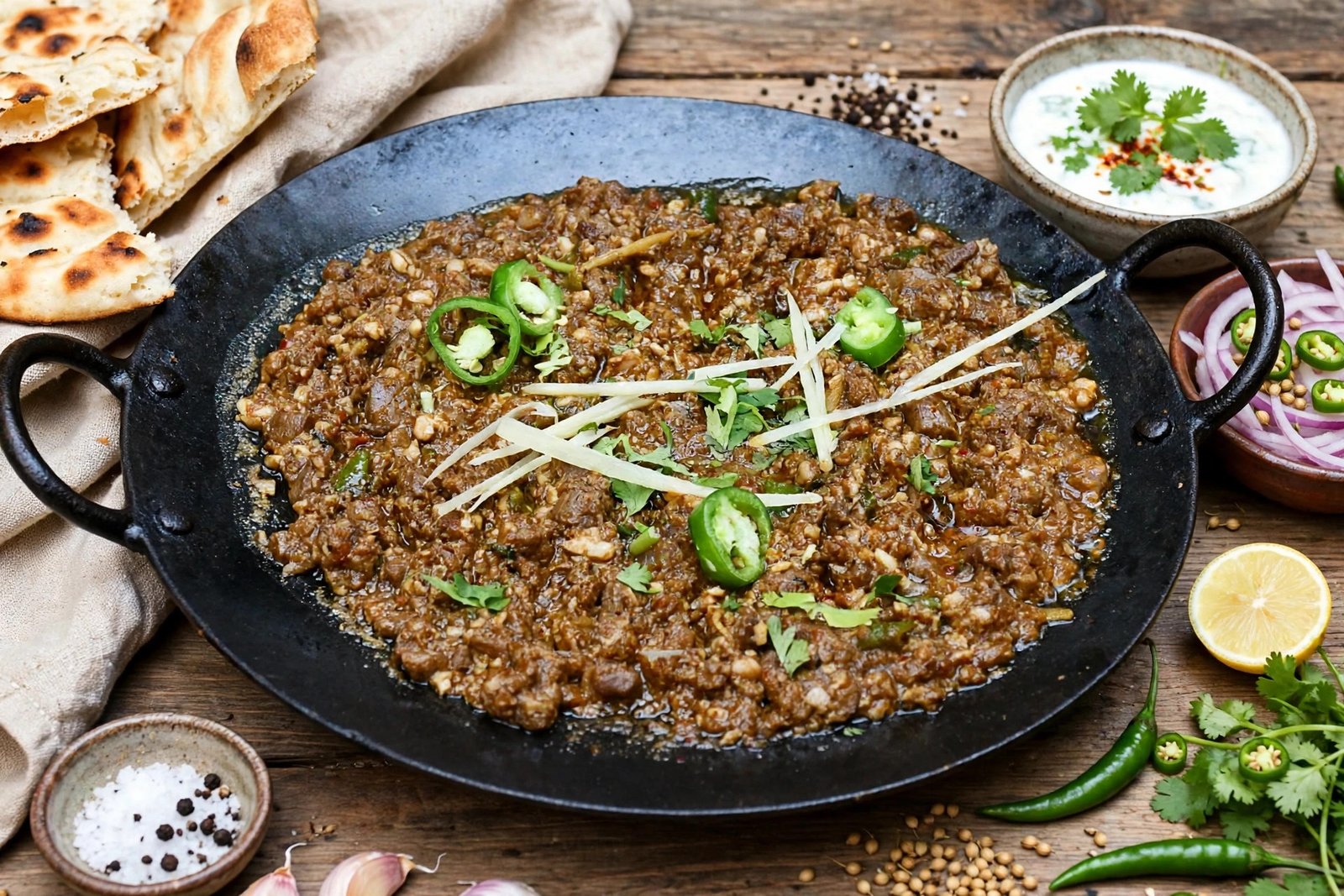
Cook it when you want something fast, bold and full of life. It suits a weekend lunch, a dinner with friends, or a cold evening when you need heat on the table quickly. Serve it in the karahi itself, with hot naan, and let everyone tear off pieces of bread and scoop straight from the pan. Serve it in the karahi itself, with hot naan, and let everyone tear off pieces of bread and scoop straight from the pan.
- Prep time
- 15 mins
- Cook time
- 50 mins
- Total time
- 65 mins
- Servings
- 4 servings
- Calories
- 540
Ingredients
- 750 g mutton, bone-in pieces, washed and drained
- 5 medium tomatoes, roughly chopped
- 1 large onion, finely chopped
- 4 tablespoons ghee or cooking oil
- 2 tablespoons ginger-garlic paste
- 2 tablespoons julienned fresh ginger
- 5 green chillies, slit lengthwise
- 2 teaspoons red chilli flakes
- 1 teaspoon turmeric powder
- 1 teaspoon black pepper, freshly ground
- 1 teaspoon garam masala
- 1 tablespoon dried fenugreek leaves (kasuri methi)
- Salt to taste, and fresh coriander to garnish
- 1 lemon, cut into wedges, to serve
Instructions
- Heat the ghee in a karahi or wide wok over medium-high heat and add the chopped onion. Fry for 5 to 6 minutes, stirring often, until the onion turns soft and pale gold. The wok should be hot enough that the onion sizzles as soon as it hits the oil.
- Add the ginger-garlic paste and cook for 2 minutes until the raw smell fades. Add the mutton pieces and fry on high heat for 8 to 10 minutes, turning often, until the meat is browned on the outside and the juices have sealed in.
- Add the chopped tomatoes, turmeric and red chilli flakes. Stir well, then cover and cook on medium heat for 10 minutes, until the tomatoes soften and start to collapse. Press them with the back of the ladle to help them break down.
- Pour in 300 ml of hot water, cover with a lid, and cook on medium-low heat for 35 to 40 minutes, stirring every 10 minutes, until the mutton is tender. Add a splash of hot water if the pan dries out before the meat is done.
- Remove the lid and turn the heat up to high. Cook for 8 to 10 minutes, stirring constantly, until the gravy thickens and the oil separates at the edges. This is the bhunai stage, and it is what gives karahi its rich, glossy finish.
- Add the julienned ginger, slit green chillies and black pepper, and cook for 2 minutes more so the ginger softens slightly but stays fresh and sharp. The chillies should wilt just a little, not turn soft.
- Crush the kasuri methi between your palms over the pan and stir in the garam masala. Taste and adjust the salt. The gravy should be thick, dark and glossy, clinging to the meat with a layer of oil on top.
- Taste the gravy and adjust the salt and chilli, adding a pinch more black pepper if the flavour feels flat, because the gravy should taste bold and balanced before it leaves the pan. The lemon wedges on the side let everyone add brightness to their own plate.
- Sprinkle a little extra julienned ginger and fresh coriander over the top, then cover the pan for 2 minutes so the ginger warms through and scents the gravy. This last rest also lets the oil rise to the top, giving the karahi its glossy finish.
- Take the pan off the heat and rest for 5 minutes. Garnish with fresh coriander and a squeeze of lemon, then serve hot straight from the karahi with naan or roti and a bowl of raita.
Pro tips
- Use a wok or karahi if you have one. The curved shape lets you stir fast and fry hard, and the high heat drives off water quickly, which is what makes the gravy thick instead of thin. and keep stirring.
- Do not add water until the tomatoes have collapsed. The tomatoes release their own juice as they cook, and adding water too early stops the bhunai and leaves you with a thin, watery gravy. or the gravy stays thin.
- Fry the mutton on high heat before adding the tomatoes. This seals the outside of the meat and builds flavour in the pan, so the finished dish tastes rich rather than boiled. for a richer flavour.
- Keep the ginger and chillies for the end. They go in after the gravy has thickened, so they stay fresh and sharp. Adding them early would cook away the bright heat that makes karahi taste alive. or the heat fades away.
- Taste the meat before the final bhunai. If it is still firm, add a splash of hot water and cook covered for another 10 minutes. The bhunai only works once the meat is already tender. before the final bhunai.
Variations & serving ideas
For a lighter version, use 2 tablespoons of oil instead of 4 and skip the ghee. The flavour stays bold, though the gravy will be a little less rich. You can also make karahi with chicken, which cooks in 20 to 25 minutes, so cut the covered cooking time to 15 minutes. Use two tablespoons of oil instead of four and skip the ghee for a lighter version, because the flavour stays bold, though the gravy will be a little less rich.
Add a spoonful of yoghurt at the bhunai stage for a creamier, tangier gravy. Whisk it smooth first and add it on medium heat, stirring constantly so it blends in. This is a popular variation in many Lahore dhabas and it softens the heat nicely. Add a spoonful of yoghurt at the bhunai stage for a creamier, tangier gravy, whisking it smooth first and adding it on medium heat while stirring constantly so it blends in.
Swap the mutton for beef if you like, but allow 50 to 60 minutes of covered cooking, as beef takes longer to turn tender. Prawn karahi is another good variation: the prawns need only 5 minutes, so add them after the tomatoes have collapsed and skip the long simmer entirely. Swap the mutton for beef if you like, but allow fifty to sixty minutes of covered cooking, since beef takes longer to turn tender, and the bhunai stage stays the same.
Serve it with hot naan, tandoori roti or steamed rice, and a bowl of cucumber raita to cool the heat. A salad of sliced onions, tomatoes and lemon on the side adds freshness. Pair it with salted lassi or plain water, and keep the meal simple so the karahi leads. Serve it with hot naan, tandoori roti or steamed rice, and a bowl of cucumber raita to cool the heat, because a salad of sliced onions, tomatoes and lemon adds freshness. A glass of salted lassi on the side rounds out the meal nicely. A bowl of raita and a fresh salad complete the table, so the meal feels generous without much extra work.
Getting it right
The key technique is the bhunai, the high-heat frying at the end. After the meat is tender, the lid comes off and the heat goes up, and you stir constantly for 8 to 10 minutes while the water evaporates and the oil separates. This stage concentrates the flavour and gives the gravy its thick, glossy body. Stop too early and the curry tastes thin; go too far and it burns. The curved shape lets you stir fast and fry hard, and the high heat drives off water quickly, which is what makes the gravy thick instead of thin.
Heat and timing matter from the start. The wok should be hot enough to sizzle when the onion goes in, and the mutton should fry on high heat so it browns rather than steams. Once the water goes in, the heat drops to medium-low for the long, covered cook. Managing these shifts is the whole skill of karahi cooking. Once the water goes in, the heat drops to medium-low for the long, covered cook, and managing these shifts is the whole skill of karahi cooking.
The common mistake is adding too much water. Karahi is a thick, dryish curry, not a soupy one. Start with 300 ml of hot water and add more only if the pan dries out before the meat is tender. If the gravy ends up thin, cook uncovered on high heat until it thickens, stirring all the time so it does not catch. Start with three hundred millilitres of hot water and add more only if the pan dries out, because karahi is a thick, dryish curry, not a soupy one.
Storing & reheating
Leftovers keep in a sealed container in the fridge for up to 3 days, and the flavour deepens overnight as the spices settle. Reheat gently in a karahi or wide pan over medium heat, adding a splash of hot water if the gravy has thickened too much, and stir often. Reheat gently in a karahi or wide pan over medium heat, adding a splash of hot water if the gravy has thickened too much.
You can freeze karahi gosht for up to 2 months. Thaw it overnight in the fridge and reheat slowly on the stove. Add a fresh scattering of ginger juliennes and coriander after reheating to bring back the bright, fresh flavour that fades in storage. Add a fresh scattering of ginger juliennes and coriander after reheating to bring back the bright, fresh flavour.
Frequently asked questions
What is the difference between karahi and handi?
Karahi is cooked fast and hot in a wok, with a thick, dryish gravy and fresh ginger and chillies added at the end. Handi is cooked slowly in a covered clay pot, with a richer, creamier gravy. Both use mutton, but the method and flavour are different. The method and flavour are quite different.
Can I make karahi gosht in a normal pan?
Yes, though a wok or karahi works best. Use the widest, heaviest pan you have, keep the heat high during the frying and bhunai stages, and stir often so the masala does not catch on the flat base. Stir often so the masala does not catch.
Why is my karahi gravy watery?
Too much water, or not enough bhunai. Karahi needs only 300 ml of water, and the final high-heat frying stage is essential. Cook uncovered on high heat, stirring constantly, until the oil separates and the gravy thickens. Cook uncovered on high heat until it thickens.
Can I use chicken instead of mutton?
Yes, chicken karahi is very popular and much faster. Use bone-in chicken pieces and cook covered for only 15 to 20 minutes. The bhunai stage stays the same, and the dish is ready in about 35 minutes. The dish is ready in about thirty-five minutes.
Is karahi gosht spicy?
It has a clean, fresh heat from green chillies and chilli flakes, balanced by tomatoes and ginger. It is spicier than a handi but not fiery. Reduce the chillies to 3 for a milder version. Reduce the chillies to three for mild.
What bread goes best with karahi?
Hot naan or tandoori roti is the classic partner, torn into pieces and used to scoop up the gravy. Steamed rice works too, but bread is the traditional way to eat karahi, straight from the pan. Bread is the traditional way to eat it.