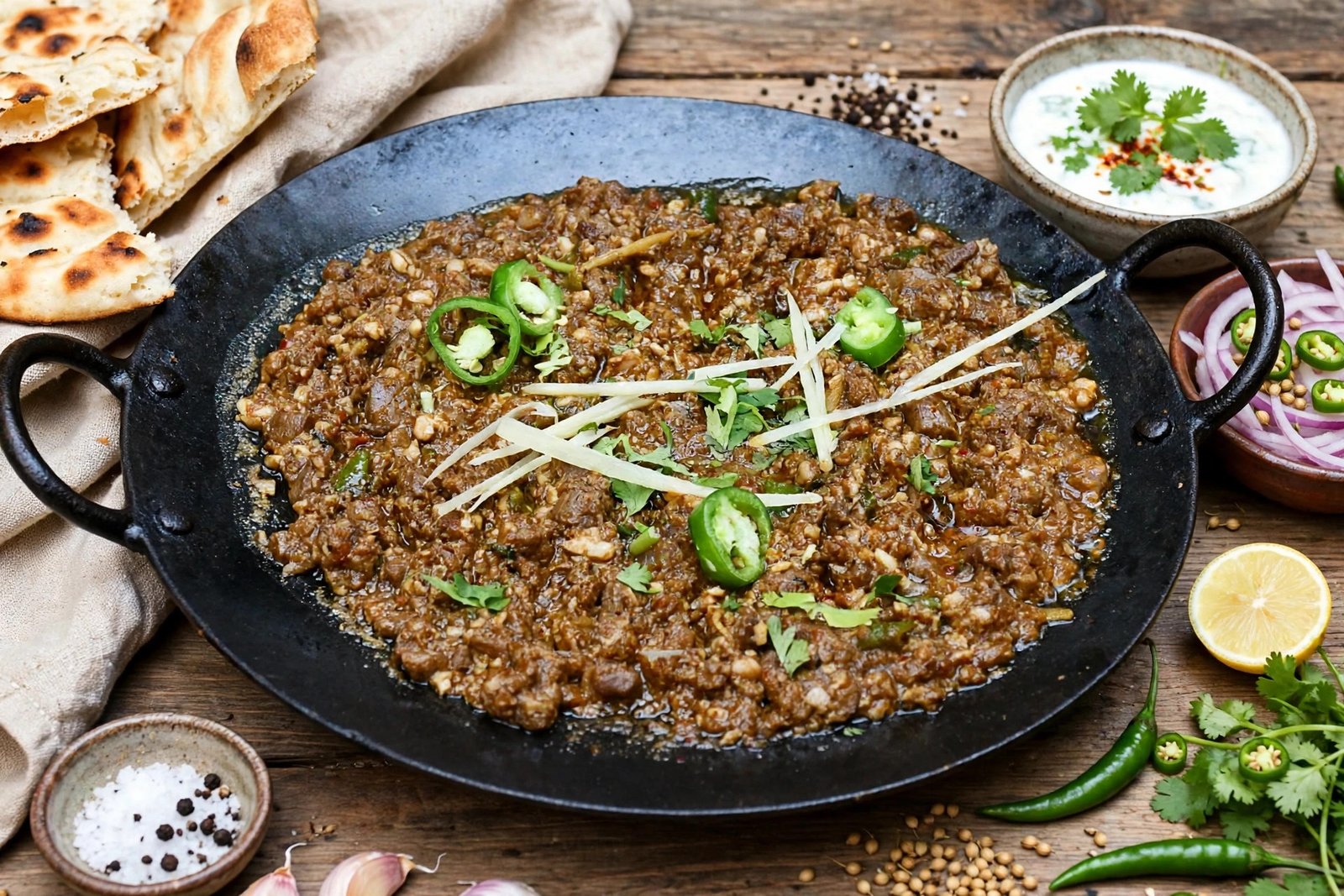
Gosht Ki Biryani Recipe

Advertisement
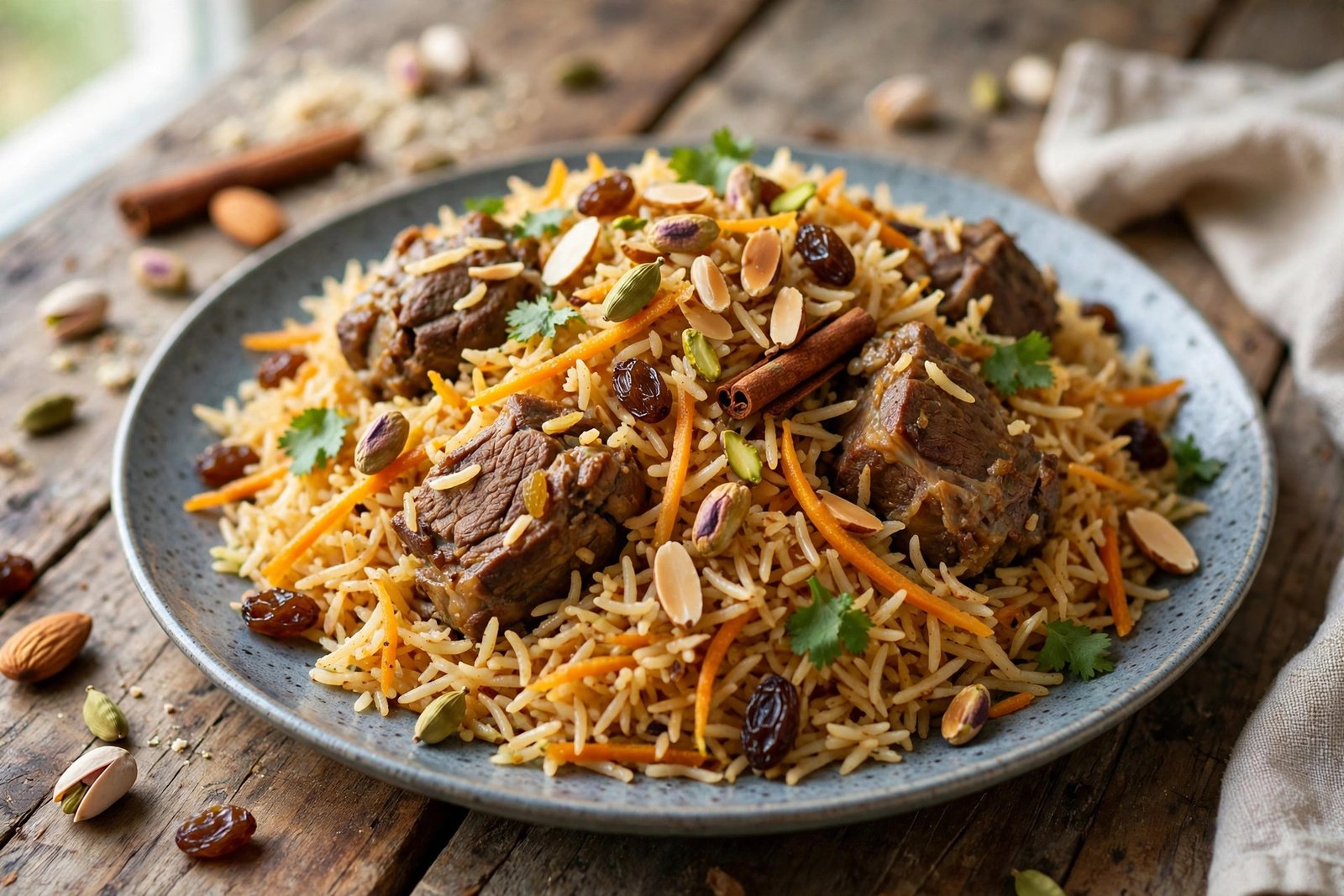
Gosht ki biryani is the dish that turns an ordinary day into a celebration: tender mutton simmered in a rich, spiced masala, layered with saffron-stained basmati rice and crisp fried onions, then sealed and slow-steamed on dum until the flavours melt together. It takes time, but every minute is worth it.
Advertisement
Advertisement
- Prep time
- 30 mins
- Cook time
- 1 hr 30 mins
- Total time
- 2 hrs
- Servings
- 6 servings
- Calories
- 720
Ingredients
- 750 g mutton, bone-in pieces
- 500 g basmati rice, soaked 30 minutes
- 200 g yogurt
- 3 onions, thinly sliced
- 2 tomatoes, chopped
- 2 tablespoons ginger-garlic paste
- 3 green chillies, slit
- 1 teaspoon red chilli powder, 1 teaspoon turmeric and 2 teaspoons biryani masala
- 1 teaspoon garam masala
- 1 pinch saffron, soaked in 3 tablespoons warm milk
- 1/2 cup each chopped mint and coriander leaves
- 100 ml oil or ghee
- 2 bay leaves, 4 green cardamom pods and 1 cinnamon stick
- Salt to taste
Instructions
- Heat the oil and fry the onions until deep golden and crisp, then remove half for garnish.
- Add the whole spices to the same oil, then the ginger-garlic paste and cook for 1 minute.
- Add the mutton and brown well on all sides.
- Stir in the tomatoes, yogurt, chilli powder, turmeric, biryani masala and salt, then cover and cook on low for 1 hour until the meat is tender.
- Boil the soaked rice in salted water until 70% cooked, then drain.
- Layer half the rice over the mutton, sprinkle with mint, coriander and half the fried onions, then repeat.
- Drizzle the saffron milk over the top, cover tightly with a lid sealed with dough or foil and cook on the lowest heat for 25 minutes.
- Rest for 10 minutes, then gently mix from the bottom and serve with raita.
Advertisement
Pro tips
- Fry the onions slowly until deep golden; pale onions will not give the right flavour.
- Do not fully cook the rice before layering; it finishes steaming on dum.
- Seal the lid well so no steam escapes during dum.
- Bone-in mutton gives the richest flavour and stays juicy.
Frequently asked questions
What does cooking on dum mean?
Dum means cooking on very low heat with the pot sealed, so the food steams slowly in its own aroma.
Can I use chicken instead of mutton?
Yes, chicken biryani cooks faster. Reduce the meat cooking time to about 25 minutes.
How do I stop the bottom layer from burning?
Use a heavy-bottomed pot, keep the heat very low, and place the pot on a tawa as a heat diffuser.
What should I serve with biryani?
Raita, salad and a simple shorba are the classic companions.