Fish Fragrant Eggplant Recipe
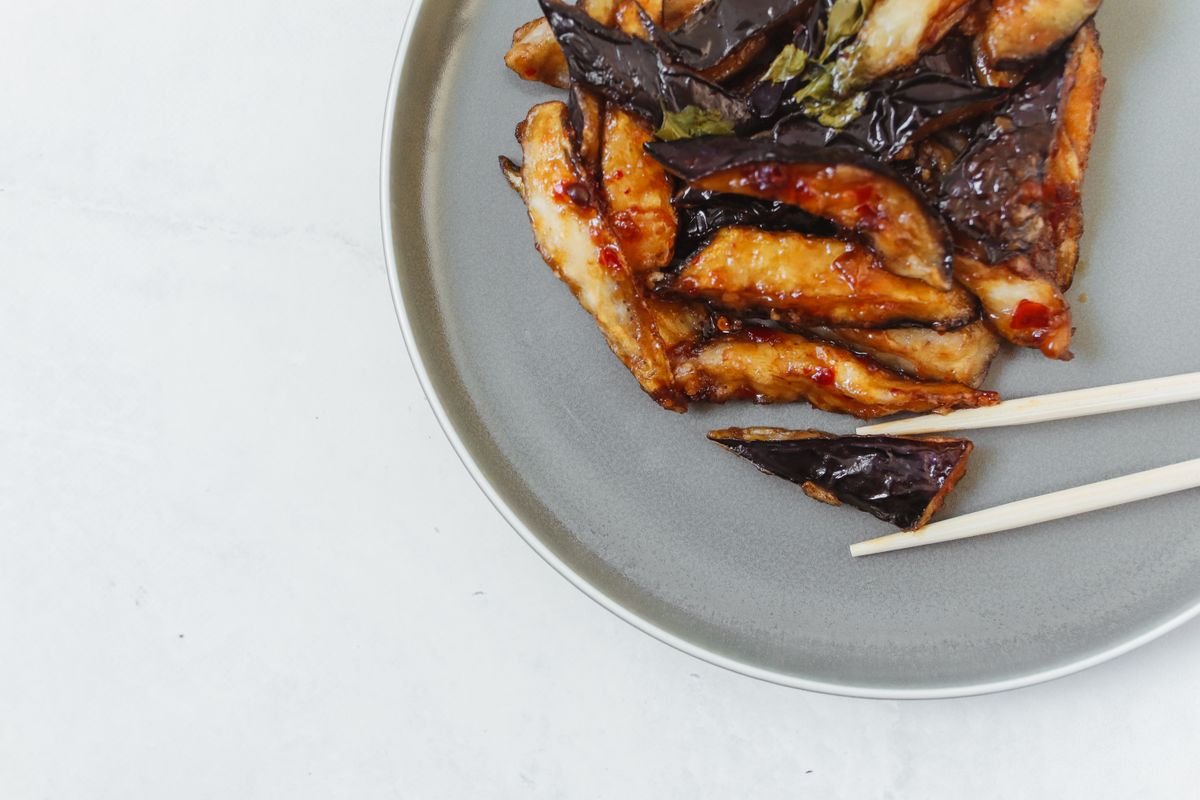
Fish fragrant eggplant is a Sichuan classic that contains no fish at all, just aubergine cooked until silky in a sweet, sour and spicy sauce. The eggplant soaks up garlic, ginger, chilli and black vinegar until every piece glistens and tastes rich. Serve it with steamed rice for a quick Australian weeknight supper that is deeply satisfying without any meat.
The story behind Fish Fragrant Eggplant
Fish fragrant, or yu xiang, is one of the great flavour profiles of Sichuan cooking, built from garlic, ginger, spring onion, chilli, sugar and black vinegar. The name comes from the sauce, which was first used for fish dishes in Sichuan, where cooks found that the mix of sweet, sour and spicy flavours suited river fish perfectly. When the same sauce was tried on aubergine, it worked so well that the dish became a classic in its own right. The sauce was first used for river fish in Sichuan, where cooks found that the mix of sweet, sour and spicy flavours suited the local catch perfectly.
In Sichuan, this dish appears on family tables and in restaurants as part of a shared meal, served with rice and several other dishes. The aubergine is prized for the way it soaks up sauce, and cooks judge a good version by how glossy and silky the pieces look. A dull, dry aubergine means the sauce was wrong or the frying was too short, and no Sichuan cook would serve it that way. A dull, dry aubergine means the sauce was wrong or the frying was too short, and no Sichuan cook would serve it that way, so the gloss is the test.
What makes this dish special is the balance in the sauce. Sugar softens the chilli, vinegar brightens the richness, soy adds salt and depth, and the garlic and ginger give it warmth. The aubergine itself is almost a blank canvas, and the sauce turns it into something rich and complex. Every piece should glisten, and every bite should taste sweet, sour, salty and spicy at once. The aubergine itself is almost a blank canvas, and the sauce turns it into something rich and complex, with every piece glistening in the pan.
Cook this when you want a meat-free meal that still feels rich and satisfying. It suits a quick Australian weeknight supper, when dinner needs to be on the table fast and nobody wants a heavy dish, or a weekend lunch with rice and a simple soup. Keep the sauce ingredients in the cupboard and aubergine in the fridge, and this dinner is never far away. Keep the sauce ingredients in the cupboard and aubergine in the fridge, and this dinner is never far away, even on a night when you have little time.
- Prep time
- 15 mins
- Cook time
- 20 mins
- Total time
- 35 mins
- Servings
- 4 servings
- Calories
- 410
Ingredients
- 4 Chinese aubergines, about 600 g total
- 1 teaspoon fine sea salt
- 4 tablespoons vegetable oil
- 4 garlic cloves, finely chopped
- 1 tablespoon fresh ginger, finely grated
- 2 spring onions, white parts chopped
- 2 dried red chillies, snipped
- 2 tablespoons soy sauce
- 1 tablespoon Chinkiang black vinegar
- 1 tablespoon sugar
- 1 tablespoon Shaoxing wine
- 1 tablespoon chilli bean paste
- 120 ml chicken stock
- 1 teaspoon cornflour mixed with 2 tablespoons water
- 1 teaspoon sesame oil
- 2 spring onions, green parts sliced, to serve
Instructions
- Cut the aubergines into batons about 8 centimetres long and 2 centimetres thick, then toss them in a bowl with the salt. Leave them for 15 minutes so the salt draws out water, then pat them dry with paper towels. The pieces should feel a little softer and look slightly darker at the edges.
- Heat 3 tablespoons of the oil in a large wok or wide frying pan over high heat until it shimmers. Add the aubergine in a single layer and fry for 4 to 5 minutes, turning the pieces now and then, until they are golden brown and soft all the way through. You will see the flesh turn creamy and pale inside as it cooks. The oil should be hot enough that the aubergine sizzles loudly on contact, and the pieces should turn golden at the edges within a couple of minutes.
- Lift the aubergine out with a slotted spoon and set it aside on a plate lined with paper towels. The pieces should feel soft and yielding when you press them, not firm or spongy. If some pieces are still firm, give them another minute in the pan before you take them out.
- Add the remaining tablespoon of oil to the same wok and lower the heat to medium. Add the garlic, ginger, spring onion whites and dried chillies, and fry for 30 seconds, stirring constantly, until the garlic smells fragrant and the chillies darken. Work fast, since garlic burns quickly at this stage.
- Stir in the chilli bean paste and cook for 30 seconds more, until the oil turns red and smells spicy and savoury. Pour in the soy sauce, black vinegar, sugar and Shaoxing wine, and let the sauce bubble for 30 seconds. It should smell sharp, sweet and warm all at once.
- Pour in the chicken stock and bring the sauce to a simmer, then return the aubergine to the wok. Toss gently so the pieces are coated without breaking apart. Simmer for 2 minutes, letting the aubergine soak up the sauce and turn glossy. The aubergine will drink up the sauce as it simmers, so toss gently and keep the heat low enough that the sauce bubbles softly rather than boiling hard.
- Stir the cornflour slurry once more and drizzle it into the wok, tossing as you go. The sauce will thicken in about 30 seconds and cling to the aubergine in a shiny coat. If it gets too thick, add a spoonful of water to loosen it.
- Drizzle over the sesame oil and scatter the sliced spring onion greens on top. Give the wok one last gentle toss and taste a piece; it should be soft, rich and balanced between sweet, sour and spicy. Serve at once over steamed rice, while the aubergine is still hot and glossy.
Pro tips
- Salt the aubergine for 15 minutes and pat it dry, since the salt draws out water and helps the pieces fry golden instead of soaking up oil and turning greasy.
- Fry the aubergine in a single layer at high heat until soft and golden, and cook in two batches if your pan is small, so every piece gets proper colour and heat.
- Lower the heat before the garlic and chillies go in, since both burn in seconds and a burnt garlic will spoil the whole sauce.
- Mix the sauce ingredients before you start cooking, so you can pour them in at once when the pan is hot and the garlic is fragrant and ready.
- Use only one teaspoon of cornflour for the slurry, since too much turns the sauce gluey instead of glossy, and add water if it thickens too far.
Variations & serving ideas
You can use the same fish fragrant sauce on green beans, cauliflower or mushrooms, all of which soak up the sweet and sour flavours well. The sauce also works on chicken or pork, simmered for a few minutes longer so the meat cooks through. Keep the balance of sugar, vinegar and chilli the same and the dish will taste right whatever you cook in it. The sauce also works on chicken or pork, simmered for a few minutes longer so the meat cooks through, and the balance of sugar, vinegar and chilli stays the same.
For a richer version, add a spoonful of minced pork to the wok with the garlic, which turns the dish into a heartier main course. For a lighter version, roast the aubergine in the oven instead of frying it, using far less oil. A few drops of chilli oil at the end add extra warmth if you like the dish spicy. For a lighter version, roast the aubergine in the oven instead of frying it, using far less oil, and a few drops of chilli oil at the end add extra warmth.
Serve the aubergine over steamed rice with the sauce spooned on top, or as part of a larger Chinese meal with a soup and a green vegetable. For an Australian weeknight supper, a bowl of rice and this aubergine is enough on its own, with a simple cucumber salad on the side for crunch. For an Australian weeknight supper, a bowl of rice and this aubergine is enough on its own, with a simple cucumber salad on the side for crunch and freshness.
Pair the dish with a cold lager, a glass of iced green tea, or sparkling water with lemon. Keep the drinks cold and simple, since the sauce is rich and spicy. A small dish of pickled vegetables on the side adds a sharp note that cuts through the sweetness of the sauce. A small dish of pickled vegetables on the side adds a sharp note that cuts through the sweetness of the sauce and gives the meal a little extra bite.
Getting it right
The key technique is frying the aubergine until it is properly soft before the sauce goes in. Aubergine needs time and heat to turn creamy, and undercooked pieces stay spongy and bitter. Fry in a single layer at high heat, turning the pieces so every side gets colour, and do not crowd the pan. The flesh should yield easily when you press it with a spoon. The flesh should yield easily when you press it with a spoon, and the skin should look shiny and dark, not pale or leathery, when the pieces are done.
Heat control matters twice in this dish. First, the oil must be hot before the aubergine goes in, or the pieces will soak up oil and turn greasy. Second, the heat must come down when the garlic and chillies go in, since both burn in seconds and turn the sauce bitter. Keep the aromatics moving and add the liquid quickly once they smell fragrant. Keep the aromatics moving and add the liquid quickly once they smell fragrant, since the pan is still hot and garlic can burn in a matter of seconds.
The most common mistake is adding the sauce before the aubergine is fully cooked, which leaves the pieces firm and raw in the middle. Cook the aubergine first, set it aside, and bring it back only when the sauce is ready. The other common slip is using too much cornflour, which turns the sauce gluey instead of glossy. One teaspoon is enough to give the sauce body without making it thick and sticky. One teaspoon of cornflour is enough to give the sauce body without making it thick and sticky, and a spoonful of water will loosen it if it tightens too far.
Storing & reheating
Leftover fish fragrant eggplant keeps in the fridge for up to three days in a sealed container, and the flavour deepens overnight as the aubergine sits in the sauce. The texture softens a little on reheating, but the dish still tastes rich and satisfying. Store the rice separately so it does not soak up the sauce.
To reheat, warm the aubergine gently in a wok over medium heat for 3 minutes, adding a spoonful of water if the sauce has thickened too much. Avoid the microwave if you can, since it can make the aubergine mushy. The dish does not freeze well, so cook only what you need for two or three days and store the rest in the fridge for a quick lunch.
Frequently asked questions
Why is it called fish fragrant if there is no fish?
The name comes from the sauce, not the dish. Fish fragrant is a classic Sichuan flavour profile of garlic, ginger, chilli, sugar and black vinegar, first used for fish dishes in Sichuan. Cooks later used the same sauce on aubergine, and the name stuck even though no fish is involved.
Is fish fragrant eggplant vegan?
Yes, the dish is naturally vegan if you use a vegetarian stock or water in place of the chicken stock, and the sauce carries all the flavour. Use a good soy sauce and a splash of sesame oil, and the dish will still taste rich and complete without any animal products.
What kind of aubergine should I use?
Chinese aubergine is long, thin and pale purple, with fewer seeds and a softer texture than the large round kind. It cooks faster and turns silky without going bitter. If you can only find round aubergine, cut it into smaller pieces and salt it first to draw out moisture.
How do I know if the sauce tastes right?
The sauce should coat the aubergine in a glossy layer and pool slightly at the bottom of the pan, with a balance of sweet, sour, salty and spicy in every bite. Taste it before serving and add a drop more vinegar for brightness or a pinch more sugar if the chilli is too sharp.
Why do I need to salt the aubergine first?
Salting draws out water from the aubergine, which helps it fry without soaking up too much oil and turning greasy. It also seasons the flesh from the inside. Chinese aubergine needs less salting than round aubergine, but a short rest with salt still improves the texture.
Can I roast the aubergine instead of frying it?
Yes, you can roast the aubergine in a hot oven at 220 degrees Celsius for 20 minutes until soft and golden, using far less oil than frying. Toss the pieces with oil first so they roast evenly, then finish them in the wok with the sauce for 2 minutes.