Honey Sesame Chicken Recipe
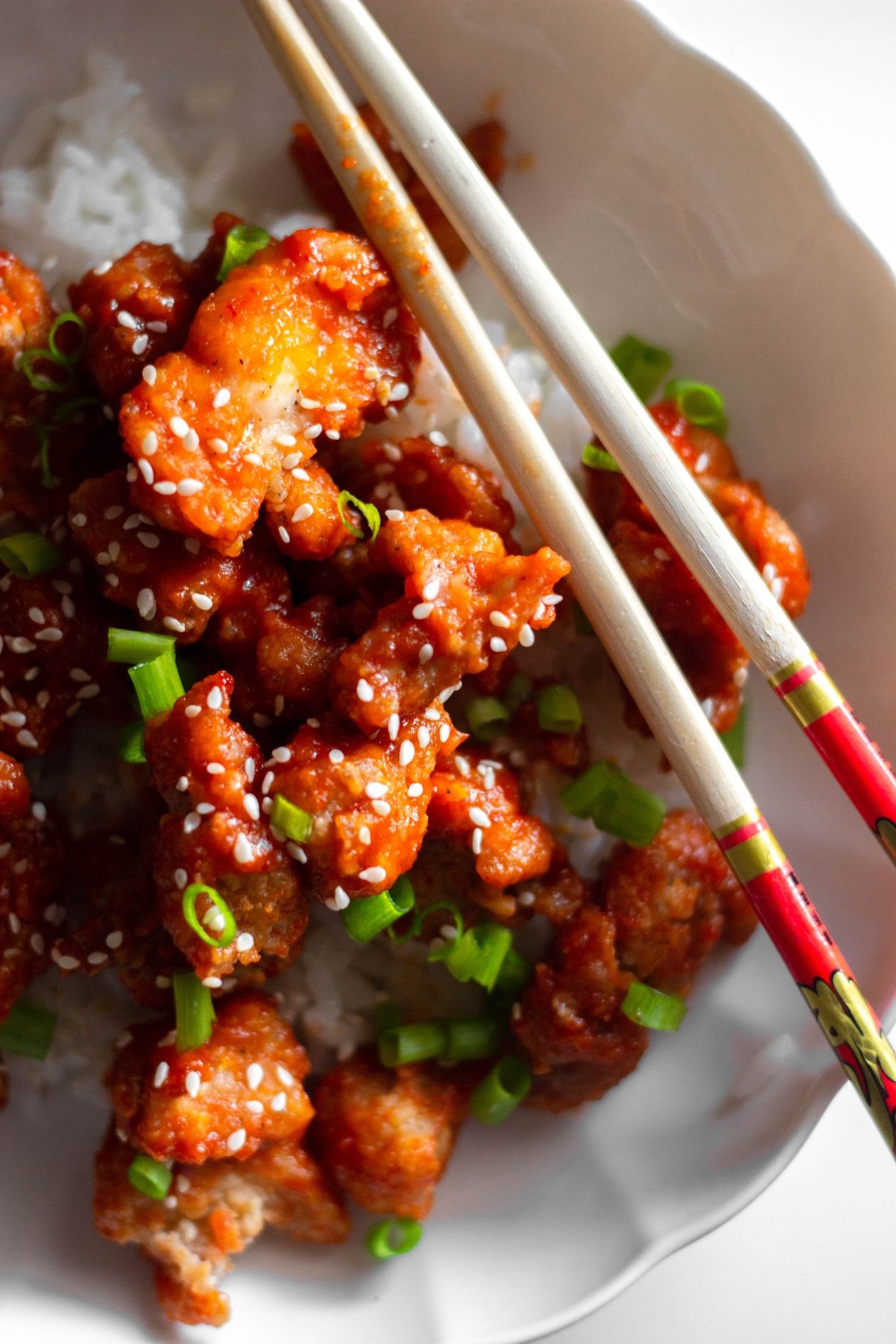
Golden pieces of fried chicken coated in a sticky honey and sesame glaze, with garlic, ginger and a splash of soy. The coating stays crisp under the sauce, the glaze clings to every piece, and the whole plate comes together fast. Serve it over steamed rice with spring onions on top.
The story behind Honey Sesame Chicken
Honey sesame chicken is a Chinese-American restaurant favourite, born in the takeaway kitchens of the United States where Cantonese cooking met American tastes. The dish takes the old technique of coating meat in starch and frying it crisp, then dresses it in a sweet glaze built on honey, soy and sesame. It is not a dish with a single birthplace in China, and that is part of its charm: it grew out of cooks adapting what they had to what their customers loved. The earliest versions were often made with a simple sugar glaze, and honey came later, as cooks looked for a rounder sweetness and a sauce that would shine on the plate. Sesame seeds were the finishing touch, adding texture and a nutty note that balanced the sugar.
In Chinese cooking, sesame has a long and respected history. Sesame seeds turn up in oils, pastes, sweets and savoury dishes across the country, and toasted sesame oil is one of the great finishing flavours of the cuisine. Honey shows up less often than sugar in traditional sauces, but the pairing of sweet and savoury is old and central. Together they give this chicken a flavour that feels both familiar and a little bit special, which is why it became a takeaway staple.
What makes the dish work is contrast. The chicken comes out of the oil with a thin, shattering coating, and then the hot glaze wraps around it without soaking through straight away. You get crunch, then sweetness, then the salt of the soy and the warmth of ginger, and finally the nutty pop of sesame seeds. It is a small plate of opposites, and each bite keeps you reaching for the next one. The spring onions matter too: their fresh, sharp bite cuts the sweetness and keeps the dish from feeling heavy.
This is a weeknight dish that still feels like a treat. It cooks fast enough for a busy evening, but it looks and tastes like something you ordered in. Make it on a Friday when the week has been long, or when friends come round and you want a centrepiece that everyone will eat. Serve it with plain steamed rice and something green, and let people help themselves straight from the pan.
- Prep time
- 20 mins
- Cook time
- 25 mins
- Total time
- 45 mins
- Servings
- 4 servings
- Calories
- 520
Ingredients
- 700 g boneless, skinless chicken breast, cut into bite-size pieces
- 1 teaspoon salt
- 1/2 teaspoon ground black pepper
- 1 large egg, beaten
- 120 g cornflour (cornstarch)
- 120 ml vegetable oil, for frying
- 60 ml honey
- 60 ml light soy sauce
- 2 tablespoons rice vinegar
- 2 cloves garlic, finely minced
- 1 tablespoon fresh ginger, finely grated
- 1 teaspoon chilli flakes (optional)
- 2 tablespoons toasted sesame seeds
- 3 spring onions, thinly sliced
Instructions
- Pat the chicken pieces dry with kitchen paper, then season them with salt and pepper. Dry chicken helps the coating stick, and the coating is what turns crisp in the oil. Take your time here and the frying will go smoothly.
- Put the beaten egg in one bowl and the cornflour in another. Dip each piece of chicken in the egg first, let the extra drip off, then roll it in the cornflour until it is covered all over. Shake off the loose flour and set the pieces on a plate in a single layer.
- Pour the oil into a large deep pan and heat it over medium-high heat until it shimmers. Drop in one test piece: it should sizzle at once and bubble hard around the edges. If it sinks quietly, the oil is not hot enough yet.
- Fry the chicken in two batches so the pan stays hot. Cook each batch for 4 to 5 minutes, turning the pieces once, until they are deep golden and the coating feels firm and crisp. Lift them out with a slotted spoon and drain on a wire rack, not on paper, so the base stays crisp. If a piece looks pale after 4 minutes, give it one more minute; the coating should sound faintly crackly when you tap it with a spoon.
- While the chicken fries, whisk the honey, soy sauce and rice vinegar together in a small bowl. Stir in the garlic, ginger and chilli flakes. This sauce takes only a minute to mix, and having it ready matters because the glaze cooks fast.
- Pour off all but one tablespoon of oil from the pan and set it over medium heat. Add the sauce and let it bubble for 1 to 2 minutes, stirring, until it turns glossy and thick enough to coat a spoon. You will smell the garlic soften and the honey darken slightly.
- Return all the chicken to the pan and toss it through the glaze for about 30 seconds. Every piece should shine with sauce, and you should hear a light sizzle as the glaze meets the hot coating. Work quickly so the crisp outside does not soak.
- Sprinkle in the toasted sesame seeds and most of the spring onions, then toss once more. The seeds stick to the glaze and give each bite a gentle nutty crunch. Taste a piece and add a pinch of salt or a squeeze of vinegar if it needs balance.
- Serve at once over steamed rice, with the rest of the spring onions scattered on top. The dish is at its best in the first few minutes, while the coating is still crisp and the glaze is warm and sticky.
Pro tips
- Cut the chicken into even pieces, about the size of a walnut, so they all cook in the same time and none dry out.
- Use a wire rack for draining, not kitchen paper, because paper traps steam under the chicken and softens the coating.
- Toast the sesame seeds yourself in a dry pan; shop-bought toasted seeds are often stale and taste flat.
- Mix the sauce before you start frying so you are not scrambling while the chicken waits.
- Add the chilli flakes only if you like heat; leave them out and the dish is mild enough for children.
Variations & serving ideas
Swap the chicken breast for boneless thighs if you want richer, juicier meat. Thighs forgive a minute too long in the oil, which makes them a safer choice when you are still learning to fry. Cut them the same size, cook them the same way, and give them one extra minute in the pan.
For a lighter version, skip the deep frying and bake the coated pieces at 220C (425F) for 18 to 20 minutes, turning once. Spray or brush them lightly with oil first so the coating crisps. The result is not quite as shattering as fried chicken, but the glaze and the sesame carry the dish, and it is far less messy. You can also use an air fryer at 200C (400F) for 12 to 14 minutes, shaking the basket halfway through, which gives a very good crunch with only a little oil.
You can change the sauce without losing the dish. A spoonful of hoisin makes it deeper and darker, a little orange zest adds a fresh citrus lift, and a teaspoon of sriracha brings gentle heat. Keep the honey and soy as the base, and treat the extras as small adjustments, not a new recipe.
Serve this chicken over steamed jasmine rice so the rice soaks up the extra glaze. A simple cucumber salad or steamed broccoli on the side cuts through the sweetness and gives the plate some crunch. For drinks, iced green tea or a cold lager both work well, and the dish fits easily into a larger spread with fried rice and spring rolls. If you are feeding a crowd, double the sauce and keep a second batch of chicken warm in a low oven while you fry the rest.
Getting it right
The coating is the heart of this dish. Cornflour gives a light, glassy crunch that wheat flour cannot match, and it stays crisp longer under a wet sauce. Coat each piece evenly and shake off the excess, because thick clumps of flour turn gummy in the oil. Fry in batches so the oil temperature stays high; crowded chicken steams instead of frying, and the coating slides off.
Heat control matters at two moments. The oil should be around 175C (350F) when the chicken goes in: hot enough to set the coating at once, but not so hot that it browns before the chicken cooks through. Then, when you make the glaze, keep the heat at medium and watch it. Honey burns fast, and a scorched glaze tastes bitter. Pull the pan off the heat the moment the sauce turns glossy and coats a spoon.
The most common mistake is tossing the chicken in the glaze and then leaving it sitting in the pan. The coating starts softening the second it meets the sauce, so toss for 30 seconds and serve at once. If the glaze is too thin, simmer it a minute longer before the chicken goes in. If the chicken is pale and soft, the oil was too cool or the pan was too full. Next time, fry fewer pieces and wait for a strong sizzle before adding them. A second common slip is skipping the drying step: wet chicken makes the cornflour paste up and slide off, so always pat the pieces dry first.
Storing & reheating
Keep leftover honey sesame chicken in a sealed container in the fridge for up to 3 days. The coating will soften as it sits, which is normal, and the glaze will firm up when cold. Reheat it in a hot oven at 200C (400F) for 8 to 10 minutes on a wire rack, which brings back some of the crunch far better than a microwave.
Do not freeze the finished dish, because the coating turns soggy and never crisps again. The sauce on its own freezes well for up to a month in a small tub. Thaw it in the fridge overnight, warm it gently in a pan, and toss it with freshly fried chicken.
Frequently asked questions
Can I bake the chicken instead of frying it?
Yes. Bake the coated pieces at 220C (425F) for 18 to 20 minutes, turning once, until crisp and cooked through. The glaze still works the same way. You lose a little of the deep-fried crunch, but the flavour stays right and the clean-up is much easier.
Can I use maple syrup instead of honey?
Honey gives the glaze its shine and its gentle sweetness, and it thickens as it cools. Maple syrup works in a pinch, but the sauce will taste a little different and stay thinner. Brown sugar makes a darker, more caramel-like glaze.
How do I toast sesame seeds properly?
Toast the seeds in a dry pan over medium heat for 2 to 3 minutes, shaking the pan often. They are ready when they smell nutty and turn a light golden colour. Watch them closely because they go from toasted to burnt in seconds.
Can I use chicken thighs instead of breast?
Yes, boneless thighs stay juicier and are harder to overcook, so they suit this recipe well. Cut them into even pieces and cook them the same way. Thighs take about one extra minute in the oil.
How do I know when the glaze is thick enough?
The glaze is ready when it coats the back of a spoon and drips off in a slow ribbon. If it runs off like water, simmer it for another minute. If it turns thick and tacky, loosen it with a spoonful of hot water.
Can I freeze the sauce for later?
The sauce freezes well on its own for up to a month, so make a double batch and freeze half. The fried chicken is best eaten fresh, since the coating softens in the freezer and never quite crisps up again.