Miang Kham Recipe
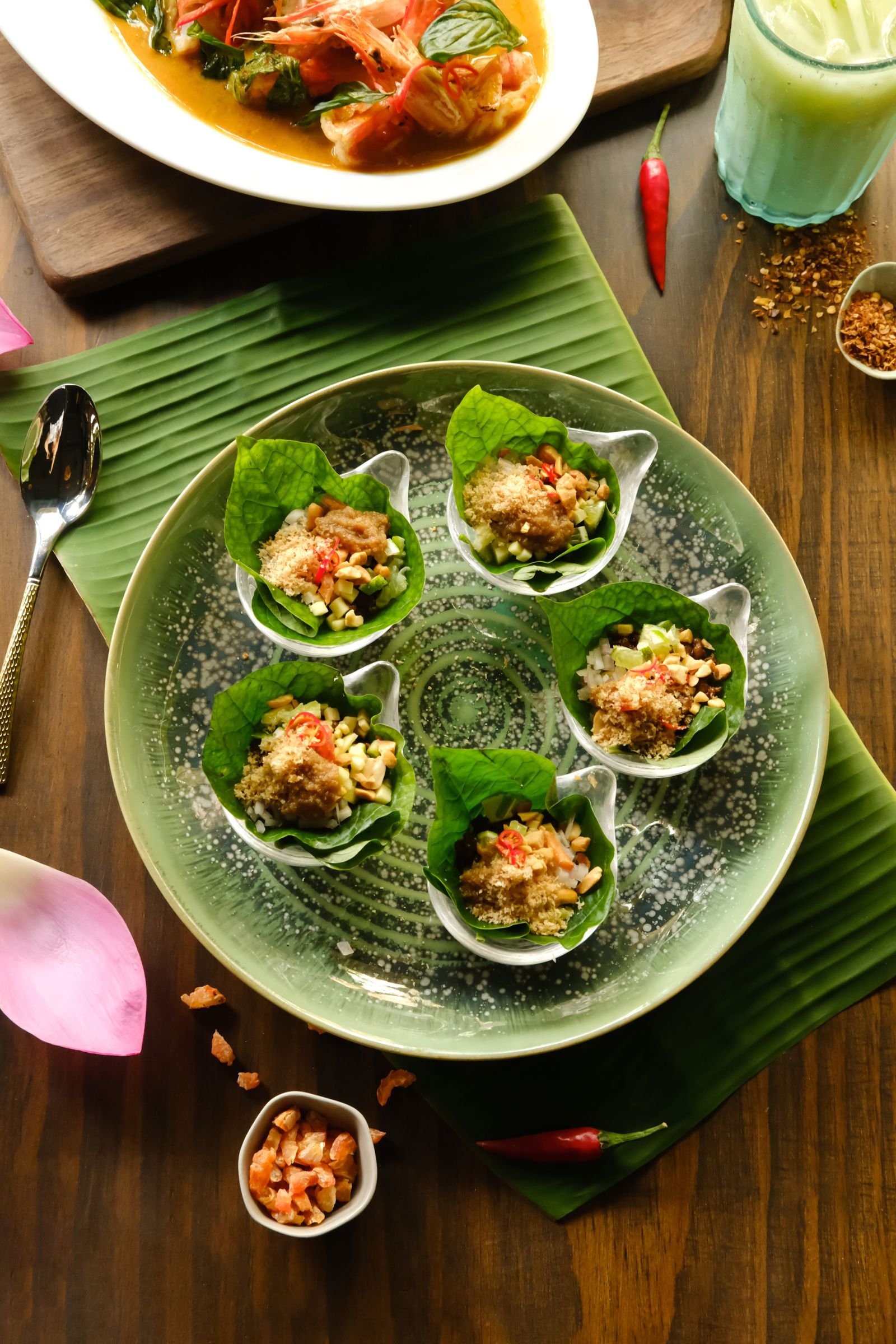
A glossy green betel leaf, folded around toasted coconut, crunchy peanuts, sharp lime, fresh ginger and a dab of chilli, all bound together with a sticky palm-sugar sauce. Miang kham is Thailand's most joyful snack — sweet, sour, salty, spicy and fresh in a single bite, and it is as fun to make as it is to eat. Set it out on a platter and watch it vanish.
The story behind Miang Kham
Miang kham is one of Thailand's oldest snacks, with roots in the royal kitchens of the central plains, where cooks wrapped small, flavourful parcels in leaves for the court. The name means a bite wrapped in leaves, and the idea is simple: take a leaf, fill it with a little of everything — coconut, peanuts, lime, ginger, shallot, chilli, dried shrimp — add a spoonful of sweet sauce, fold it up, and eat it in one bite. It is a dish that turns eating into a small ceremony.
The snack travelled from the palace to the streets, and today you will find miang kham at markets and festivals across Thailand, sold in little leaf parcels or as a do-it-yourself platter. The betel leaf, called bai cha plu, is the traditional wrapper: it is glossy, heart-shaped, and has a mild peppery taste that suits the filling. The dish is also eaten across Laos and northern Malaysia, each place with its own version of the filling and sauce.
What makes miang kham special is that every bite is different. You choose how much chilli, how much lime, how much sauce — so no two parcels taste the same, and everyone at the table builds their own. The flavours are a full Thai orchestra in miniature: sweet sauce, sour lime, salty shrimp, hot chilli, fresh ginger and crunchy peanut, all wrapped in a cool, peppery leaf. It is a snack, but it tastes like a whole meal in one mouthful.
This is a wonderful dish for sharing, and it suits a relaxed Australian gathering perfectly. The sauce cooks in ten minutes, the fillings are a chopping-board job, and the assembly happens at the table, so everyone gets involved. Serve it for a weeknight dinner in Australia as a starter, or put a platter out at a barbecue and let guests wrap their own — it is a conversation piece as much as a snack, and it always gets people talking. The first time you make it, keep the fillings simple and let the sauce do the work; once you know the rhythm, you can play with the fillings as much as you like.
- Prep time
- 25 mins
- Cook time
- 30 mins
- Total time
- 55 mins
- Servings
- 4 servings
- Calories
- 470
Ingredients
- 20 betel leaves (bai cha plu), washed and dried
- 1 cup desiccated or shredded coconut, toasted
- 1 cup roasted peanuts, roughly chopped
- 2 limes, peeled and finely diced
- 3 cm piece fresh ginger, peeled and finely diced
- 2 shallots, finely diced
- 2 red chillies, deseeded and finely diced
- 3 tbsp dried shrimp, finely chopped
- 100 g palm sugar, grated or chopped
- 2 tbsp fish sauce
- 1 tbsp water
- 1 tbsp grated fresh galangal (optional)
- 1 tbsp roasted coconut flakes, for topping (optional)
- 1 lime, cut into wedges, to serve
Instructions
- Toast the coconut first. Put the desiccated coconut in a dry frying pan over medium heat and stir constantly for 3 to 4 minutes, until it turns an even golden brown and smells warm and nutty. Tip it straight onto a plate to cool — it keeps cooking in the hot pan and can burn in seconds if you leave it sitting there.
- Make the sauce while the coconut cools. Put the palm sugar, fish sauce and water into a small saucepan over medium heat and stir until the sugar dissolves completely. Let it bubble gently for 3 to 4 minutes, until it thickens into a sticky, glossy syrup that coats the back of a spoon. Take it off the heat and let it cool — it thickens more as it cools.
- Prepare the fillings. Dice the lime, ginger, shallots and chillies into small, even pieces, about the size of a pea Chop the peanuts roughly, keeping some crunch, and finely chop the dried shrimp. Keep each filling in its own small bowl.
- Check the sauce and the leaves. The sauce should be thick enough to cling to a spoon but still pourable — if it has set too firm, warm it gently for a minute with a splash of water. Pick over the betel leaves, discarding any torn or yellowed ones, and pat them dry. A dry leaf folds cleanly; a wet one tears and slips.
- Arrange the platter. Set the leaves in a neat pile on a large plate or board, then arrange the small bowls of fillings around them in a circle, with the sauce in the centre. The platter should look generous and inviting, with all the colours showing — the golden coconut, the red chillies, the green leaves, the pale ginger.
- Show everyone how to wrap one. Lay a leaf flat in your palm, shiny side down, and add a small pinch of each filling — a little coconut, a few peanuts, a piece of lime, a dice of ginger, a shallot, a chilli, a sprinkle of shrimp. Spoon a little sauce over the top, then fold the sides of the leaf in and roll it up into a neat parcel.
- Eat each parcel in one bite. Pop the whole parcel into your mouth and chew slowly — the flavours arrive one after another, sweet, then sour, then salty, then hot, then fresh. Make another one straight away, and adjust the fillings to your taste.
- Keep the platter topped up. As the leaves and fillings run low, refill the small bowls and bring out more leaves. Miang kham is a grazing dish, and people will keep coming back to it — a second round of sauce, warmed gently, keeps the platter going for a whole evening.
Pro tips
- Use betel leaves if you can find them. They have a mild peppery taste that suits the filling perfectly, and their size and flexibility make them ideal for wrapping — look for them at Asian grocers, sold as bai cha plu.
- Dice the fillings small and even. Pea-sized pieces sit neatly in a leaf and give you a little of everything in one bite — big chunks fall out, and uneven pieces make some bites all chilli and others all lime. A sharp knife and a steady hand make this quick work — take your time and the parcels will taste balanced.
- Do not overfill the leaf. A small pinch of each filling is enough — an overloaded leaf will not fold, it will burst, and you will lose the filling all over your hands.
- Toast the coconut carefully. It goes from golden to burnt in seconds, so keep it moving in the pan and tip it out the moment it turns an even gold and smells nutty.
- Serve the sauce warm, not hot. A warm sauce pours easily and clings to the fillings, while a hot sauce wilts the leaves and a cold one sets too thick to spoon. A small jug of warm sauce on the table lets people add more as they go.
Variations & serving ideas
Miang kham is a flexible snack, and the fillings change with the season and the cook. If you cannot find betel leaves, use lettuce cups, shiso leaves, or even small cabbage leaves — they all wrap well and taste fresh. Some Thai families use toasted coconut and peanuts as the base and add whatever is in the kitchen: diced green mango for sourness, pomelo segments for sweetness, or a few slices of raw shallot for bite.
The sauce is the part worth getting right, and it is easy to change. A little grated galangal or lemongrass stirred into the palm sugar gives it a warm, citrusy depth, and a splash of tamarind paste adds a gentle sourness that suits the sweet sauce. For a vegan version, swap the fish sauce for soy sauce and leave out the dried shrimp — the peanuts, coconut and lime still carry the dish, and it is just as satisfying.
If dried shrimp is hard to find, use finely chopped roasted peanuts with a pinch of salt instead, or a few flakes of smoked fish. And if palm sugar is not available, use brown sugar or jaggery — the flavour is a little less caramel-like, but the sauce still works. The dish is forgiving, and a good sauce with fresh fillings will carry it even if one ingredient is swapped.
Serve miang kham as a starter, a snack, or a party dish. It sits beautifully next to a Thai curry or a noodle soup, it works as a light lunch on its own, and it is a wonderful thing to put out at a barbecue while the grill heats up. A cold beer, a glass of white wine, or a Thai iced tea all pair well, and the platter looks so good that people gather around it before they have even tasted it. For a sweet version, add a few pieces of diced ripe mango or pomelo to the platter — the fruit brings a gentle sweetness that suits the salty shrimp and sharp lime, and children love building parcels with fruit in them. It is a snack that always starts a conversation.
Getting it right
The key technique is the sauce. Palm sugar, fish sauce and water, simmered until they form a sticky, glossy syrup — that is all it is, but the timing matters. Too short and the sauce is thin and runs off the fillings; too long and it sets into hard toffee as it cools. Three to four minutes of gentle bubbling is the window, and the test is simple: dip a spoon in, and the sauce should coat the back of it in a thin, even layer that holds its shape for a second before sliding off.
The second skill is the dice. Every filling needs to be cut to roughly the same small size, about a pea, so that a single leaf holds a little of everything and no one flavour takes over. Uneven pieces make for uneven bites — a big chunk of chilli in one parcel and none in the next. Take your time with the knife, keep the pieces even, and the parcels will taste balanced every time.
The most common mistake is overfilling the leaf. People pile the fillings high, and then the leaf will not fold and the parcel falls apart in their hands. A small pinch of each filling is enough — the leaf is a bite, not a meal. The second mistake is a sauce that is too thin or too thick: thin sauce drips everywhere, thick sauce will not pour. If it sets too firm, warm it gently with a splash of water and it comes right back.
Storing & reheating
Miang kham is best made fresh, but the parts keep well. The sauce keeps in a sealed jar in the fridge for up to a week — warm it gently with a splash of water to loosen it before serving. The toasted coconut keeps for a week in a sealed container, and the chopped peanuts keep for two weeks. Store the diced lime, ginger and shallots separately in the fridge for up to two days.
Do not assemble the parcels ahead of time — the leaves wilt, the lime softens, and the fillings go soggy. Keep everything in separate bowls and let people wrap their own at the table. Betel leaves keep for two to three days in the fridge, wrapped in a damp paper towel inside a sealed bag. This dish does not freeze, so make only what you plan to eat fresh.
Frequently asked questions
Where can I buy betel leaves in Australia?
Asian grocers sell betel leaves, called bai cha plu, in the fresh herb section. If you cannot find them, use lettuce cups, shiso leaves or small cabbage leaves instead — they all wrap well and taste fresh. Keep everything fresh and separate, and the platter will be a success.
Is miang kham spicy?
It depends on how much chilli you add. Each person controls their own parcel, so it can be as mild or as hot as you like. The palm-sugar sauce, peanuts and lime all soften the heat, so even a spicy parcel tastes balanced. Keep everything fresh and separate, and the platter will be a success.
Can I make miang kham vegan?
Yes. Swap the fish sauce for soy sauce and leave out the dried shrimp. The peanuts, toasted coconut, lime, ginger and palm-sugar sauce still give you the full sweet, sour, salty and spicy balance. Keep everything fresh and separate, and the platter will be a success.
How long does the sauce keep?
The palm-sugar sauce keeps in a sealed jar in the fridge for up to a week. Warm it gently with a splash of water to loosen it before serving, since it thickens as it cools. Keep everything fresh and separate, and the platter will be a success.
Can I make miang kham ahead for a party?
Partly. Make the sauce, toast the coconut, chop the peanuts and dice the fillings up to a day ahead, and store everything separately. Assemble the platter and let guests wrap their own just before serving. Keep everything fresh and separate, and the platter will be a success.
What do I serve with miang kham?
It works as a starter before a Thai curry or noodle soup, as a light lunch on its own, or as a party snack at a barbecue. A cold beer, white wine or Thai iced tea all pair well with it. Keep everything fresh and separate, and the platter will be a success.