Moo Dad Deaw Recipe
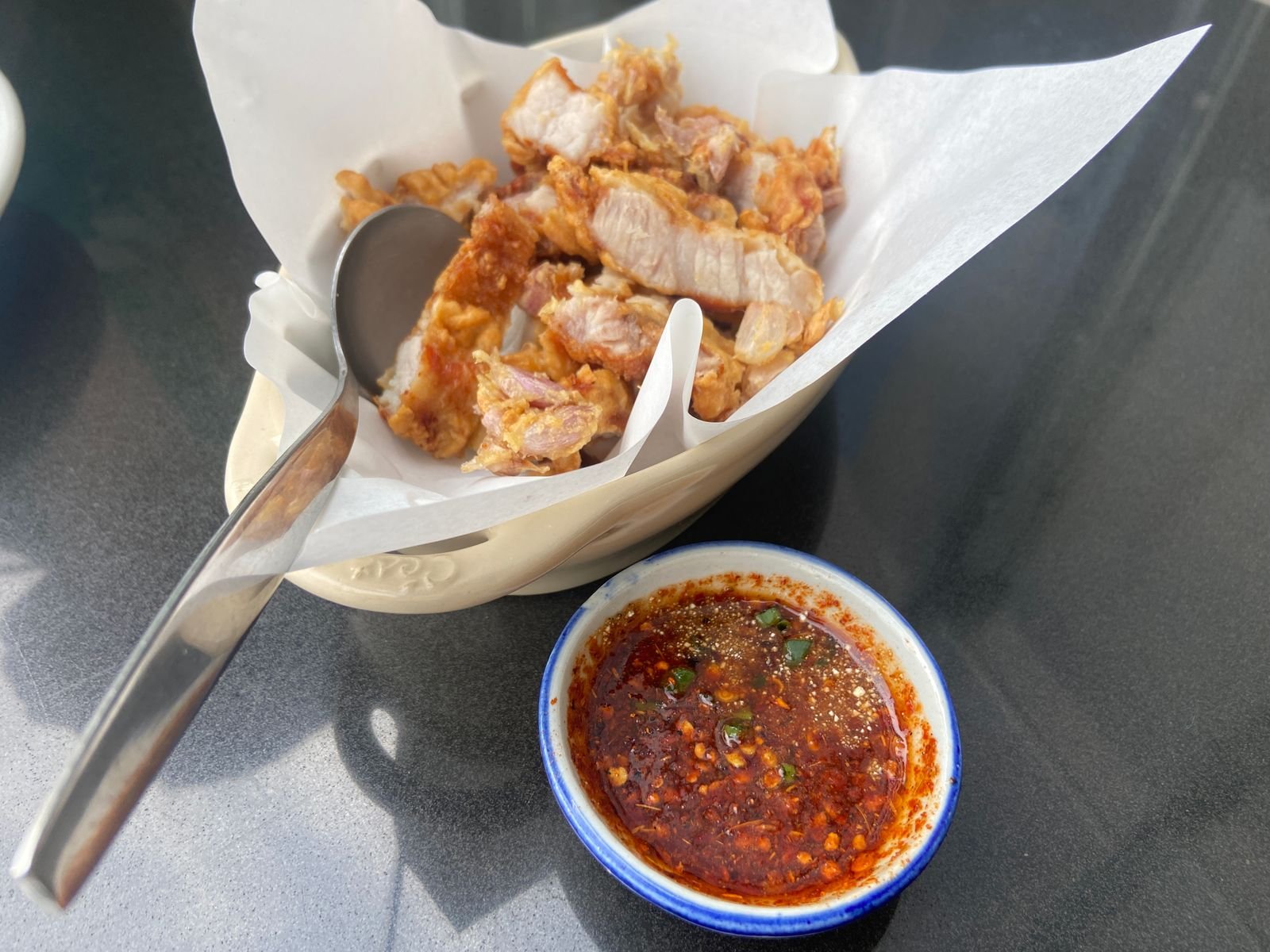
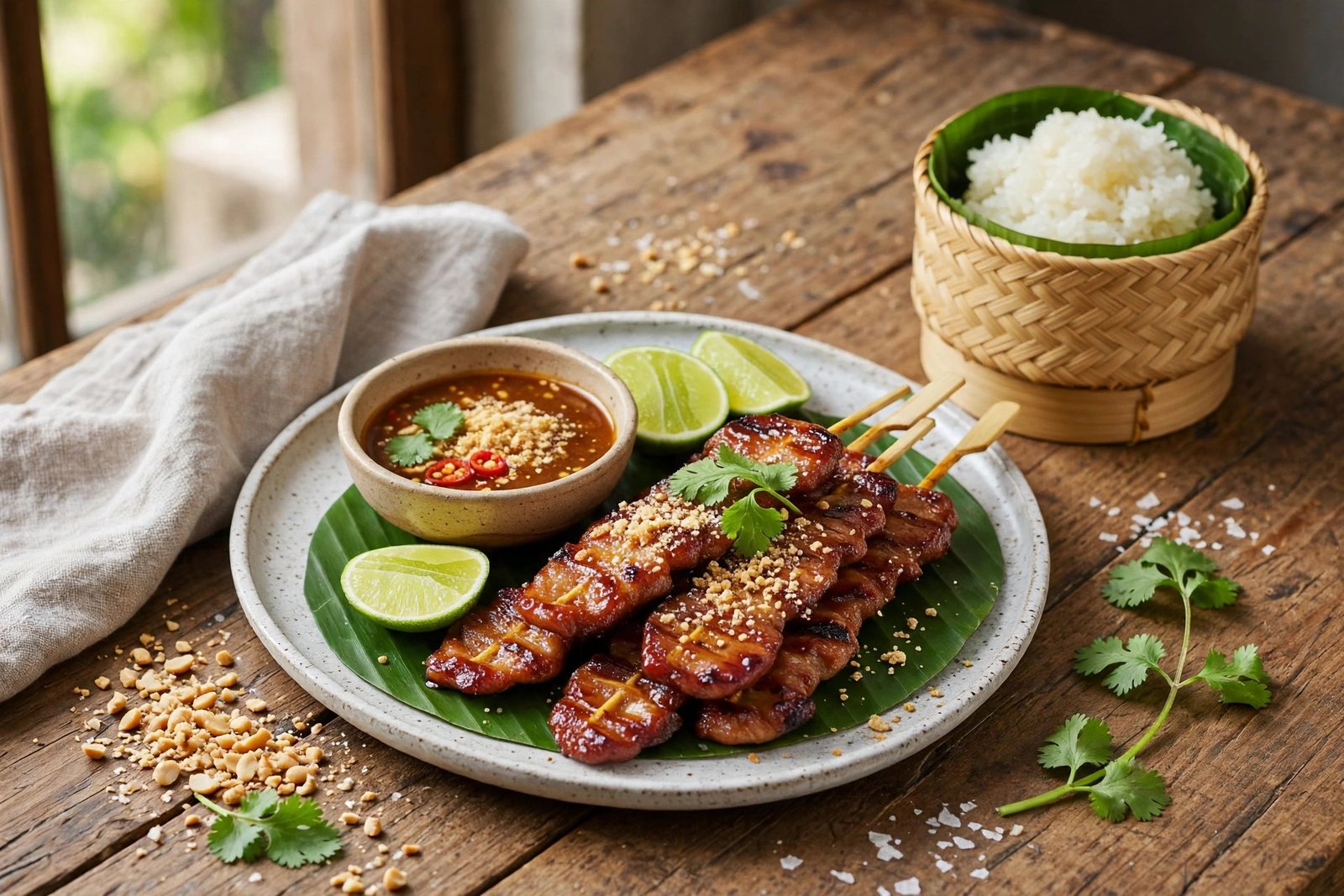
Strips of pork marinated with garlic, fish sauce and palm sugar, dried until tacky, then fried until crisp at the edges — moo dad deaw is chewy, salty-sweet and deeply moreish. It is Thai snacking food at its best, made for sticky rice and cold beer. Serve it with sticky rice, a sharp salad and sweet chilli sauce, and watch it disappear fast from the plate.
The story behind Moo Dad Deaw
Moo dad deaw means pork dried in the sun for a single day, and the name tells you exactly how the dish is made. In Thailand, where the sun is strong and pork is plentiful, families have long preserved meat by salting it, seasoning it, and laying it out to dry. What began as a way to keep pork from spoiling became a beloved snack in its own right. Similar dried meats appear across South-East Asia, from Vietnamese dried beef to Malaysian dendeng, each one shaped by its own climate and seasonings.
The dish comes from the Isaan region of north-east Thailand, where sun-dried meats are a way of life. Strips of pork are marinated, dried on racks or bamboo trays in the fierce sun, then fried quickly when someone is hungry. It is sold at markets, served in restaurants as a drinking snack, and packed for journeys, since the dried pork keeps well. In Isaan, drying racks sit in sunny yards and on rooftops, and the smell of garlic and fish sauce drifts through the neighbourhood on a hot day. The pork keeps well without refrigeration, which made it a traveller's food.
What makes it special is the texture. Drying concentrates the flavour and firms the meat, so when it hits hot oil, the edges crisp and caramelise while the centre stays chewy and juicy. The marinade of garlic, fish sauce, sugar and pepper gives it a salty-sweet, savoury depth that keeps you reaching for one more piece. The sugar in the marinade caramelises in the hot oil, which is why the edges turn such a deep, appetising brown.
Cook it when you want a snack that feels a little different, or a main dish with sticky rice and a sharp salad. It suits a weekend afternoon, a party plate, or a simple supper with papaya salad. The drying takes a few hours, but the hands-on work is short, and the result is worth planning ahead for. If you are short on time, an overnight marinade and a low oven still give you a very good result without any sun at all.
- Prep time
- 20 mins
- Cook time
- 15 mins
- Total time
- 35 mins
- Servings
- 4 servings
- Calories
- 520
Ingredients
- 500 g pork shoulder, cut into strips 1 cm thick, cut across the grain
- 4 garlic cloves, finely chopped
- 2 tablespoons fish sauce
- 1 tablespoon light soy sauce
- 1 tablespoon palm sugar, finely grated, or use soft brown sugar
- 1 teaspoon ground white pepper
- 1 teaspoon ground black pepper
- 1 tablespoon oyster sauce
- 1 tablespoon vegetable oil, plus more for frying
- 2 tablespoons toasted sesame seeds, optional
- 1 tablespoon dried chilli flakes, optional
- Sticky rice and fresh cucumber, to serve
- Sweet chilli sauce, to serve
- Lime wedges, to serve
Instructions
- Cut the pork into strips about 1 cm thick and 5 to 6 cm long, cutting across the grain so the meat stays tender when fried. Trim off any large pieces of fat, but leave a little, since it crisps in the oil and adds flavour.
- Mix the garlic, fish sauce, soy sauce, palm sugar, white pepper, black pepper, oyster sauce and 1 tablespoon of oil in a large bowl until the sugar dissolves. The marinade should taste salty first, then sweet, with a warm peppery background.
- Add the pork strips and massage the marinade into the meat with your hands for a minute, making sure every strip is coated. Cover the bowl and leave it in the fridge for at least 1 hour, or overnight if you have time, so the flavour works deep into the meat.
- Lay the strips out in a single layer on a wire rack set over a tray, leaving space between them so the air can reach all sides. Put the rack in a sunny, breezy spot for 3 to 4 hours, turning the strips once, until the surface feels dry and tacky but the meat is still flexible, and turn the strips once halfway through drying.
- If you have no sun, dry the strips in the oven on its lowest setting, about 70 C, with the door slightly open, for 2 to 3 hours. The pork is ready when the surface feels dry to the touch and the strips bend without snapping.
- Heat about 3 cm of oil in a deep frying pan over medium-high heat until it reaches 170 C. The oil should shimmer and a small piece of pork should sizzle hard when it goes in, but the oil must not smoke.
- Fry the pork in small batches for 2 to 3 minutes, turning once, until the edges are crisp and caramelised and the strips are a deep golden brown. Do not crowd the pan, or the temperature drops and the pork steams instead of crisping.
- Lift the strips out with tongs and drain on a wire rack, not on paper, so the hot air keeps them crisp. Sprinkle with sesame seeds and chilli flakes while they are still hot, if using, so the toppings stick.
- Serve at once with sticky rice, cucumber and sweet chilli sauce, with lime wedges on the side. Eat it while the edges are still crisp, tearing the strips with your fingers and scooping them up with the rice.
Pro tips
- Cut the strips evenly, since thin pieces burn while thick ones stay undercooked in the same batch. Thin pieces burn while thick ones stay undercooked in the same batch, so take your time with the knife.
- Dry the pork until the surface is tacky, not wet, because wet strips spit in the oil and never crisp properly. Wet strips spit in the oil and never crisp properly, so wait until the surface feels tacky.
- Marinate overnight if you can, since the extra time lets the garlic and fish sauce flavour the meat right through. The extra time lets the garlic and fish sauce flavour the meat right through to the centre.
- Fry in small batches and let the oil recover between them, so every strip gets the same crisp, golden finish. Let the oil recover between batches, so every strip gets the same crisp, golden finish.
- Serve it hot and fresh, because the crisp edges soften within 20 minutes and the dish is at its best straight from the pan. The crisp edges soften within 20 minutes, so plan to serve the pork the moment it leaves the pan.
Variations & serving ideas
For a spicier version, add a tablespoon of dried chilli flakes and a teaspoon of chilli paste to the marinade, which gives the pork a warm heat that builds as you eat. Some cooks add a splash of dark soy sauce for a deeper colour and a richer, almost smoky flavour. A little ground coriander seed in the marinade adds a citrusy, floral note that suits the pork well. A little ground coriander seed in the marinade adds a citrusy, floral note that suits the pork well. A teaspoon of ground coriander adds a warm, citrusy note that suits the pork.
If pork shoulder is hard to find, pork neck works just as well and has a little more fat, which keeps the strips juicy. Beef is another option, though it dries firmer and needs a slightly longer fry. Chicken thigh, cut into strips, also works, but it dries faster, so check it after 2 hours in the sun. Chicken thigh, cut into strips, also works, but it dries faster, so check it after 2 hours in the sun. Beef dries firmer, so watch it closely.
Serve moo dad deaw as a snack with cold beer, or as a main with sticky rice, papaya salad and a bowl of clear soup. It also works in a sandwich, tucked into a baguette with pickled vegetables and herbs, or chopped over rice with a fried egg for a quick, filling lunch. It also works in a sandwich, tucked into a baguette with pickled vegetables and herbs, or chopped over rice with a fried egg. A fried egg on top makes it a complete, filling lunch.
To build a full Isaan meal, put the pork beside larb, sticky rice and a spicy papaya salad. The salty-sweet pork balances the sour, hot salad, and the sticky rice ties everything together. A cold lager, a lime soda, or iced tea all pair well with the rich, salty meat. A cold lager, a lime soda, or iced tea all pair well with the rich, salty meat, and each one cuts through the fat. The meal is simple, salty and deeply satisfying.
Getting it right
The key technique is the drying stage, which is what makes this dish different from ordinary fried pork. The sun, or a low oven, pulls moisture from the surface of the meat, concentrating the flavour and letting the edges caramelise in the oil instead of steaming. Skip the drying and you get fried pork, which is fine, but it is not moo dad deaw. The sun, or a low oven, pulls moisture from the surface of the meat, concentrating the flavour and letting the edges caramelise.
Heat control matters when frying. The oil should be hot enough to crisp the strips quickly, around 170 C, but not so hot that the sugar in the marinade burns before the pork cooks through. If the strips darken too fast, lower the heat a little; if they stay pale and greasy, the oil is too cool and needs a minute to recover. If the strips darken too fast, lower the heat a little, and if they stay pale and greasy, the oil is too cool.
The most common mistake is cutting the strips too thick, which leaves the centre raw while the outside burns. Another common slip is drying the pork too long, until it turns stiff and leathery, so check it regularly and pull it in the moment the surface feels tacky. If the pork tastes too salty, it usually means the marinade was too strong, so use a little less fish sauce next time. If the pork tastes too salty, it usually means the marinade was too strong, so use a little less fish sauce next time.
Storing & reheating
Leftover fried pork keeps in a sealed container in the fridge for up to 3 days, though the crisp edges will soften. Reheat it in a hot oven at 200 C for 5 to 6 minutes, or in an air fryer for 3 to 4 minutes, until hot and crisp again. Avoid the microwave, which makes the pork tough and soggy. The crisp edges will soften in the fridge, but a hot oven brings them back in minutes.
The dried, unfried pork keeps even better: wrap it tightly and store it in the fridge for up to 3 days, or freeze it for up to 2 months. Fry it straight from the fridge, adding a minute to the cooking time, or thaw frozen strips overnight before frying. Always let the pork cool before storing it, and keep it away from strong-smelling foods.
Frequently asked questions
Do I need sun to make moo dad deaw?
No, a low oven works well as a substitute. Dry the strips at about 70 C with the door slightly open for 2 to 3 hours, until the surface feels dry and tacky. A food dehydrator set to the same temperature also works. A food dehydrator set to the same temperature also works well and gives very even results.
How long should I marinate the pork?
At least 1 hour, though overnight in the fridge gives a much deeper flavour. The fish sauce and garlic need time to work into the meat, so do not rush this step if you can avoid it. The fish sauce and garlic need time to work into the meat, so do not rush this step if you can avoid it.
What cut of pork works best?
Pork shoulder is ideal, since it has enough fat to stay juicy and a good texture for drying. Pork neck is another excellent choice, while loin is too lean and can turn dry and tough after frying. Pork neck is another excellent choice, while loin is too lean and can turn dry and tough after frying.
Can I make it less salty?
Yes, use 1 tablespoon of fish sauce instead of 2 and add a little extra palm sugar to balance it. Taste the marinade before adding the pork, and remember that drying concentrates the salt, so go easy. Taste the marinade before adding the pork, and remember that drying concentrates the salt.
How do I know when the pork is dry enough?
The surface should feel dry and slightly tacky when you touch it, and the strips should bend without snapping. If the surface is still wet and shiny, give it another hour in the sun or oven. If the surface is still wet and shiny, give it another hour in the sun or oven.
What do I serve with moo dad deaw?
Sticky rice is the classic partner, with fresh cucumber, a sharp papaya salad, and sweet chilli sauce for dipping. A cold beer or a lime soda is the right drink alongside the salty, chewy pork. A cold beer or a lime soda is the right drink alongside the salty, chewy pork.