Khao Niao Mamuang Recipe
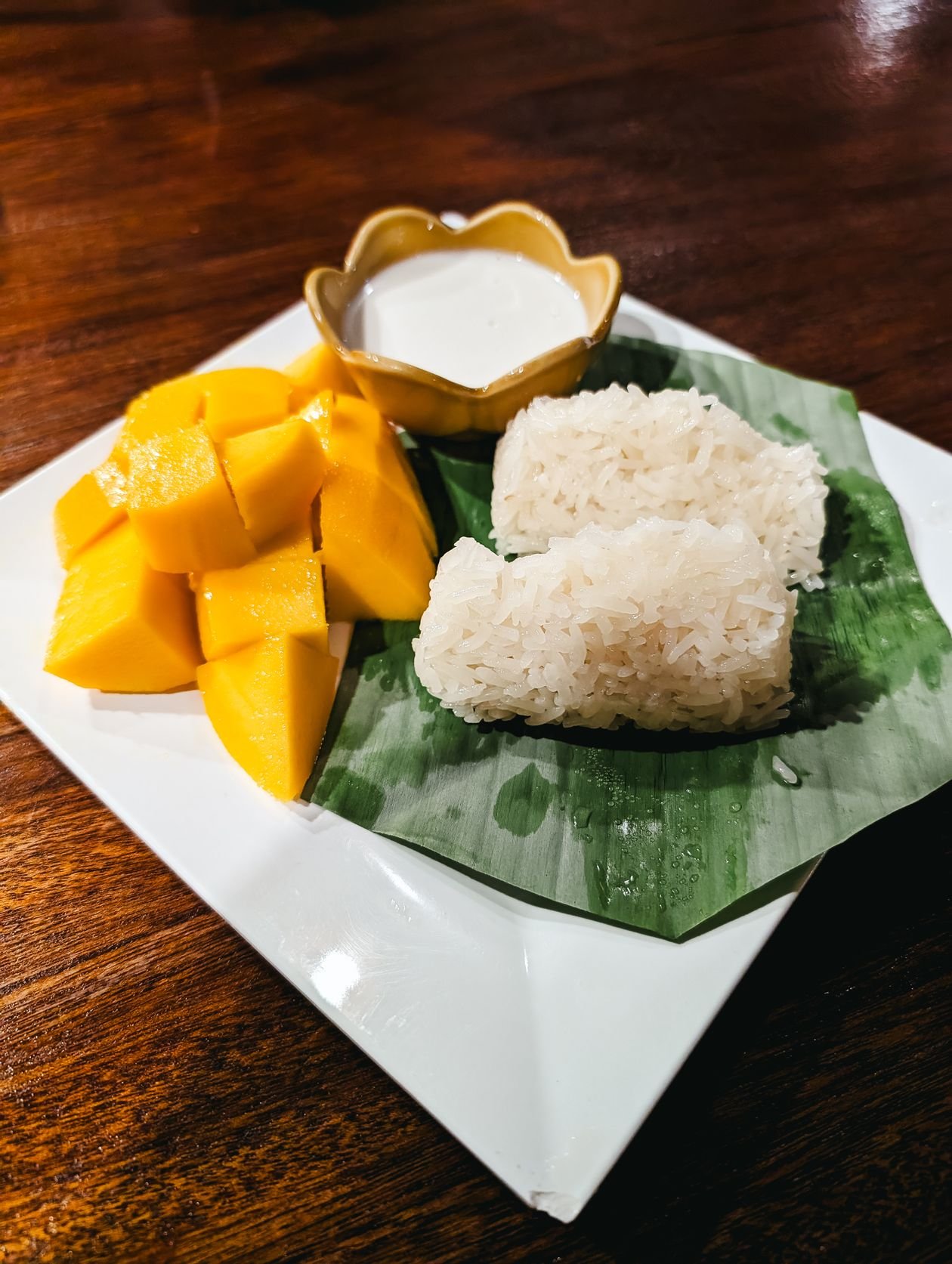
Soft, warm sticky rice soaked in sweet coconut milk, cool slices of ripe mango, and a drizzle of salty coconut cream on top. Khao Niao Mamuang is the Thai dessert that turns a good mango into a great one. It needs only a few ingredients and a little patience while the rice soaks. Make it in mango season and serve it the same day.
The story behind Khao Niao Mamuang
Khao Niao Mamuang is the dessert Thailand is proudest of, and it is also one of the simplest. Sweet sticky rice, ripe mango, and coconut milk. That is the whole recipe, and that is the whole point. The dish is older than the restaurants that serve it now: sticky rice has been a staple across Southeast Asia for centuries, and mango season has always been the time to eat it at its best. Put the two together and you get a dessert that needs no decoration.
Mango season in Thailand runs through the hot months, roughly March to May, and the dessert follows the fruit. Street vendors set up carts piled high with mangoes, and the rice is cooked fresh in the morning and sold until it runs out. Families buy it on the way home from the market, and children eat it straight from the bag with their fingers. The best mangoes for the dish are the sweet, fibre-free varieties that slice cleanly and smell floral when you cut into them.
What makes the dish special is the balance of three things that should not work together but do. The rice is warm, sweet, and sticky. The mango is cool, soft, and sharp. The coconut cream on top is salty, which sounds wrong until you taste it: the salt makes the sugar taste stronger and the coconut taste richer. Every spoonful should have a little of all three, and that is why the rice is served in a mound with the mango leaning against it, so you can build each bite yourself.
Cook this when mangoes are at their best and you want a dessert that feels like a treat without turning on the oven. It suits a dinner party because you can cook the rice ahead and slice the mango at the last minute, and it suits a quiet night too, because a single ripe mango and a cup of rice is enough for two people. Eat it while the rice is still warm and the mango is still cool from the fridge, and you will understand why the dish has never needed to change.
- Prep time
- 20 minutes (plus 4 hours soaking)
- Cook time
- 30 minutes
- Total time
- 50 minutes (plus soaking)
- Servings
- 4 servings
- Calories
- 420
Ingredients
- 2 cups (400 g) glutinous rice (sweet rice)
- 1 1/2 cups (400 ml) full-fat coconut milk
- 1/2 cup (100 g) sugar
- 1 teaspoon salt, divided
- 2 ripe mangoes, peeled and sliced
- 1/2 cup (120 ml) coconut cream, for drizzling
- 1 teaspoon cornstarch
- 1 tablespoon water
- 1 pandan leaf, tied in a knot (optional)
- 2 tablespoons toasted mung beans or sesame seeds, for sprinkling
- 1 lime, cut into wedges (optional)
Instructions
- Rinse the glutinous rice in a large bowl under cold water, swishing the grains with your hand, until the water runs mostly clear. Drain it, cover with fresh cold water by about 5 cm, and leave it to soak for at least 4 hours, or overnight in the fridge.
- Drain the soaked rice and tip it into a steamer basket lined with a clean cloth. Spread the grains in an even layer no more than 3 cm deep so the steam can reach every grain. Set the basket over a pot of boiling water, cover with a tight lid, and steam for 20 minutes.
- Lift the lid and check the rice. The grains should look glossy and slightly see-through, and a grain squashed between your fingers should feel soft with no hard white centre. If the middle still feels chalky, cover and steam for 5 more minutes.
- While the rice steams, warm the coconut milk in a saucepan over medium heat with the sugar, 3/4 teaspoon of salt, and the pandan leaf. Stir until the sugar dissolves, about 2 minutes, and take the pan off before the milk simmers. Hot milk soaks into the rice better than cold milk, so timing matters here.
- Tip the hot rice into a wide bowl and pour the warm coconut milk over it in a slow, even stream. Fold gently with a spatula, lifting from the bottom so the milk reaches every grain without crushing them. Cover with a clean cloth and leave it for 15 minutes.
- Make the cream drizzle while the rice rests. Stir the cornstarch into the water until smooth, then warm the coconut cream in a small pan over low heat with the remaining salt. Whisk in the cornstarch mixture and cook for 1 minute until the cream coats the back of a spoon. Set it aside to cool.
- Slice the mangoes while the rice rests. Cut the flesh away from the flat stone on both sides, score each cheek in a criss-cross pattern, then push the skin from underneath so the cubes pop up. Slice the cubes off the skin, or peel the mango and cut it into thin slices. Ripe mango should cut cleanly without tearing.
- Spoon a mound of warm sticky rice onto each plate and arrange the mango slices beside it, leaning them against the rice. Drizzle coconut cream over the rice, then sprinkle with toasted mung beans or sesame seeds. The cream should pool a little at the base of the mound, not run all over the plate.
- Taste the rice before you serve it. It should be soft, sticky, and sweet, with a faint salty finish. If it tastes flat, fold in another pinch of salt. If the mango is a little sour, a squeeze of lime over the fruit will balance it, and extra cream on the rice will smooth the whole plate out.
Pro tips
- Soak the rice for at least 4 hours, or overnight if you can. This one step decides whether the rice steams up soft and even or comes out hard in the middle. Set it soaking in the morning and the rest of the recipe takes half an hour.
- Buy mangoes that smell sweet at the stem end and give slightly when pressed. Colour alone will fool you, since the best Thai varieties can be green outside and golden inside. A mango with no smell is not ready yet.
- Keep the coconut milk below a simmer at all times. Boiling makes it split and turn grainy, which ruins the silky texture of the rice. Warm it just until the sugar dissolves, then take it off the heat.
- Fold the milk into the rice gently, lifting from the bottom with a spatula. Stirring hard crushes the grains and turns the rice into a sticky paste. Let the covered bowl rest for 15 minutes after folding so the rice can drink the milk in.
- Serve the rice warm and the mango cool. That temperature contrast is half the pleasure of the dish, and it is lost if both sit at room temperature. Keep the mango in the fridge until you slice it.
Variations & serving ideas
Try other fruit when mangoes are out of season, though none of them beats a ripe mango at its peak. Sliced banana works well because it is soft and sweet, and a few pieces of durian turn the dessert into a rich, custardy plate that Thai eaters love. Strawberries and peaches are pleasant but too watery, so they make the rice soggy if they sit on it for long. Whatever fruit you use, slice it just before serving and keep it cool. Cut the fruit at the last minute, since sliced mango browns and softens fast once it meets the air.
Change the rice to suit your taste. Black glutinous rice, also called black sticky rice, makes a nutty, chewy version with a deep purple colour that looks striking on the plate. It needs a longer soak, about 6 hours, and a longer steam, closer to 30 minutes, so plan ahead. Black rice also stains the bowl and your hands a little, so use a dark cloth and rinse the grains well before soaking. A mix of half white and half black sticky rice gives you the colour and the nutty flavour without the long cooking time of pure black rice.
Make it lighter or richer to suit the meal. For a lighter bowl, use less sugar in the coconut milk and skip the cream drizzle, letting the mango carry the sweetness. For a richer one, add a spoonful of coconut cream into the rice itself when you fold in the milk. A pinch of toasted sesame seeds or a few mung beans on top adds crunch either way, and a small scoop of coconut ice cream turns the plate into a full dessert course.
Serve it for a crowd by cooking the rice in a double batch and keeping it warm in the steamer until people are ready. Slice the mangoes at the last minute and let everyone build their own plate, with the cream in a small jug on the table. Offer hot jasmine tea alongside, since its clean, floral bitterness cuts through the richness of the coconut and resets your palate between bites.
Getting it right
Steaming is the technique that makes or breaks this dessert, and it starts with the soak. Glutinous rice grains are dense and need hours in water before they will cook evenly. Skip the soak and the outside of each grain turns to mush while the middle stays hard. Four hours is the minimum, overnight in the fridge is better, and warm water cuts the time to about two hours if you are in a rush. Rinse until the water runs clear first, or the loose starch will make the rice gummy.
Spread the rice thin in the steamer and keep the lid tight. A thick pile steams unevenly, with the bottom turning soft and the top staying chalky, so keep the layer under 3 cm and give the steam room to move. Do not lift the lid every few minutes to check: each peek lets out a cloud of steam and drops the temperature. Check once at 20 minutes, squash a grain between your fingers, and give it 5 more minutes if the centre is still hard.
The common mistakes are small and fixable. Rice that tastes bland usually needs salt, not sugar, so add a pinch and taste again before you add anything sweet. Milk that split means the pan was too hot, so keep it below a simmer and pull it off the heat early. Rice that turned mushy was probably boiled instead of steamed, or stirred too hard when the milk went in, so fold gently with a spatula and let the rice rest covered while it drinks the milk in.
Storing & reheating
Mango sticky rice is a same-day dessert, so plan to eat it within a few hours of making it. Leftover coconut rice keeps in a sealed container in the fridge for up to 1 day, but it firms up and loses its soft shine. Store the mango separately in its own container, because the fruit softens and weeps juice into the rice if they sit together overnight.
Warm leftover rice in the microwave for 30 seconds with a spoonful of coconut milk, then stir and check it. A splash of warm milk brings back most of the softness, though it will never be quite as tender as fresh. Do not freeze the rice or the mango: the rice turns grainy and the mango goes mushy when it thaws. Make a fresh batch instead, since the active cooking time is only about 30 minutes.
Frequently asked questions
Can I use regular rice instead of glutinous rice?
Only glutinous rice, also sold as sweet rice or sticky rice, will work. Regular long-grain rice will not turn sticky no matter how long you cook it, and jasmine rice goes soft and mushy instead. Look for the words glutinous or sweet on the bag.
Why do I need to soak the rice for so long?
Soaking lets the grains absorb water evenly, so they steam up soft and tender all the way through. Rice that skipped the soak cooks unevenly: soft outside and hard in the middle. Short on time? Soak 2 hours in warm water, but 4 hours or overnight is best.
How sweet should the coconut rice be?
It should taste sweet first, then finish with a little salt on your tongue. The salt balances the sugar and makes the coconut taste richer. If the rice tastes flat, add another pinch of salt. If it tastes salty, a spoonful of sugar will pull it back.
How do I pick a ripe mango for this dessert?
A ripe mango gives a little when you press it gently near the stem, smells sweet and floral, and feels heavy for its size. The skin may be yellow, red, or green depending on the variety, so do not judge it by colour alone. Avoid mangoes that feel hard or smell of nothing.
Can I make mango sticky rice ahead of time?
It keeps for a day in the fridge, but it is never as good the next day. The rice firms up when cold and the mango softens, so the contrast fades. If you must store it, keep the rice and mango apart and warm the rice gently with a spoonful of coconut milk.
Can I use canned coconut milk?
Yes, use a good-quality canned coconut milk and shake the can well before opening. Full-fat milk gives the rice its shine and richness, while light coconut milk makes it taste thin and watery. Check the label and pick a can where coconut is the first ingredient.