Khao Pi Prik Khing Recipe
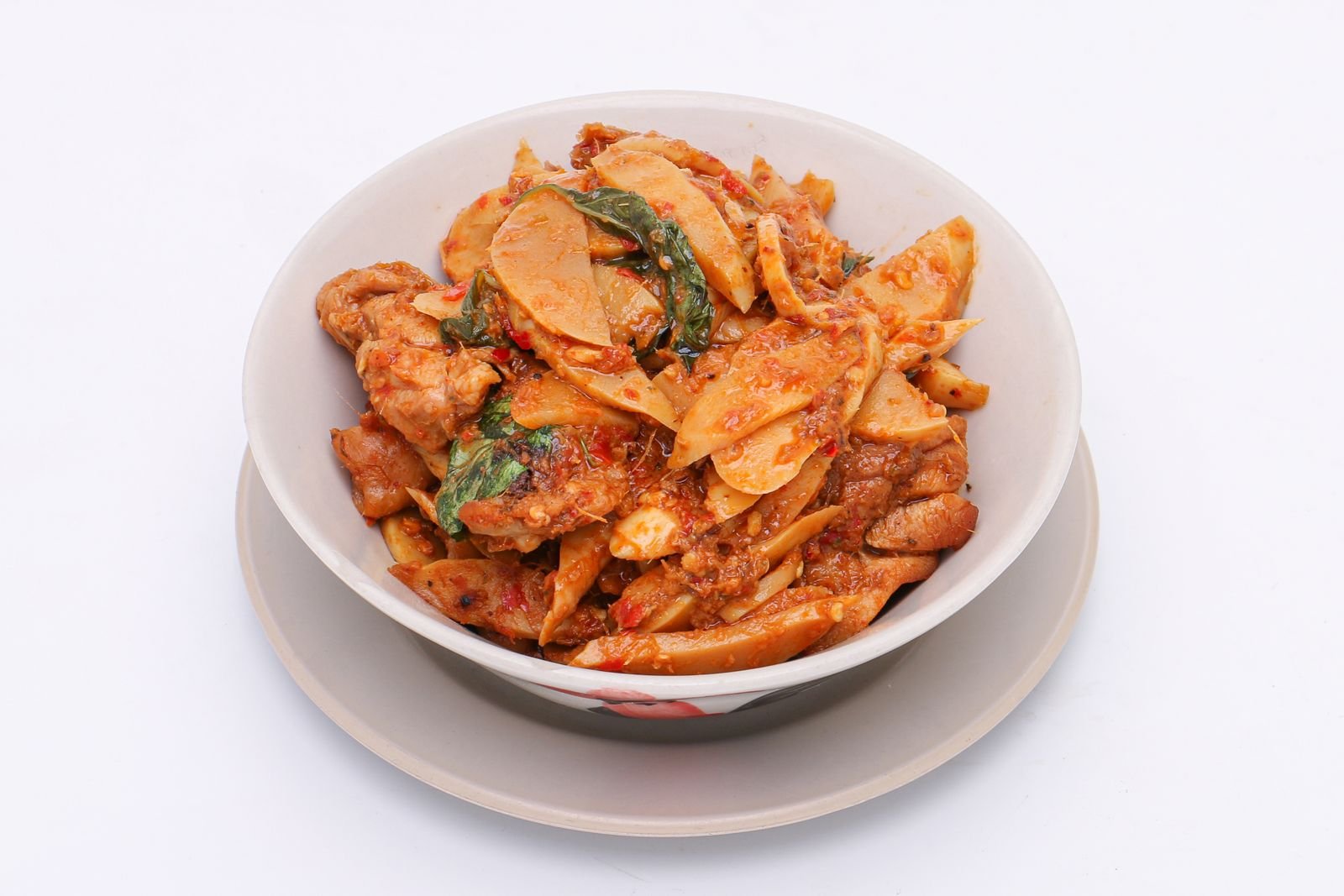
Khao pi prik khing is Thai comfort food at its punchiest: steamed jasmine rice topped with prik khing, a dry red curry of pork and long beans fried in curry paste until the oil turns red and fragrant. Kaffir lime leaves add a citrus lift, and a fried egg on top makes it a complete meal. It is fast, fiery and deeply satisfying.
The story behind Khao Pi Prik Khing
Prik khing is one of Thailand's oldest curry styles, and it breaks the rules of what most people expect from a Thai curry. There is no coconut milk, no soupy gravy — just curry paste fried in oil with meat and vegetables until everything is coated in a dry, fragrant sauce. The name means chilli and ginger, a nod to the paste's fiery, aromatic character. Served over rice, it is a street food and home cooking classic, the kind of dish you find at a market stall at lunchtime and in a family kitchen at dinner. Unlike the coconut curries most people know, prik khing has no milk at all — just paste, oil, meat and beans, fried until dry.
In Thailand this dish is everyday food, cooked fast and eaten fast. It shows up at market stalls, where the cook stir-fries a big wok of prik khing and spoons it over rice for workers on a lunch break, and in home kitchens, where it is a quick dinner when there is little time. The fried egg on top is part of the ritual — it turns a simple plate of rice and curry into a complete, satisfying meal. It is bold, direct and unapologetic, and that is exactly why Thai cooks love it.
What makes prik khing special is its intensity. Because there is no coconut milk to soften it, the curry paste speaks directly — the heat of the chillies, the warmth of the galangal and garlic, the sweetness of the palm sugar, the salt of the fish sauce. The long beans stay crisp against the tender pork, and the kaffir lime leaves add a citrus note that lifts the whole dish. It is bold, direct and unapologetic.
Cook this dish when you want Thai food that is fast and fiery. It suits a weeknight dinner when you have 30 minutes and a hungry table, or a lunch for friends who like their food with a kick. It also works well as part of a bigger Thai spread — the dry, punchy curry balances beautifully against a soupy tom yum or a fresh papaya salad.
- Prep time
- 15 mins
- Cook time
- 20 mins
- Total time
- 35 mins
- Servings
- 4 servings
- Calories
- 540
Ingredients
- 500 g pork belly or pork shoulder, sliced
- 2 cups jasmine rice, cooked
- 200 g yard-long beans, cut into 3 cm pieces
- 3 tablespoons prik khing curry paste
- 2 tablespoons vegetable oil
- 1 tablespoon fish sauce
- 1 tablespoon palm sugar
- 4 kaffir lime leaves, torn
- 2 red chillies, sliced
- 3 garlic cloves, minced
- 4 eggs, for frying
- Cucumber slices, to serve
- Fresh coriander leaves, to garnish
Instructions
- Cut the pork into thin slices, about 3 mm thick, and set aside. Thin slices cook fast and soak up the curry paste, while thick chunks stay chewy and never quite take on the flavour. If the pork is hard to slice, chill it in the freezer for 20 minutes first.
- Heat the oil in a wok over medium-high heat and fry the curry paste for 2 minutes, stirring constantly, until it smells rich and fragrant and the oil turns a deep red. You should hear a steady sizzle and see the paste darken slightly — this frying step is what wakes the paste up.
- Add the garlic and fry for 30 seconds, then add the pork and stir-fry for 4 to 5 minutes until the slices change colour and the edges brown.
- Add the palm sugar and fish sauce, then stir well so the sugar melts into the paste. The mixture should taste salty, sweet and hot all at once. If it tastes flat, add a little more fish sauce; if it tastes too sharp, add a pinch more sugar.
- Add the yard-long beans and the torn kaffir lime leaves, then stir-fry for 3 to 4 minutes. The beans should turn a brighter green and stay crisp — you want a snap when you bite them, not a soft, grey vegetable. Add a splash of water if the wok looks dry.
- Taste the curry and adjust it. Prik khing should be bold: salty from the fish sauce, sweet from the palm sugar, hot from the chillies, and fragrant from the lime leaves. The sauce should be almost dry, clinging to the pork and beans rather than pooling in the wok.
- Heat a little oil in a separate pan over medium-high heat and fry the eggs one at a time, sunny side up, until the whites are set and the edges turn golden and crisp. A fried egg with a runny yolk is the classic topping — the yolk runs into the rice and softens the heat of the curry.
- Spoon the hot jasmine rice into bowls and top with a generous portion of the prik khing. Lay a fried egg on top of each serving and scatter over the sliced red chillies and coriander leaves.
- Serve straight away with cucumber slices on the side. The cool cucumber is not a decoration — it is there to calm the heat between bites. Eat the rice, curry and egg together, so every spoonful has a little of each.
- Spoon any leftover prik khing into a container once it cools, and keep the rice separate so it does not go soggy. The curry reheats well in a hot wok with a splash of water, and a fresh fried egg makes it taste like new.
Pro tips
- Fry the curry paste properly before anything else goes in. Raw paste tastes harsh and one-note, while paste fried in oil until it smells fragrant and turns red gives the whole dish its depth. Have the rice cooked and kept warm before the wok gets hot, as prik khing cooks in 15 minutes and waits for no one.
- Keep the wok hot and do not crowd it. If the pork goes in all at once and the wok cools down, the meat steams instead of frying and the paste never clings to it properly.
- Cut the beans short — about 3 cm — so they cook evenly and are easy to eat with a spoon. Long pieces stay raw in the middle and are awkward to pick up with rice.
- Taste before you serve and trust your own palate. Curry pastes vary in salt and heat, so the fish sauce and sugar are guides, not rules — adjust until the balance tastes right to you.
- Cook the rice first and keep it warm. Prik khing cooks in 15 minutes, so have the rice ready and the eggs fried at the last minute, and the whole meal comes together hot.
Variations & serving ideas
Swap the pork for chicken thigh, sliced thin the same way — it cooks in the same time and takes on the paste beautifully. Prawns work well too; add them in the last 3 minutes so they stay tender. For a vegetarian version, use firm tofu and mushrooms, and fry the tofu first until golden so it holds its shape in the wok. Prawns work well too — add them in the last 3 minutes so they stay tender and juicy in the hot wok. Sliced beef works too, though it needs a minute longer in the wok to turn tender.
Turn the heat up or down to suit your table. A spoonful of extra curry paste lifts the fire, while a little more palm sugar softens it. If the paste you bought is very hot, use 2 tablespoons instead of 3 and add the third only if the dish needs it. A squeeze of lime at the end brightens everything. A squeeze of lime at the end brightens everything, and it is the easiest way to lift a curry that tastes flat. A little more palm sugar softens the heat, while a spoonful of extra paste lifts the fire for those who like it hot.
The dish is at its best over jasmine rice, but it also works over brown rice or a bed of rice noodles. A fried egg is the classic topping, but a soft-boiled egg or a spoonful of pickled vegetables works too. Cucumber slices and a few raw long beans on the side give the plate crunch and coolness. Brown rice works if you prefer it, though jasmine rice soaks up the dry curry paste best of all.
For a full Thai meal, pair it with a clear soup like tom yum or a light cucumber salad. The soup adds warmth and sourness, the salad adds freshness, and the prik khing brings the fire. A cold beer or a glass of iced tea is the traditional company, and a little fresh fruit after the meal cools the palate. The soup adds warmth and sourness, the salad adds freshness, and the prik khing brings the fire to the table. Keep the rice hot and the eggs fried at the last minute, so the whole meal comes together at once.
Getting it right
The key technique in prik khing is frying the curry paste in oil before anything else goes in. Heat the oil until it shimmers, add the paste, and stir it constantly for 2 minutes. You are looking for a change in smell — the paste goes from sharp and raw to rich and fragrant — and a change in colour, as the oil turns red and the paste darkens. This step is the difference between a flat curry and a great one. You will know the paste is ready when the oil around it turns red and the smell changes from sharp to rich.
Heat control runs through the whole cook. The wok needs to be hot enough that the pork sizzles the moment it lands, but not so hot that the paste burns — if the paste starts to catch, turn the heat down and add a splash of water. Keep the food moving with the spatula, and let the beans stay crisp by cooking them for just 3 to 4 minutes.
The most common mistakes are easy to fix. A curry that tastes raw means the paste was not fried long enough — give it a full 2 minutes next time, until it smells fragrant. A watery curry means too much water went in; prik khing should be almost dry, so let it cook uncovered until the sauce clings. Beans that turn soft and grey were cooked too long — add them later and keep the heat high.
Storing & reheating
Prik khing keeps in an airtight container in the fridge for up to 3 days, and the flavour deepens overnight as the paste settles into the pork. The beans will soften a little by day two, but the dish still tastes good. Cook fresh rice and fry fresh eggs when you serve it again. Cook fresh rice and fry fresh eggs when you serve it again, as the curry itself reheats far better than the rice does.
You can freeze the curry — without the rice and egg — for up to 2 months. Thaw it overnight in the fridge, then reheat it in a hot wok with a splash of water. Add a few fresh beans in the last 3 minutes to bring back the crunch, and serve over fresh rice with a fried egg.
Frequently asked questions
What is prik khing?
Prik khing is a Thai dry curry made by frying red curry paste in oil with meat and vegetables, with no coconut milk. The result is a bold, fragrant dish with almost no sauce, usually served over rice. A dry curry has no coconut milk to soften it, so the paste speaks directly and the flavour is more intense.
What are yard-long beans?
Yard-long beans are long, thin green beans used across Southeast Asia. They stay crisp when stir-fried and taste similar to green beans. Ordinary green beans, cut into short pieces, make a good substitute. Ordinary green beans work well too — cut them into short pieces so they cook evenly and stay crisp.
Is khao pi prik khing very spicy?
It is warm and punchy, but you control the heat. Use 2 tablespoons of paste instead of 3 for a milder version, and let the fried egg and cucumber cool the heat on the plate. The fried egg and cucumber on the plate are there to calm the heat, so a milder paste still tastes balanced.
Can I use chicken instead of pork?
Yes, chicken thigh sliced thin works beautifully and cooks in the same time. Prawns are also good — add them in the last 3 minutes so they stay tender and juicy. Chicken thigh sliced thin cooks in the same time as pork and takes on the curry paste just as well.
What is the difference between prik khing and red curry?
Red curry is cooked in coconut milk and has a soupy sauce. Prik khing has no coconut milk — the paste is fried in oil and the sauce is almost dry, so the flavour is more direct and intense. Red curry is soupy and creamy, while prik khing is dry and direct, with the paste clinging to every piece.
What should I serve with prik khing?
Jasmine rice is essential, with a fried egg on top and cucumber slices on the side. A clear soup like tom yum or a fresh papaya salad makes it a complete Thai meal. A spoonful of pickled vegetables or a few raw long beans on the side adds crunch and freshness to the plate.