Cemitas Poblanas Recipe
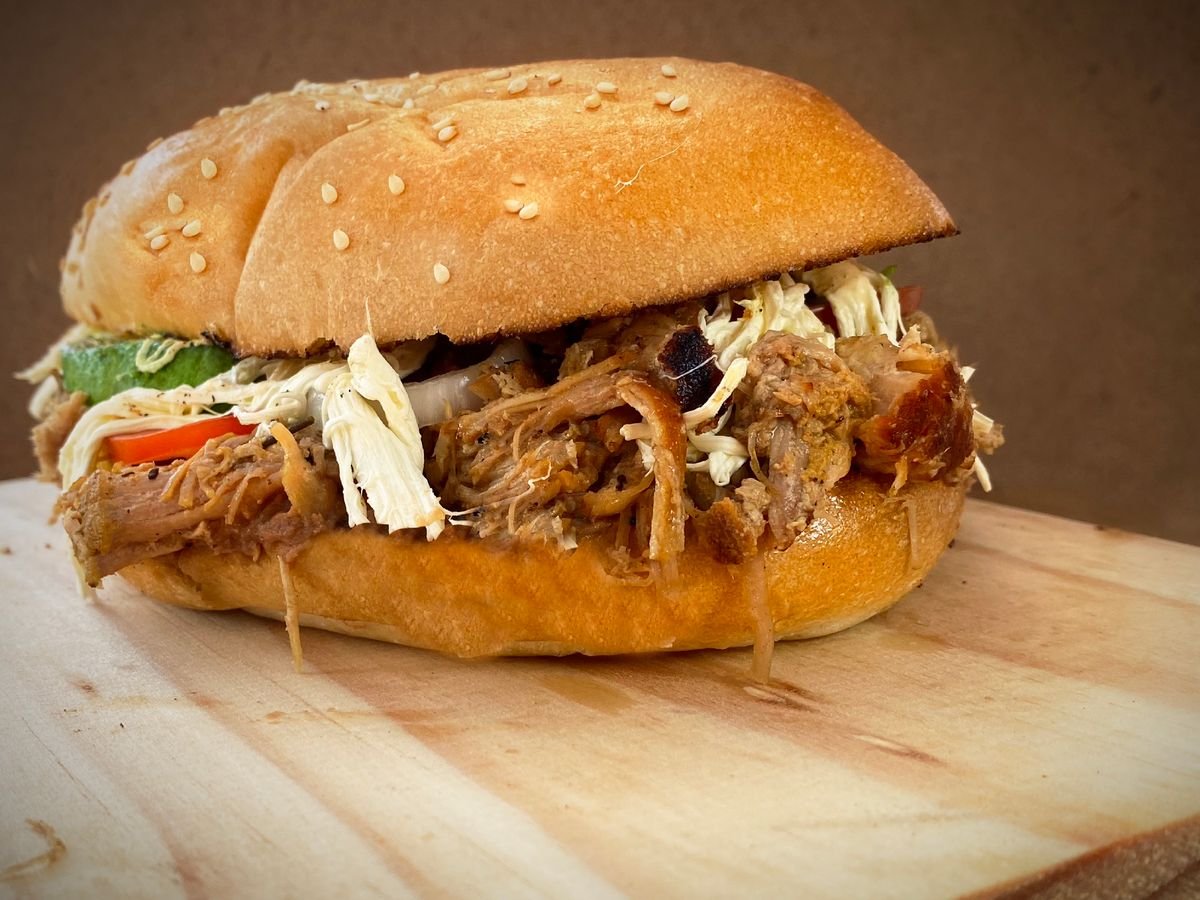
Cemitas poblanas are the great sandwiches of Puebla: a crusty sesame roll piled with crispy milanesa, creamy avocado, melty quesillo cheese, chipotle and the herbal bite of papalo. Every bite is crunchy, creamy, smoky and fresh at once. This is street food at its best, and it makes a mighty fine lunch at home too. It is messy in the best possible way, so keep plenty of napkins close.
The story behind Cemitas Poblanas
Cemitas poblanas come from Puebla, a city in central Mexico famous for its food. Puebla is the home of mole poblano, chiles en nogada and the cemita, a sandwich that locals take very seriously. The cemita roll itself has roots in the French bread brought to Mexico in the 1800s, but Puebla's bakers made it their own: a round roll with a crisp, crackly crust, a soft crumb and a shower of sesame seeds on top. It was built to hold a big, messy filling.
The sandwich grew up around Puebla's markets, where vendors piled the rolls with milanesa, avocado, quesillo and papalo for workers and shoppers. Each stall had its own balance of fillings, and regulars argued about whose cemita was the best. The sandwich became a point of city pride, as much a symbol of Puebla as its tiled churches and its mole. Today you will find cemita stalls on nearly every busy street in the city, and the smell of frying milanesa is part of the market air.
What makes a cemita special is the way the parts work together. The roll is crusty outside and soft inside, so it holds up to juicy fillings without falling apart. The milanesa brings crunch and savoury richness, the avocado brings cool creaminess, and the quesillo melts into strings that tie the whole sandwich together. Papalo adds a wild herbal note you will not find in any other sandwich, and the chipotle mayo brings a smoky heat that wakes up every bite.
This is a sandwich for a hungry lunch, and it suits an American table very well. In the US it works as a weekend lunch or a casual dinner, the kind of meal you eat with your hands and enjoy without fuss. It is also a great choice for a gathering, since you can fry the milanesa in batches and let everyone build their own sandwich. Set out the fillings, warm the rolls, and let the table do the rest.
- Prep time
- 25 mins
- Cook time
- 20 mins
- Total time
- 45 mins
- Servings
- 4 servings
- Calories
- 650
Ingredients
- 4 cemita rolls or sesame Kaiser rolls
- 400 g beef milanesa, pounded thin
- 100 g plain flour
- 2 large eggs, beaten
- 150 g fine breadcrumbs
- 1 teaspoon garlic powder
- 1 teaspoon smoked paprika
- 100 ml vegetable oil, for frying
- 2 ripe avocados, sliced
- 200 g quesillo or Oaxaca cheese, torn
- 4 tablespoons chipotle mayonnaise
- 1 small bunch of papalo or cilantro leaves
- 1 lime, cut into wedges
- 1 red onion, thinly sliced
Instructions
- Slice the beef into four thin cutlets and pound each one between sheets of cling film until it is about 5 mm thick. Season both sides with salt and pepper. Thin, even cutlets fry quickly and stay tender, so take a moment to get them uniform. Pat them dry with paper towels so the coating sticks well.
- Set up three shallow bowls: flour in the first, beaten eggs in the second, and breadcrumbs mixed with the garlic powder and smoked paprika in the third. Dredge each cutlet in flour and shake off the excess, then dip it in egg, letting the extra drip away. Press it firmly into the breadcrumbs, coating both sides evenly, and set it on a plate.
- Heat the vegetable oil in a large frying pan over medium-high heat until it shimmers and a pinch of breadcrumbs sizzles at once. The oil should be about 180°C. Lay the milanesa in the pan without crowding it, frying two at a time if needed. Cook for three minutes per side, until the crust is deep golden and crisp.
- Lift the milanesa onto a wire rack or a plate lined with paper towels and season lightly with salt while it is still hot. The crust should sound crisp when you tap it with a fork. Let the cutlets rest for two minutes so the juices settle, then slice each one into strips about 2 cm wide for easy stacking in the rolls.
- While the milanesa rests, slice the cemita rolls in half and warm them in a 180°C oven for five minutes, until the crust crackles and the inside is warm. A warm roll makes the cheese melt and keeps the sandwich from tasting cold and heavy. Spread chipotle mayonnaise generously over both cut sides.
- Lay the milanesa strips on the bottom half of each roll, overlapping them slightly. Tear the quesillo over the hot meat so it starts to melt into strings. The heat from the milanesa does the work here, so build quickly while everything is still warm from the pan.
- Add the avocado slices on top of the cheese, then scatter over the papalo leaves and sliced red onion. The avocado brings creaminess, the papalo brings a fresh herbal bite, and the onion adds crunch and a sharp edge. Squeeze a wedge of lime over the filling to brighten all the flavours at once.
- Place the top half of the roll on the filling and press down gently, just enough to hold everything together. Do not squash the sandwich flat or the avocado will squeeze out the sides. The finished cemita should feel hefty in your hand, with the crust crackling slightly as you press.
- Serve the cemitas right away, while the milanesa is still crisp and the cheese is still melting. Cut each sandwich in half on the diagonal if you like, and pass extra chipotle mayonnaise and lime wedges at the table. Eat with both hands and plenty of napkins, because a good cemita is gloriously messy.
Pro tips
- Pound the beef between cling film so it stays even and does not tear. A rolling pin works if you have no meat mallet, and a heavy pan makes a fair substitute in a pinch.
- Season the breadcrumbs, not just the meat. Garlic powder and smoked paprika in the crumb mixture give the milanesa flavour all the way through, instead of a bland crust around seasoned beef.
- Fry in batches and keep the oil hot between them. Crowding the pan drops the temperature and makes the coating greasy, so give each cutlet space and let the oil come back up to heat before the next batch.
- Warm the rolls before you build the sandwiches. A cold roll makes the whole cemita taste heavy, while a warm, crackly roll melts the cheese and lifts the sandwich into something special.
- Taste the avocado before you slice it. A ripe avocado should yield gently to pressure and taste buttery, not watery. If your avocado is underripe, add extra chipotle mayo and lime to make up for the missing creaminess.
Variations & serving ideas
The milanesa can be beef, pork or chicken, and each one changes the sandwich in a small way. Pork milanesa is juicier and a little sweeter, while chicken is lighter and cooks faster. You can also use a thick slice of ham with a fried egg for a breakfast cemita, or a grilled mushroom and cheese filling for a meat-free version that still tastes rich and satisfying.
The cheese and sauce are flexible too. Mozzarella works in place of quesillo, though it is milder and less stringy. For the sauce, try a plain chipotle in adobo mixed with mayonnaise for more heat, or a green salsa for a fresher, sharper bite. Some Puebla stalls add a spoonful of refried beans to the roll, which adds creaminess and helps the sandwich hold together.
Serve cemitas as a main meal with very little on the side. A simple cabbage slaw with lime, a few pickled jalapeños, or a bowl of fresh fruit is all you need. In the US they make a great weekend lunch or a casual Friday dinner, and they travel well to a picnic if you pack the parts separately and build the sandwiches when you arrive.
Pair the sandwich with a cold Mexican lager, a glass of agua fresca, or a tart lime soda. The cold drink cuts through the fried milanesa and the rich avocado. For a non-alcoholic option, a hibiscus agua de jamaica brings a sweet-tart note that matches the chipotle heat. Finish with fresh mango or pineapple, which cleanses the palate after such a rich sandwich.
Getting it right
The key skill in a cemita is the milanesa, and the secret is a thin cutlet and hot oil. Pound the beef evenly to 5 mm, because a thick spot stays chewy while a thin spot dries out. The oil should be hot enough that breadcrumbs sizzle the moment they touch it. If the oil is too cool, the coating drinks up the fat and turns greasy; if it is too hot, the crumbs burn before the meat cooks through.
Timing matters when you build the sandwich. Fry the milanesa last, after everything else is sliced and ready, so the meat goes straight from the pan into the roll while it is still hot. The heat melts the quesillo and warms the avocado slightly, and the whole sandwich comes together in minutes. If you fry the meat too early, it cools, the cheese never melts, and the sandwich tastes flat.
The most common mistake is a soggy roll. It happens when the sandwich sits too long after assembly, or when too much sauce soaks into the bread. Spread the chipotle mayo in a thin layer, build the sandwich just before eating, and use a crusty roll with a firm crust. The second common mistake is overloading the filling so the sandwich falls apart. Four or five elements, well balanced, beat a tower that collapses in your hands.
Storing & reheating
Cemitas poblanas are best eaten fresh, while the milanesa is crisp and the roll is warm. Once assembled, the sandwich softens within an hour as the avocado and chipotle mayo soak into the bread. If you need to store the parts, keep them separate: wrap the cooked milanesa in foil and refrigerate it for up to two days, and keep the avocado, cheese and papalo in their own containers.
To reheat the milanesa, warm it in a 200°C oven for eight minutes on a wire rack, which brings back some of the crunch. A microwave will make the coating soggy, so avoid it. Rebuild the sandwich with fresh avocado and a warmed roll. The chipotle mayonnaise keeps in the fridge for a week, and the rolls freeze well for a month if you wrap them tightly.
Frequently asked questions
What is a cemita roll?
A cemita is a round, crusty roll from Puebla, topped with sesame seeds and baked until the outside crackles. The crumb is soft and airy, which lets it hold a lot of filling without falling apart. Look for them in Mexican bakeries, or use a crusty sesame Kaiser roll as a close substitute.
What is papalo and can I skip it?
Papalo is a pungent Mexican herb with a flavour somewhere between cilantro, mint and citrus. It is essential to a true cemita, but it can be hard to find outside Mexico. Use a mix of fresh cilantro and a little chopped arugula if you cannot find papalo, and add a squeeze of lime.
Can I use chicken instead of beef milanesa?
Yes. Chicken milanesa is lighter and cooks faster, and it takes the same breadcrumb coating. Pound the chicken thin, bread it the same way, and fry it for three minutes per side. The sandwich will be a little less rich but just as satisfying, especially with extra avocado.
How do I keep the milanesa crispy?
Bread and fry the milanesa just before you build the sandwiches, because it loses its crunch quickly once it sits. You can prepare the avocado, cheese and chipotle mayo ahead of time, and warm the rolls in the oven. Assemble at the last minute so the bread stays crisp and the cheese melts from the heat of the meat.
What is quesillo cheese?
Quesillo is a mild, stringy Mexican cheese also sold as Oaxaca cheese. It melts into lovely strings when it meets hot milanesa. Find it in Mexican grocery stores or the cheese section of larger supermarkets. Mozzarella is the closest substitute, though it is less tangy than quesillo.
What should I serve with cemitas poblanas?
A classic cemita is a full meal on its own, so you need little else. A light side of pickled jalapeños, a simple cabbage slaw, or a bowl of fresh fruit balances the richness. A cold Mexican lager or a glass of agua fresca makes it feel like a proper Puebla lunch, even at your own kitchen table.