Oi Naengchae Recipe
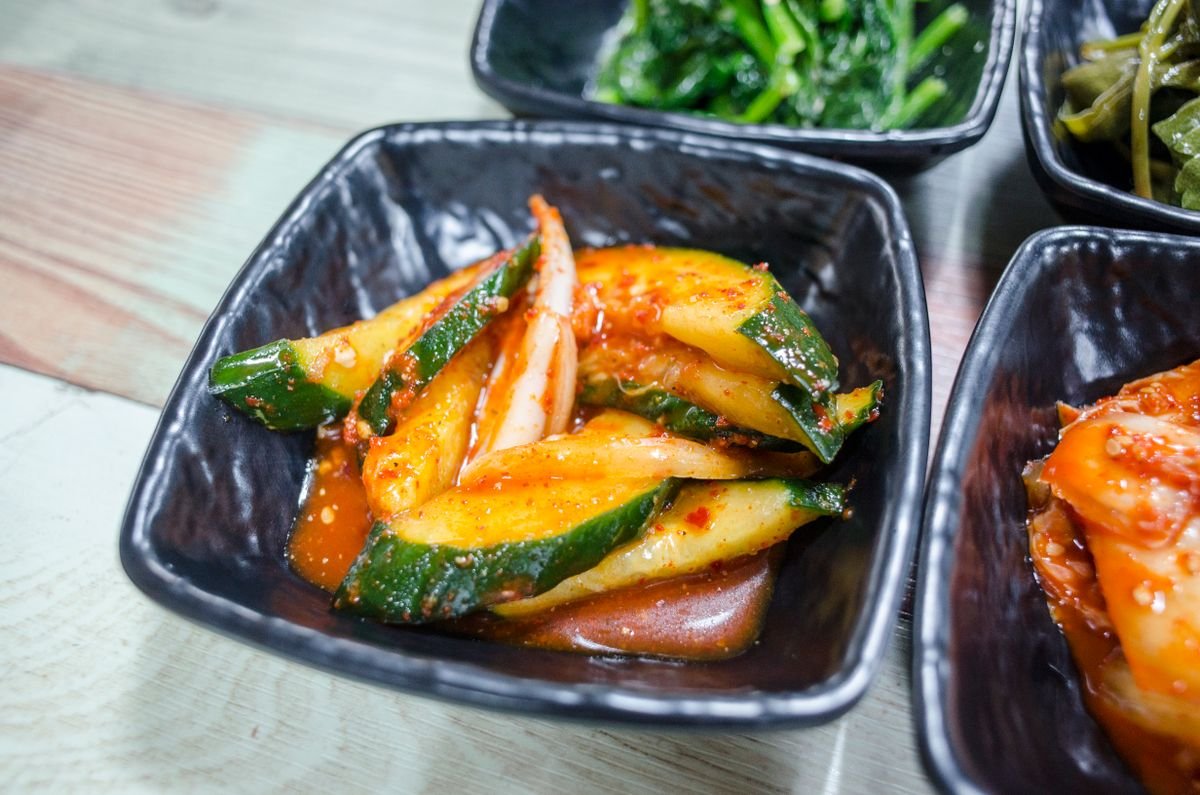
Oi Naengchae is a cool, crunchy Korean cucumber salad dressed in a sweet-tangy mustard sauce with a gentle, nose-tingling heat. The cucumber is salted and drained first, so it stays crisp under the glossy dressing. Light, refreshing, and ready in fifteen minutes with no cooking at all. It needs no cooking at all, just a sharp knife, a bowl and fifteen minutes of your time.
The story behind Oi Naengchae
Oi naengchae is one of Korea's banchan, the small side dishes that fill a Korean table alongside rice and a main course. Naengchae means chilled salad, and oi means cucumber. The dish grew out of the Korean habit of serving something cold, crisp and sharp next to rich or grilled food, a small plate that wakes up the palate between bites of something heavier.
In Korean meals, banchan are not an afterthought. A table might hold five or six of them, each in its own small dish: kimchi, bean sprouts, spinach, and a chilled salad like this one. They are refilled freely, shared by everyone, and meant to be eaten in small amounts with each mouthful of rice. Oi naengchae fits that role perfectly, since it is light, cool and quick to make, and it keeps well in the fridge for a few days.
What makes this version special is the mustard dressing. Korean mustard is sharper and hotter than the mild yellow kind, and it gives the sauce a clean, nose-tingling heat that is different from chilli. Mixed with vinegar, sugar and a little sesame oil, it coats the cucumber ribbons in a glossy, sweet-tangy layer that tastes bright and refreshing. The cucumber stays crisp because it is salted and drained first.
Make it when the weather is warm, when the main dish is rich or grilled, or when you want a quick side dish that needs no cooking. It suits a barbecue night, a picnic, or any Korean meal where the table needs something cool and crunchy. It takes fifteen minutes from start to finish, and most of that is waiting for the cucumber to drain. It keeps for a couple of days in the fridge, so make a double batch on Sunday and use it through the week beside grilled meat or rice bowls. The mustard in the dressing is the same kind used in Korean cold noodle dishes, where its sharp heat cuts through rich broths and chilled noodles. In summer, Korean markets sell cucumbers by the armful, and families buy them in bulk to make large bowls of naengchae for the whole week.
- Prep time
- 15 mins
- Cook time
- 0 mins
- Total time
- 15 mins
- Servings
- 4 servings
- Calories
- 90
Ingredients
- 2 large cucumbers, about 400 g
- 1 teaspoon salt
- 1 tablespoon Korean mustard powder
- 1 tablespoon warm water
- 2 tablespoons rice vinegar
- 1 tablespoon sugar
- 1 teaspoon sesame oil
- 1 teaspoon soy sauce
- 1 garlic clove, finely grated
- 1 spring onion, thinly sliced
- 1 teaspoon toasted sesame seeds
- 1/2 red chilli, deseeded and thinly sliced
Instructions
- Slice the cucumbers in half lengthways, scoop out the soft, watery seeds with a spoon, and cut the halves into thin half-moon slices about 3 mm thick. Removing the seeds matters, because they hold most of the water and would make the salad soggy within minutes of dressing it.
- Toss the cucumber slices with the salt in a bowl and leave them for 10 minutes. You will see beads of water form on the surface and a small pool gather at the bottom of the bowl. This step draws out moisture and seasons the cucumber from the inside, so it stays crisp and tastes seasoned all the way through.
- While the cucumber rests, mix the mustard powder with the warm water in a small bowl and leave it for 5 minutes. The paste will thicken and the sharp, nose-tingling aroma will develop as it sits. This short rest is what gives the dressing its characteristic mustard heat, so do not skip it.
- Stir the rice vinegar, sugar, sesame oil, soy sauce and grated garlic into the mustard paste, whisking until the sugar dissolves and the dressing looks smooth and glossy. Taste it: it should be sharp, sweet and savoury at once, with the mustard heat arriving at the back of your nose.
- Squeeze the salted cucumber gently in handfuls to press out the liquid, then pat the slices dry with kitchen paper. Do not rinse them, or you will wash away the seasoning. The slices should feel firm and slightly bendy, not wet or limp, and the bowl should be almost dry.
- Tip the cucumber into a clean bowl and pour the dressing over it. Add the spring onion and chilli, then toss everything gently with your hands or tongs, coating each slice without crushing it. The dressing should cling to the cucumber in a thin, shiny layer.
- Cover the bowl and chill it in the fridge for at least 10 minutes before serving, so the flavours settle and the cucumber turns cold and refreshing. It can be made a few hours ahead, though the cucumber softens a little over time, so it is best within the first day.
- Scatter the toasted sesame seeds over the top just before serving and give the salad one last gentle toss. Serve it cold, in a small bowl, as part of a larger Korean meal or alongside grilled meat. The first bite should be cold, crisp, sharp and sweet all at once. Chill the serving bowl in the fridge while you work, so the salad stays cold from the first bite to the last. A pair of kitchen tongs tosses the salad more gently than a spoon, which can bruise the thin slices.
Pro tips
- Remove the cucumber seeds, because they hold most of the water and turn the salad soggy within minutes of dressing. A teaspoon scoops them out cleanly, and the firm flesh that is left behind is the best part.
- Salt the cucumber and let it drain for a full 10 minutes, since skipping this step leaves a watery salad with dressing that slides off. Set a timer so you do not rush it, since the last few minutes do the most work.
- Mix the mustard powder with warm water and rest it for 5 minutes, because the sharp heat only develops once the powder hydrates. Cold water works too, though it takes a few minutes longer for the heat to bloom.
- Dress the salad just before serving if you want maximum crunch, though a short chill of 10 minutes helps the flavours settle nicely.
- Taste the dressing before it meets the cucumber, and adjust the sugar or vinegar, since cucumbers vary in sweetness and the balance is everything. Use a mandoline for even slices if you have one, since uniform slices salt and drain at the same speed.
Variations & serving ideas
You can swap the cucumber for thinly sliced courgette, which needs the same salting step, or for a mix of cucumber and julienned carrot for colour and extra crunch. Some cooks add thin strips of cooked squid or jellyfish for a traditional naengchae feel, though the plain cucumber version is the most common at home. A few slices of Asian pear add a gentle sweetness that suits the mustard dressing.
If you cannot find Korean mustard powder, English mustard powder is the closest swap, with a similar sharp heat. Dijon mustard works too, though it is milder and creamier, so use a little more and add a splash of extra vinegar. Leave the chilli out if you want the mustard to be the only heat, or add a pinch of gochugaru for a gentle chilli warmth as well.
Serve oi naengchae as one of several banchan alongside rice, soup and a grilled main dish. It is especially good with Korean barbecue, where its cool crunch balances the smoky, fatty meat. It also works as a light salad on its own, or as a topping for cold noodles on a hot day.
It pairs well with a cold lager, a glass of iced barley tea, or a light, crisp white wine. The sharp mustard dressing likes something cold and clean alongside it, and the low richness of the salad means the drink can be simple. Avoid anything heavy or sweet, which would fight the bright, tangy flavour of the dressing. A spoonful of toasted sesame oil drizzled over the top just before serving adds a nutty aroma that lifts the whole salad. For a prettier plate, arrange the cucumber slices in overlapping rows and scatter the chilli and sesame seeds over the top like a garnish. Thin strips of red pepper add sweetness and colour, while a few drops of honey in place of sugar give the dressing a rounder, softer sweetness. A few slices of radish add peppery crunch, while a spoonful of sesame seeds stirred through the dressing gives it a nuttier flavour. For a party, serve the salad in small cups with a chilli slice on top, so guests can help themselves without a serving spoon.
Getting it right
The key technique is salting and draining the cucumber. Salt pulls water out of the cucumber cells, which does two things: it seasons the flesh all the way through, and it firms up the texture so the slices stay crisp under the dressing. Ten minutes is enough for thin slices. Squeezing them gently afterwards removes the last of the liquid without crushing the flesh, and patting them dry stops the dressing from watering down.
Heat control does not apply here, since nothing is cooked, but temperature matters in a different way: the salad must be served cold. Chilling it for even ten minutes tightens the cucumber and lets the mustard, vinegar and sugar settle into a balanced dressing. A warm salad tastes flat and the mustard heat feels harsh, while a cold one tastes bright and refreshing.
The most common mistake is skipping the salting step, which leaves a watery bowl with limp cucumber and a dressing that pools at the bottom. Another mistake is using too much mustard powder, which makes the dressing bitter and overpowering. Start with the amount given and add more only if you like real heat. If the dressing tastes too sharp, a little more sugar and a splash of water will soften it without losing the mustard character. If you double the recipe, salt the cucumber in two batches, since a crowded bowl does not drain evenly and some slices stay watery. Taste a slice of cucumber after salting to check the salt level before you add the dressing, since some cucumbers need a quick rinse if they taste too salty.
Storing & reheating
Store oi naengchae in a sealed container in the fridge for up to 3 days, though it is at its best within the first day. The cucumber will soften gradually and release a little more water, so give it a gentle toss and drain any liquid from the bottom of the container before serving. Do not leave it at room temperature for more than 2 hours.
Freezing is not suitable, because cucumber turns soft and watery when thawed and the texture that defines this dish is lost. Make only as much as you will eat within a few days, since the ingredients are cheap and the preparation takes minutes. If you have leftovers, they make a good topping for cold noodles or a rice bowl the next day, where the softer texture matters less.
Frequently asked questions
What is oi naengchae?
Oi naengchae is a Korean chilled cucumber salad, one of the small banchan side dishes served with rice and a main course. Thin cucumber slices are salted, drained and tossed in a sweet-tangy dressing made with mustard, vinegar, sugar and sesame oil.
Can I make oi naengchae without mustard?
You can, though the mustard is what makes it distinctive. Leave it out and add a little extra vinegar and a pinch of gochugaru for warmth, or use a teaspoon of Dijon mustard for a milder version. The salad will still be refreshing, just less sharp.
Why do you salt the cucumber first?
Salt draws water out of the cucumber, which keeps it crisp and stops the dressing from turning watery. It also seasons the flesh all the way through. Without this step, the salad goes soggy within minutes and the dressing pools at the bottom of the bowl.
How long does oi naengchae keep in the fridge?
It keeps for up to 3 days in a sealed container, but it is best within the first day, when the cucumber is still crisp. The slices soften gradually, so drain any liquid from the container and give it a gentle toss before serving leftovers.
Is oi naengchae spicy?
It has a sharp, nose-tingling heat from the mustard rather than a chilli burn, plus a gentle warmth from the sliced chilli. Leave the chilli out and use less mustard powder if you want it mild, or add more chilli for a spicier version.
What do I serve with oi naengchae?
Serve it as one of several small side dishes with rice, soup and a grilled main, especially Korean barbecue. It also works on its own as a light salad, or spooned over cold noodles on a hot day for a refreshing, crunchy topping.