Pajeon Recipe
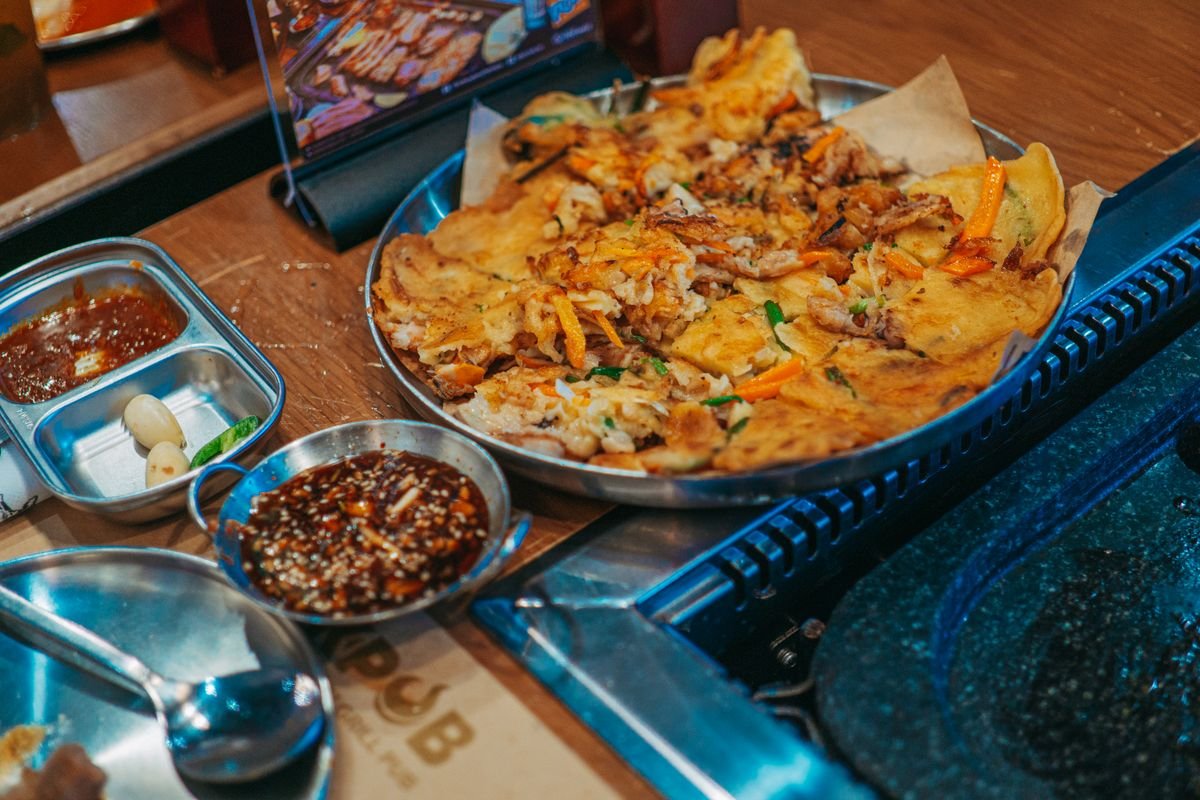
Pajeon is a crisp-edged Korean pancake loaded with spring onions and seafood, with a soft, savoury middle and a golden, lacy crust. The batter is thin, the onions form the base, and a sharp soy and vinegar sauce cuts through the richness. Make it on a rainy evening and serve it hot from the pan. Each pancake takes only a few minutes in the pan, so cook them one after another and serve them hot.
The story behind Pajeon
Pajeon belongs to the family of jeon, the savoury pancakes that have been part of Korean cooking for centuries. The name comes from pa, meaning spring onion, and jeon, meaning pancake. Cooks made them from whatever was at hand: a flour batter, a pile of spring onions, and seafood or meat from the market. Over time the seafood version became the most famous, with prawns, squid and oysters folded into the batter.
In Korea, pajeon is food for rainy days and shared tables. There is a saying that the sound of rain makes people crave the sizzle of a pancake in the pan, and many Koreans still reach for the frying pan when the weather turns. It is also a classic anju, the food served with drinks, so it turns up at gatherings where friends share makgeolli, the milky rice wine that pairs with it so well.
What makes this version special is the balance of crisp and soft. The batter is thin enough to let the spring onions stay the star, and the pan must be hot enough to set the edges into a golden, lacy crunch while the middle stays tender. A good pajeon holds together when you cut it, but shatters a little at the edges when you bite. The dipping sauce, sharp with soy and vinegar, cuts through the richness of the egg and oil.
Cook it when rain is falling, when friends are coming over, or when you want a quick, satisfying snack that feels like a treat. It works as a starter, a light lunch with a bowl of soup, or the centre of a casual evening meal. Once the batter is mixed, each pancake takes only a few minutes, so you can cook them one after another and serve them hot. Keep the batter in the fridge for up to a day, so you can fry a fresh pancake whenever someone asks for one. Keep a bag of frozen mixed seafood in the freezer, so pajeon is never more than twenty minutes away. Rainy-day cooking is a real tradition in Korea, and the sound of batter hitting a hot pan is part of the comfort, almost as much as the eating.
- Prep time
- 15 mins
- Cook time
- 15 mins
- Total time
- 30 mins
- Servings
- 4 servings
- Calories
- 420
Ingredients
- 150 g plain flour
- 2 tablespoons rice flour
- 1 egg, beaten
- 200 ml cold water
- 1/2 teaspoon salt
- 1 bunch spring onions, about 200 g
- 150 g mixed seafood, prawns and squid
- 1 red chilli, thinly sliced
- 4 tablespoons vegetable oil
- 3 tablespoons soy sauce
- 1 tablespoon rice vinegar
- 1 teaspoon sesame oil
- 1 teaspoon sugar
- 1 teaspoon toasted sesame seeds
Instructions
- Whisk the plain flour, rice flour, salt and egg in a bowl, then pour in the cold water a little at a time, stirring until the batter is smooth and about as thick as pouring cream. Lumps will show up as pale spots in the pancake, so stir patiently. Leave the batter to rest for 10 minutes while you prepare the rest.
- Trim the spring onions and cut them into lengths of about 10 cm, keeping the white and green parts together. Slice the squid into rings and cut the prawns in half lengthways if they are large. Pat the seafood dry with kitchen paper, since wet seafood makes the batter soggy and the pancake falls apart.
- Make the dipping sauce by stirring the soy sauce, rice vinegar, sesame oil, sugar and sesame seeds in a small bowl until the sugar dissolves. Taste it and add a little more vinegar if you like it sharper. Set the sauce aside in small bowls so it is ready when the pancakes come out of the pan.
- Heat 1 tablespoon of oil in a large frying pan over medium-high heat until it shimmers. Lay half the spring onions in the pan in a neat layer, pointing them all the same way, and scatter half the seafood and a few chilli slices over the top. The spring onions should cover the pan like a raft.
- Pour half the batter evenly over the spring onions and seafood, tilting the pan so it spreads to the edges. Let it cook undisturbed for 3 to 4 minutes, until the underside is golden and crisp and the edges look set. You should hear a steady sizzle and see the edges turn golden brown.
- Slide a wide spatula underneath and flip the pancake in one confident motion. If it feels too heavy, slide it onto a plate first, then flip the plate over the pan. Cook the second side for 3 minutes until it is golden and the seafood is cooked through and firm.
- Lift the pancake onto a board and repeat with the remaining batter, spring onions, seafood and oil. Let each pancake rest for 1 minute before cutting, so the middle sets and the slices hold their shape instead of sliding apart.
- Cut each pancake into 8 wedges or squares and arrange them on a warm plate. Serve at once with the dipping sauce, while the edges are still crisp and the middle is soft and steaming. Pajeon waits for nobody, so bring it to the table the moment it is cut. Keep the dipping sauce in small bowls on the table, so everyone can dip their own slices as they eat.
Pro tips
- Keep the batter thin, because a thick batter swallows the spring onions and turns the pancake into a heavy, doughy slab. It should pour off a spoon in a thin ribbon, not fall in thick blobs.
- Lay the spring onions in one neat layer before adding batter, since a tidy raft of onions gives the pancake its structure and its signature look. Trim the roots neatly so the onions lie flat and the pancake cooks evenly.
- Use a pan that is hot but not smoking, and do not move the pancake while the first side sets, or the crisp crust will never form. Resist the urge to peek underneath, since lifting the edge lets the steam escape.
- Pat the seafood dry before it goes in, because water in the pan steams the batter and makes the middle soggy instead of tender.
- Cut the pancake with a sharp knife or kitchen scissors, and serve it straight away, since the crisp edges soften within minutes. Warm the serving plate before you plate the pancake, since a cold plate cools the crisp edges fast.
Variations & serving ideas
You can make a vegetarian pajeon by leaving out the seafood and adding sliced mushrooms, shredded carrot and a few chives. The batter and method stay exactly the same, and the pancake still turns out crisp and satisfying. Kimchi pajeon is another popular version: chop a handful of well-fermented kimchi and fold it into the batter for a tangy, spicy twist.
Swap the prawns and squid for oysters, mussels or small pieces of white fish, all of which cook quickly in the pan. Some cooks add a little grated potato to the batter, which makes the pancake extra crisp at the edges. If you like it spicier, stir a spoonful of gochujang into the dipping sauce, or add sliced fresh chilli to the batter itself.
Serve pajeon as part of a Korean spread with a bowl of rice, a simple soup and a few small side dishes. It also works on its own as a light lunch, with a cold beer or a glass of makgeolli alongside. Leftovers make a good next-day snack if you reheat them in a dry pan, though the crisp edges will never be quite as good as fresh.
It pairs beautifully with makgeolli, the cloudy Korean rice wine, which is the classic partner for pancakes on a rainy day. A cold lager works just as well, and a light, dry white wine suits it if you are serving pajeon as a starter at a dinner party. Keep the drink cold and the pancake hot, and the contrast is half the pleasure. For a heartier meal, serve the pancake with a bowl of kimchi jjigae, a spicy kimchi stew that pairs beautifully with the crisp, savoury pancake. A simple seaweed soup on the side keeps the meal light while the pancake provides the crunch. Add a spoonful of kimchi juice to the batter for a pink tint and a tangy flavour that regular pajeon never has. A seafood-free version with extra mushrooms and a handful of chives is just as satisfying, and it cooks in the same time. Serve the pancake with a cold cucumber salad on the side, since the cool crunch balances the hot, savoury pancake beautifully.
Getting it right
The key technique is the spring onion raft. Lay the onions side by side in the pan first, then pour the batter over them, so the onions form the base of the pancake rather than floating in a sea of batter. This gives the pancake its structure and its look: long green strips running through every slice. If you stir the onions into the batter instead, they clump together and the pancake cooks unevenly.
Heat control is a steady medium-high. Too hot and the outside burns before the seafood cooks; too cool and the pancake soaks up oil and turns greasy. You want a constant, confident sizzle, with the edges setting within a minute of the batter hitting the pan. Listen for it: a lively crackle means the crust is forming, while silence means the pan is too cool.
The most common mistake is flipping too early. If you try to turn the pancake before the first side has set, it folds and tears. Wait until the edges look dry and golden and the pancake slides freely when you shake the pan. Another mistake is overloading the pan with seafood, which weighs the pancake down and stops it crisping. A single layer of onions and a modest scattering of seafood is all you need. A cast iron pan holds heat well and gives an especially crisp crust, though it needs a little more oil than a non-stick pan. If the pancake sticks, slide a thin spatula under the edges first, then work toward the centre before you lift it.
Storing & reheating
Store leftover pajeon in a sealed container in the fridge for up to 2 days, with baking paper between layers so the slices do not stick. The crisp edges will soften in the fridge, but a quick reheat brings back much of the texture. Do not leave it at room temperature for more than 2 hours, especially since it contains seafood.
Freeze cooked pajeon for up to 1 month in a sealed bag, with paper between slices. Thaw in the fridge overnight. Reheat in a dry frying pan over medium heat for 2 to 3 minutes per side, until hot and crisp again. A hot oven at 200 C for 8 minutes also works. Avoid the microwave, since it makes the pancake soft and rubbery instead of crisp.
Frequently asked questions
What is the difference between pajeon and haemul pajeon?
They are the same dish by different names. Haemul means seafood, so haemul pajeon is simply pajeon made with seafood. A plain pajeon may use only spring onions, while the seafood version adds prawns, squid or oysters to the batter.
Can I make pajeon without seafood?
Yes. Leave the seafood out and add sliced mushrooms, shredded carrot and extra spring onions. The pancake is just as good, and the method does not change. Many Korean homes make a plain spring onion version as an everyday snack.
Why is my pajeon soggy in the middle?
The batter was probably too thick, the pan too cool, or the seafood too wet. Keep the batter thin, heat the pan until the oil shimmers, pat the seafood dry, and let the first side set fully before flipping so the middle has time to cook through.
What do I serve with pajeon?
A small bowl of soy and vinegar dipping sauce is essential. Add a bowl of rice and a simple soup for a light meal, or serve it as a shared starter with other Korean dishes. Makgeolli, the cloudy rice wine, is the classic drink alongside.
Can I use frozen seafood for pajeon?
Yes, and it works well. Thaw it completely, drain it, and pat it very dry with kitchen paper before adding it to the pan. Wet seafood releases water into the batter and stops the pancake from crisping up properly. Squeeze the thawed seafood gently in kitchen paper to remove the last of the water.
How do I flip a large pajeon without breaking it?
Wait until the first side is fully set and golden, then slide the pancake onto a large plate, place the pan upside down over it, and flip the two together. A wide spatula also works if you support the pancake firmly and move in one quick, confident motion.