Japchae Bap Recipe
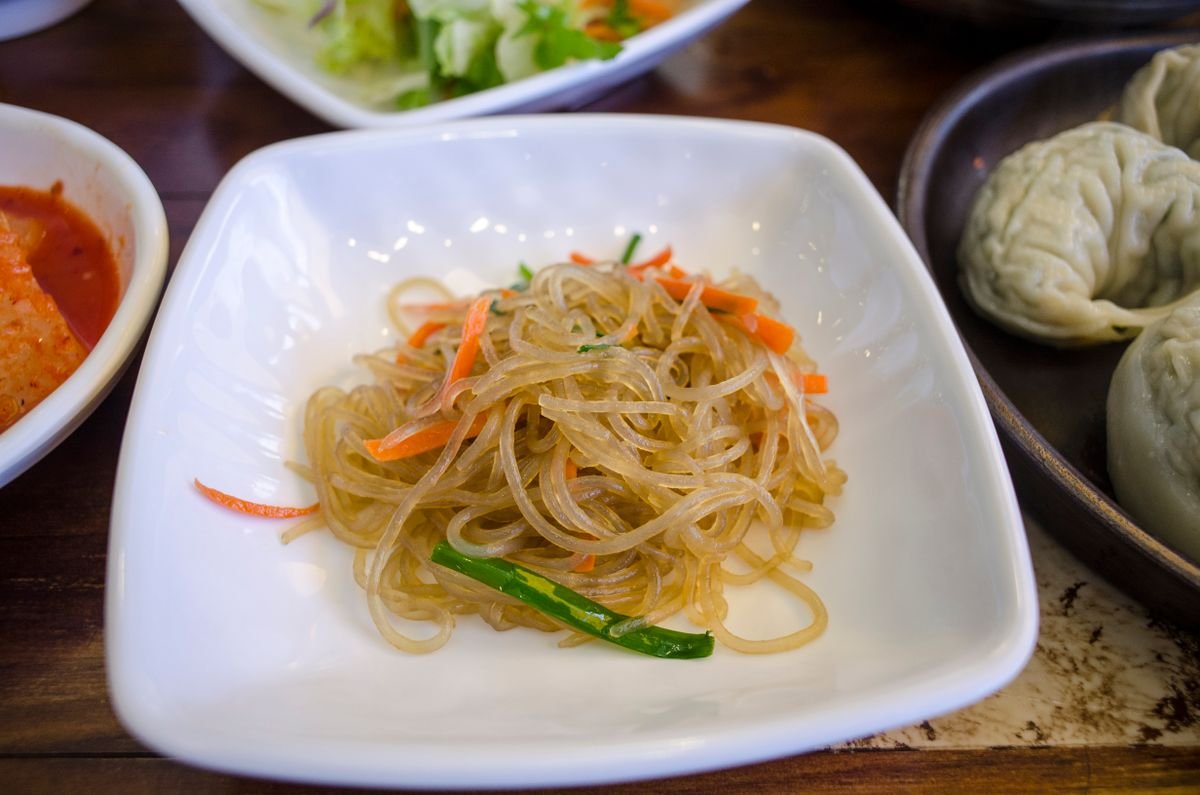
Japchae bap takes Korea's beloved glass noodle dish and turns it into a full meal. Sweet potato noodles, stir fried with beef, spinach, mushrooms and peppers, are piled over a bowl of warm rice. The noodles are glossy and chewy, the vegetables stay crisp, and the soy-sesame sauce ties everything together with a gentle sweetness. It is colourful, filling and gently sweet, and it works just as well for a packed lunch as for dinner.
The story behind Japchae Bap
Japchae dates back to the Joseon dynasty, when it was first served at a royal banquet in the seventeenth century. The original version had no noodles at all: it was a stir fry of vegetables and meat, made to impress the king. Sweet potato noodles arrived later, and they changed the dish completely, giving it the chewy, glassy texture that people now love. The noodles are made from sweet potato starch, which is why they turn clear when cooked and hold their springy bite far longer than wheat noodles.
The dish spread from the royal court to ordinary homes, and it became a fixture of Korean celebrations. Japchae turns up at birthdays, at Chuseok, the harvest festival, and at any family gathering where a special dish is needed. It is the kind of food that takes a little effort, so making it is a way of showing care for the people you feed. Each family has its own balance of soy, sugar and sesame, and the dish is often made in a large batch so there is plenty to share.
What makes it special is the texture of the noodles. Dangmyeon, the sweet potato starch noodles, are grey and stiff when dry, but once cooked they turn clear, slippery and springy. They soak up the soy and sesame sauce without going soft, and they hold their chew even as the bowl cools. The vegetables add colour and crunch, and the beef brings a savoury depth. Sesame oil is the quiet star: a spoonful gives the whole dish a warm, nutty smell that makes it taste like a celebration even on an ordinary evening.
Japchae bap, served over rice, is the everyday version. It turns the celebration dish into a complete, filling meal, and it is a common choice for a quick lunch or a weeknight dinner. Cook it when you want something comforting that still feels a little special, and serve it in deep bowls with kimchi on the side.
- Prep time
- 20 mins
- Cook time
- 20 mins
- Total time
- 40 mins
- Servings
- 4 servings
- Calories
- 520
Ingredients
- 200 g sweet potato glass noodles (dangmyeon)
- 200 g beef sirloin, thinly sliced
- 2 tablespoons light soy sauce
- 1 tablespoon sugar
- 2 tablespoons sesame oil, plus 1 tablespoon toasted sesame seeds, to serve
- 3 garlic cloves, finely chopped
- 1 medium onion, thinly sliced
- 1 red pepper, deseeded and thinly sliced
- 1 carrot, peeled and cut into thin matchsticks
- 150 g shiitake mushrooms, thinly sliced
- 100 g baby spinach
- 2 spring onions, cut into 3 cm pieces
- 1 tablespoon vegetable oil
- 4 bowls steamed short-grain rice, to serve
Instructions
- Soak the glass noodles in warm water for 20 minutes, until they turn soft and pliable. Drain them and cut them into shorter lengths with kitchen scissors, about 15 cm each, so they are easy to eat with chopsticks.
- Mix the beef with 1 tablespoon of the soy sauce, 1 teaspoon of the sugar, 1 teaspoon of the sesame oil and half the garlic. Leave it for 10 minutes while you prepare the vegetables, so the meat takes on the seasoning. Slice the beef thinly across the grain, so it stays tender and cooks in just a couple of minutes.
- Bring a pot of water to a boil and cook the noodles for 5 to 6 minutes, until they turn clear and springy. Drain them and toss at once with 1 tablespoon of the sesame oil, so they do not stick together while you cook the rest.
- Blanch the spinach in the same boiling water for 30 seconds, until it wilts. Drain it, squeeze out the water, and toss with a pinch of salt and a few drops of sesame oil. Set aside.
- Heat the vegetable oil in a wide frying pan or wok over high heat. Add the beef and spread it out in a single layer. Cook for 2 to 3 minutes, until it browns at the edges and smells savoury, then lift it out and set aside.
- Add the onion, carrot, pepper and mushrooms to the same pan and stir fry for 3 to 4 minutes. The vegetables should soften slightly but stay crisp, and the mushrooms should shrink and turn golden at the edges.
- Return the beef to the pan, add the noodles, the remaining soy sauce, the remaining sugar and the rest of the garlic. Toss everything together over medium heat for 2 to 3 minutes, until the noodles are glossy and evenly coated. Keep the heat at medium and toss with tongs, lifting the noodles high so the sauce falls through every strand.
- Fold in the spinach and spring onions and toss once more. Taste and adjust the seasoning: it should be gently sweet, salty and nutty, with the sesame coming through clearly. Add a splash more soy sauce if it tastes flat.
- Spoon warm rice into deep bowls and pile the japchae on top. Scatter over the toasted sesame seeds and serve at once, with kimchi on the side and extra soy sauce on the table.
Pro tips
- Soak the noodles until they bend easily, but do not over-soak them. Noodles left in water too long turn mushy when boiled, so check them after 15 minutes and drain as soon as they are pliable.
- Toss the cooked noodles in sesame oil at once. They stick together fast as they cool, and a coating of oil keeps them separate while you cook the vegetables. A wide bowl works better than a deep pot, since the noodles cool evenly and stay separate.
- Cut the noodles shorter with scissors before cooking. Long, tangled noodles are hard to serve and harder to eat, and a quick snip makes the whole bowl easier to handle.
- Cook the vegetables in one batch but do not crowd the pan. If the pan is too full, the vegetables steam instead of frying, and you lose the crisp edges that make the dish work. If the pan is small, cook the vegetables in two batches so they fry rather than steam.
- Taste the finished noodles before serving. The balance of sweet, salty and nutty is personal, so adjust the soy sauce and sugar to your liking while the pan is still warm.
Variations & serving ideas
For a vegetarian version, leave out the beef and add extra mushrooms and a block of firm tofu, cut into strips and fried until golden. The tofu soaks up the sauce and adds protein, while the mushrooms bring a deep, savoury flavour that fills the gap. Press the tofu well first, so it fries up crisp instead of steaming, and season it the same way as the beef.
Swap the beef for thinly sliced chicken or pork if you prefer. Both cook the same way, though pork needs a minute longer. A fried egg on top is a classic addition: the runny yolk mixes into the noodles and makes the whole bowl richer.
Use whatever vegetables you have. Courgette, mange tout and bean sprouts all work well, added at the same stage as the peppers. Keep the pieces thin and even, so they cook in the same time and stay crisp. Bean sprouts need only a minute in the pan, so add them last and toss them briefly to keep their crunch.
Serve it with kimchi and a bowl of soup, such as a light seaweed soup, for a full Korean meal. A cold barley tea or a light lager pairs well. The dish also works as a packed lunch: it holds up well at room temperature and tastes just as good cold. A small bowl of kimchi and a cup of barley tea complete the meal, and the leftovers make a fine lunch the next day.
Getting it right
The key technique is cooking each part separately. The noodles, the beef and the vegetables all need different times, and cooking them apart keeps each one at its best. The noodles stay springy, the beef stays browned, and the vegetables stay crisp. Only at the end do they come together in the pan. Keep the cooked noodles in a wide bowl, not a deep pot, so they cool evenly and do not clump into a solid mass.
Heat and timing matter for the beef. The pan must be hot enough that the meat sizzles when it lands, and it needs 2 to 3 minutes in a single layer to brown properly. If you stir it too soon, it steams and turns grey. Let it sit, then turn it once and lift it out. Cut the beef across the grain into thin strips, so it stays tender even after a few minutes in the hot pan.
The common mistake is overcooking the noodles. Dangmyeon go from springy to soft in under a minute, so taste them from 5 minutes onward and drain them the moment they turn clear and chewy. If the finished dish tastes bland, it usually needs more soy sauce or a little more sesame oil. If the noodles look dry, add a splash of hot water and toss again, which loosens the sauce without watering it down.
Storing & reheating
Leftovers keep in a sealed container in the fridge for up to 3 days. The noodles will firm up as they cool, which is normal. Reheat gently in a pan with a splash of water or soy sauce, tossing until the noodles loosen and turn glossy again. Store the rice separately from the noodles, so it does not soak up the sauce and turn soft overnight.
Do not freeze the finished dish. The noodles turn rubbery and the vegetables go limp when thawed. If you want to plan ahead, cook the noodles and vegetables separately and store them apart, then toss them together in a hot pan when you are ready to eat. The vegetables keep their colour best if you store them apart from the noodles, though the flavour is fine either way.
Frequently asked questions
What are sweet potato glass noodles?
Dangmyeon are noodles made from sweet potato starch. They are grey and stiff when dry, but turn clear, slippery and chewy when cooked. They hold their texture well and are the heart of japchae. Find them dried in the noodle aisle of a Korean or Asian grocery, where they are sold in large bundles.
Can I make japchae without beef?
Yes. Use extra mushrooms and fried tofu, or leave the meat out entirely and add more vegetables. The sauce and the noodles carry the dish, so it stays satisfying without meat. Extra mushrooms and fried tofu give the same savoury depth, and the sauce carries the dish either way.
Is japchae bap gluten-free?
The noodles are naturally gluten-free, but soy sauce contains wheat. Use a gluten-free tamari instead, and check the labels on your sesame oil and sugar, to keep the dish safe. Sesame oil and sugar are naturally gluten-free, but check the label on your brand to be sure.
Why are my noodles sticky?
They were not tossed in sesame oil right after draining. Glass noodles stick fast as they cool, so oil them at once and keep them moving. A quick rinse in cold water also helps if they clump. Toss them in sesame oil the moment they are drained, while they are still hot and loose.
Can I make japchae ahead of time?
Yes, it holds well for a few hours at room temperature, which is why it is a party dish. Store it in the fridge for up to 3 days and reheat gently with a splash of water to loosen the noodles. It tastes good cold too, so you can pack it for lunch without reheating it at all.
What is the difference between japchae and japchae bap?
Japchae is the noodle dish on its own, served as a side or a main. Japchae bap is the same dish served over a bowl of steamed rice, which turns it into a fuller, more filling meal. The rice soaks up the sauce as you eat, which makes the bowl even more satisfying.