Cheongpomuk Muchim Recipe
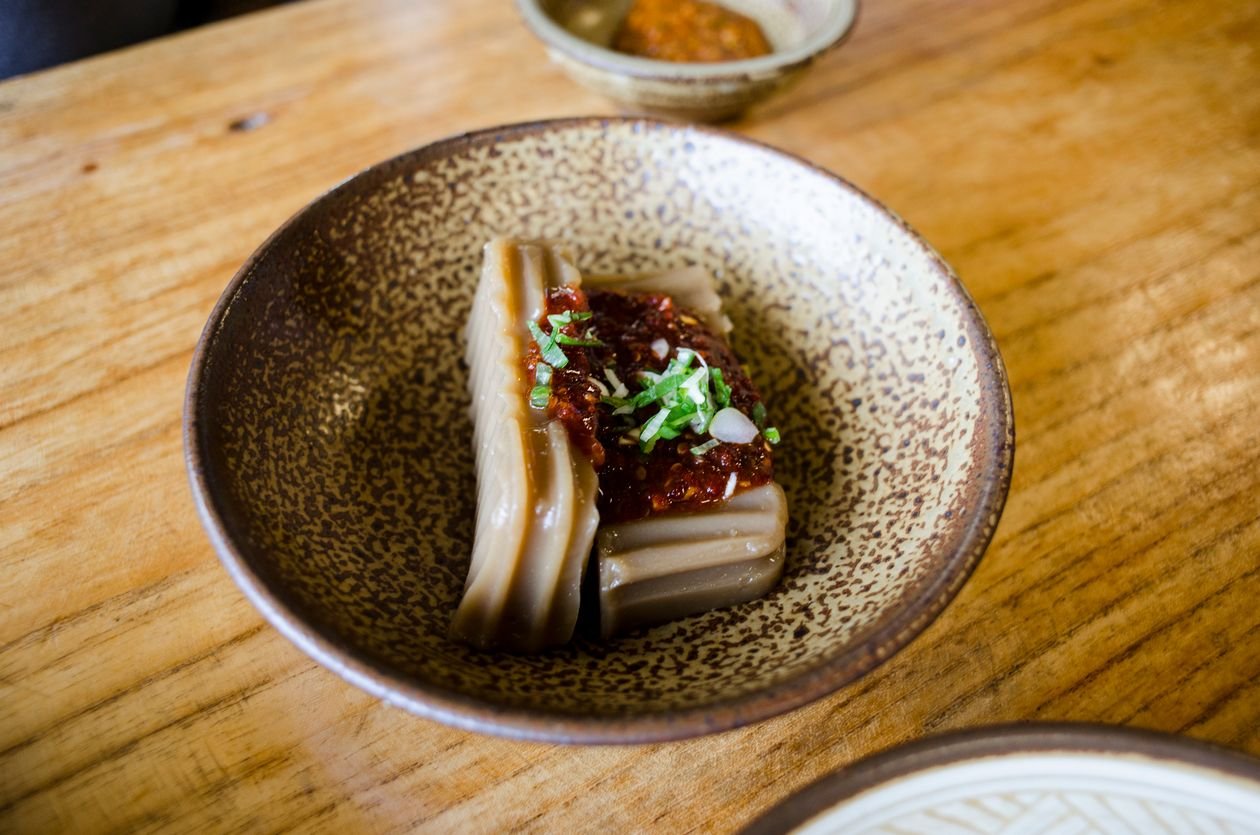
Silky, cool mung bean jelly tossed with crunchy cucumber, carrot, and a bright soy and sesame dressing, cheongpomuk muchim is one of Korea's most refreshing side dishes. The jelly itself is mild and smooth, so the dressing does the talking: salty, sour, and nutty, with a gentle warmth from chilli. It takes about 35 minutes, most of it just waiting for the jelly to set.
The story behind Cheongpomuk Muchim
Muk is one of Korea's oldest foods, and it has fed ordinary families for centuries. Muk is a jelly made from starch, usually mung bean, acorn, or buckwheat, mixed with water and cooked until it sets into a cool, smooth block. It was a peasant food first, made from whatever starch was cheap and plentiful, and it kept well without refrigeration, which made it valuable in a time before ice boxes. Cheongpomuk, the mung bean version, is the palest and most delicate of the three, with a clean, silky texture that takes on the flavour of its dressing.
In Korean homes, muk shows up as muchim, which means a seasoned, tossed salad. The jelly is cut into bite-sized pieces and mixed with vegetables and a sharp dressing, then served as a banchan, one of the small side dishes that fill a Korean table. Cheongpomuk muchim is the cool, mild member of the family, lighter than the nutty, earthy acorn version and more delicate than buckwheat. It is the dish people reach for in summer, or alongside rich grilled meat, when something cool and clean is what the table needs.
What makes this dish special is the jelly itself. Good cheongpomuk is almost clear, smooth as glass, and cool on the tongue, with a gentle wobble that holds its shape on a spoon. It has very little flavour of its own, and that is the point: it is a quiet base that lets the dressing shine. The soy sauce brings salt, the vinegar brings brightness, the sesame oil brings warmth and nuttiness, and the garlic and chilli add a low hum of heat. The cucumber and carrot add crunch, so every bite gives you soft and crisp together.
Cook this on a warm day, or as part of a Korean spread with grilled meat and rice. The hands-on time is short, but the jelly needs at least 2 hours to set, so make it in the morning and assemble the salad just before dinner. It is also a good dish for a beginner, because the hardest part is simply stirring the starch until it turns clear. Once you have made it once, you will see why muk has survived for centuries: it is simple, honest, and quietly delicious.
- Prep time
- 20 mins
- Cook time
- 15 mins
- Total time
- 35 mins
- Servings
- 4 servings
- Calories
- 180
Ingredients
- 100 g mung bean starch
- 600 ml water, for the jelly
- 1 teaspoon salt, for the jelly
- 1 small cucumber, cut into thin half-moons
- 1 small carrot, cut into fine strips
- 2 spring onions, thinly sliced
- 3 tablespoons light soy sauce
- 1 tablespoon rice vinegar
- 1 tablespoon sesame oil
- 1 teaspoon sugar
- 1 garlic clove, finely grated
- 1 teaspoon toasted sesame seeds
- 1 teaspoon gochugaru (Korean chilli flakes), optional
- 1 sheet gim (roasted seaweed), crumbled, to serve
Instructions
- Make the jelly first, because it needs time to set. Whisk the mung bean starch and salt into the cold water in a saucepan, stirring until there are no lumps at all. A whisk is better than a spoon here, because even a small lump of dry starch will stay grainy in the finished jelly.
- Set the pan over medium heat and stir constantly with a wooden spoon or spatula. After a few minutes the mixture will turn cloudy, then suddenly thick and clear, like a pale glass paste. This is the starch gelatinising, and it is the moment the jelly is born. Keep stirring for 2 more minutes so the starch cooks fully.
- Pour the hot jelly into a lightly oiled flat container, about 20 cm square, and smooth the top with a wet spatula. Leave it on the counter until it is cool enough to handle, then cover it and put it in the fridge for at least 2 hours, or overnight. It should set firm enough to hold its shape when you press it gently.
- While the jelly sets, prep the vegetables. Slice the cucumber into thin half-moons, cut the carrot into fine strips, and slice the spring onions. Put them in a bowl and sprinkle with a pinch of salt. Leave them for 10 minutes, then squeeze out the water gently; this keeps the salad crisp instead of watery.
- Make the dressing in a small bowl: soy sauce, rice vinegar, sesame oil, sugar, grated garlic, and the gochugaru if you are using it. Stir until the sugar dissolves, then taste it. It should be salty, sour, and nutty all at once, with a gentle sweetness underneath. Add a splash more vinegar or soy sauce to balance it to your liking.
- Turn the set jelly out onto a board and cut it into bite-sized pieces, about 2 cm across. Use a knife dipped in cold water so the jelly does not stick to the blade. The pieces should be smooth, cool, and slightly wobbly, with clean edges. If the jelly feels soft, chill it for another hour before cutting.
- Put the jelly pieces in a wide bowl with the cucumber, carrot, and spring onions. Pour the dressing over the top and toss gently with your hands or a large spoon, turning the pieces over so each one is coated. Be gentle: the jelly is delicate, and rough handling will break it into crumbs.
- Sprinkle the toasted sesame seeds over the top and give the salad one last gentle turn. Taste a piece of jelly and adjust the seasoning if needed, a drop more soy sauce for salt or a little vinegar for brightness. The dressing should cling to the jelly, not pool at the bottom of the bowl.
- Serve the salad cold, in a wide shallow bowl, with the crumbled gim scattered over the top just before serving. The seaweed adds a savoury, toasty note and a little crunch. Eat it as a side dish with rice, and enjoy it the same day, while the vegetables are still crisp and the jelly is at its silkiest.
Pro tips
- Whisk the starch into cold water until it is completely smooth before you turn on the heat. Any dry lump will stay grainy in the finished jelly.
- Stir the starch mixture constantly while it cooks. It thickens suddenly and can catch on the bottom of the pan, which gives the jelly a scorched taste.
- Give the jelly at least 2 hours in the fridge, or overnight. A warm jelly is too soft to cut cleanly, and the pieces will fall apart in the salad.
- Salt the cucumber and carrot and squeeze out the water before you dress the salad. This one step keeps the whole dish crisp instead of watery.
- Dress the salad just before serving. The dressing draws moisture out of the vegetables, so a salad dressed hours ahead will be soft and soupy.
Variations & serving ideas
Swap the vegetables to suit the season. Thinly sliced radish, bean sprouts, or shredded lettuce all work well in this salad, and each one changes the crunch a little. Add bean sprouts blanched for 30 seconds, or a handful of perilla leaves cut into strips for a herbal, minty note. The dressing stays the same, so the dish is easy to adapt to whatever is in the fridge.
For a spicier version, add a tablespoon of gochujang to the dressing, or a teaspoon of gochugaru and a few drops of chilli oil. The heat sits in the dressing and the jelly stays cool, so the contrast is part of the pleasure. For a milder version, leave the chilli out entirely and add a little more sesame oil and a pinch of sugar; the salad stays gentle and nutty, and children usually prefer it that way.
Serve the salad as a banchan alongside rice and a main course, or as a light lunch on its own with a bowl of rice and a fried egg. The jelly also works well in a cold noodle soup, cut into strips and floated in a chilled broth with cucumber and sesame. Keep the portions small; muk is a side dish, not a main event, and its lightness is the point.
Pair the salad with rich or spicy food, where its cool, clean flavour refreshes the palate. Grilled pork belly, fried chicken, and spicy stews all benefit from a bowl of cheongpomuk muchim on the side. A cold barley tea or a light lager sits well alongside it. The meal stays balanced without anything heavy, and the table feels complete with a few small dishes around the main course.
Getting it right
The key technique is cooking the starch mixture until it turns clear. Mung bean starch starts out cloudy and thin, then thickens suddenly as it heats, turning into a pale, glassy paste. That change is the starch gelatinising, and it is the moment the jelly forms. Stir constantly, because the mixture thickens fast and can catch on the bottom of the pan. Once it turns clear, keep cooking for 2 more minutes; this extra time is what makes the jelly set firm instead of staying soft.
Cutting the jelly is a skill of its own. The jelly is smooth and a little sticky, so a dry knife will drag and tear it. Dip the blade in cold water before each cut, and use a gentle, clean motion rather than sawing. Cut the pieces bite-sized, about 2 cm across, so they are easy to pick up with chopsticks and easy to coat with dressing. If the jelly feels too soft to cut cleanly, it needs more chilling time, not more cooking.
The common mistakes are all about water. A watery salad usually means the vegetables were not salted and squeezed before dressing, or the dressing was added too early and sat in the fridge pulling moisture out. Dress the salad just before serving, and salt the cucumber and carrot first to draw out their water. And if the jelly comes out lumpy, the starch was not whisked smooth in the cold water before heating; whisk it until it is completely lump-free next time.
Storing & reheating
Cheongpomuk muchim is best eaten the same day, while the jelly is silky and the vegetables are crisp. If you have leftovers, keep them in a sealed container in the fridge for up to 2 days. The dressing will draw water out of the vegetables, so the salad gets a little softer, but the flavour stays good. Drain off any excess liquid before serving, and add a splash of fresh dressing to wake it up.
The plain jelly, before dressing, keeps better: it will hold in the fridge for 3 to 4 days in a sealed container, covered with a little cold water. Drain it well and cut it fresh when you are ready to make the salad. Do not freeze the jelly; freezing ruins its smooth texture and it turns grainy and watery when it thaws.
Frequently asked questions
Where do I buy mung bean starch?
Look for mung bean starch in Korean or Asian supermarkets, usually near the rice flour and potato starch. It is sometimes labelled as green bean starch. If you cannot find it, potato starch gives a similar jelly, though it is a touch firmer and less silky.
Can I make this dish spicy?
Yes, and the dressing is where the flavour lives. Add a teaspoon of gochugaru or a few drops of chilli oil to the dressing, or top the salad with sliced fresh chilli. The jelly itself stays mild, so the heat sits in the dressing, which is easy to adjust.
Why is my jelly too soft to cut?
It is not your fault; the jelly needs time to cool and set, and a warm jelly will always be soft. Give it at least 2 hours in the fridge, or overnight if you can. If it is still soft, it was probably undercooked, so next time cook the starch mixture a full 2 minutes past the point it turns clear.
Why is my salad watery?
A little is normal, because the dressing draws moisture out of the vegetables. To keep it crisp, dress the salad just before serving, and keep the jelly and vegetables separate in the fridge until then. The salad is at its best within a day of making it.
Is cheongpomuk muchim vegan?
Yes, this dish is vegan as written, as long as the soy sauce you use has no fish-based additives. Check the label, or use tamari. The sesame oil, vinegar, and vegetables are all plant-based, so nothing else needs changing.
How do I serve it?
Serve it as a banchan, a small side dish, alongside rice and a main course. It is especially good with grilled meat, fried food, and spicy dishes, where its cool, clean flavour refreshes the palate between bites.