Kakuni Recipe
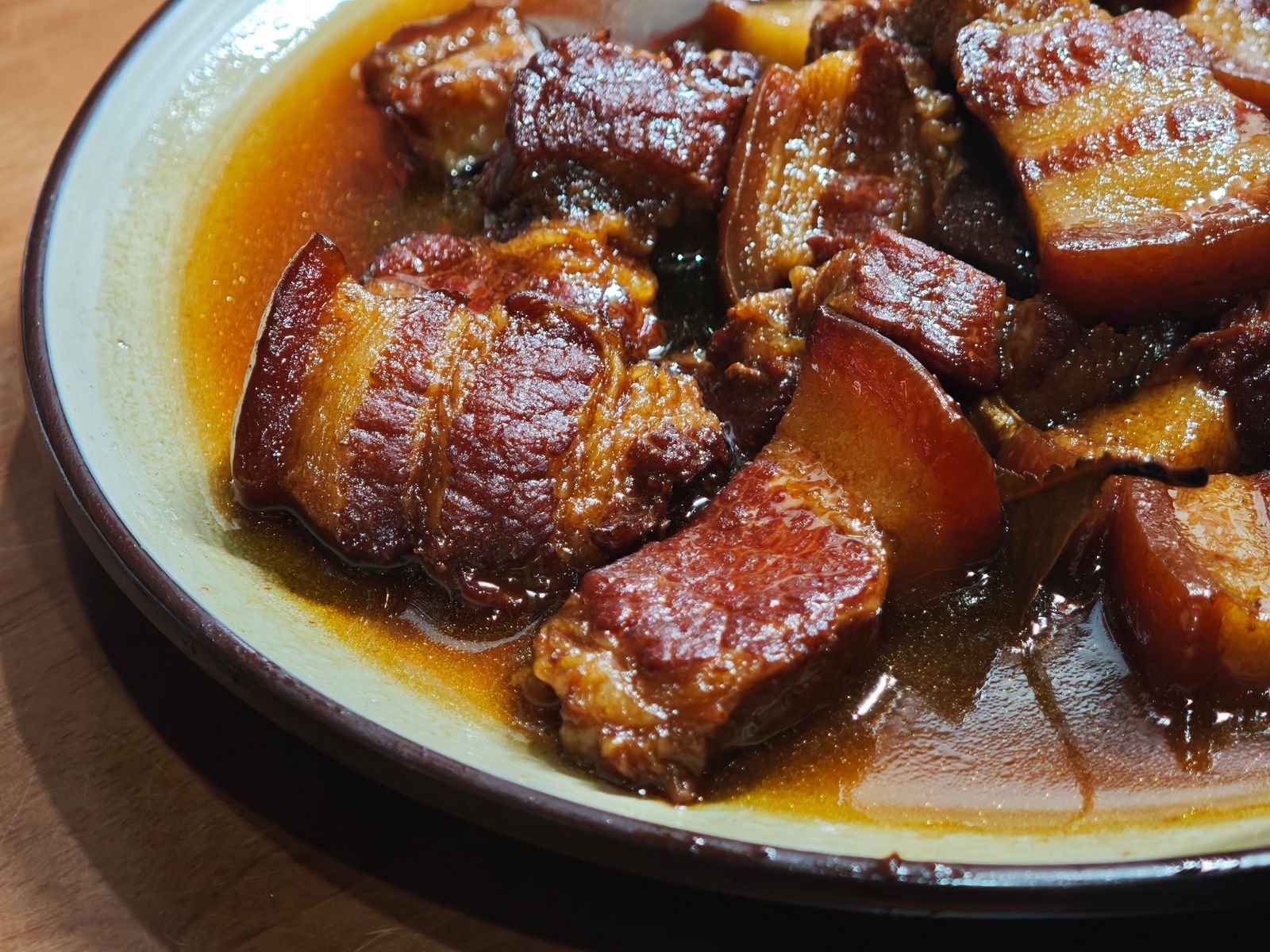
Kakuni is Japanese comfort food at its richest: cubes of pork belly simmered for hours in soy, sake, mirin and ginger until the meat turns meltingly tender and the fat turns silky. The sauce reduces to a glossy, dark glaze that coats every piece. Served with rice and mustard, it is the kind of dish that makes a quiet evening feel special.
The story behind Kakuni
Kakuni comes from Nagasaki, the port city in western Japan where Chinese and Japanese cooking have mixed for centuries. The dish is a Japanese take on Chinese braised pork, brought by traders and adapted to local tastes. Nagasaki cooks made it with soy sauce, sake and ginger, and served it as part of shippoku, the shared banquet style that blends Chinese, Japanese and European influences. The port was Japan's window to the world for centuries, and its food still carries that mix of cultures in every bite.
In Japan, kakuni is celebration food and home food at once. It appears at family gatherings, at New Year, and in the little bowls of an izakaya, the Japanese pub, where it is eaten slowly with drinks. The long cook is part of the pleasure; the pork simmers for hours while the house fills with the smell of soy and ginger, and the cook checks the pot now and then, tasting the sauce as it thickens. There is no rush, and the slow pace is part of what makes the dish feel like a small celebration.
What makes kakuni special is the texture. The pork belly has layers of meat and fat, and the slow braise turns the fat into something soft and almost creamy, while the meat itself becomes so tender it falls apart at the touch of a chopstick. The sauce, dark and glossy, clings to each cube and tastes sweet, salty and warm all at once. A dab of Japanese mustard cuts through the richness. The mustard is hot and sharp, so a little goes a long way, and it wakes up the palate between bites of the sweet, fatty pork. Without it the dish can feel heavy; with it, each bite tastes fresh again.
Cook this when you have an afternoon to spare and you want a dish that feels like an occasion. The work is mostly waiting, and the result is worth every hour. Serve it with steamed rice, which soaks up the sauce, and a simple vegetable side. A bowl of miso soup on the side makes the meal feel complete, and a few pickles add a sharp note that balances the pork. It feeds four generously, and the leftovers, if there are any, taste even better the next day. It feeds four generously, and the leftovers, if there are any, taste even better the next day.
- Prep time
- 20 mins
- Cook time
- 2 hrs
- Total time
- 2 hrs 20 mins
- Servings
- 4 servings
- Calories
- 620
Ingredients
- 800 g pork belly, skin on, in one piece
- 4 spring onions, cut into chunks
- 1 piece fresh ginger (about 40 g), sliced
- 2 garlic cloves, crushed
- 120 ml soy sauce
- 120 ml sake
- 60 ml mirin
- 2 tbsp brown sugar
- 4 eggs
- 1 tsp Japanese mustard (karashi), to serve
- Steamed rice, to serve
- Salt, to taste
Instructions
- Put the pork belly in a large pot and cover with cold water. Bring to a boil over high heat and cook for 5 minutes, skimming off the foam. Drain the pork and rinse it under cold water. This first boil removes impurities and keeps the braising liquid clear.
- Cut the pork into large cubes, about 5 cm across. The pieces will shrink as they cook, so keep them generous. Tie each cube with kitchen string if you like, to help it hold its shape, though this is optional.
- Put the pork back in the clean pot with the spring onion chunks, ginger and garlic. Pour in the sake and enough water to cover the pork by 3 cm. Bring to a boil, then turn the heat down low, cover and simmer gently for 1 hour. The meat should be starting to soften.
- Add the soy sauce, mirin and brown sugar to the pot. Stir gently until the sugar dissolves. The liquid will turn dark and smell sweet and savoury. Cover and simmer for 45 minutes more, turning the pork pieces once halfway through.
- While the pork simmers, boil the eggs. Put them in a pan of cold water, bring to a boil, then cook for 7 minutes for a slightly soft yolk. Cool under cold water, peel carefully, and set aside.
- Remove the lid from the pork pot and turn the heat up to medium. Simmer uncovered for 15 minutes, until the sauce thickens and turns glossy. The pork should be deeply coloured and the sauce should coat a spoon. Watch it closely so it does not burn.
- Add the peeled eggs to the pot for the last 5 minutes of cooking, turning them gently so they pick up the colour of the sauce. The eggs will turn a light brown and absorb the sweet, savoury flavour of the braise.
- Take the pork and eggs out of the pot and let them rest for 5 minutes. The sauce will thicken a little more as it cools. Cut the string off the pork cubes if you used it, and arrange the pork and eggs on a serving plate.
- Serve the kakuni hot with steamed rice and a dab of karashi mustard on the side. Spoon a little of the glossy sauce over the pork and eggs. Eat the pork with rice, letting the sauce soak in, and use the mustard sparingly; it is hot and sharp.
Pro tips
- Buy pork belly with the skin on and even layers of meat and fat. The skin turns soft and gelatinous in the braise, and the fat keeps the meat moist through the long cook. Ask the butcher for a piece from the middle of the belly.
- Do not skip the first boil. It removes blood and impurities that would cloud the sauce and give it a harsh flavour. Five minutes is enough; longer and you start to lose flavour from the meat.
- Keep the simmer gentle. A hard boil will toughen the pork and evaporate the liquid too fast, while a slow simmer lets the fat render gently and the meat turn tender. The surface should barely tremble.
- Watch the sauce in the final fifteen minutes. Once the lid comes off, the liquid reduces fast and can go from glossy to burnt in a few minutes. Stay near the pot and stir gently.
- Let the pork rest for five minutes before serving. The sauce thickens as it cools slightly, and the meat firms up just enough to slice cleanly without falling apart.
Variations & serving ideas
Swap the pork belly for pork shoulder if you cannot find belly, though the result will be leaner and less silky. The shoulder needs a little longer in the pot, so test it with a chopstick and keep simmering until it yields easily. For a lighter version, use chicken thighs, which braise in about 45 minutes and still take the sauce well.
You can add vegetables to the pot for the last 30 minutes. Daikon radish is the classic choice; it turns soft and sweet and soaks up the sauce beautifully. Carrots and whole shallots also work, adding sweetness and colour. Add them late so they keep their shape and do not turn to mush. Daikon needs about thirty minutes, while carrots need twenty, so stagger them if you use both. The vegetables soak up the sauce as they cook and taste wonderful with the rice.
Serve kakuni with steamed rice and a simple green vegetable, such as blanched spinach with sesame or steamed bok choy. Pickles, like takuan or pickled ginger, add a sharp contrast that cuts through the richness. A simple cucumber pickle takes five minutes to make and does the same job. The meal needs little else, since the pork and rice carry it. The meal needs little else, since the pork and rice carry it.
Pair it with a cold beer, which is the classic izakaya choice and refreshes the palate between rich bites. A dry sake also suits the dish, echoing the sake in the braise. Serve it slightly warm in winter, which suits the rich, hot pork. If you prefer not to drink alcohol, a hot green tea or a cold barley tea works well and cleans the palate nicely. If you prefer not to drink alcohol, a hot green tea or a cold barley tea works well and cleans the palate nicely. A little grated daikon on the side adds freshness and helps cut through the fat. A few slices of pickled ginger on the side add a sharp, clean note. A cold beer is the classic drink with this rich dish. Serve hot.
Getting it right
The first stage is the blanch, and it sets up the whole dish. Boiling the pork briefly in plain water draws out blood and impurities that would otherwise cloud the sauce and leave a harsh, metallic taste. Rinse the pork well afterwards, and start the braise in a clean pot with fresh liquid. It is a small step that makes a visible difference to the final sauce.
Control the heat through the long braise. The pork wants a gentle simmer, with the liquid barely moving, so the fat renders slowly and the meat turns tender without drying out. If the pot boils, the meat tightens and the sauce reduces too fast. Check the liquid level every half hour and top up with hot water if it drops below the pork. The pork should stay covered for most of the cook, so the meat braises evenly and does not dry out on top. A lid that fits well helps, but a small gap lets the steam escape slowly and concentrates the sauce.
The most common mistake is reducing the sauce too far. A glossy sauce that coats a spoon is the goal; a thick, sticky paste means the pot was too hot or the lid came off too early. If the sauce gets too thick, stir in a splash of hot water and simmer for a minute. The other common slip is cutting the pork too small, which leaves it dry and stringy after two hours. Keep the cubes generous, about five centimetres across, and they will shrink to the perfect size by the time the braise is done. Large cubes also hold their shape better on the plate. Keep the cubes generous.
Storing & reheating
Kakuni keeps in the fridge for up to 4 days in a sealed container, covered in its sauce. The flavour deepens overnight, and many cooks say day-two kakuni tastes better than fresh. Reheat it gently in a covered pan over low heat, with a splash of water if the sauce has thickened too much.
You can freeze kakuni for up to 2 months, though the texture of the fat changes slightly on thawing. Freeze the pork and sauce together in a sealed container, thaw overnight in the fridge, and reheat gently. Boil fresh eggs on the day you serve it, since frozen eggs turn rubbery and unpleasant. The eggs take only seven minutes, and a freshly boiled egg, still warm and lightly coloured by the sauce, is one of the best parts of the dish.
Frequently asked questions
What is kakuni?
Kakuni is Japanese braised pork belly, simmered slowly in soy sauce, sake, mirin and ginger until meltingly tender. It comes from Nagasaki, where Chinese braising met Japanese flavours. The pork is served in cubes with a glossy, dark sauce, usually with rice.
Can I make kakuni in a slow cooker?
Yes. Blanch the pork first, then put it in the slow cooker with the ginger, garlic, sake and water. Cook on low for 5 to 6 hours, then add the soy, mirin and sugar and cook for 1 hour more. Reduce the sauce in a pan on the stove at the end.
Why is my kakuni tough?
It needs more time. Pork belly only turns tender after a long, gentle braise, usually at least 2 hours. If a chopstick does not slide in easily, put the lid back on and simmer for another 30 minutes. A hard boil will toughen it, so keep the heat low.
Can I use pork shoulder instead of belly?
Yes, pork shoulder works, though it is leaner and less silky than belly. It needs a little longer in the pot, so test it with a chopstick. The sauce and method stay the same, and the result is still rich and satisfying.
What is karashi mustard?
Karashi is Japanese hot mustard, made from ground mustard seeds. It is sharp, hot and pungent, a little like English mustard. It comes as a paste in a tube or a small jar, and a pea-sized amount is enough for one serving.
Can I freeze leftover kakuni?
Yes, it freezes well for up to 2 months in its sauce. Thaw overnight in the fridge and reheat gently in a covered pan over low heat. Boil fresh eggs on the day you serve it, since frozen eggs turn rubbery.